
Samsung Patents an AI That Grades Its Own Photo Edits to Get Better Over Time
What if your phone's photo editor could fail a test, notice it failed, and then fix itself? That's the idea behind Samsung's new patent for an AI that scores its own image edits against a known-good answer.
What Samsung's self-grading photo editor actually does
Ever tried to tell a photo app to "make the sky more dramatic" and gotten something that looks nothing like what you pictured? The gap between what you asked for and what the AI produced is hard to measure, and right now most tools don't even try.
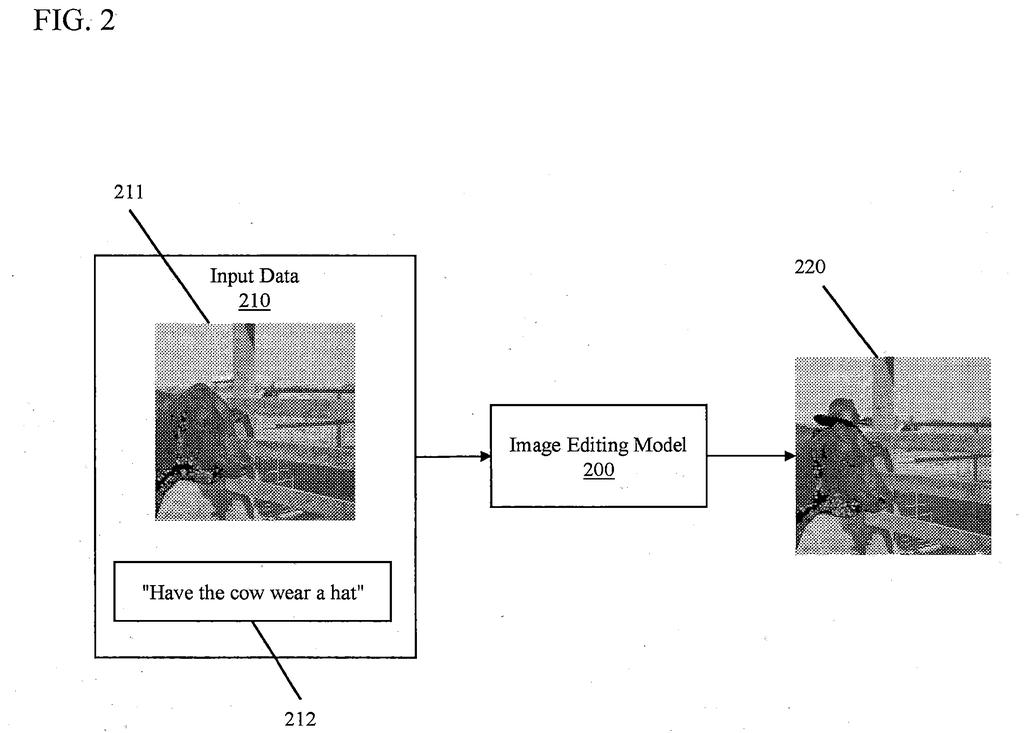
Samsung's new filing describes a system that teaches an AI to grade those edits. You give it a starting photo and an instruction (say, "remove the background"). The AI produces an edited version, then a second AI model looks at all three things together, the original, the instruction, and the result, and assigns a quality score. That score gets compared to a ground truth, a pre-verified "correct" answer, and the model adjusts itself based on the gap.
The practical effect is a feedback loop: the scoring model keeps getting better at judging edits, which in turn helps photo-editing AI produce results that actually match what you asked for.
… providing the reference image, the editing instruction, and the edited image to an artificial intelligence (AI) editing evaluation model to obtain an editing evaluation score …
Translation: The system feeds the original photo, the instructions, and the revised image into an AI to grade the quality of the edit.
How the AI model scores edits and updates itself
The patent describes a training pipeline for what Samsung calls an editing evaluation model, an AI whose job is not to make edits but to judge them.
Here's the flow:
- A reference image (the original photo) and an editing instruction (a text command like "brighten the subject") are fed into the system alongside an edited image produced by a separate editing model.
- The evaluation model takes all three inputs and outputs an editing evaluation score, a numerical judgment of how well the edit followed the instruction.
- That score is compared against a ground truth score, essentially a human-verified answer key for what a good edit looks like.
- The difference between the two scores is used to update the model's internal parameters, the knobs that determine how it makes future judgments.
The system also covers automatic dataset creation: generating the image-instruction-edit triples and their reference scores at scale, so the model has a large, reliable training library to learn from. This matters because hand-labeling photo edits for quality is slow and expensive.
The claim language is broad. It covers any method that (1) takes the three-input combination, (2) scores it with an AI model, and (3) updates that model based on the scoring error. The specific AI architecture is left open.
… modifying at least one parameter of the editing evaluation model based on a comparison between the editing evaluation score and a ground truth editing evaluation score …
Translation: The AI adjusts its grading rules by comparing its own score against a verified correct score.
What this means for AI photo editing on Galaxy devices
For everyday users, the promise is that AI photo tools on Samsung devices could get measurably better at following instructions, not just producing a plausible-looking image but one that actually does what you asked. If the scorer improves reliably, the editing model it trains against improves too.
Samsung's run of AI image-processing filings points to a clear priority: competing on software quality, not just camera hardware. A self-improving evaluation loop could let Samsung iterate on editing quality without requiring engineers to manually review thousands of edited photos. Whether that advantage shows up in a Galaxy feature update or stays internal as a training tool depends on how well the system works in practice, and the patent doesn't guarantee either outcome.
Samsung's 25th filing we've tracked in our AI photo editing race since July follows its video frame repair work and the AI eraser filing, continuing a focus on fixing and filling images.
Claim 1 is written at a high level of abstraction. It doesn't specify the AI architecture, the type of images, the format of the editing instructions, or how the ground truth scores are generated. That breadth is intentional: it stakes out the general idea of using an AI scorer, trained against reference answers, to evaluate image edits.
In practice, that scope is wide enough to cover a lot of ground. Any company building an AI photo editor that uses a separate scoring model and a comparison-to-ground-truth training step would sit inside this claim's territory, assuming it survives examination. That's a meaningful perimeter to draw around a technique that is becoming common in generative AI workflows.
The honest caveat is that broad claims like this attract prior-art challenges. If similar scorer-plus-feedback-loop systems were published before the March 2026 filing date, the claim will likely narrow during prosecution. For now, the patent reads less like a specific invention and more like Samsung planting a flag on the general category of "AI that grades AI photo edits."
There are more where this came from
We read every patent application Big Tech publishes and send you the ones worth knowing. Plain English, free, every week.
The drawings
14 drawing sheets from US 2026/0301270 A1 · click any drawing to enlarge


Want this weekly breakdown for a company we don't cover? Patentlyze Pro →
Be the first to weigh in