
Qualcomm
Qualcomm · Automotive · Filed Jul 24, 2026 · USPTO published Nov 19, 2026 · This week's release
Qualcomm Files Patent for Cars That Restart Their Engines Before the Light Turns Green
Your car's start-stop system waits for your foot to leave the brake before it wakes the engine. Qualcomm's patent application has the car guess when you will want to move and start the engine first.
- Publication number
- US 2026/0365178 A1(US20260365178A1)
- Applicant
- QUALCOMM Incorporated
- Filed · Published
- Jul 24, 2026 · Nov 19, 2026
- Inventors
- Lars JOHANSSON, Karl-Johan AHLGREN ODE
- Status when we published
- Waiting for an examiner
- Document
- 20 claims
- US classification
- 701/102
- Parent application
- Division of 18/952,921 (filed Nov 19, 2024)(18952921)
What Qualcomm's early engine restart actually does
Every time you stop at a red light, plenty of modern cars shut their engines off to save gas, then restart only once you lift your foot off the brake. That restart takes a moment, and you wait through it.
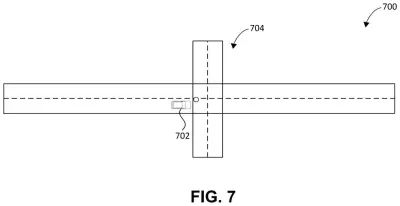
Qualcomm's new patent application tries to close that gap. Your car would guess when you will want to move, using its sensors, a map, a list of common situations (like waiting at a crosswalk), and messages broadcast by the traffic light itself. It then starts the engine early, even with your foot still on the brake, so the engine is already running when you want to go.
The filing also describes the flip side. If a stop will be too short to be worth it, the car keeps the engine running. Its own example: shut off and restart within about five seconds, and you can burn more fuel than you save.
predict a time associated with acceleration of the vehicle based on at least one of sensor data captured by one or more sensors of the vehicle, a vehicle-to-everything (V2X) message received by the vehicle, a map of an environment of the vehicle, a catalog of predefined situations, or tracked objects in a zone of interest …
Translation: The car figures out when it will move using road maps, sensors, and outside messages.
How the car guesses when you will move
The core of the claims is a move time: the car's running prediction of when the driver will want to accelerate. It can build that guess from any of these inputs:
- Sensor data from cameras, radar or lidar (a laser-based distance sensor).
- V2X messages (vehicle-to-everything, short-range radio messages) from traffic lights, roadside units such as traffic cameras, and other cars.
- A map of the surroundings.
- A catalog of predefined situations, such as waiting at a crosswalk, being first in line at a red light, or stopped on train tracks.
- Tracked objects in a zone of interest, an area that must be clear before the car can go, such as a pedestrian still crossing in front.
Once the car has a move time, it starts the engine early: the restart time is the move time minus however long a startup takes. If startup takes one second, cranking begins one second before the predicted moment. Dependent claims cover starting the engine while your foot is still on the brake, before you touch the gas, and overriding the normal idle shutdown. Two more claims name a message from a traffic light, or a roadside unit next to it, saying when the light will change.
The description adds optional extras: timing the car's own starts with a rolling average, learning how quickly you press the gas, and adjusting for how fast the car ahead pulls away. It also describes the parent idea of keeping the engine on when predicted off-time is too short.
… preventing an idle-engine shutdown feature from stopping the engine of the vehicle, wherein the idle-engine shutdown feature is configured to shut down the engine when the vehicle is stopped …
Translation: The system stops the fuel saving feature from turning off the engine if the red light is about to change.
Why a green-light head start could win back drivers
The practical payoff is a start-stop system that stops feeling like a delay. The filing itself says drivers who find shutdowns annoying may switch the feature off, which defeats its fuel-saving purpose. An engine that is already running when the light turns green gives you less reason to do that.
How well it works depends on what your car can see. Traffic lights that broadcast their timing give the best guess. Without them, the car has to read cameras, the map and the cross-traffic signals, and a guess from those will be rougher. Your fuel savings depend on how often it guesses right.
That makes this Qualcomm's 637th filing in our Qualcomm coverage since May, a corpus that spans work like self-driving cars in new cities and echo-based phone location.
Source: US 2026/0365178 A1 at the USPTO (PDF). Full patent text and figures are in the official publication.
Get our take in your Top Stories
Liked this breakdown? Add Patentlyze as a preferred source on Google, and our plain-English take shows up more often in your Top Stories the next time Qualcomm patent news breaks.
Add Patentlyze on Google
One click.
There are more where this came from
We read every patent application Big Tech publishes and send you the ones worth knowing. Plain English, free, every week.
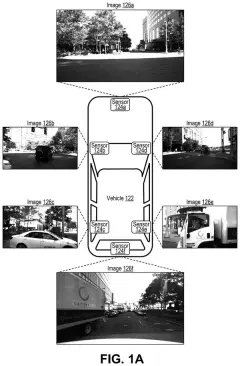
The drawings · 14 sheets
14 drawing sheets from US 2026/0365178 A1 · click any drawing to enlarge


Show the other 6 sheets


More from Qualcomm
All 637 Qualcomm patents →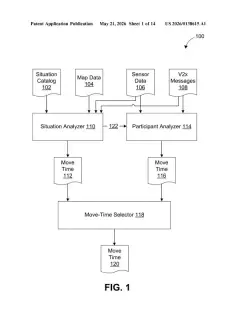
More in Automotive
All 377 Automotive patents →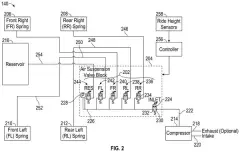
Tesla
Tesla Patents Air Suspension Valves That Ease Your Car Up Instead of Jolting It
Mobileye (Intel)
Mobileye Files Patent for Cars That Judge How Dark It Is Using Their Cameras
Nvidia
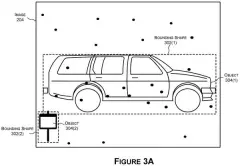
Nvidia Files Patent to Help Self-Driving Cars Keep Track of the Same Pedestrian or Car
Waymo (Google)
No comments yet