
Qualcomm
Qualcomm · Networking · Filed Mar 25, 2025 · USPTO published Oct 1, 2026 · Oct 1 release
Qualcomm Patents a System That Picks Your Car's Wireless Network Based on Where You're Headed
Your car already switches between cellular and Wi-Fi sometimes, but it does it clumsily. Qualcomm has filed a patent for a system that predicts whether your car is about to stop, and picks the right wireless connection before you even pull in.
- Publication number
- US 2026/0304301 A1(US20260304301A1)
- Applicant
- QUALCOMM Incorporated
- Filed · Published
- Mar 25, 2025 · Oct 1, 2026
- Inventors
- Mohammad Nekoui, Soumya Das
- Status when we published
- Waiting for an examiner
- Document
- 20 claims
- US classification
- 370/328
How Qualcomm's car network-picker actually works
Right now, the wireless chip in most vehicles doesn't know whether you're about to park for two hours or just slowing for a light. So it makes basic, reactive decisions about which network to use, and those decisions often land you on a slow connection when a faster one was available, or burn cellular data on a file that could have waited for a Wi-Fi handoff.
Qualcomm's patent describes a system that tries to predict, in advance, whether your car is going to be sitting still long enough to make a Wi-Fi connection worthwhile. It does this by looking at things like your current speed, the environment around the vehicle, and other real-time conditions. Out of those inputs, it produces a single number called a stationarity index: essentially a confidence score for how likely you are to be parked soon.
If that score is high enough, the system switches to a Wi-Fi network. If not, it sticks with cellular. The idea is to make large data transfers (think software updates or map downloads) happen automatically over Wi-Fi, saving your cellular connection for when you're actually on the move.
… generate, in accordance with the vehicle environmental context data and the vehicle operation data, a stationarity index value associated with the vehicle, the stationarity index value indicating whether the vehicle is predicted to be stationary for at least a threshold time interval to enable selection of a wireless network for communication by the vehicle …
Translation: It calculates how long your car will stay parked based on its surroundings and current status.
How the stationarity index scores and routes the connection
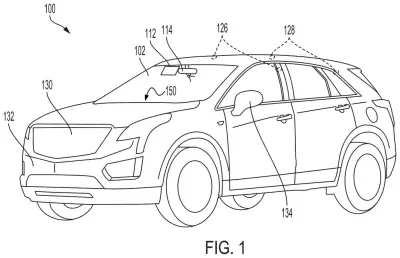
The patent describes a processing system built into a vehicle that constantly ingests two kinds of data: vehicle environmental context data (information about the surroundings, like whether you're in a parking lot, at an intersection, or on a highway) and vehicle operation data (things like current speed, acceleration, and other real-time driving conditions).
From those inputs, the system generates a stationarity index value: a calculated score that predicts whether the vehicle will remain stopped for at least a minimum amount of time. The threshold is configurable, so a fleet operator could set it to, say, five minutes, meaning the system only commits to a Wi-Fi handoff if it thinks the car will stay put that long.
Once that prediction is made, the system weighs it alongside RAT parameters (radio access technology parameters, which are technical measurements of available networks: signal strength, band quality, congestion, and so on). The combination of the stationarity prediction and the network quality assessment determines whether the vehicle communicates over a WWAN (wireless wide area network, like 4G or 5G cellular) or a WLAN (wireless local area network, like a parking garage's Wi-Fi hotspot).
The practical target is large, time-flexible data transfers. Software updates, route data, and telemetry files that don't need to move instantly are the obvious candidates for offloading to Wi-Fi when the system is confident the car will be stationary long enough to finish the transfer.
What this means for connected cars and in-vehicle updates
For most drivers, this would play out invisibly: your car's software update finishes in the garage overnight instead of eating into your cellular plan on the highway. That is a real, if quiet, quality-of-life fix, especially as over-the-air updates become standard across more vehicle brands.
For automakers and fleet operators, the stakes are higher. Large vehicles with constant data needs (delivery vans, ride-share fleets, long-haul trucks) spend a lot of money on cellular data. A system that reliably offloads bulk transfers to Wi-Fi when the vehicle is stopped could meaningfully reduce operating costs. Qualcomm's track record in automotive connectivity patents suggests this fits a longer arc of work rather than a one-off filing.
Filing 469 in our Qualcomm coverage since May, this application extends a thread that includes location and object sensing and workout tracking via radio, making it Qualcomm's 469th we've tracked.
Source: US 2026/0304301 A1 at the USPTO (PDF). Full patent text and figures are in the official publication.
Get our take in your Top Stories
Liked this breakdown? Add Patentlyze as a preferred source on Google, and our plain-English take shows up more often in your Top Stories the next time Qualcomm patent news breaks.
Add Patentlyze on Google
One click.
There are more where this came from
We read every patent application Big Tech publishes and send you the ones worth knowing. Plain English, free, every week.
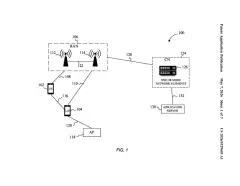
The drawings · 6 sheets
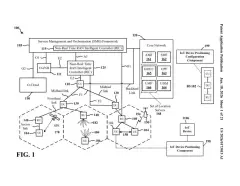
6 drawing sheets from US 2026/0304301 A1 · click any drawing to enlarge


More from Qualcomm
All 637 Qualcomm patents →
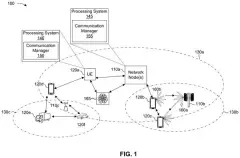
More in Networking
All 516 Networking patents →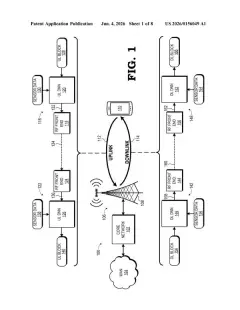
Google
Google Patents a Cellular Radio That Uses Sensor Data to Optimize Its Own Signals
Intel
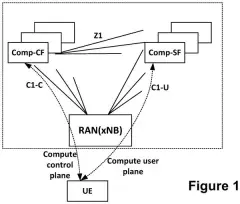
Intel Patents Technology That Moves Computing Work From Devices to Cellular Networks
Nvidia
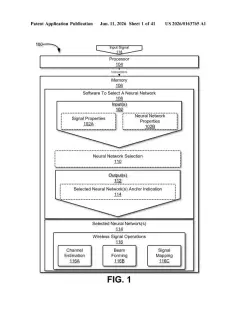
Nvidia Patents a System That Picks Its AI Based on Your Wireless Signal Strength
Apple
No comments yet