
Qualcomm
Qualcomm · Wearable · Filed May 16, 2025 · USPTO published Nov 19, 2026 · This week's release
Qualcomm Patents Earbuds That Let You Answer a Call With a Nod
Qualcomm describes earbuds that treat a nod as 'answer' and a head shake as 'decline,' and it lets you decide what every head movement does.
- Publication number
- US 2026/0367711 A1(US20260367711A1)
- Applicant
- QUALCOMM Incorporated
- Filed · Published
- May 16, 2025 · Nov 19, 2026
- Inventors
- Dattaji Diliprao DHUMAL, Praveenkumar BAGALI, Hari Prasad NARASIMHAIAH
- Status when we published
- Waiting for an examiner
- Document
- 20 claims
- US classification
- 715/863
What Qualcomm's head-gesture controls actually do
Ever had your phone ring while your hands were buried in cookie dough, or while you were riding a bike? Today you either let it go to voicemail or stop what you're doing and fumble for the screen.
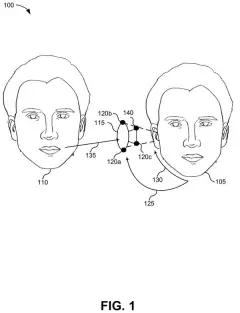
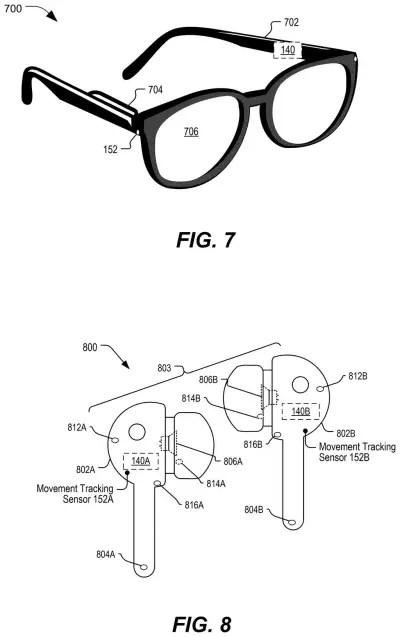
Qualcomm's patent application describes a different answer: use your head. Motion sensors in your earbuds or headset notice when you nod, shake your head, tilt it, or roll it clockwise or counterclockwise. A nod could answer the call, and a shake could decline it.
The twist is that you decide what each move does. A head tilt could skip a song, another move could switch your noise-cancellation mode, and it could even send an alert to an emergency contact. If the system keeps misreading your gestures, you can retrain it.
a memory configured to store gesture configuration data associated with at least one user-assigned gesture and at least one operation, wherein the gesture configuration data maps each of the at least one user-assigned gesture to a respective operation of the at least one operation; …
Translation: The earbuds remember which head movements are tied to specific tasks like answering a call.
How the earbuds match a nod to a command
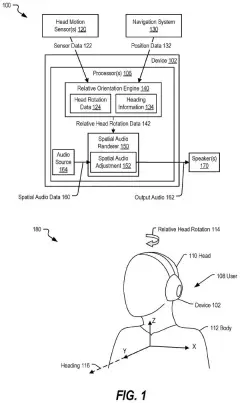
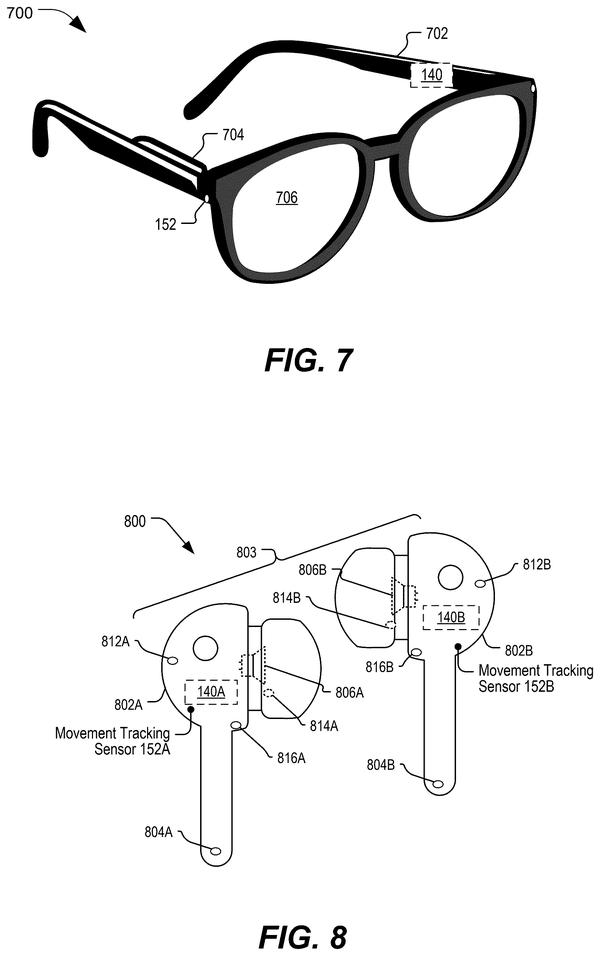
The core claim is a lookup table plus a motion detector. The device stores gesture configuration data, a saved list that links each gesture you have assigned (a nod, a head shake, a tilt, a clockwise or anti-clockwise head rotation) to an action. Sensors in a wearable such as an earbud or headset (an accelerometer, a gyroscope, a magnetometer, or a mix) report its yaw, pitch and roll, meaning how it turns, tips and rolls.
Software turns that stream of numbers into a detected gesture, optionally with a machine learning model (a program that learns patterns from examples). If the detected gesture matches one on your list, the matching action starts. The filing also describes scoring how close a match is and, when two guesses compete (say a head shake at 0.7 confidence and a tilt at 0.6), acting on the more confident one.
Several extras are described around that:
- Retraining: if the system misreads you, a screen shows what it detected, you say what you meant, and the model updates.
- Per-app mappings: a nod could start music in a media app and start navigation in a map app.
- Guard conditions: it can check that the device is worn and a gesture-enabled app is running before it listens.
The action can run on the phone, on the earbuds, or on another device, and the same motion sensors that already drive spatial audio can double as the gesture sensor.
Why your hands-full moments are the target
The practical win is answering a call or changing a song when your hands or eyes are busy. The filing's own examples are cooking, painting, cycling and driving, where it says you could take a call without taking your eyes off the road or your hands off the wheel. It also mentions triggering a camera without a spoken command spoiling the moment, and, in a car, responding only to the gestures of an authorized driver rather than a passenger.
Because the idea reuses motion sensors already inside many earbuds and headsets, it points toward a software feature that needs no extra hardware. It is a patent application, and the filing names no specific product, so treat it as a sketch of one way wearables could be controlled.
That makes this Qualcomm's third filing we've tracked in our body-sensing wearables watchlist since October, following their work on bone-conduction voice sensing and radio-signal workout tracking.
Source: US 2026/0367711 A1 at the USPTO (PDF). Full patent text and figures are in the official publication.
Get our take in your Top Stories
Liked this breakdown? Add Patentlyze as a preferred source on Google, and our plain-English take shows up more often in your Top Stories the next time Qualcomm patent news breaks.
Add Patentlyze on Google
One click.
There are more where this came from
We read every patent application Big Tech publishes and send you the ones worth knowing. Plain English, free, every week.
The drawings · 10 sheets
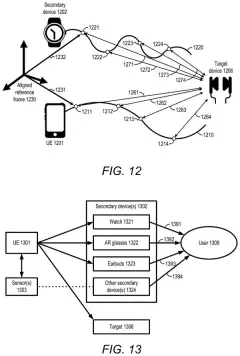
10 drawing sheets from US 2026/0367711 A1 · click any drawing to enlarge


Show the other 2 sheets


More from Qualcomm
All 637 Qualcomm patents →
More in Hardware
All 2,355 Hardware patents →
Samsung
A New Samsung Patent Turns Smart Rings Into a Stylus for Phone Drawing
Samsung
Samsung Patents a Fix for Watches That Misread Altitude When You Flip Your Wrist
Samsung
Samsung Patents Earbuds That Work Out What You're Doing From Sound and Movement
Sony
No comments yet