
Samsung Files Patent for a System That Cuts People Out of Your Photos and Turns Them Into Stickers
Samsung wants your phone to scan any photo you open, automatically pick out every person, pet, or object in it, and hand you a ready-made sticker pack from your own life. The cleverest wrinkle: those stickers are grouped by subject, so you can swap between versions of the same person just by swiping.
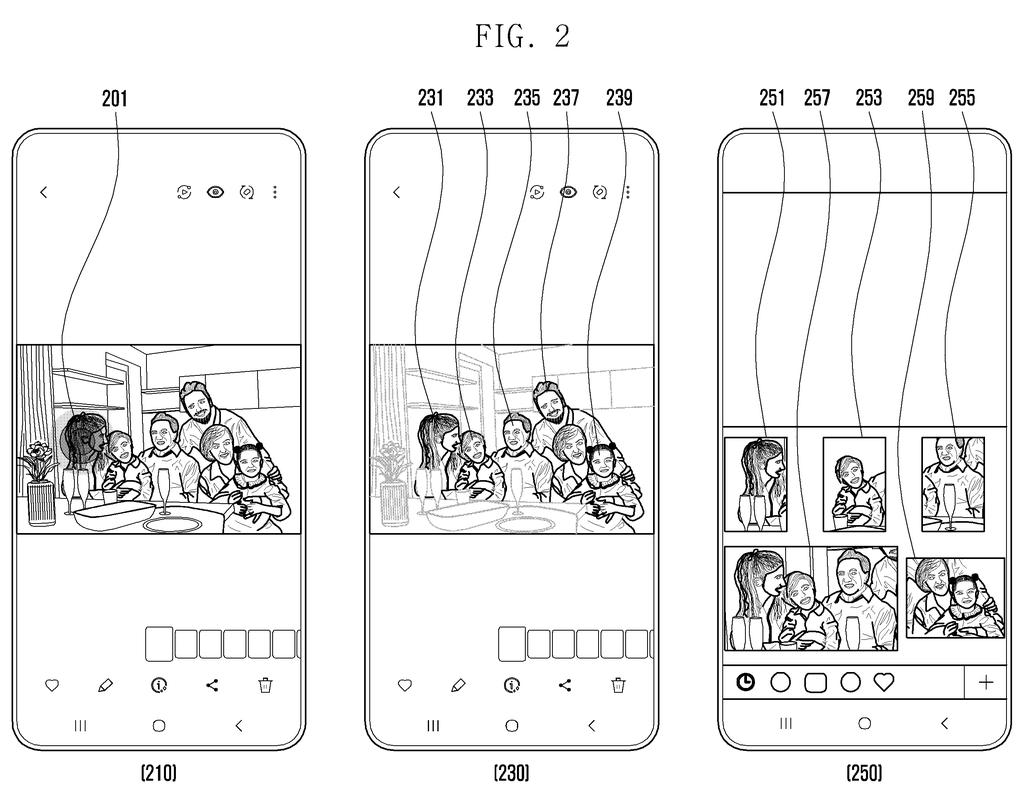
How Samsung's photo-sticker idea actually works
Imagine you open a group photo from last summer's vacation, tap on your friend's face, and your phone instantly offers you a cut-out sticker of just that friend, cleaned up and ready to drop into a text message or another image.
That's the core of what Samsung is filing for here. The phone's AI spots every recognizable thing in a photo or video (people, animals, objects, even backgrounds), lets you select one or several of them, and generates a sticker from whatever you picked. If a subject is partly hidden behind someone else in the frame, the system can fill in the missing parts automatically using a technique called out-painting.
The stickers don't just sit in a flat list. Your phone groups them by context: photos from the same trip, the same person, or the same pet all end up in their own collection. When you've already placed a sticker in a message, a quick horizontal swipe replaces it with a different photo of the same subject, while a vertical swipe pulls from a related-theme group instead.
recognize a plurality of objects from an image or video displayed on the display, based on a user input, separate one object or multiple objects from the plurality of objects that are recognized …
Translation: It identifies everything in a photo or video and lets you isolate specific items with a tap.
How the device splits objects and builds sticker groups
The system works in three broad stages: recognition, generation, and organization.
Recognition: When you open a photo or video, the processor uses object-recognition AI (essentially the same kind of computer vision used in modern portrait modes) to draw boundaries around every distinct element: each person gets their own outline, animals get their own, and even the background can be treated as a separable layer. If only one subject appears in the frame, the device doesn't stop at one sticker; it subdivides that subject into regions of interest (a cat's face, its paw, its full body) and offers stickers for each region separately.
Generation: You select one or more of those recognized objects, and the phone produces clipping data (the patent's term for the cut-out sticker image). The shape can follow the object's exact outline or fit inside a rectangle. If part of the subject was behind another person, out-painting (an AI technique that invents plausible image content to fill gaps) can reconstruct the hidden portion. Visual effects like outlines, vintage filters, or a cartoon look can be applied before saving.
Organization and use: Every sticker is saved alongside the metadata of its source image (date, location, detected relationships). The phone groups stickers by that metadata so that, for example, all cut-outs of your child form one browsable collection and all photos from a specific trip form another. When inserting a sticker into a message or photo, a horizontal swipe cycles through different poses or photos of the same subject; a vertical swipe moves to a thematically related group. The system also auto-positions the sticker inside a target image, adjusting its size and angle to fit naturally around any other objects already in the frame.
… generate clipping data from the one object or multiple objects separated from the plurality of objects, display the clipping data on the display, and store, in the memory, the clipping data together with metadata …
Translation: It turns those cutouts into digital stickers and saves them along with the original file info.
What this means for Samsung's messaging and photo apps
The practical problem this addresses is real: making a personalized sticker on today's phones usually means opening a dedicated app, manually tracing an outline, and saving the result to a separate location. Most people never bother. If Samsung bakes this into the gallery and messaging apps on Galaxy devices, the friction essentially disappears, and custom photo stickers become as easy to use as the generic emoji keyboard.
The grouping and swipe-to-swap mechanic is the more interesting design move. It turns a flat archive of cut-outs into something closer to a smart photo album organized by subject, which could make the feature useful over time rather than a novelty that fills up storage. Samsung's string of photo-AI filings suggests the company is trying to build a defensible, end-to-end creative layer inside its own apps rather than ceding that space to third-party tools.
Samsung's 27th filing we've tracked since July in our AI photo editing watch adds to earlier applications like one on filming with multiple lenses and one on an AI grading its own edits.
The problem Samsung is attacking here is friction, and the friction is real. Anyone who has tried to make a custom sticker from a photo knows it takes more steps than it should, which is why most people use generic packs instead of anything personal.
The grouping system is the part worth examining most carefully. Storing stickers with photo metadata and letting users swipe between versions of the same person is a thoughtful design idea. Whether Samsung can surface that feature in a way that feels natural rather than buried in settings is an execution question the patent can't answer.
The out-painting angle (reconstructing parts of a subject that were hidden behind someone else in the original photo) is the most technically ambitious piece, and also the most likely to produce odd-looking results in practice. The concept is sound; the quality depends entirely on how good the underlying AI model is at the time this ships.
Get our take in your Top Stories
Liked this breakdown? Add Patentlyze as a preferred source on Google, and our plain-English take shows up more often in your Top Stories the next time Samsung patent news breaks.
There are more where this came from
We read every patent application Big Tech publishes and send you the ones worth knowing. Plain English, free, every week.
The drawings
22 drawing sheets from US 2026/0321291 A1 · click any drawing to enlarge


Show the other 14 sheets


Want this weekly breakdown for a company we don't cover? Patentlyze Pro →
Be the first to weigh in