
Samsung Patents Technology That Keeps Every Router in Your Home Talking in Sync
When multiple Wi-Fi access points broadcast on slightly different frequencies, the result is interference, dropped connections, and wasted airtime. Samsung's new patent describes a way for access points to silently correct their own frequency before each transmission, using signals they receive from neighboring access points as a guide.
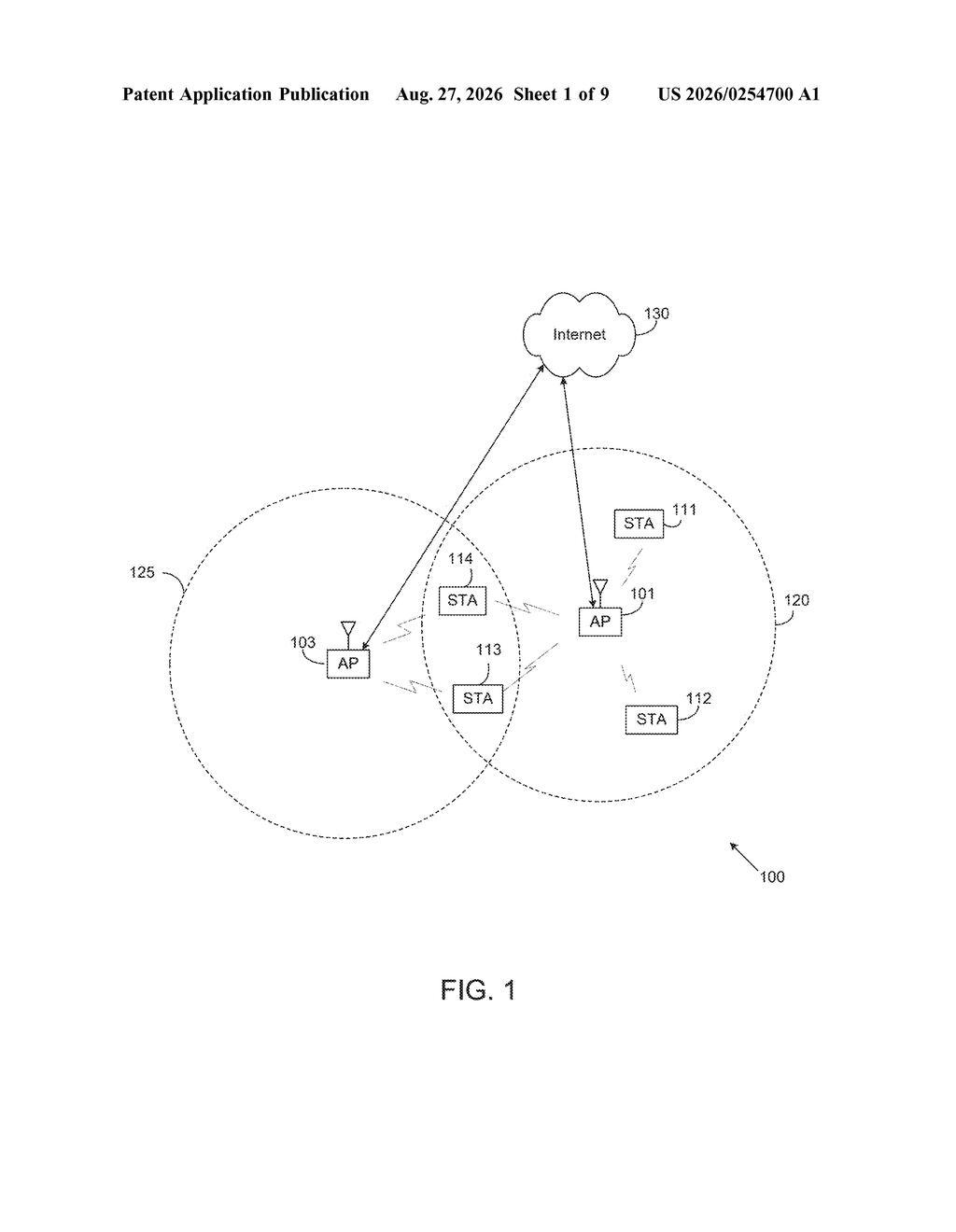
What Samsung's access-point frequency fix actually does
Every radio transmitter drifts slightly from its target frequency over time, and when a building is filled with multiple Wi-Fi access points, those tiny drifts can pile up into real problems: signals that overlap badly, connections that drop, and overall speeds that slow down for everyone nearby.
Samsung's patent describes a self-correcting approach. When one access point receives a signal from a neighboring access point, it uses that incoming signal to calculate how far off its own frequency is. It then adjusts before sending its next transmission. No central controller is required, and no manual tuning is needed.
The result is a group of access points that stay coordinated with each other, even as their hardware naturally drifts. For you, that means more reliable connections in offices, stadiums, apartment buildings, and anywhere else dozens of access points are packed into the same space.
… estimating a frequency pre-correction value based on a received signal of the first frame; adjusting a frequency for a second frame to be transmitted following reception of the first frame based on the frequency pre-correction value …
Translation: The router calculates how to tweak its signal timing so it stays perfectly aligned with the other devices in your home.
How each access point estimates and corrects its own frequency
The patent describes a four-step loop that repeats for every pair of frames exchanged between access points.
- Receive a frame: The first access point (AP) listens for an incoming wireless frame from a second access point nearby.
- Estimate a frequency pre-correction value: By analyzing the received signal, the AP calculates how much its own carrier frequency (the precise radio frequency it uses to broadcast) deviates from the neighbor's. This estimate is called the "frequency pre-correction value."
- Adjust before transmitting: Before the AP sends its next frame, it shifts its transmit frequency by that correction amount, compensating for the drift in advance rather than after the fact.
- Transmit on the corrected frequency: The adjusted frame goes out, meaning the neighbor receives a signal that is much closer to the expected frequency.
The key insight is that the correction happens before each outbound transmission, not as a slow background calibration. That makes the system reactive: every exchange between access points is also an opportunity to re-synchronize. No dedicated synchronization hardware or external timing source (like GPS) is required.
Methods and systems for synchronizing carrier frequency of multiple access points. A method includes receiving a first frame from a second AP device. The method also includes estimating a frequency pre-correction value based on the received signal of the first frame.
Translation: This technology allows multiple Wi-Fi points to talk to each other to ensure their signals remain in perfect harmony.
What this means for dense Wi-Fi networks and future Samsung gear
Carrier frequency synchronization is one of those problems that sounds minor until you try to run coordinated multi-point transmission, a technique where several access points beam at the same device simultaneously to multiply speeds. If the access points are not on nearly identical frequencies, that coordination falls apart and you get interference instead of a speed boost. This patent addresses exactly that prerequisite.
Samsung is one of the larger suppliers of enterprise Wi-Fi equipment, and dense deployments are where this kind of per-frame frequency correction would earn its keep. Wireless networking patents like this one sit alongside the plain-English patent summaries Patentlyze covers across the broader radio and networking space, where small synchronization improvements determine whether the next generation of multi-access-point coordination actually works in the real world.
Samsung's 1151st filing in our Samsung coverage since May follows patents like the self-framing projector and the AI-based location system.
The problem this patent attacks is real. Frequency drift between access points is not a theoretical edge case; it is a known barrier to coordinated multi-point Wi-Fi transmission, the kind of feature that Wi-Fi 7 and future standards are built around. If access points cannot stay in sync, the promised speed gains from simultaneous multi-point beaming do not materialize.
What the patent proposes is genuinely lightweight: each access point corrects itself using signals it would already be receiving, with no new hardware and no central controller. That is an elegant match to the size of the problem, because the alternative approaches (GPS timing, dedicated sync channels, centralized calibration servers) add cost and complexity that most deployments cannot absorb.
The claim itself is broad enough to cover the core loop but thin on specifics about how the pre-correction value is computed. That vagueness may help Samsung in licensing conversations but leaves open whether the real engineering challenge, the estimation algorithm itself, is genuinely solved or just described at a high level.
Get our take in your Top Stories
Liked this breakdown? Add Patentlyze as a preferred source on Google, and our plain-English take shows up more often in your Top Stories the next time Samsung patent news breaks.
There are more where this came from
We read every patent application Big Tech publishes and send you the ones worth knowing. Plain English, free, every week.
The drawings
9 drawing sheets from US 2026/0254700 A1 · click any drawing to enlarge


Want this weekly breakdown for a company we don't cover? Patentlyze Pro →
Be the first to weigh in