
Sony
Sony · Camera · Filed Mar 14, 2025 · USPTO published Nov 12, 2026 · This week's release
Sony Files Patent for Camera Dimming Filters That Fill Without Blotches
Sony's latest filing is about a manufacturing detail that decides whether a camera's built-in dimming filter leaves bright dots on your footage. The fix is a set of tiny walls that send liquid down a short path and a long path at the same time.
- Publication number
- US 2026/0358663 A1(US20260358663A1)
- Applicant
- SONY GROUP CORPORATION
- Filed · Published
- Mar 14, 2025 · Nov 12, 2026
- Inventors
- YUTARO TANOUE, KENTA SEKI, YASUHIRO MATSUI, YOSHINORI SUGIYAMA, SHOTA IWAMOTO
- Status when we published
- Approved; patent expected soon
- Document
- 15 claims
- US classification
- 349/2
- Examiner
- WILLIAMS, JOSEPH L (Art Unit 2875)
- Parent application
- National Stage Entry of PCT/JP2023/028867 (filed Aug 8, 2023)(PCTJP2023028867)
What Sony's camera dimming filter actually does
A filmmaker points a camera at a sunlit street and turns a dial to make the picture darker without changing anything else. In some cameras, that dimming is done by a thin layer of liquid crystal, the same family of material found in many screens.
Making that layer is fussy. The liquid is squirted in through small holes near the corners, and it rushes in unevenly. It can scrape the delicate coating inside and leave white spots, and it can push tiny spacer beads and trapped air into the middle, where they show up as bright dots in your footage.
Sony's patent application adds tiny walls next to each hole. Each wall splits the incoming liquid into a short path and a long path, so the liquid spreads out in an even wave instead of crashing together in the center.
… an asymmetry forming portion configured to impart asymmetry regarding inflow of the liquid crystal in a plurality of inflow paths extending from the liquid crystal injection port.
Translation: A special design feature controls how the liquid crystal fluid flows along multiple branching pathways during manufacturing.
How the walls split the liquid's path
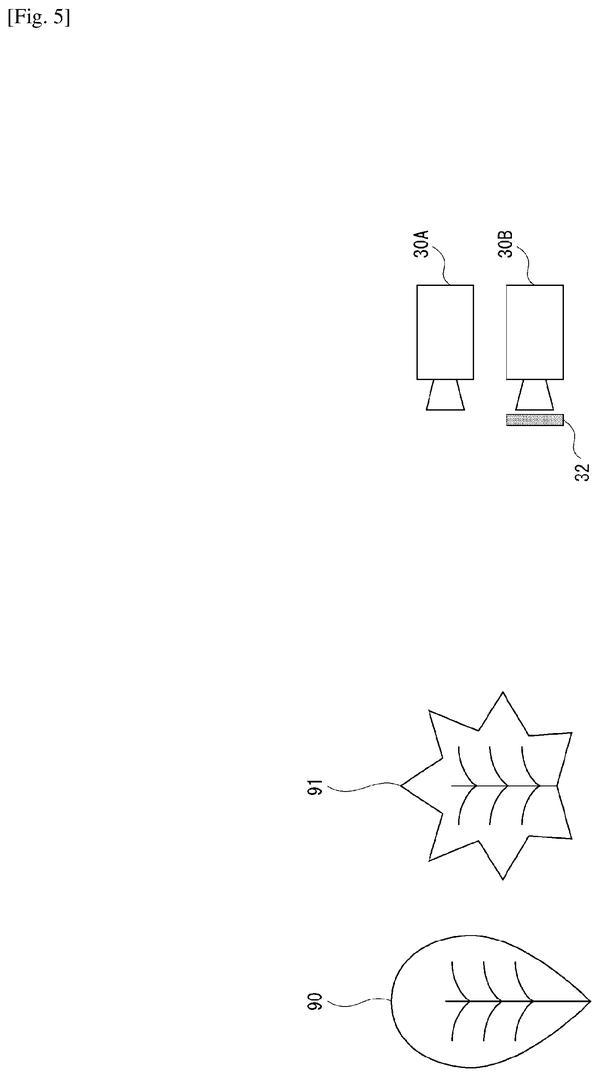
Sony's filing covers a neutral density filter (a dimming filter that cuts the light reaching a camera's sensor without shifting colors) made from liquid crystal between glass plates. The liquid goes in through a liquid crystal injection port, a small hole, into a gap ringed by a glue-like seal.
The key piece is an asymmetry forming portion, which in the main example is a small wall beside each hole. It splits the flow into a short path toward the middle of the filter and a long path along the edge. Liquid moves faster along edges, so the two fronts line up and sweep across together instead of colliding in the center.
The filing describes several ways to make the paths uneven:
- Different path lengths from the hole to the center
- Different path widths, which change flow speed and flow volume
- Walls built from the same material as the seal, printed in the same step
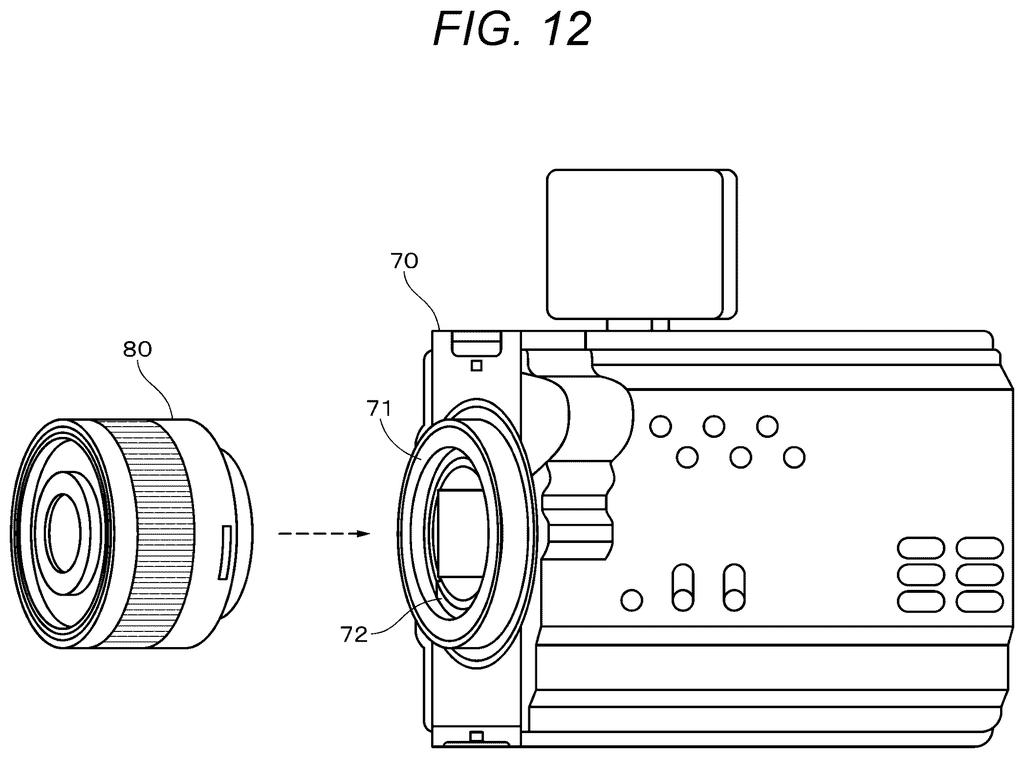
It also covers two stacked liquid layers whose fill holes line up, so one injection fills both, or filling from opposite sides. The claims reach the filter itself, a camera with a drive unit for it, and a lens adapter.
A liquid crystal is uniformly dispersed as much as possible without unevenness in a liquid crystal injection layer.
Translation: The goal is to spread the liquid crystal evenly across the screen layer so there are no blotchy spots or streaks.
Why even filling matters for camera footage
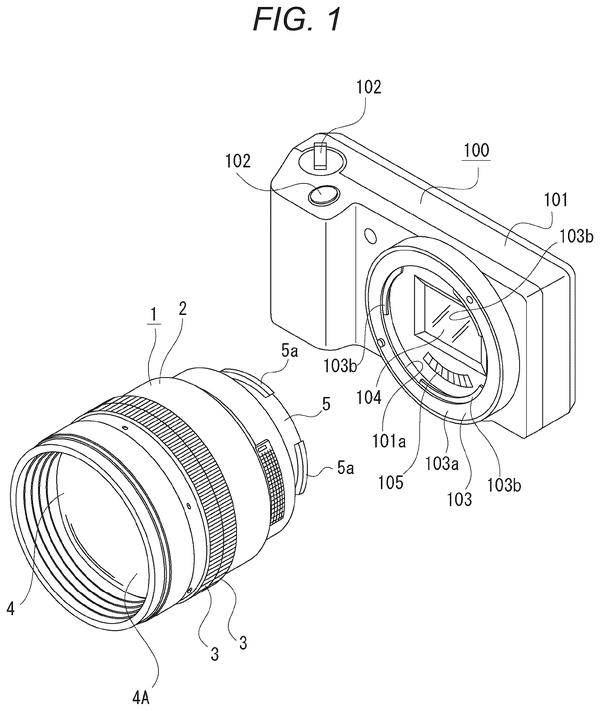
For you, this comes down to cleaner footage and photos from cameras with a built-in dimming filter. Fewer white spots and bright dots means a cleaner image, and the filing says the approach also helps the filter's strength and reliability. Two liquid layers need only three glass plates and a single fill step, which makes the filter thinner and simpler to build.
The patent office has approved this application, and once Sony pays the final fee it should be issued as a granted patent. The filing places the filter inside a camera body, a lens, or a lens adapter, but it names no specific product.
Sony's 88th camera patent we've tracked since May follows earlier applications on faster lens startup and lensless camera tuning.
Source: US 2026/0358663 A1 at the USPTO (PDF). Full patent text and figures are in the official publication.
Get our take in your Top Stories
Liked this breakdown? Add Patentlyze as a preferred source on Google, and our plain-English take shows up more often in your Top Stories the next time Sony patent news breaks.
Add Patentlyze on Google
One click.
There are more where this came from
We read every patent application Big Tech publishes and send you the ones worth knowing. Plain English, free, every week.
The drawings · 18 sheets
18 drawing sheets from US 2026/0358663 A1 · click any drawing to enlarge


Show the other 10 sheets


More from Sony
All 707 Sony patents →
More in Camera
All 268 Camera patents →
Samsung
Samsung Patents a Removable Gear to Free a Broken Rolling Projector
Samsung
Samsung Patents a Single Camera Light That Switches Between Scanning and Mapping Faces
Samsung
Samsung Patents an Image Sensor That Traps Air Between Its Color Filters
Samsung
No comments yet