

Sony
Sony · Wearable · Filed Apr 30, 2026 · USPTO published Nov 12, 2026 · This week's release
Sony Patents a Neckband That Blows Air at You as Game Enemies Close In
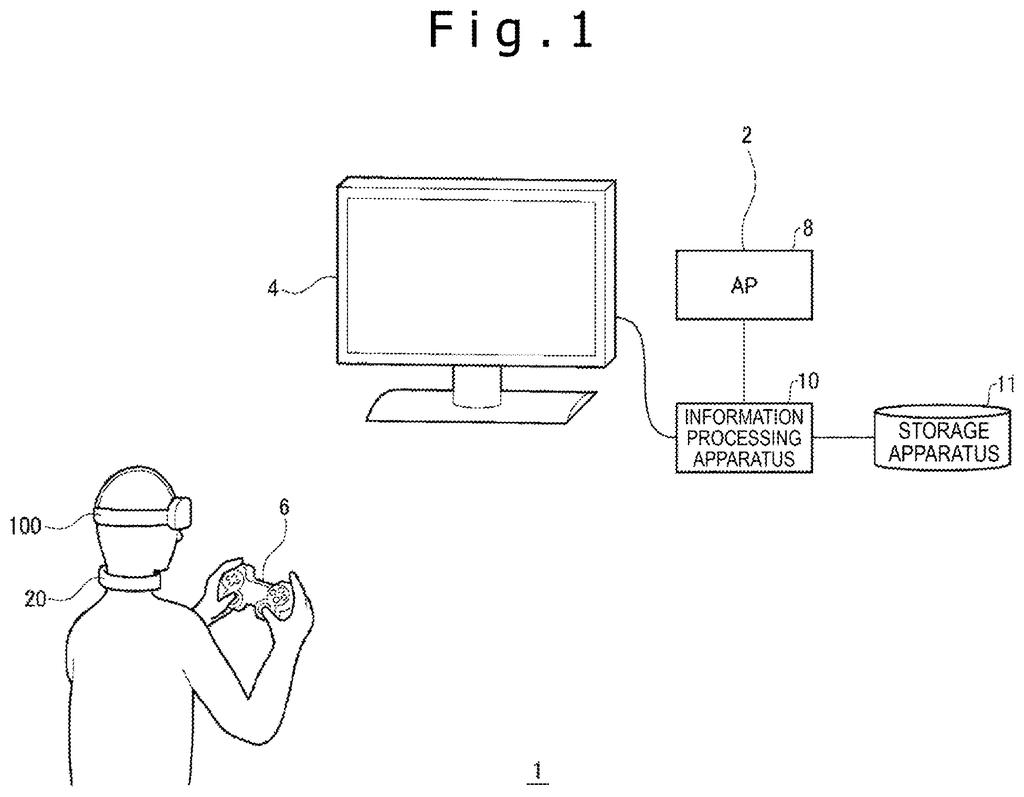
Sony has filed a patent for a neckband that blows air at you from different directions, so you can feel a VR monster creeping up behind you.
- Publication number
- US 2026/0357800 A1(US20260357800A1)
- Applicant
- Sony Interactive Entertainment Inc.
- Filed · Published
- Apr 30, 2026 · Nov 12, 2026
- Inventors
- Yasushi Okumura, Akihito Nishiike, Kentaro Yoshida, Kyosuke Uchida, Koichi Shiono
- Status when we published
- Waiting for an examiner
- Document
- 11 claims
- US classification
- 463/30
- Parent application
- Claims priority from a provisional application 63802735 (filed May 9, 2025)
What Sony's air-blowing neckband actually does
Every time you play a scary VR game, you are trusting just two senses: sight and sound. In a dark room, that is not much to go on, and the thing creeping up behind you might as well be invisible.
Sony's patent adds a third sense: touch. You wear a neckband lined with a row of small air blowers. When a monster circles you, the game tells the neckband to puff air from your front, then your right side, then the back of your neck. As the monster gets closer, the puffs get stronger and come faster.
The same trick could work for a door swinging open (a gust from the front) or for sprinting (wind in your face). The filing says it could also be used outside of games.
… supply air to one or more of the neck and a part above the neck of the user; and control the air blowing devices based on the control signal.
Translation: The collar blows air onto your face and neck when the connected game tells it to do so.
How the neckband picks which blowers fire
The device is a curved neckband that sits around your neck. Small holes on its inner surface point air at your neck, face and head. Behind the holes sit several tiny blowers. In the main example there are eight, spaced about 30 degrees apart, so each one covers a different direction.
The blowers use a piezoelectric element (a material that vibrates when electricity hits it) to move a thin plate at ultrasonic speed. That lets them start and stop almost instantly, so the air keeps pace with what is on screen.
A game console or PC does the thinking. It tracks your character and nearby objects, works out a direction, and sends a control signal to the neckband telling each blower when to run. The filing walks through a few cases:
- A door opens: the two front blowers fire, like a gust from the next room.
- An enemy circles you in the dark: blowers fire in sequence, so the breeze travels from front to right to back.
- An enemy closes in from behind: the air comes in pulses that get stronger and more frequent as the distance shrinks.
- Also described: air that follows your character's speed or direction, random puffs to build a sense of dread, and air shaped by a character's voice.
A time constant (a ramp-up delay) can make air arrive gently instead of all at once. The filing also says the neckband could work with apps other than games.
A wearable device is worn about a neck of a user. The wearable device includes: a communication unit configured to receive a control signal from an external apparatus; …
Translation: The neckband connects to your console to receive instructions about when to activate its fans.
What a neck breeze could add to VR games
If you play VR games, this is a bid to add a sense most headsets skip: touch on your skin. Headsets handle sight and sound, and controllers buzz in your hands. Air on your neck gives a game a way to warn you about something behind you that your eyes cannot catch, which matters most in the dark, tense scenes horror games love.
For Sony Interactive, the PlayStation maker, it is a way to make games feel more physical. The filing describes a headset-and-console setup but names no product, and a patent is not a release plan. It also says the neckband could serve apps beyond games, so the idea could stretch to other VR experiences. Whether people want a fan around their neck mid-game is the real test.
Sony's 14th filing we've tracked in our wearable patent coverage since June builds on earlier applications like one flagging bad heart rate readings and one filtering noise from health data.
Source: US 2026/0357800 A1 at the USPTO (PDF). Full patent text and figures are in the official publication.
Get our take in your Top Stories
Liked this breakdown? Add Patentlyze as a preferred source on Google, and our plain-English take shows up more often in your Top Stories the next time Sony patent news breaks.
Add Patentlyze on Google
One click.
There are more where this came from
We read every patent application Big Tech publishes and send you the ones worth knowing. Plain English, free, every week.
The drawings · 13 sheets
13 drawing sheets from US 2026/0357800 A1 · click any drawing to enlarge


Show the other 5 sheets


More from Sony
All 707 Sony patents →
More in Hardware
All 2,316 Hardware patents →
Qualcomm
Qualcomm Files Patent for Phone That Guides You to Your Car Through Your Watch
Samsung
Samsung Patents a Fix for Thumbnails That Don't Match the Photo You Took
Samsung
Samsung Files Patent for a Walking Aid That Corrects Its Own Hip Readings
Google
No comments yet