
Sony Patents a System That Predicts How Dangerous Each Nearby Object Is to Your Car
Most car safety systems tell you when something is close. Sony's new patent describes a system that tells you how dangerous that thing is likely to be, including what would happen if a crash were already in motion.
What Sony's danger-prediction system actually does for drivers
You're driving through a busy intersection, and a cyclist to your left is moving unpredictably. Your car's sensors see the cyclist, but the real question is: should you be worried about that specific cyclist right now, or are they fine? Sony has filed a patent for a system that tries to answer that exact question.
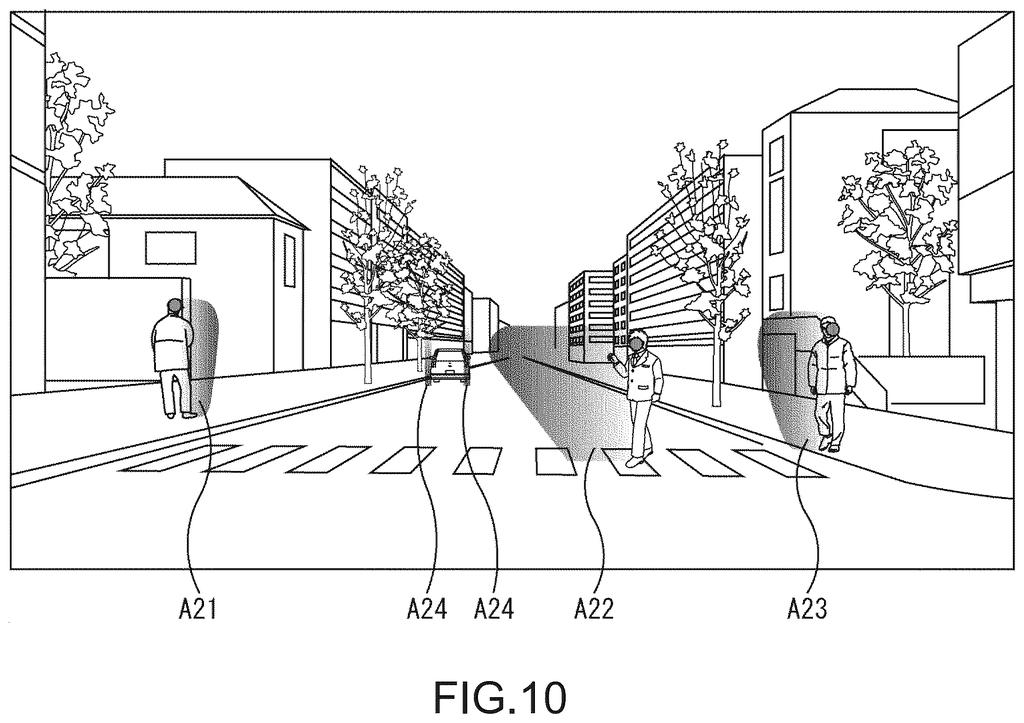
The system does two things at once. First, it predicts where nearby objects (other cars, pedestrians, cyclists) are likely to go in the next few seconds. Second, it also models what would happen if a collision were already occurring, tracing the likely path an object would take during a crash. By comparing those two pictures, it calculates a danger score for each object around the vehicle.
That score then gets shown to the driver, so instead of a simple proximity alarm, you get something closer to a ranked threat list. The idea is to cut through the noise and surface the risks that actually matter before it's too late to react.
a prediction unit which predicts movement information indicating a future movement of an object around a moving body and accident information indicating a movement of the object in a case where an accident occurs; …
Translation: The system forecasts both where nearby things are going and how they would move during a crash.
How the system models crashes that haven't happened yet
The patent describes three linked components working together inside a vehicle (or any moving object).
- Prediction unit: This piece forecasts two separate things simultaneously: the normal expected movement of objects around the vehicle (where that pedestrian is probably heading) and a separate model of how those objects would move if a collision were already happening (think of it as a crash physics simulation running in parallel).
- Calculation unit: It combines both forecasts into a single danger score for each nearby object. An object moving toward the vehicle on a normal path might score low, but one whose crash-trajectory overlaps heavily with the vehicle's path scores high.
- Presentation control unit: This takes those scores and decides what to show the driver, presenting what the patent calls "danger prediction information." The format isn't fixed in the claim, leaving room for visual overlays, audio alerts, or other outputs.
The key distinction here is the dual-track prediction. Most proximity systems ask "how close is this thing?" This system asks "how bad would it be if things go wrong with this thing?" by essentially pre-simulating the accident and then weighing that against real movement data.
… a calculation unit which calculates a degree of danger of the object on the basis of the movement information and the accident information; …
Translation: It figures out how threatening each surrounding object is by combining those movement and crash predictions.
What this means for driver-assist warnings in real traffic
Driver-assist systems today are often guilty of crying wolf: too many beeps, too many warnings, for things that pose no real threat. That alert fatigue is a documented problem, and it causes drivers to tune out the very systems designed to protect them. A danger-scoring approach that separates low-risk proximity from high-risk proximity could make warnings feel meaningful again, which is a bigger safety win than simply adding more sensors.
For Sony, this fits into its broader interest in automotive sensing and in-vehicle electronics. The system is described broadly enough to apply to any moving vehicle, not just passenger cars, which keeps the potential applications wide, covering buses, drones, or autonomous delivery vehicles. Whether it ever reaches production depends on far more than the patent itself.
Sony's 28th filing we've tracked since July in the self-driving sensing race adds to a run that includes one on keeping sensors aligned and one on picking warning sounds.
Drivers who stop trusting their car's warnings are more dangerous than drivers who never had warnings at all. That erosion happens one false alarm at a time, and once it sets in, no alert gets through, which means the whole safety system has failed at the moment it matters most.
The cost of that failure is not abstract. Unnecessary warnings train people to ignore the next one, and the next one might be the pedestrian stepping off the curb. Sony's patent tries to address this by calculating whether a nearby person or vehicle would actually be in harm's way if things went wrong, rather than alerting on anything that looks vaguely risky.
Whether the math behind that calculation holds up in messy real-world conditions is an open question. What the patent gets right is identifying the problem worth solving: a warning system that cries wolf too often is not a safety feature, it is a liability.
There are more where this came from
We read every patent application Big Tech publishes and send you the ones worth knowing. Plain English, free, every week.
The drawings
17 drawing sheets from US 2026/0296418 A1 · click any drawing to enlarge


Want this weekly breakdown for a company we don't cover? Patentlyze Pro →
Be the first to weigh in