
Toyota
Toyota · AI / ML · Filed Apr 6, 2026 · USPTO published Nov 19, 2026 · This week's release
Toyota Patents a System That Tells Robots When a Task Is Going Wrong
A robot that can follow a spoken order still has no idea when it is about to drop the pot. Toyota's research arm has filed a patent application for a watcher that reads the robot AI's own internal signals and flags trouble early.
- Publication number
- US 2026/0369045 A1(US20260369045A1)
- Applicant
- Toyota Research Institute, Inc.
- Filed · Published
- Apr 6, 2026 · Nov 19, 2026
- Inventors
- Qiao Gu, Yuanliang Ju, Shengxiang Sun, Igor Gilitschenski, Haruki Nishimura, Mikhal ltkina, Florian Shkurti
- Status when we published
- Waiting for an examiner
- Document
- 20 claims
- US classification
- 382/155
- Parent application
- Claims priority from a provisional application 63806272 (filed May 15, 2025)
What Toyota's robot failure detector does
Ever watched a robot vacuum push at the same chair leg over and over, totally unaware it's stuck? Machines that follow instructions are often bad at noticing when things are going wrong. That matters a lot more when the robot is an arm carrying a hot pot.
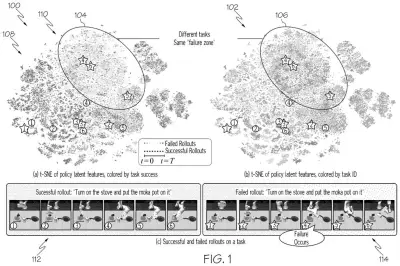
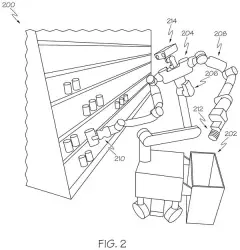
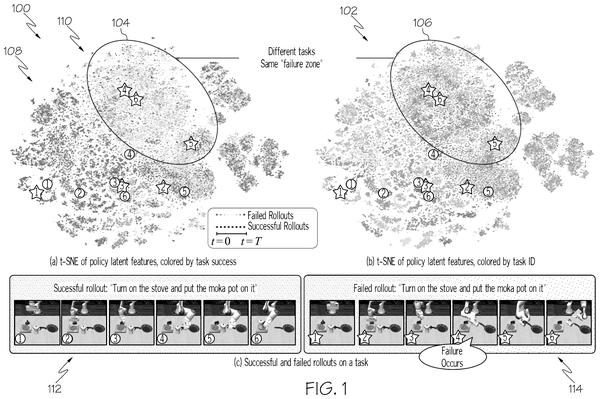
Toyota Research Institute's patent application describes a watcher that sits beside a robot's AI brain. The AI takes in camera images and a written instruction like "put the pot on the stove," then produces movements. The watcher peeks at the AI's internal numbers as it works and boils them down to a single score: how likely is this going wrong?
If that score crosses a limit, the robot can stop, back up, or send you an alert. The limit isn't fixed. It shifts as the task goes on, and it is set using examples of the robot doing things right.
extract features from one or more layers of a vision-language-action (VLA) model; predict a failure score by processing the features; determine a time-varying threshold for detecting a failure by the VLA model …
Translation: The system analyzes the robot brain's inner workings to calculate a score for potential errors over time.
How the score and moving threshold work
Toyota's filing covers a failure detector that attaches to a vision-language-action (VLA) model, an AI that takes camera images plus a written instruction and outputs robot movements. The detector works in three steps:
- Read the features. It pulls the model's internal numbers (called features) from the last layer, just before they turn into movements.
- Score the risk. A small neural network, either an MLP (a simple stack of layers) or an LSTM (a network that remembers earlier steps), turns those numbers into one failure score that updates as the task goes on.
- Compare to a moving limit. The limit comes from functional conformal prediction (a statistical method) applied to a held-out set of successful runs, so it changes over time. At the setting the filing favors, false alarms on successful runs are meant to be capped at about 15 percent.
When the score crosses the limit, the system can send a control signal to stop or back up, or send an alert to a user device.
The filing says the detector was trained on some tasks and tested on tasks it had never seen, using three existing robot AI models in simulation and on real robots. It adds about 0.73 milliseconds, against 149 milliseconds for the underlying model.
… detect the failure based on the failure score exceeding the time-varying threshold; and perform an action in response to detecting the failure.
Translation: It flags a mistake when the error score gets too high and then takes steps to fix the problem.
Why robots need to know when they're failing
If robots are going to work around people, they need a way to say "this isn't going well" before something breaks or spills. This detector aims to give robot AI that habit without slowing it down, and without needing a fresh round of training for every new chore. Because the claims also mention vehicle control, the idea isn't limited to robot arms.
The limits are worth knowing. The filing admits the detector needs hundreds of success and failure examples from other tasks before it can work, and on varied real-world tasks its accuracy was modest. It also only raises the alarm. It doesn't make the robot any better at the job.
Source: US 2026/0369045 A1 at the USPTO (PDF). Full patent text and figures are in the official publication.
Get our take in your Top Stories
Liked this breakdown? Add Patentlyze as a preferred source on Google, and our plain-English take shows up more often in your Top Stories the next time Toyota patent news breaks.
Add Patentlyze on Google
One click.
There are more where this came from
We read the new patents from Big Tech, carmakers and more and send you the ones worth knowing. Plain English, free, every week.
The drawings · 18 sheets
18 drawing sheets from US 2026/0369045 A1 · click any drawing to enlarge


Show the other 10 sheets


More from Toyota
All 16 Toyota patents →
More in AI / ML
All 2,745 AI / ML patents →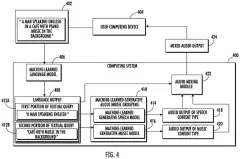
Google
Google Patents an AI That Splits Your Sound Request Into Speech, Music and Noise
Wing (Google)
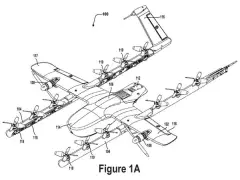
Wing Files Patent for Drone Deliveries That Tell You in Words Where Your Package Landed
Google
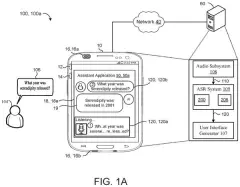
Google Patents a Speech Recognizer That Types Fast, Then Fixes Its Own Mistakes
Samsung
No comments yet