
Toyota
Toyota · Robotics · Filed Dec 31, 2025 · USPTO published Nov 19, 2026 · This week's release
Toyota Files Patent for a Grocery Robot That Picks the Easiest Item From a Pile
Toyota Research Institute describes a shopping robot that doesn't just grab the first apple it sees. It scores every item in a bin, picks the least-buried one, and tries suction first, then switches to a two-finger gripper if the vacuum seal fails.
- Publication number
- US 2026/0364809 A1(US20260364809A1)
- Applicant
- Toyota Research Institute, Inc.
- Filed · Published
- Dec 31, 2025 · Nov 19, 2026
- Inventors
- Carolyn C. Matl, Isabella Huang
- Status when we published
- Waiting for an examiner
- Document
- 20 claims
- US classification
- 700/246
- Examiner
- KHAYER, SOHANA T (Art Unit 3657)
- Parent application
- Claims priority from a provisional application 63805403 (filed May 14, 2025)
What Toyota's pile-picking robot actually does
You're standing at the produce display, and a bin of oranges is heaped up in front of you. Your hand goes to the ones on top without thinking, because digging out one from the bottom would send the rest rolling. A robot has no such instinct, so it needs a rule for the choice.
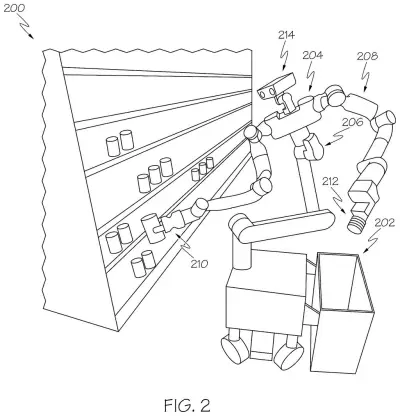
Toyota's filing describes that rule. Cameras on a wheeled robot photograph the pile, and software draws a box around each item and gives each one a grasp score. Items that sit higher and bump into fewer neighbors score better. The top scorer is the least-occluded item, meaning the one least blocked by everything else.
The robot then tries to pick it up with a suction cup. If the suction doesn't hold, it lets go and tries again with a pair of gripper fingers on its other arm.
… identify the object in a highest-ranked bounding box as a least-occluded object; extract one or more geometric features of the least-occluded object from the image data; select a suction grasp strategy to acquire the least-occluded object …
Translation: The system finds the easiest item to grab and chooses the best suction method to pick it up.
How the robot ranks items and falls back to fingers
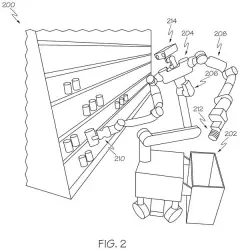
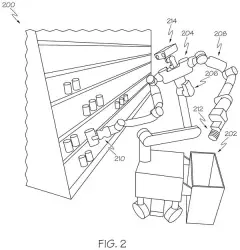
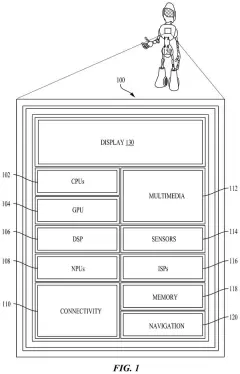
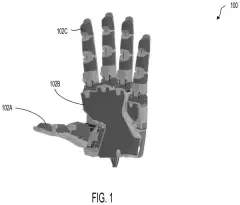
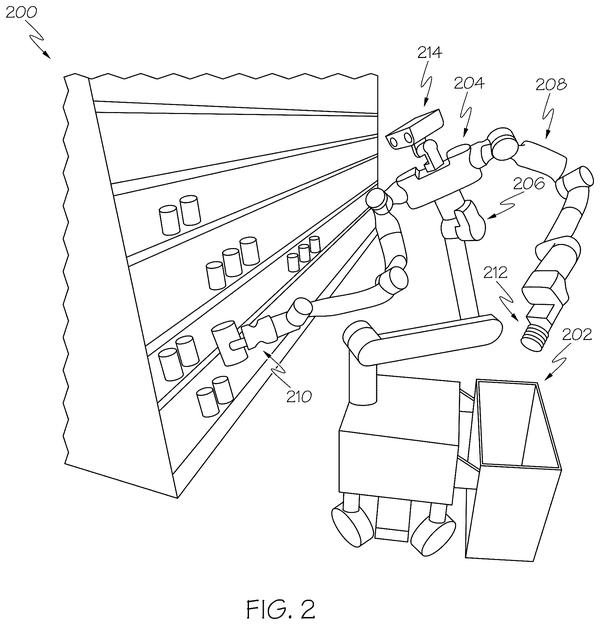
The patent covers a mobile robot with two arms, one fitted with a suction gripper and the other with a two-finger gripper. It takes in pictures from several cameras, then splits the image into bounding boxes (a rectangle around each item in the bin or pile).
For each box, the system builds a 3D map of the item from depth readings, then fits a simple egg-like shape around it (a minimum volume containing ellipsoid, the smallest 3D oval that holds the item). That shape is broken into tiny cubes called voxels, which let the software count how many places the item would collide with the bin walls or its neighbors. The grasp score comes from the item's estimated height, that collision count, or both.
The highest-ranked item is treated as the easiest to reach. The robot picks a suction point on the top of the item's oval shape, where the surface faces directly up. It then moves in along a straight line, presses the cup on, and checks a pressure sensor.
- If the vacuum reading meets a set threshold, the robot pulls the item straight back along that same line.
- If it falls short, the robot releases and tries a finger grasp instead.
For the finger grasp, it lists pairs of contact points on opposite sides of the item and ranks them by how much of the item fits between the fingers. The deepest fit wins.
Disclosed herein are apparatus, method, and computer-readable medium embodiments for providing grasp strategy for manipulation of items in bins or piles.
Translation: This patent covers technology designed to help robots grab items out of messy containers.
Why grocery picking is a hard test for robots
The description frames this around grocery stores and warehouses, where one robot has to handle a long shopping list of very different items. Produce piled in a bin is a hard case, because the items are loose and blocking each other. The patent's own background says a one-percent drop in success rate matters more at the system level than a gain in speed, which explains the built-in backup plan.
For you, the practical stake is a robot that could one day fill an online grocery order without crushing or dropping the fruit. The filing describes a robot that reads a shopping list, drives to each item and places it in a basket. It is a patent filing, not a product announcement, so nothing here says when or whether such a robot will reach a store.
Toyota's second filing in the robotics patents we cover since November builds on their earlier robot error detection work.
Source: US 2026/0364809 A1 at the USPTO (PDF). Full patent text and figures are in the official publication.
Get our take in your Top Stories
Liked this breakdown? Add Patentlyze as a preferred source on Google, and our plain-English take shows up more often in your Top Stories the next time Toyota patent news breaks.
Add Patentlyze on Google
One click.
There are more where this came from
We read the new patents from Big Tech, carmakers and more and send you the ones worth knowing. Plain English, free, every week.
The drawings · 7 sheets
7 drawing sheets from US 2026/0364809 A1 · click any drawing to enlarge


More from Toyota
All 16 Toyota patents →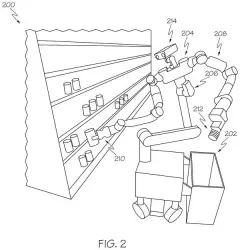
More in Hardware
All 2,375 Hardware patents →
Tesla
A New Tesla Patent Gives Robot Fingers Cables That Work Like Tendons
Samsung
Samsung Files Patent for a Robot Finger That Bends and Straightens With One Motor
Sony
Sony Patents a Motorized Clip-On That Physically Presses Your Controller Buttons
Tesla
No comments yet