
Zoox Files Patent for Parking Spots That Tell a Robotaxi Where It Is
A self-driving car that gets towed or rebooted can lose track of where it is. Zoox's answer is a list of distinctive check-in spots, like charging bays and parking spaces, that the car can look for and match against a stored 3D map.
What Zoox's robotaxi check-in spots actually do
Today, a self-driving car that has been switched off, rebooted or towed has to work out where it is before it can safely drive again. If its stored location is wrong, everything built on top of it, from spotting obstacles to planning a route, starts from a bad guess.
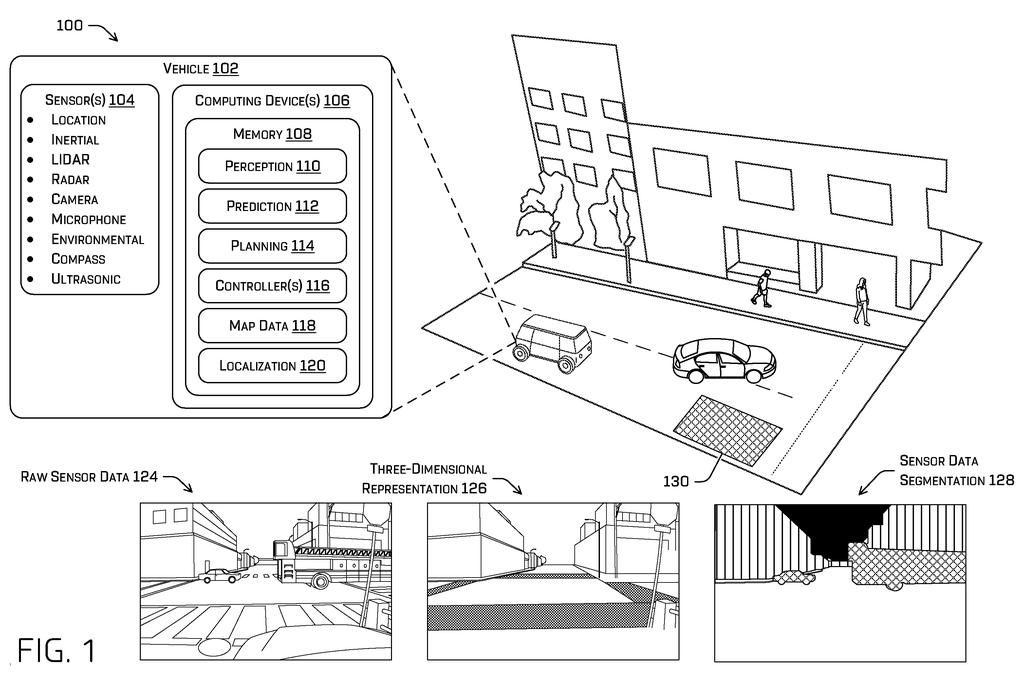
Zoox's filing describes a fix: a list of pre-chosen check-in spots around a city, such as charging stations, parking spaces and areas near service depots. Each one looks different enough from the others that a car can tell them apart by comparing what its sensors see with a stored 3D map. The car can ask a remote server for the nearby options and get the map for each one.
Once the car matches a spot, it uses that spot's known address to work out its own exact position and direction, then gets back to work.
In order to operate reliably and effectively, an autonomous vehicle may at least partially rely on accurately determining an initial position and orientation of the vehicle within the environment.
Translation: Self driving cars need to know exactly where they are before they can safely drive.
How a Zoox robotaxi picks a spot and checks in
The filing covers three related pieces. The first is a remote server that helps a vehicle restart its sense of place. The vehicle sends a rough guess of its location (from GPS, its last saved position, or cell-tower signal strength). The server picks a set of nearby candidate initialization locations (the check-in spots) and sends back those spots along with the stored map data for each.
The vehicle then compares its live sensor readings to each spot's map, which is a stored 3D picture of the surfaces around it. If its confidence score is too low, the server can pick the best spot for it. That choice can weigh distance, whether the car can get there, and whether the spot is free.
A second claim covers a simpler route: the car spots a known landmark (a QR code, barcode, RFID tag, or a physically unique object), measures where it sits relative to it, and adds that offset to the landmark's known location. Moving people and cars are filtered out first.
The third piece is how the spots get created:
- Software samples map data along roads at set intervals.
- It checks for a parkable spot nearby, such as a road shoulder, garage or charging area.
- It simulates noise, fog, blocked views and moving objects, then compares the spot with existing ones.
- It adds the spot only if it looks different enough, then sends the updated list to the fleet.
… transmitting, to the vehicle via the network, the set of candidate pose initialization locations and map data associated with individual pose initialization locations of the set of candidate pose initialization locations; …
Translation: The system sends the car a list of possible parking spots and matching map details to help it figure out its location.
Why a robotaxi that gets lost costs Zoox time
Any driverless fleet has to restart cars constantly: after charging, after repairs, after software updates, after a sensor gets bumped. Each restart needs a quick, reliable way to confirm where the car is. A pre-built list of check-in spots turns that into a lookup instead of a puzzle, and the filing says this could cut the time a vehicle sits out of service.
For riders, the benefit is mostly invisible. A car that knows its position and direction precisely plans safer moves. The filing also describes what happens when the car cannot find a good match: it can drive toward a spot, wait, or ask a remote human operator for help. That gives the system fallback options when a car is stuck in a tunnel or surrounded by crowds.
Amazon's 36th filing we've tracked since May in the self-driving sensing race adds to a run that includes ice and crowd warnings and street capability decisions.
You will probably never notice this feature, and that is the point. The moment you would notice it is when it fails, with a robotaxi that pulls out of a depot slightly off from where it thinks it is, and then makes every subsequent decision from a flawed starting point.
The detail that matters most for riders is the fallback behavior. If a car is surrounded by pedestrians and cannot get a clean read on its surroundings, the system has it stay put and keep checking, or ask a remote operator for help. That is a sensible way to handle a bad moment rather than letting a confused car guess its way into traffic.
The software that invents new check-in spots by simulating fog, noise and blocked views is the most practical idea here. Those spots are tested against bad conditions before any car depends on them, which keeps a fleet from needing a human to drive out and rescue a vehicle that simply does not know where it is.
Get our take in your Top Stories
Liked this breakdown? Add Patentlyze as a preferred source on Google, and our plain-English take shows up more often in your Top Stories the next time Amazon patent news breaks.
There are more where this came from
We read every patent application Big Tech publishes and send you the ones worth knowing. Plain English, free, every week.
The drawings
5 drawing sheets from US 2026/0346869 A1 · click any drawing to enlarge


Want this weekly breakdown for a company we don't cover? Patentlyze Pro →
Be the first to weigh in