Latest cybersecurity patents
Fraud detection, encryption, sign-in and privacy controls from Microsoft, Google, IBM, Apple and others. The cybersecurity and privacy patent applications we have broken down from the companies we track, newest first.
- in the Nov 12 release
- 8
- in November so far
- 27
- filings tracked
- 341
- last 90 days
- 143
Recent filings
Newest first · 341 total-
OpenAI · Published Nov 5
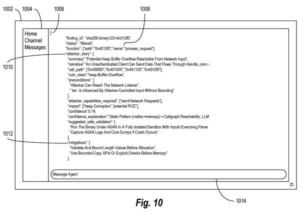
OpenAI Files Patent for AI That Hunts Security Holes in Finished Software
OpenAI's patent application describes an AI that reads the compiled code inside a finished app, flags the pieces that look dangerous, and writes up how an attacker could break in through each one.
-
Google · Published Nov 5
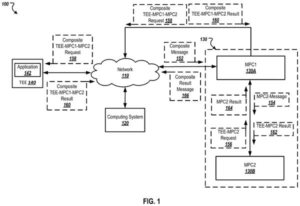
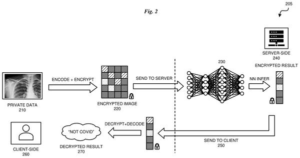
Google Patents a Faster Way to Crunch Private Data Without Exposing It
Google wants computers to work on your private data without ever seeing it, and it has a speed trick: rebuild the data for a split second inside a sealed-off piece of a chip, do the slow part there, then scramble the answer again.
-
Microsoft · Published Nov 5
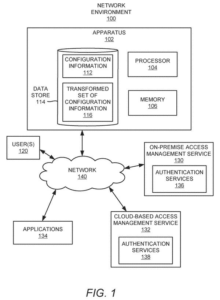
Microsoft Patents a Readiness Check for Moving Work Logins to the Cloud
Moving a company's work sign-in system to the cloud means rebuilding the settings for every app, one by one. Microsoft's patent describes software that translates those settings and checks each app first, so the ones that would break stay put.
-
Microsoft · Published Nov 5
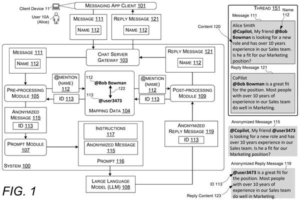
Microsoft Files Patent for Hiding Your Name From the AI in Group Chats
When someone @-mentions you in a group chat, an AI helper should be able to reply to you by name. Microsoft's patent application describes a way to do that without the AI ever seeing your name: a fake tag goes in, and the real name comes back out.
-
Google · Published Nov 5
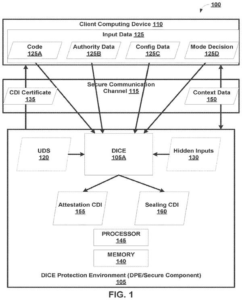
Google Files Patent for a Locked Vault That Guards Your Phone's Startup Secrets
Every time a device starts up, it handles secrets that prove it hasn't been tampered with. Google's filing moves those secrets into a separate protected component that does the sensitive math so the rest of the device never sees them.
-
Microsoft · Published Nov 5
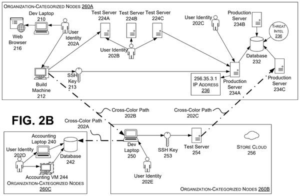
A New Microsoft Patent Flags Suspicious Computer Connections by Checking Who Normally Talks to Whom
Microsoft's patent application tries to spot hackers moving between computers by asking one question: does this connection cross lines it normally wouldn't? The more lines it crosses, the louder the alarm.
-
Qualcomm · Published Nov 5
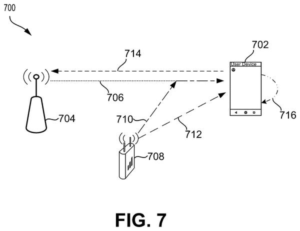
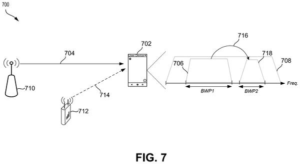
Qualcomm Patents Technology to Detect and Report Fake Network Connection Requests on Phones
Some of the control messages that tell your phone to reconnect to a cell tower travel without encryption, so a nearby attacker could fake one. Qualcomm's patent application has the phone watch for fishy timing and tell the network when something looks off.
-
IBM · Published Nov 5
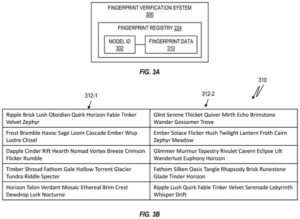
IBM Files Patent for a Secret Quiz That Proves an AI Model Is the Real One
IBM's filing describes a hidden quiz trained into an AI model: ask the right secret question, and only the genuine model gives the exact right answer.
-
IBM · Published Nov 5
A New IBM Patent Lets Chips Skip Steps When Crunching Encrypted Data
IBM has filed a patent application for a chip design that lets some encrypted calculations finish in as few as 1 or 2 steps, where older designs take 12. It does this by adding a few switches to circuits that chips already have.
-
Qualcomm · Published Nov 5
A New Qualcomm Patent Teaches Phones to Spot Fake Signals That Cut Off Service
One forged message can send your phone to a corner of the 5G channel where nobody is listening, and your connection stalls. Qualcomm's patent gives the phone a way to catch the trick and tell the network.
-
IBM · Published Nov 5
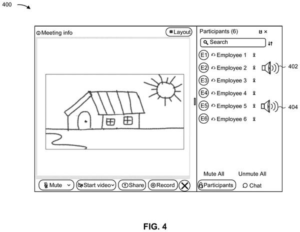
IBM Files Patent for a Meeting Tool That Tells Others When You're on Speakerphone
Your laptop would listen to its own speaker, then tell everyone else in the meeting when your call is leaking out loud.
-
Samsung · Published Nov 5
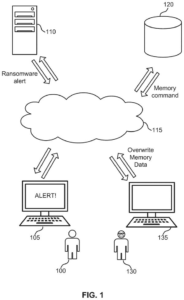
Samsung Patents an AI Guard Built Into Your Storage Drive to Stop Ransomware
Most ransomware defense runs inside your operating system, which is exactly what attackers try to switch off. Samsung's filing puts the watchdog inside the storage drive itself.