
Waymo Patents System That Reroutes Drop-Offs Away From Bad Weather
Nobody wants to step out of a self-driving car into a downpour. Waymo is patenting a system that reroutes you to a better drop-off spot when the weather at your original destination is miserable.
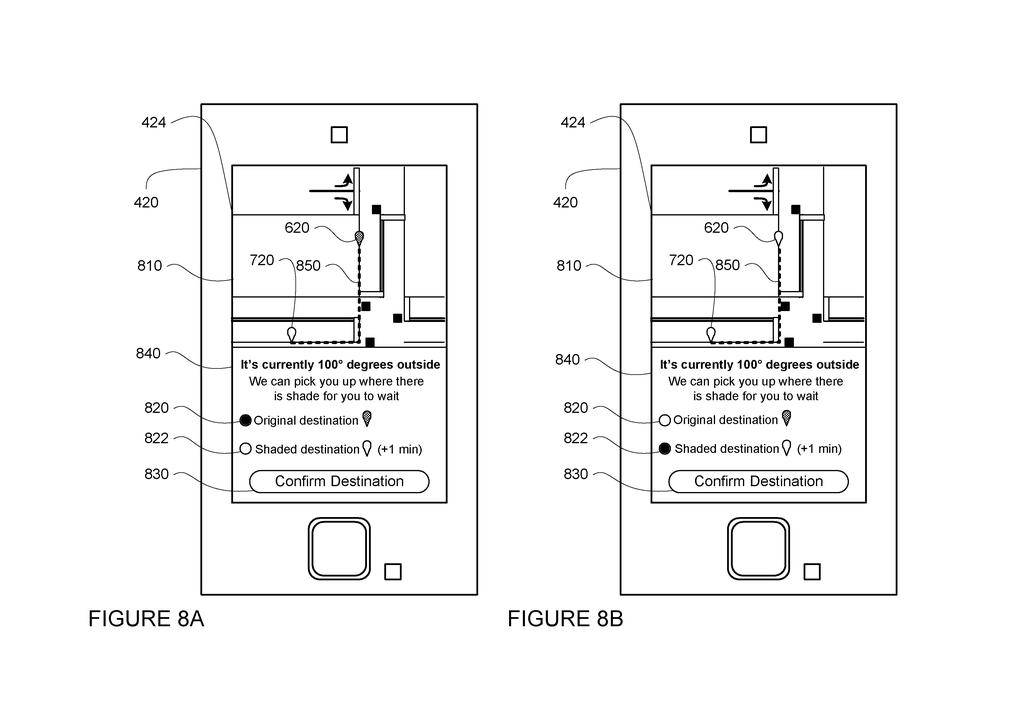
How Waymo's weather-aware drop-off routing works
Imagine you've booked a Waymo ride and your destination is a building entrance that's fully exposed to the rain. The car is already on its way, but a better covered spot exists just around the corner.
That's the problem this patent addresses. Waymo's system checks the weather at your drop-off point while the vehicle is still driving, looks for a nearby alternative that would shield you from the conditions, and then runs a quick comparison: is the detour worth it? If the answer is yes, the car adjusts course on its own, no input from you required.
The goal is simple: get you out of the car without getting soaked, frozen, or baked. It's the kind of small thing a thoughtful human driver would do automatically, translated into software that a driverless vehicle can run on every trip.
determining, by one or more processors, a characteristic associated with reduction of an impact of a weather condition at the first destination on a passenger; determining, by the one or more processors, a difference between the first cost and a second cost associated with travel to a second destination …
Translation: The car calculates if it is worth paying more to drop you off at a spot that keeps you out of the rain or snow.
How the vehicle compares destination costs mid-trip
The patent describes a method that runs while an autonomous vehicle is already en route to a destination. Here's how the system works step by step:
- Weather check at the original destination: The vehicle's processors pull live weather data for the drop-off point, identifying conditions like rain, snow, or extreme heat.
- Characteristic matching: The system defines a "characteristic" that would reduce the weather's impact on the passenger, such as being covered, sheltered, or on the leeward side of a building.
- Candidate destination search: A second nearby destination that has that characteristic is identified. This alternate stop is different from the original one.
- Cost comparison: The system computes a "cost" for each route. Cost here likely means a combination of distance, travel time, and convenience, not just dollars. The two costs are compared.
- Dynamic rerouting: Based on that comparison, the vehicle sets the better option as the active destination and proceeds autonomously.
The comparison step is important: the system doesn't always pick the sheltered spot. If the detour adds too much cost (too far out of the way, or too much extra time), the original destination can win. The patent frames this as a trade-off the vehicle resolves automatically, without requiring passenger input mid-trip.
Weather information for the first destination may be received. A characteristic is determined based on the weather information. A second destination having the characteristic may be selected. The second destination may be different from the first destination.
Translation: The vehicle checks the local weather and decides to drop you at a nearby location that is more comfortable.
What this means for autonomous ride comfort
Passenger comfort might sound like a soft feature, but for a driverless car service it's a real competitive differentiator. One of the friction points people cite with autonomous vehicles is the loss of human judgment: a human driver can scan ahead, notice the bus shelter, and pull up next to it without being asked. This patent is Waymo's attempt to build that same contextual awareness into software, applied to something every rider experiences on a rainy day.
For riders in cities where weather is unpredictable, this kind of automatic adjustment could meaningfully change how the service feels day-to-day. It also fits into a broader pattern of autonomous vehicle makers layering in environmental awareness beyond just obstacle avoidance. Waymo's autonomous drop-off routing sits alongside the interesting tech patents covering how vehicles and devices increasingly read the physical world to make better micro-decisions on a rider's behalf.
Google's 47th filing we've tracked since May in our self-driving sensing race builds on its work around blind-spot data sharing and adjustable sensor fields.
The reader who will notice this feature most is the person stepping out into heavy rain with their hands full and no umbrella. For that person, an automatic reroute to a covered entrance is a small but real improvement to the trip, the kind that makes a service feel considerate rather than mechanical. The cost-comparison step is the detail that keeps this from being a gimmick: the car won't drag you three blocks out of your way just to find a canopy, so the feature is designed to activate only when it actually helps.
There are more where this came from
We read every patent application Big Tech publishes and send you the ones worth knowing. Plain English, free, every week.
The drawings
10 drawing sheets from US 2026/0243575 A1 · click any drawing to enlarge


Want this weekly breakdown for a company we don't cover? Patentlyze Pro →
Be the first to weigh in