
Microsoft Patents a Way to Make AI Image Generators Hit an Exact Color
Getting an AI image generator to produce your company's exact shade of blue is notoriously hard. Microsoft's new patent describes a method that locks AI output to a specific color by hitting it from three directions at once.
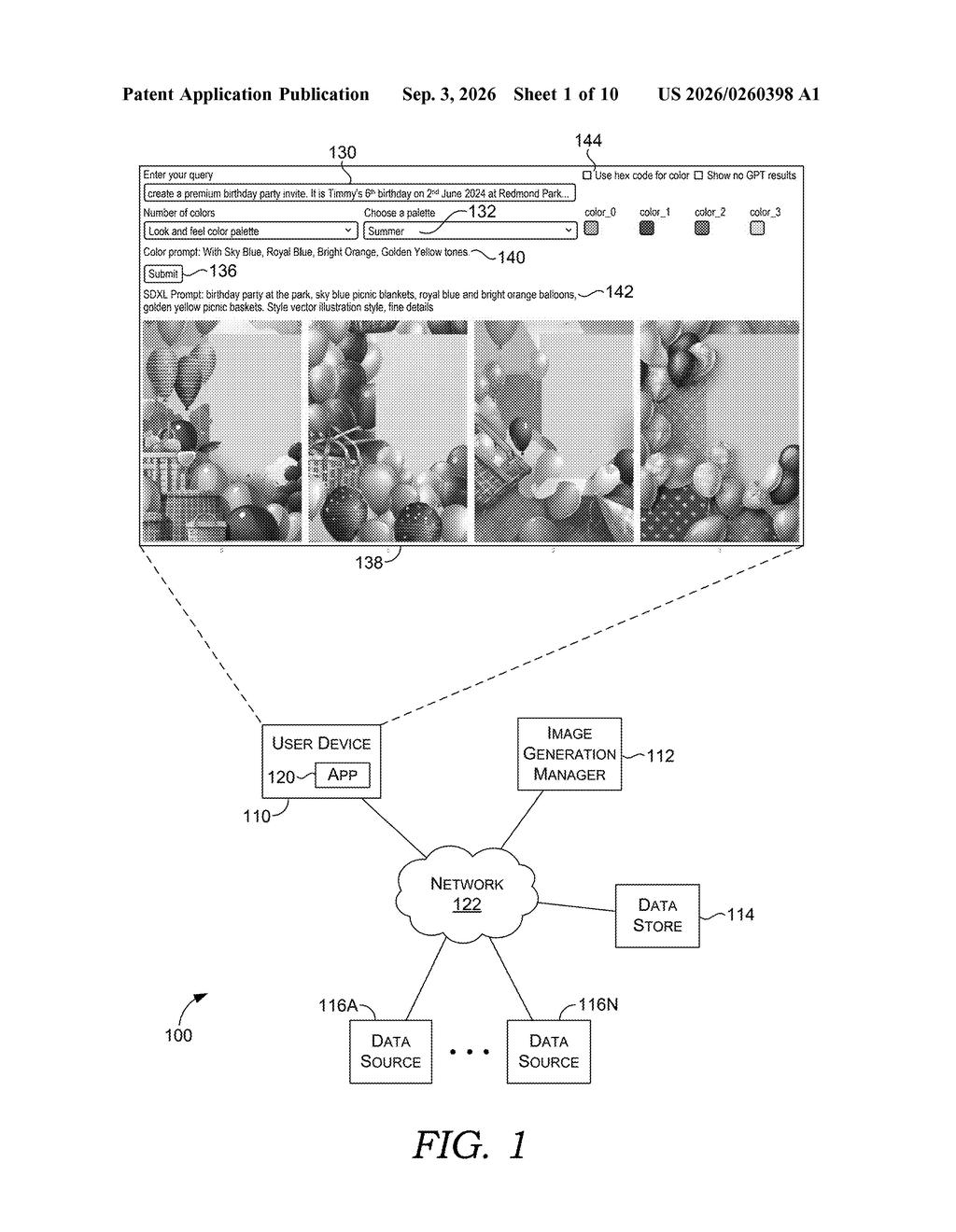
What Microsoft's color-locked AI image system actually does
Imagine you're a designer who needs an AI to generate product photos using your brand's precise coral-orange, hex code #E8632A. You type the color name into the prompt and the AI produces something close but not quite right, a slightly brighter orange, or a more reddish one. That gap between "close" and exact is the problem Microsoft is trying to solve.
The patent describes a system that bundles color information into the request three ways at once: a plain-text color name ("coral orange"), a color code (the specific hex or RGB number designers use to pin down a color exactly), and a modified reference image that's been visually adjusted to feature that color. The AI model sees all three signals together before it generates anything.
The result, according to the filing, is an image that actually matches the target color rather than approximating it. For anyone doing brand work, marketing materials, or any creative project where color consistency matters, that's a meaningful step up from what most AI tools offer today.
generating a text prompt including a first color signal representing a textual description of a color and a second color signal representing a color code associated with the color …
Translation: The system builds a prompt using both a word for the color and its exact digital code.
How the dual color signal and reference image work together
The system works by constructing two kinds of input, called prompts, that are fed to an AI image generator simultaneously.
The first is a text prompt that carries two color signals. The first signal is a natural-language description of the color (for example, "a deep navy blue"). The second signal is a color code, the kind of precise numeric identifier (such as a hex code like #1B2A6B) that graphic designers use in tools like Photoshop to specify an exact shade with no ambiguity.
The second input is an image prompt built around a "color-enhanced reference image." The system takes a reference image and adjusts it so the target color is visually prominent inside it. That altered image is passed to the AI generator alongside the text prompt.
- The text description tells the model roughly what color family to aim for.
- The color code gives the model a precise numeric target.
- The color-enhanced reference image shows the model what that color actually looks like in a visual context.
By combining all three signals, the system tries to reduce the drift that normally happens when AI models interpret color from text alone. The generated image is then returned and displayed through a user interface.
… an image prompt is generated that includes a color-enhanced reference image generated in accordance with the color …
Translation: It also creates a special reference image tuned to show the correct color.
What this means for designers and branded content
Color accuracy is one of the most persistent frustrations with AI image generation in professional settings. Brand guidelines, product photography, and marketing assets all depend on hitting specific colors consistently, and most AI tools treat color as an approximation rather than a specification. Microsoft's run of AI creative-tool filings suggests the company sees this as a gap worth closing at the infrastructure level, not just through post-processing filters.
For everyday users, this could mean asking an AI image tool to generate a birthday card in "your grandmother's favorite dusty rose" and getting something that actually matches the color you pinned from a photo rather than a generic pink. For professionals, it opens the door to AI-assisted design work that doesn't require manual color correction every time.
This is the third Microsoft filing we've tracked since July in our AI photo editing race watchlist, following applications on poor lighting in video calls and scrubbing camera sensor noise.
Claim 1 covers any computing system that does three specific things together: writes a color description in plain language, pairs it with a color code, and adjusts a reference image to reflect that color before feeding everything into a final image generator. The protection lives in that complete sequence, not in any single step.
That combination is broad enough to cover a wide range of creative tools. Any product that guides an image generator using both a color code and a color-adjusted reference image, regardless of how the software is built underneath, would fall within what this claim describes.
Whether that coverage holds depends on whether earlier tools already assembled these same ingredients in this same order. Microsoft only needs to show that this particular three-part combination was new, and that question will decide how much real-world leverage this patent carries.
Get our take in your Top Stories
Liked this breakdown? Add Patentlyze as a preferred source on Google, and our plain-English take shows up more often in your Top Stories the next time Microsoft patent news breaks.
There are more where this came from
We read every patent application Big Tech publishes and send you the ones worth knowing. Plain English, free, every week.
The drawings
10 drawing sheets from US 2026/0260398 A1 · click any drawing to enlarge


Show the other 2 sheets


Want this weekly breakdown for a company we don't cover? Patentlyze Pro →
Be the first to weigh in