
IBM Patents a System That Reshuffles Computing Power for AI Jobs Mid-Run
Running an AI job on a server is a bit like trying to bake a complicated dish without knowing how many burners you'll need until you're already cooking. IBM has filed a patent for a system that watches an AI task in real time and automatically reassigns computing power before things go sideways.
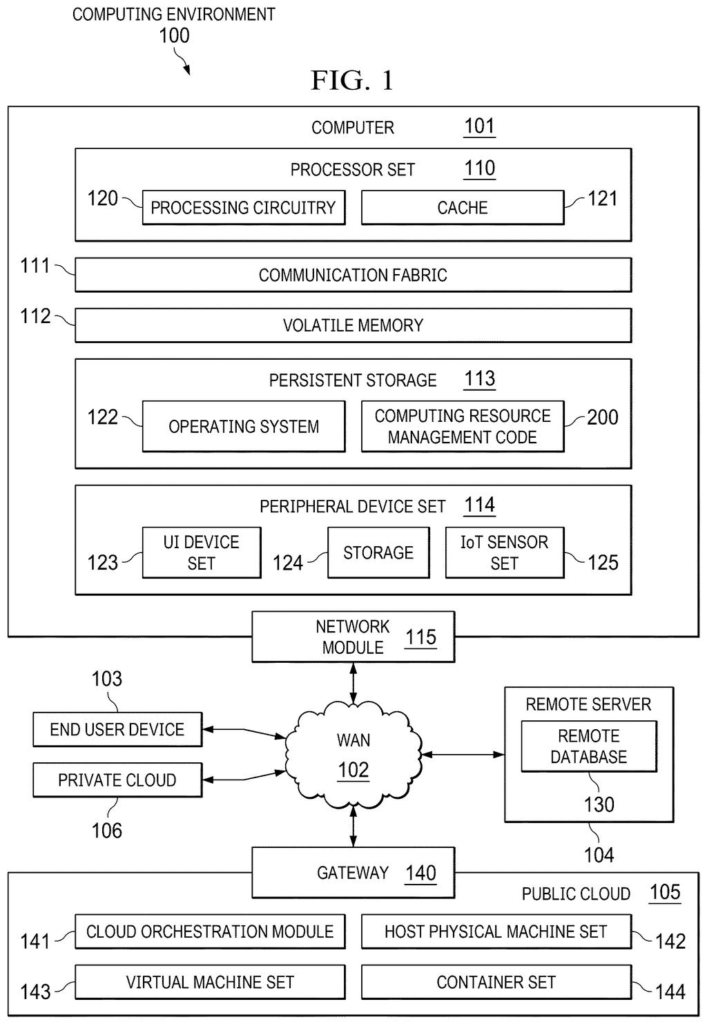
What IBM's mid-run AI resource juggling actually does
Imagine you're running a big AI program on a company server, and halfway through, the program suddenly needs a lot more power than it started with. Most systems today either over-provision resources from the start (wasteful) or let the job slow down until a human steps in (slow and frustrating).
IBM's patent describes a system that watches your AI workload as it runs and uses that live data to forecast what computing resources it will need in the near future. If the forecast says the job is about to outgrow its current allocation, the system automatically shifts resources around, without waiting for anyone to notice or intervene.
The key word here is automatic. Instead of a human logging into a dashboard and manually scaling things up, the system handles it on its own, in real time. That means AI jobs run more efficiently, with less wasted capacity and fewer slowdowns.
generating time series predictions of future allocation of number and type of computing resources needed on a compute node to run an Artificial Intelligence (AI) workload based on real-time performance data …
Translation: Forecasting the hardware needs of an AI task using live performance data.
How the time-series forecaster triggers live resource shifts
The patent describes a three-step loop running continuously on a compute node (think: a single powerful server or a virtual machine in a cloud cluster).
- Step 1, Observe: The system collects real-time performance data from the AI workload as it runs. This includes metrics like CPU usage, memory consumption, and GPU load.
- Step 2, Forecast: It feeds that data into a time-series prediction model (a type of algorithm that spots patterns over time and extrapolates them into the future, similar to how a weather app predicts tomorrow's temperature from today's trend). The output is a prediction of how many and what type of computing resources the workload will need going forward.
- Step 3, Act: If the forecast shows a mismatch between what's currently allocated and what's coming, the system automatically reallocates resources on the fly, adjusting the number of processors, memory blocks, or other compute types without pausing the job or waiting for a human.
Critically, the patent covers both the number of resources (scale up or down) and the type (swap CPU-heavy allocation for GPU-heavy allocation, for example). That two-dimensional flexibility is the distinguishing angle here, since many existing autoscaling tools only adjust quantity, not kind.
What this means for companies running big AI workloads
For companies running AI training or inference jobs in the cloud or on private servers, wasted compute time is wasted money. Over-provisioning (reserving too much) is expensive; under-provisioning causes slowdowns that ripple through downstream systems. A tool that continuously right-sizes resources mid-job could meaningfully cut both problems.
The practical beneficiaries are IT and cloud operations teams at large enterprises, where IBM's track record in enterprise infrastructure patents gives the company credibility in selling this kind of tool. For the average person, the downstream effect is AI-powered services that respond faster and cost less to operate, even if the mechanism stays invisible.
IBM's 11th filing we've tracked in our AI chip wars watchlist since July builds on earlier work like a memory compression approach and splitting models across storage nodes.
From a ship-path perspective, this patent is closer to a productizable software layer than a moonshot. It doesn't require new hardware. The compute nodes, the performance-monitoring hooks, and time-series forecasting libraries all exist today. IBM (or a cloud vendor licensing the idea) could plausibly bolt this onto an existing orchestration platform like Kubernetes without building anything from scratch.
The harder question is whether the time-series forecasting piece is actually good enough to be useful. Predicting future resource needs from a mid-run snapshot is tricky: AI workloads can shift suddenly and unpredictably, and a forecast model that's wrong at a critical moment could over-allocate or under-allocate just as badly as doing nothing. The patent claims it works but doesn't specify which forecasting methods are reliable across workload types.
This is a sensible, practical filing aimed squarely at a real operational pain point. It won't excite anyone outside enterprise IT, but that's exactly the audience IBM needs to keep happy.
There are more where this came from
We read every patent application Big Tech publishes and send you the ones worth knowing. Plain English, free, every week.
The drawings
4 drawing sheets from US 2026/0277765 A1 · click any drawing to enlarge


Want this weekly breakdown for a company we don't cover? Patentlyze Pro →
Be the first to weigh in