
Samsung Patents a Way for Storage Drives to Report Their Own Data Status
When your computer asks a storage drive what's going on with a piece of data, today's drives often give a vague answer. Samsung has filed a patent describing a way for drives to give a precise, address-level status report instead.
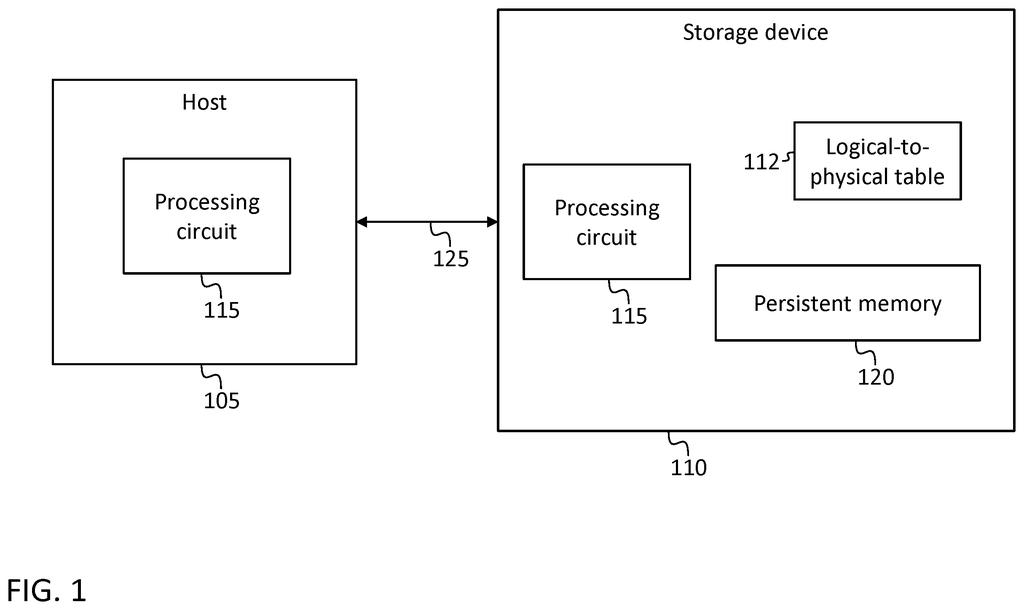
What Samsung's storage status reporting actually does
Storage drives today have a limited ability to communicate their internal state back to the computer asking for data. When a computer queries a drive about a specific chunk of data, the drive may not be able to say clearly whether that data is allocated, ready, being written, or in some other condition. Samsung wants to change that.
This patent describes a method where a drive receives a specific request about a logical block address (essentially a numbered location on the drive, like a street address for data), checks the status of that location and the surrounding group of locations it belongs to, and sends back a detailed status report.
The idea is that your computer, or the software managing your storage, gets a clearer picture of what the drive is actually doing at any given moment. That can help avoid errors, speed up data management, and let software make smarter decisions about when and how to read or write data.
… determining a status of an allocation granularity associated with a set of memory locations associated with a range of logical block addresses, the range of logical block addresses comprising the first logical block address …
Translation: The drive figures out the health or status for a specific group of memory blocks linked to your request.
How the drive checks and reports allocation granularity
The patent describes a three-step exchange between a host system (your computer or server) and a persistent storage device (an SSD, NVMe drive, or similar).
First, the host sends a command asking for the status of a specific logical block address (LBA), which is a numbered slot in the drive's address space, like asking "what's the status of locker 4,721?"
Second, the drive doesn't just check that one locker. It checks the status of the entire allocation granularity that contains it. An allocation granularity is the minimum chunk of storage a drive manages at once, often spanning many individual addresses. Think of it like a city block: you asked about one house, but the drive reports on the whole block's condition.
Third, the drive sends back a response containing that status. The claim specifies that the drive must check each individual LBA within that granularity before forming its answer, meaning the status is built from a scan of every address in the group, not just an approximation.
- Receive a status-request command tied to a specific address
- Identify the allocation granularity that contains that address
- Check every address in that group and compile a status
- Return the status in a structured response
receiving, by a persistent storage device, a command, the command requesting a status associated with a first logical block address …
Translation: The storage drive gets a direct request to check the status of a specific memory address.
What this means for storage performance and reliability
For most consumers, this is deep infrastructure work that would show up indirectly: faster drive management, fewer cryptic errors, and storage software that can act on reliable information rather than guessing. In servers and data centers, where thousands of drives are managed at once and every wasted I/O operation costs money, a clean status-reporting protocol can meaningfully reduce overhead.
The practical ceiling here is in enterprise storage, where software systems constantly need to know which regions of a drive are free, in-use, or mid-write. If drives can answer those questions directly and accurately, the host software doesn't have to maintain as much of its own tracking state, which simplifies the whole stack.
Samsung's 32nd filing we've tracked since June in our next-gen SSD applications builds on earlier work like one on faster storage and one catching chip errors.
Claim 1 covers one specific exchange: a storage drive receives a request about a particular address, checks every address in the surrounding block, and sends back a combined result. That is a narrow chain, not a general right to report drive health in any form.
The scanning requirement is what makes the claim precise. The drive must inspect each address individually before answering, which means a cached guess or a rough estimate would fall outside the claim entirely.
What this would block, if granted, is a specific commitment between software and storage hardware: ask about one spot, and the drive is obligated to inspect the whole neighborhood before replying. For buyers who depend on accurate, verified status from their storage systems, that protocol guarantee has real value.
There are more where this came from
We read every patent application Big Tech publishes and send you the ones worth knowing. Plain English, free, every week.
The drawings
6 drawing sheets from US 2026/0277814 A1 · click any drawing to enlarge


Want this weekly breakdown for a company we don't cover? Patentlyze Pro →