
OpenAI Patents a Row-Marker System to Speed Up AI Image Generation
When an AI generates an image, it has to keep track of thousands of tiny pieces at once, and that gets expensive fast. OpenAI's new patent describes a system of "border tokens" that act like row numbers in a spreadsheet, making it easier for the AI to know where it is while drawing.
What OpenAI's border token image trick actually does
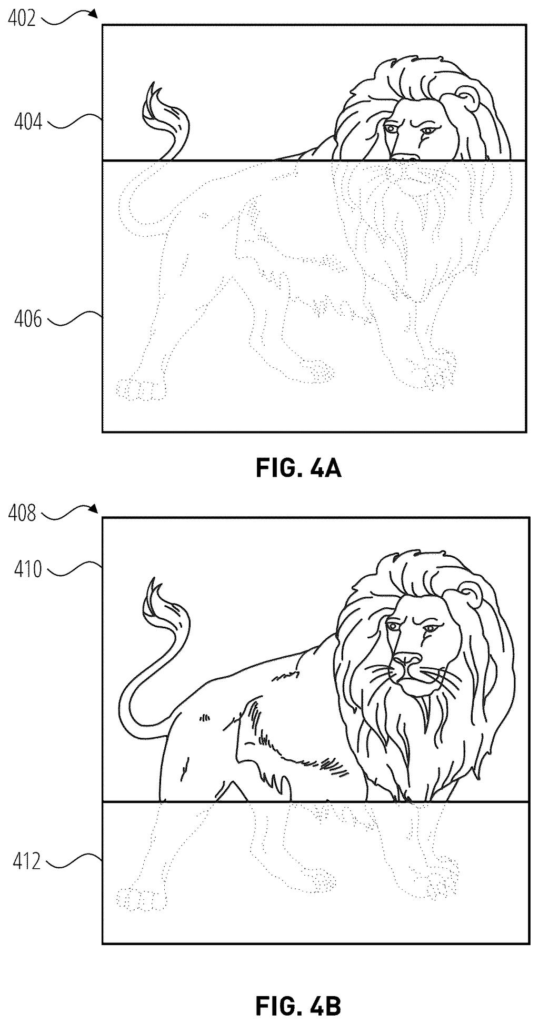
Imagine asking an AI to draw a picture, and instead of painting it all at once, it builds the image one piece at a time, left to right, top to bottom, like a dot-matrix printer. Every piece has to "remember" where it fits relative to every other piece, and the more pieces there are, the harder and slower that gets.
OpenAI's patent describes a fix: drop a special marker token at the start of each row, like a chapter heading. Instead of each image piece having to look all the way back through the entire image to figure out where it is, it just looks at the nearest row marker. It's a bit like numbering the rows on a spreadsheet so any cell can instantly know its position.
The patent also covers a training improvement that stops text-understanding and image-generating tasks from interfering with each other inside the same AI model. That's the kind of behind-the-scenes work that, if it holds up, could make multimodal AI tools produce better images with less computing power.
… sampling, by the AI model, a border token to indicate a beginning of the respective row of tokens; attending, by the AI model, to at least one of the tokens making up the respective row by referencing the border token at the beginning of the respective row to locate the at least one of the tokens making up the respective row; …
Translation: The system marks the start of each picture row so the AI can track where everything goes.
How the AI uses row markers to find pixels fast
Modern AI image generators work by producing a sequence of tokens (small encoded chunks of data) one at a time, in order. To generate each new token correctly, the model uses a process called attention, which means it looks back at all the tokens it has already produced to understand context. The problem: as images get larger, the number of tokens grows fast, and attending to all of them becomes computationally expensive.
OpenAI's system inserts a border token at the start of each row of image tokens. Think of it like a bookmark at the beginning of every line of text. When the model needs to understand where a particular image token sits spatially, it references that row's border token rather than scanning the entire sequence from the beginning. This lets it determine position more efficiently.
The generation loop works like this:
- Receive a prompt requesting an image.
- For each row, sample a border token to mark the row's start.
- Generate tokens for that row, using the border token as a spatial anchor.
- Repeat until the full image is assembled.
The patent also addresses a separate problem in multimodal models (AI that handles both text and images): training the two capabilities together can cause them to interfere with each other, degrading performance on both. The filing describes a training approach designed to reduce that interference, though the specific mechanism is described at a high level in the abstract.
… using border tokens output by an AI model at the beginning of respective rows of a set of image tokens. Thus, the AI model can reference an image token's position based on its position from a border token.
Translation: By measuring distance from these row markers, the AI figures out token positions much faster.
What this means for AI image tools you already use
For everyday users, a more efficient image-generation process means faster results and potentially higher-resolution images without requiring dramatically more computing power. OpenAI's run of multimodal architecture filings suggests the company is investing seriously in making text-and-image models work better together, which matters for products like ChatGPT that already mix the two.
The border-token approach is also notable because it is a structural change to how the model processes images, not just a matter of throwing more hardware at the problem. If it works as described, it could apply to any autoregressive image model, not just OpenAI's own, making this a filing that competitors will study closely.
OpenAI's second filing we've tracked in our AI image and video coverage since September builds on one that picks and redraws photos.
Claim 1 is written broadly. It covers any AI model that samples a border token at the start of a row, uses that token to locate image tokens, and outputs an image built through that iterative process. There is no restriction to a particular model size, image format, or hardware setup. That scope means, if granted, this patent could cover a wide class of row-aware autoregressive image generation systems, not just OpenAI's specific implementation.
How broad is too broad? That will depend on what prior art the patent examiner finds. Positional encoding approaches that help AI models track location in a sequence have existed for years, and the USPTO will want to see that "border tokens" represent something genuinely distinct. The claim as written does not specify what makes a border token different from an ordinary position embedding, which could be a vulnerability during examination.
From a practical standpoint, the core idea is clear and useful: give the model explicit row markers so it doesn't have to infer position from scratch for every token. Whether that earns a patent or gets folded into prior art is a separate question, but the engineering logic is sound.
There are more where this came from
We read every patent application Big Tech publishes and send you the ones worth knowing. Plain English, free, every week.
The drawings
10 drawing sheets from US 2026/0289826 A1 · click any drawing to enlarge


Want this weekly breakdown for a company we don't cover? Patentlyze Pro →
Be the first to weigh in