
AMD Patents a Method to Feed AI the Examples It Needs to Sharpen Game Images
Getting an AI to upscale low-resolution game images well requires a huge pile of matched image pairs to train on. AMD has filed a patent for an automated pipeline that creates those pairs directly from the game engine itself, without needing anyone to hand-craft them.
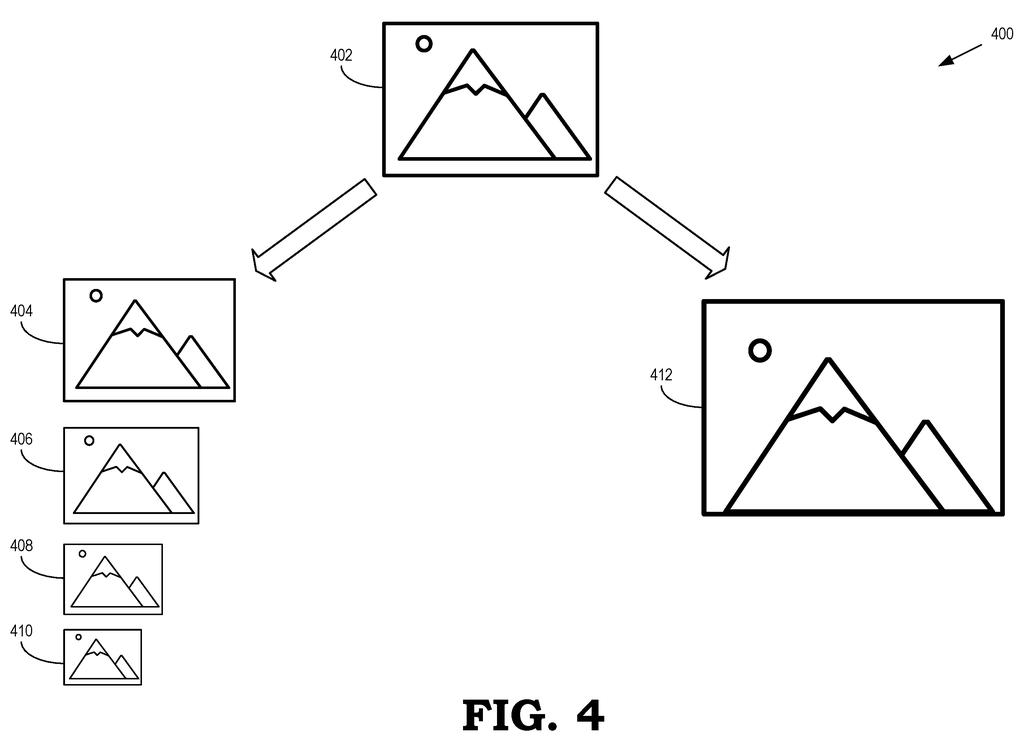
How AMD's system teaches AI to sharpen low-res game frames
Ever noticed how a game can look incredible on a high-end monitor but blurry and rough on a less powerful one? AI upscaling tools try to fix that by guessing what the sharp version of a blurry frame should look like, and they need thousands of examples to learn from.
The problem is building those examples. You need a blurry version and a sharp version of the exact same scene, and that's harder to get than it sounds. AMD's approach goes straight to the source: it grabs the internal data a game engine uses to render a frame, then replays that scene multiple times with tiny variations in a setting called jitter (a small positional offset used by games to gather sub-pixel detail). Each replay gives you a slightly different view of the same scene, and together those views can be used to reconstruct a high-resolution image.
The result is a matched set of training images that come directly from real game rendering, not synthetic stand-ins. That kind of authentic data is generally what makes AI upscaling tools like AMD's FSR series perform better over time.
… instructing the GPU to generate at least one modified frame by replaying the at least one frame based on the captured information and at least one modified value of the jitter …
Translation: The system tells the graphics card to replay a game scene using different visual noise values to create training data.
How the GPU replays frames with swapped jitter values
The patent describes a method for automatically constructing training data for a machine learning model that upscales game images.
Here's the core pipeline:
- The system captures a recording of at least one game frame, including all the GPU commands and memory state needed to reproduce it exactly.
- It then scans GPU memory to find the specific locations that store jitter values (tiny sub-pixel offsets that game engines apply each frame to help anti-aliasing and upscaling tools gather more detail over time).
- The GPU is instructed to replay the same frame multiple times, but each time with different jitter values substituted in. This produces a set of modified frames, each a slightly shifted version of the same scene.
- Those modified frames are then combined to produce a higher-resolution version of the original, giving the AI a low-resolution input and a high-resolution target to learn from.
The key insight is that jitter is already something game engines control precisely, so swapping its values inside a captured replay is a reliable way to generate the extra viewpoints needed for high-quality upscaling without re-running the full game. Finding the right memory locations automatically, rather than requiring manual labeling, is the part this patent specifically claims.
One or more locations in a memory associated with the GPU are configured to store bits that represent jitter applied to the one or more frames by the game engine.
Translation: The method pinpoints where the graphics memory stores the sub pixel shifting data used for anti aliasing.
What this means for AI upscaling on AMD graphics cards
AI upscaling, where a GPU renders a game at lower resolution and then uses machine learning to fill in the missing detail, is one of the most practically useful graphics features available today. AMD's FSR, Nvidia's DLSS, and Intel's XeSS all compete in this space, and the quality of each depends heavily on the training data used to build the underlying AI model.
If AMD can automate the creation of high-quality, game-sourced training pairs at scale, AMD keeps filing on AI upscaling training infrastructure suggests the company is investing seriously in the data pipeline behind FSR, not just the model itself. For you as a player, better training data eventually means fewer ghosting artifacts, sharper edges, and more accurate motion in upscaled games, particularly on mid-range hardware where upscaling does the most work.
AMD's 15th filing we've tracked in our GPU rendering race since June adds to a run that includes one on camera-move detail skipping and one on ray-tracing memory waste.
The engineering trade here is worth naming directly. Replaying captured game frames is only as good as how faithfully those frames can be reproduced. If a game uses random seeds, real-time physics, or other state that wasn't captured in the original recording, the replays won't match closely enough to be useful training pairs. The patent assumes a clean, deterministic replay, which is a meaningful constraint.
That said, modern frame-capture tools (AMD already ships one called Radeon GPU Profiler) are built precisely for deterministic replay, so this isn't a wild assumption. The method is genuinely practical within that scope, and automating the jitter-location discovery step removes what would otherwise be a slow, manual process that differs game by game.
The real cost is breadth: training data built this way will be as varied as the frame captures AMD can collect. A model trained on a thousand captured scenes from a dozen games may still struggle on titles with unusual rendering pipelines. That's a data-curation problem more than a patent problem, but it's the limiting factor this system doesn't solve.
There are more where this came from
We read every patent application Big Tech publishes and send you the ones worth knowing. Plain English, free, every week.
The drawings
9 drawing sheets from US 2026/0289723 A1 · click any drawing to enlarge


Want this weekly breakdown for a company we don't cover? Patentlyze Pro →
Be the first to weigh in