
Qualcomm Patents a Faster Way for AI to Pick Out Every Object in a Photo
Teaching a chip to look at a photo and instantly outline every person, car, and tree separately is one of the harder problems in computer vision. Qualcomm's new patent tries to make that process faster by being selective about which pixels it even bothers to look at closely.
What Qualcomm's pixel-grouping technique actually does
You're taking a photo and your phone's camera app tries to blur just the background, keep just one person in focus, or label every object in the frame. To do that, the chip inside has to look at every single dot of light in the image and decide what object it belongs to. That's an enormous amount of work, and it has to happen in fractions of a second.
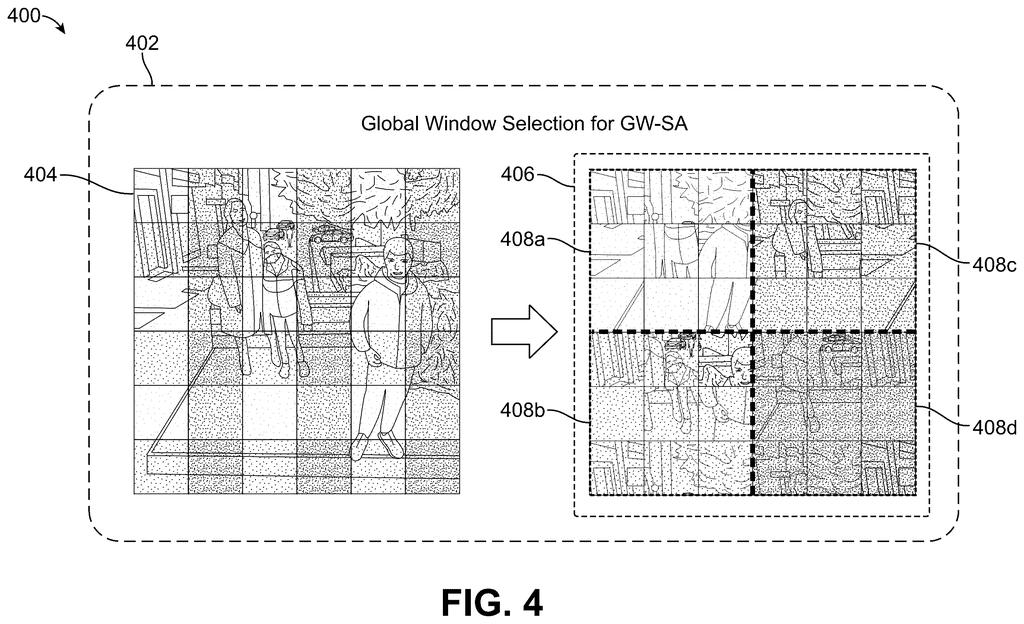
Qualcomm's patent describes a way to speed that up. Instead of examining every pixel equally, the system picks a sparse sample (a selective handful spread across the image) and sorts those samples into small, manageable groups called windows. The chip processes each window independently, figures out what's in it, then reassembles the full picture. Think of it like a survey that samples every tenth house on a street rather than knocking on every door.
The clever part is that some pixels get temporarily shuffled to a new location so they fit neatly into a window, then moved back to their original spot afterward. That shuffle-and-restore trick keeps the math tidy without losing track of where anything actually is in the image.
process, using a sparse sampling pattern, an image feature map to sample subsets of pixels of a set of pixels associated with the image feature map; …
Translation: The system uses a selective sampling method to pick out specific pixels from an image feature map.
How the sparse sampling and window sort works
The patent describes a form of instance segmentation (the AI task of drawing a precise outline around every individual object in an image, not just labeling object types but distinguishing this car from that car) designed to run efficiently on a processor.
Here's the pipeline the patent lays out:
- Sparse sampling: Instead of feeding every pixel into the model, the system picks a structured subset spread across an image feature map (a compressed numerical representation of the image that the neural network works with internally).
- Window sorting: Those sampled pixel subsets are organized into fixed rectangular regions called windows. Where a pixel doesn't fall neatly into a window, it gets temporarily repositioned to fit, with the system tracking its real location so it can be put back later.
- Attention-layer processing: Each window is processed by an attention layer (a part of a neural network that figures out which elements in a group are most relevant to each other) inside a machine learning model. This produces a set of features describing what's in each window.
- Position restoration: Any pixel that was moved during sorting is returned to its original position, so the final output maps correctly back to the real image.
The design is aimed at making instance segmentation practical on mobile or edge hardware, where memory and compute are tight. Running a full attention pass over every pixel in a high-resolution image is expensive; sparse sampling cuts that cost down significantly.
… sort the subsets into a plurality of windows of the image feature map, wherein each subset from the subsets of pixels is sorted into a respective window from the plurality of windows, …
Translation: Those pixel subsets are then organized into separate sections or windows within the image map.
What this means for cameras and on-device AI
Instance segmentation is the engine behind a lot of things your phone already does: portrait mode, background replacement on video calls, augmented-reality filters that stick objects to real-world surfaces, and driver-assistance systems that need to track pedestrians separately from vehicles. All of those require fast, accurate per-object outlines.
Qualcomm has been filing around on-device AI vision processing since at least 2023, and this patent fits that pattern. If the technique works as described, it could let future Snapdragon chips handle more complex camera and AR tasks without draining the battery or requiring a round trip to a cloud server. For you as a user, that could mean faster camera effects and more responsive AR features, all processed locally on the phone in your pocket.
Qualcomm's tenth filing we've tracked in the AI photo editing race since July builds on one on shot reframing and one on gaze-based color tuning.
The system works by looking at only a fraction of the pixels in an image rather than every single one, which saves processing time but means it can miss sharp edges between objects. That matters most at the exact spots where this type of software needs to be most precise: the boundaries where one person ends and another begins.
The pixel-shuffling step, where pixels get temporarily relocated to fit the processing grid and then moved back, is the part most likely to cause trouble. Any small error in that restoration step can spread across the image, which gets worse the higher the resolution.
The underlying bet is that phones and tablets need software that cuts corners intelligently, and that bet is reasonable. Whether the accuracy loss at object edges is small enough to ignore in real products is the question this filing leaves open.
There are more where this came from
We read every patent application Big Tech publishes and send you the ones worth knowing. Plain English, free, every week.
The drawings
10 drawing sheets from US 2026/0289946 A1 · click any drawing to enlarge


Want this weekly breakdown for a company we don't cover? Patentlyze Pro →
Be the first to weigh in