
IBM
IBM · Automotive · Filed May 7, 2025 · USPTO published Nov 12, 2026 · This week's release
IBM Patents a Plan to Shuffle Cars Around So Their Sensors Use Less Battery
Your car's laser sensors drain its battery, so IBM's idea is to have cars rearrange themselves on the road until each one has to scan less.
- Publication number
- US 2026/0360253 A1(US20260360253A1)
- Applicant
- International Business Machines Corporation
- Filed · Published
- May 7, 2025 · Nov 12, 2026
- Inventors
- Michael Boone, Tiberiu Suto, Sarbajit Kumar Rakshit, Carolina Garcia Delgado
- Status when we published
- Approved; patent expected soon
- Document
- 20 claims
- US classification
- 701/24
- Examiner
- KAN, YURI (Art Unit 3662)
What IBM's lane-shuffling patent actually does
You're driving an electric car in the right lane, stuck behind a van. Your car's laser sensors are working overtime to see around it, and every watt they burn is range you don't get to use on the way to your destination.
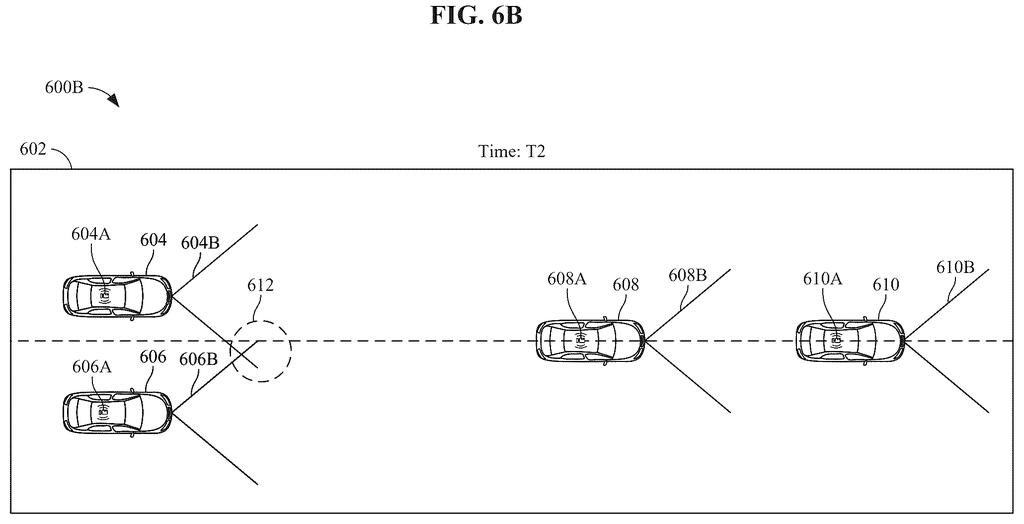
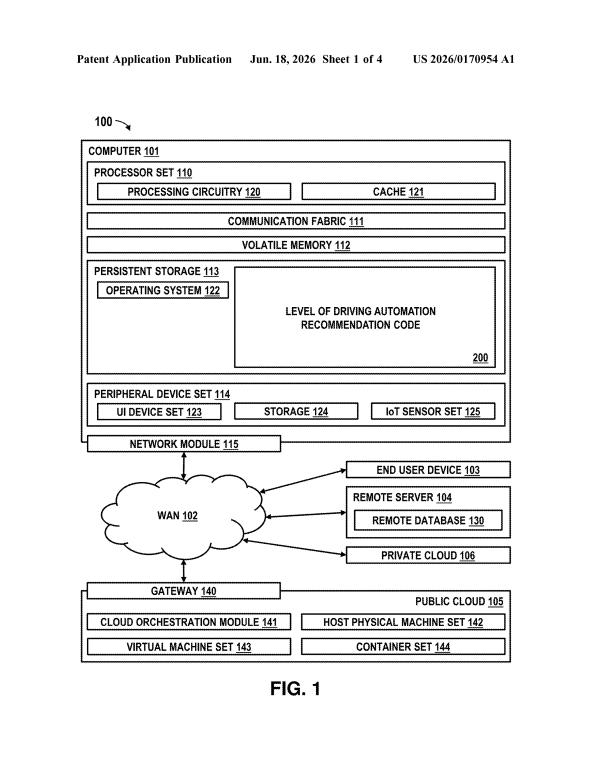
IBM's patent application describes a computer system that treats a stretch of road like a puzzle. It collects each car's speed and location, plus data from sensors mounted on things like traffic lights and light poles. A machine learning model then works out different ways the cars could be arranged, and the system picks the one that costs the least sensor power without wrecking anyone's trip.
In practice, that might mean you speed up and slide into the next lane so the van no longer blocks your view. Your sensors draw a little less, and your battery lasts a little longer.
… determining, by the computer, a set of vehicle configurations associated with the set of vehicles based on an application of the ML model, wherein each vehicle configuration of the set of vehicle configurations indicates an arrangement of the set of vehicles on the road segment …
Translation: The system figures out how the cars should line up on the road using machine learning.
How IBM's system chooses where each car sits
The claims describe a computer that takes in three kinds of information about a stretch of road: each vehicle's speed and location, the location of roadside equipment (each unit carries its own spatial mapping sensor, a device such as lidar that bounces laser pulses off objects to measure distance), and map data such as lane count, speed limit and whether a concrete divider is present.
A machine learning model then produces a list of possible vehicle configurations, meaning different arrangements of which car sits in which lane and in what order. The system picks one using criteria such as how much power each car's sensor draws, each car's remaining driving range, or each car's travel route. In the filing's example with three cars and two lanes, the lowest-power option (30 watts) is rejected because one car needs a particular lane to reach its exit, so a 36-watt option wins.
Once an arrangement is chosen, the computer controls at least one vehicle by speeding it up, slowing it down or changing its lane. The filing also describes add-ons:
- Adjusting the power sent to sensors in cars and in roadside units.
- Testing candidate arrangements in a virtual copy of the road before choosing.
- Merging the areas covered by different sensors into one shared map sent to cars.
- Dimming or brightening car and street lights based on weather data.
A machine learning (ML) model is applied to the vehicle data, the infrastructure connectivity data, and the map data.
Translation: The computer analyzes traffic details, roadside sensors, and road maps all at once.
Why sensor power matters for electric car range
If you drive an electric car loaded with sensors, the battery that moves you also feeds them. The filing says laser-based sensors burn a lot of power, which shrinks driving range and adds to range anxiety. Its answer is to shuffle traffic so sensors have less to do: in one example, a car that pulls up beside the vehicle ahead instead of sitting behind it cuts its sensor draw from 15 watts to 12.
The idea leans on roadside sensors and cars that share data, so it would work best on equipped roads or managed fleets. The patent office has approved this application, and once IBM pays the final fee it should be issued as a granted patent.
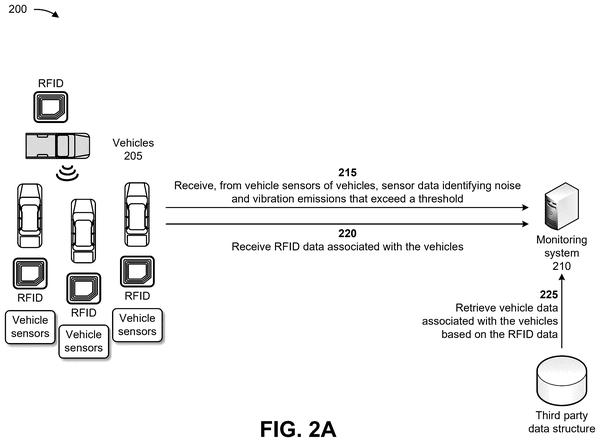
IBM's tenth filing we've tracked in our self-driving sensor watchlist since May builds on earlier applications like cars reporting loud neighbors and cross-checking cameras against sensors.
Source: US 2026/0360253 A1 at the USPTO (PDF). Full patent text and figures are in the official publication.
Get our take in your Top Stories
Liked this breakdown? Add Patentlyze as a preferred source on Google, and our plain-English take shows up more often in your Top Stories the next time IBM patent news breaks.
Add Patentlyze on Google
One click.
There are more where this came from
We read every patent application Big Tech publishes and send you the ones worth knowing. Plain English, free, every week.
The drawings · 10 sheets
10 drawing sheets from US 2026/0360253 A1 · click any drawing to enlarge


Show the other 2 sheets


More from IBM
All 470 IBM patents →
More in Automotive
All 360 Automotive patents →
Amazon
Zoox Files Patent for Parking Spots That Tell a Robotaxi Where It Is
Waymo (Google)
Waymo Patents a Robotaxi That Won't Pick You Up on a Slick Spot
Google
Google Files Patent for Cars That Notice When Road Construction Moves the Lane Lines
Waymo (Google)
No comments yet