
Microsoft
Microsoft · AI / ML · Filed Jul 15, 2026 · USPTO published Nov 12, 2026 · This week's release
Microsoft Patents Technology for Stopping Game Image-Sharpening AI at the Right Time
Microsoft's filing describes a simple rule for AI that sharpens blurry images: stop training once extra practice barely improves the results. The twist is a built-in check that can undo training if it made the AI worse somewhere else.
- Publication number
- US 2026/0359933 A1(US20260359933A1)
- Applicant
- Microsoft Technology Licensing, LLC
- Filed · Published
- Jul 15, 2026 · Nov 12, 2026
- Inventors
- Mahima SHARMA, Matthew Lawrence BRONDER
- Status when we published
- Waiting for an examiner
- Document
- 20 claims
- US classification
- 382/155
- Parent application
- Continuation of 18/678,945 (filed May 30, 2024)(18678945)
What Microsoft's stop-training rule actually does
Imagine you're cramming for a driving test with practice quizzes. Your score jumps a lot over the first few sessions. By session twenty, you gain one point every few tries, and you're mostly burning evenings.
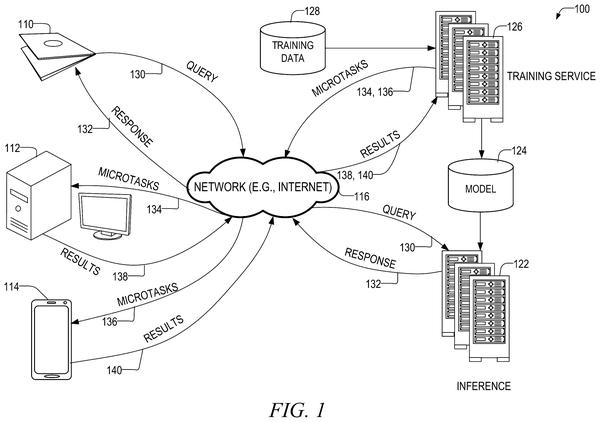
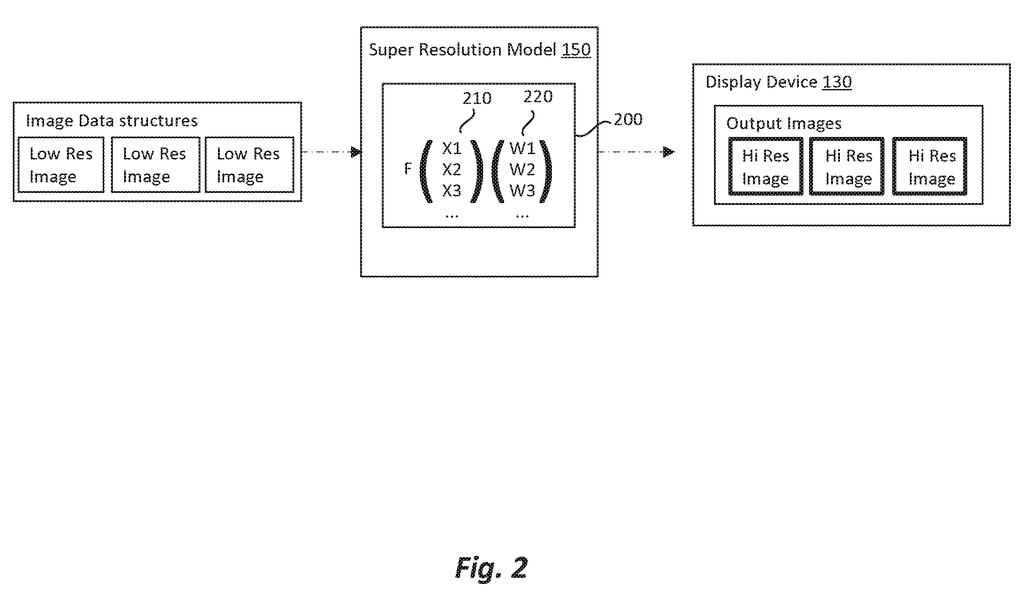
Microsoft's patent applies that same logic to teaching an AI to sharpen blurry images, the trick behind turning a low-quality game frame into a crisp 4K one. The AI studies pairs of the same picture, one low-resolution and one sharp. After every pass through the pile, it gets quizzed on pairs it has never trained on.
When its quiz score stops improving by more than a set cutoff, such as 1%, training ends automatically. That saves computing time and keeps the AI from over-practicing on one game's look.
… determining a rate of change in the calculated loss value between different epochs; identifying a predetermined rate of change threshold associated with terminating the training cycle; and terminating the training cycle when the rate of change in the calculated loss value meets or is less than the predetermined rate of change threshold.
Translation: The system stops training the AI when it stops making meaningful progress.
How the system watches practice scores flatten
The filing covers a way to decide when to stop training a model that turns low-resolution images into higher-resolution ones (called super-resolution, or upscaling). It starts with image pairings: the same picture at a low resolution and at a higher one. Some pairs are held back as validation data, a quiz the model never learns from. The description prefers a quiz set that is smaller than the training set and comes from the same source, such as the same game.
Training runs in epochs, meaning full passes through all the training pairs. After each epoch, the model is tested on the quiz set and produces a loss value (a number showing how far its output is from the sharp target image; lower is better). The system then works out how much that number changed from one epoch to the next.
Training ends when that change meets or falls below a preset threshold. Dependent claims put the threshold under 10%, 5% or 1%, and require at least five epochs before stopping is allowed. The order of the training pairs can also be shuffled each epoch.
The claims and description also cover optional extras:
- Two kinds of loss measure at once: one that compares images pixel by pixel, and a perceptual one that measures how similar they look.
- A regression check against a reference product, such as a second game. If the model got worse there beyond a limit, the training changes are reverted; otherwise they are kept.
During a training cycle, a image processing model is applied to the training group over multiple epochs. After each epoch, the model is applied to the validation data to calculate a loss value.
Translation: The AI learns in repeated rounds, and its mistakes are measured after every single round.
Why this matters for game upscaling on your screen
Training an upscaling model costs real computing time, and the patent's own background says the process is expensive and often hits diminishing returns. An automatic stop rule means each training run can cost less. That matters most in gaming, where the description says upscaling helps because games often render at lower resolutions than the screens showing them.
The revert check tackles a second risk: a model drilled too long on one game's look can get worse on another's. For you, the payoff, if any, would be upscaled images that hold up across different titles. The filing describes a training method only and names no product.
Microsoft's 11th filing we've tracked in the AI photo editing race since July follows its work on picking the cleanest cutout and filling gaps in video.
Source: US 2026/0359933 A1 at the USPTO (PDF). Full patent text and figures are in the official publication.
Get our take in your Top Stories
Liked this breakdown? Add Patentlyze as a preferred source on Google, and our plain-English take shows up more often in your Top Stories the next time Microsoft patent news breaks.
Add Patentlyze on Google
One click.
There are more where this came from
We read every patent application Big Tech publishes and send you the ones worth knowing. Plain English, free, every week.
The drawings · 16 sheets
16 drawing sheets from US 2026/0359933 A1 · click any drawing to enlarge


Show the other 8 sheets


More from Microsoft
All 646 Microsoft patents →


More in AI training & infrastructure
All 316 AI training & infrastructure patents →
Adobe
Adobe Patents a Neural Network That Trains Itself to Fix Messy Image Masks
Google
Google Files Patent to Fix Blurry, Grainy Photos by Training AI on Fake Flaws
Google
Google Patents a Way to Teach AI How Light Changes a Photo
Google
No comments yet