Latest AI vision patents, Page 20
Teaching machines to see: object recognition, gesture and gaze tracking, and the perception stack behind cameras, cars, and headsets. Every vision filing, decoded.
- in the Nov 19 release
- 13
- in November so far
- 27
- filings tracked
- 352
- last 90 days
- 170
Recent filings
Newest first · 352 total-
Apple · Published Jul 9
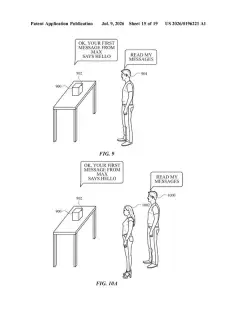
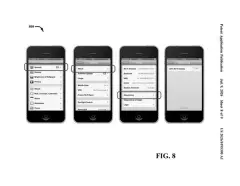
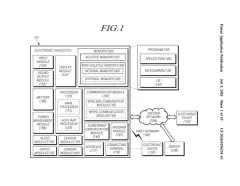
Apple Patent Reveals Siri Detecting When Users Are Actually Addressing It
What if your phone could tell the difference between you talking to it and you talking to someone nearby? Apple is working on exactly that, using your camera to check whether you're actually looking at the device before Siri acts on anything you say.
-
Nvidia · Published Jul 9
Nvidia Patent Reveals Robots That Mentally Rehearse Tasks Before Acting
Before a robot picks up an object or opens a drawer, what if it could first watch a video of itself doing it correctly? That's the idea behind this Nvidia patent.
-
IBM · Published Jul 9
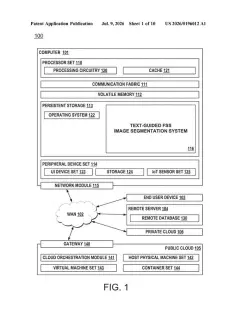
IBM Patents an AI That Finds Objects in Photos Using Words and Pictures Together
Most AI image tools make you choose: either describe what you're looking for in words, or show it a picture. IBM's new patent lets you do both at once, and argues that combining the two signals finds objects far more reliably than either method alone.
-
IBM · Published Jul 9
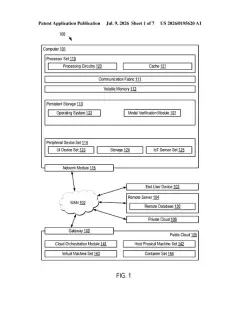
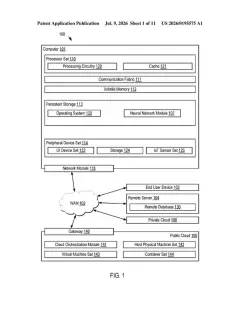
IBM Patent: Tracing AI Reasoning Paths to Detect Corrupted Trained Models
How do you know the AI model you're running is the one you think it is, and hasn't been swapped out or corrupted? IBM is filing a patent that answers that question by making the model verify itself during use.
-
Nvidia · Published Jul 9
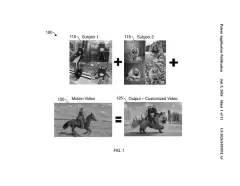
Nvidia Patents an AI Video System That Combines Multiple People and a Chosen Movement Style
What if you could describe a scene, point to photos of two specific people, show a reference clip of a dance move, and get back a video of those people doing that exact dance? That's the core idea behind Nvidia's latest AI video patent.
-
IBM · Published Jul 9
IBM Patents a System That Detects Manipulative Website Design and Routes Around It
Ever tried to cancel a subscription only to find the button buried under three confusing screens? IBM is patenting an AI that maps a website's structure, spots those traps, and hands you a direct link to where you actually want to go.
-
IBM · Published Jul 9
IBM Patent Cuts Inference Short Once a Single Answer Is Confirmed
What if an AI could recognize that it already knows the answer and just stop thinking? IBM is patenting exactly that shortcut, built around a concept borrowed from neuroscience called the 'grandmother neuron.'
-
IBM · Published Jul 9
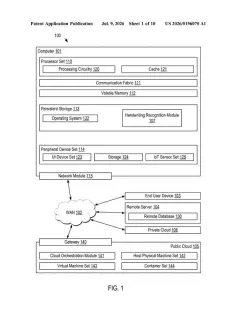
IBM Patents a Two-Step AI That Traces Pen Strokes Before Reading Your Handwriting
Most handwriting-recognition systems look at letters the way a scanner does. IBM's new patent takes a different approach: it first figures out how each letter was drawn before trying to read it.
-
Google · Published Jul 9
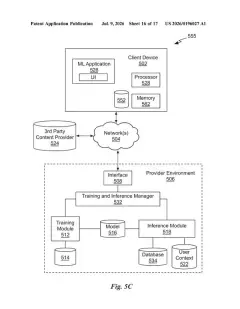
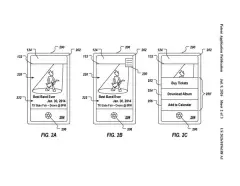
Google's New Patent Turns Your Camera Into an Assistant That Acts Before You Ask
Point your phone at something, and Google's camera doesn't just identify it, it takes action on your behalf, based on what it knows you usually do next.
-
Samsung · Published Jul 9
Samsung Patents a Way to Pull Apart Mixed Audio Into Separate Sound Objects
Imagine recording a video at a concert and later being able to turn down the crowd noise while keeping the music crisp. Samsung's latest patent describes a system that tries to make exactly that kind of audio separation work on a device itself, without sending your audio to the cloud.
-
Google · Published Jul 2
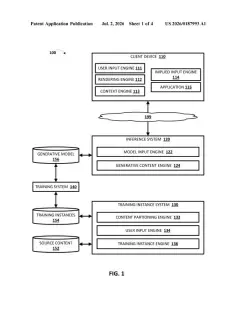
Google Patents a Way to Teach AI When to Say 'The Answer Isn't Here'
AI systems that confidently make up answers are a well-documented problem. Google is patenting a training method designed to teach models to recognize when a document simply does not contain the answer to your question.
-
Microsoft · Published Jul 2
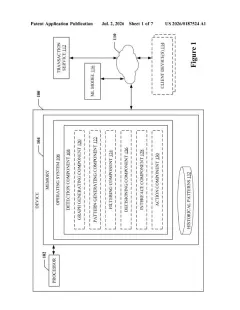
Microsoft Patent Targets Fraud Patterns Slipping Past AI Detection Models
Every AI fraud detector has a blind spot: patterns it was never trained to recognize. Microsoft's latest patent describes a system designed to catch exactly those gaps and patch them automatically.