
Adobe Patents an AI Image Generator That Draws Fur, Hair and Glass Without a Background
Ask most AI image tools for a hedgehog and you get a flat picture, with a background you have to cut away by hand. Adobe's patent describes a model that draws the hedgehog and its transparent surroundings in one go.
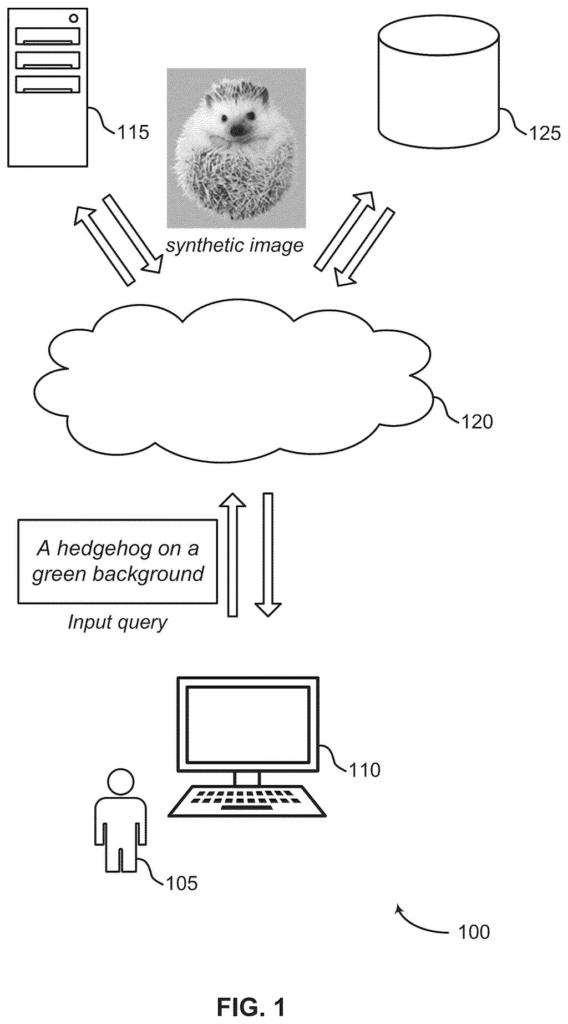
What Adobe's see-through image generator does
Imagine you ask an AI for a picture of a fluffy hedgehog so you can drop it onto a green poster. The AI hands back a hedgehog on a black background. When you cut it out, a dark fringe clings to every spine, and the animal looks pasted on. Anyone who has tried this with hair, fur or a glass of water knows the frustration.
Adobe's patent describes an image model that draws the picture and the see-through part at the same time. Alongside the usual red, green and blue, it creates a fourth layer that records how transparent each tiny dot of the picture should be. The result is a file, such as a layered PNG, where the background is simply missing, so you can place the hedgehog on any backdrop.
The filing also covers letting you sketch a rough outline to steer the shape, and feeding in an existing photo so the model lifts the subject out cleanly.
… generating, using an image generation model, a latent embedding based on the input prompt, wherein the latent embedding includes a latent alpha channel and a latent color channel corresponding to at least a part of the object; …
Translation: The AI creates an internal code that handles both the colors and the see-through background data at the same time.
How one model draws color and transparency
Today's text-to-image tools, which the filing names as DALL-E, Imagen and Stable Diffusion, produce one flat color picture. Pulling an object out of it takes a second program, which costs extra computing power and tends to leave stray background pixels along fine edges like hair. Adobe's claims describe a model that builds a latent embedding (a compact numerical sketch of the image that the model works on in place of full pixels) containing both a color part and a latent alpha channel (a hidden layer recording how see-through each spot should be).
In the main example, a latent diffusion model (an AI that starts from random noise and removes it step by step, steered by your text prompt) does the drawing. The color sketch takes 12 channels and the transparency sketch takes 4, joined into 16. A variational autoencoder (a tool that squeezes images into that sketch and expands them back) uses two encoders but a single decoder, which the filing says keeps color and transparency matched.
The filing also describes extra inputs and training details:
- A rough stroke you draw to hint at the object's shape, added as a 17th channel.
- An existing photo plus a rough mask (an outline of where the subject sits), so the model lifts the subject out with clean edges.
- Training with a penalty term for bad transparency, on a filtered set of 1.26 million images that include transparency.
… wherein the synthetic image depicts the object based on the latent color channel and includes an alpha channel based on the latent alpha channel.
Translation: The final picture shows the main object clearly while keeping the background transparent.
What this means for designers and photo editors
If you make posters, slides, product mockups or social posts, a lot of your time goes to cutting subjects out and fixing ragged edges. A generator that hands back a subject with its transparency already worked out could skip that step, especially for hair, fur and glass, the cases the filing says existing tools handle badly. The patent names no product, so it says nothing about where this would show up.
The same approach can also pull a subject out of a photo you already have, with cleaner edges than a standard cutout. The examiner's first review rejected the claims as filed, which is routine and usually followed by amendments, so the final scope may change. Adobe's description says doing everything in one model avoids extra overhead and cuts down on prediction errors.
Adobe's 42nd filing we've tracked since May on controllable AI images follows the one-sentence lighting edits and flat-to-layered conversion applications.
If you have ever cut a dog out of a photo and found a halo of leftover background clinging to its fur, you already understand what this patent targets. The fix lands at exactly the moment you would notice it: you place an AI-made subject onto a new background and the edges simply look right.
The benefit is largest for awkward subjects like flyaway hair, a fluffy tail, or a glass of water, where a flat cutout has always struggled to decide what belongs and what does not. When the AI draws its own transparency while generating the image rather than guessing afterward, that telltale fringe disappears before it ever appears.
The filing shows no product and the examiner's first review is routine, so there is no release date to hold onto. Even so, cleaner edges on generated images is a small, practical improvement that anyone who makes visuals for a living would welcome without hesitation.
Get our take in your Top Stories
Liked this breakdown? Add Patentlyze as a preferred source on Google, and our plain-English take shows up more often in your Top Stories the next time Adobe patent news breaks.
There are more where this came from
We read every patent application Big Tech publishes and send you the ones worth knowing. Plain English, free, every week.
The drawings
19 drawing sheets from US 2026/0350853 A1 · click any drawing to enlarge


Show the other 11 sheets


Want this weekly breakdown for a company we don't cover? Patentlyze Pro →
Be the first to weigh in