
Apple
Apple · AI / ML · Filed Apr 15, 2026 · USPTO published Nov 19, 2026 · This week's release
Apple Files Patent for a Phone That Guesses Where You're Going Next
Your phone could spend the night studying your habits, then spend the day guessing where you're headed and getting ready before you ask.
- Publication number
- US 2026/0370750 A1(US20260370750A1)
- Applicant
- Apple Inc.
- Filed · Published
- Apr 15, 2026 · Nov 19, 2026
- Inventors
- Kevin W. Watts, Benjamin A. Werner, Brent M. Ledvina
- Status when we published
- Waiting for an examiner
- Document
- 20 claims
- US classification
- 455/420
- Parent application
- Claims priority from a provisional application 63808365 (filed May 19, 2025)
What Apple's location-guessing phone actually does
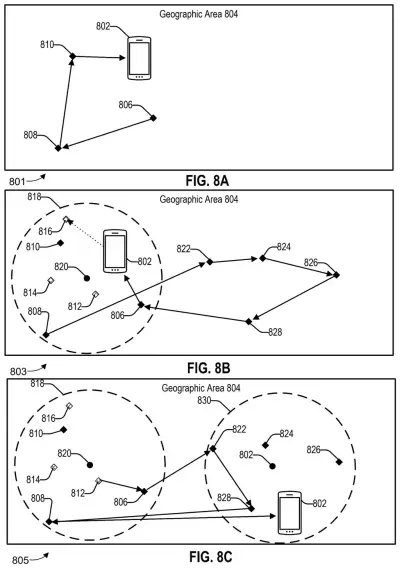
A phone sits on a nightstand at 2 a.m., plugged in and idle. In Apple's patent application, that is when it studies where you have been over the past several weeks (the filing gives 1 to 12 weeks, with eight as an example) and builds a model of your habits.
Then the day starts. When you leave the house, switch from sitting to walking, or open a map app, the phone updates its guesses about where you are headed and when. It scores each likely stop for every 15-minute window across the next 24 hours.
If it grows confident, it can act without being asked. It might show a travel time to work at 8:15 a.m. for a 9:00 arrival, start turn-by-turn directions, or tell a thermostat at your destination to start heating or cooling. The filing says the model is built on the phone itself because location data is sensitive.
… predicting one or more future locations of the mobile device over one or more future time intervals using the location model, one or more current location-related data items, and a current time.
Translation: Your phone guesses your upcoming stops using your past habits and current activity.
How the phone retrains overnight and adjusts by day
The core claim covers a phone that measures its own location over a stretch of past weeks (using GPS, cell towers and Wi-Fi signals), picks out the places it has visited, and trains a model (a pattern-finding program) whose possible answers are those places. When a trigger fires (a cue to re-check), the phone combines the model, the current time and fresh data stored on the device to predict where it will be in upcoming time slots.
The filing describes several smaller models whose guesses can be averaged:
- Visit history: where you have stayed, and when you arrived and left.
- Known places: map searches, parked-car spots and the locations of smart home devices.
- Calendar and wallet tickets: even an entry like "Daughter's Soccer Game" with no address.
- Scheduled travel: trips you set up in a map app.
Triggers include leaving a known place, changing how you move, starting navigation, an app asking, or a 15-minute timer. After you leave somewhere, the phone checks your path. It raises the odds of places ahead of you and lowers places behind you or too far to reach in time. Very unlikely guesses are dropped.
Dependent claims cover training while the phone charges, notifications that start navigation, and a thermostat that heats or cools in response. The description also covers models tied to a geographic area that pause when you travel outside it, such as on a vacation.
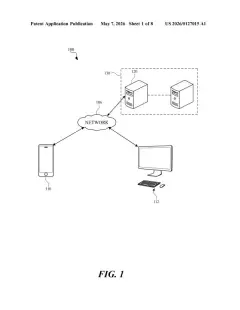
An electronic device can predict future user locations using a variety of different inputs from the device's sensors and applications.
Translation: Your phone anticipates where you are heading next by combining data from your apps and sensors.
What a phone that knows your next stop means for you
If this ever shipped, the practical change would be fewer taps. Your phone could have directions to work ready as you walk out the door, show traffic for the drive you are about to make, or tell a thermostat at your destination to start heating or cooling before you arrive. The filing also describes timing alerts for moments when you are actually holding and using the phone, so they get seen instead of ignored.
The privacy angle is the strategic piece. Training the model on the device, overnight, keeps a detailed record of your habits on your phone, which matters for something this personal. It also ties together data a phone already holds, like calendar entries, wallet tickets and map searches. Remember that this is a patent application, and nothing in it says when or whether a feature will appear.
That makes this Apple's 11th filing we've tracked since June in our AI assistants that remember you watchlist, building on work like predictive location logging and activity-aware photo surfaces.
Source: US 2026/0370750 A1 at the USPTO (PDF). Full patent text and figures are in the official publication.
Get our take in your Top Stories
Liked this breakdown? Add Patentlyze as a preferred source on Google, and our plain-English take shows up more often in your Top Stories the next time Apple patent news breaks.
Add Patentlyze on Google
One click.
There are more where this came from
We read every patent application Big Tech publishes and send you the ones worth knowing. Plain English, free, every week.
The drawings · 18 sheets
18 drawing sheets from US 2026/0370750 A1 · click any drawing to enlarge


Show the other 10 sheets


More from Apple
All 748 Apple patents →
More in AI assistant & agent
All 436 AI assistant & agent patents →
Samsung
Samsung Files Patent for a Phone Assistant That Fact-Checks Its Own Suggestions Before Showing You
OpenAI
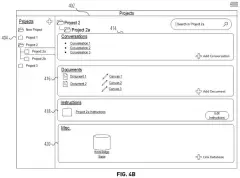
OpenAI Files Patent for Shared AI Project Folders With Built-In Instructions
IBM
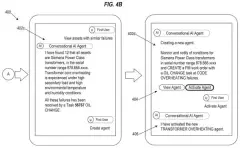
IBM's New Patent Covers a Chatbot That Spins Up New AI Assistants Mid-Conversation
Samsung
No comments yet