
GM
GM · Automotive · Filed May 16, 2025 · USPTO published Nov 19, 2026 · This week's release
GM Files Patent to Heat EV Cabins With Heat From Your Brakes
Every time you brake, your car makes heat and lets it drift away. GM's new patent application would pipe that heat into the cabin instead of draining the battery for the heater.
- Publication number
- US 2026/0364997 A1(US20260364997A1)
- Applicant
- GM Global Technology Operations LLC
- Filed · Published
- May 16, 2025 · Nov 19, 2026
- Inventors
- Hyunggyu Chang, Bongbum Back, Seokju Yong, Hyoungjun Choi, Taekyung Kim, James A. Webster
- Status when we published
- Waiting for an examiner
- Document
- 20 claims
- US classification
- 454/69
What GM's brake-heat cabin warmer actually does
It's a freezing morning, you crank the heat in your EV, and the range number on the dash starts sliding. Your range really is shrinking. GM's filing says cold weather can cut an EV's driving range by 30 or 40 percent, in large part because the electric heater pulls power from the same battery that moves the car.
GM's idea starts with a simple fact: your brakes get hot whenever you slow down, and today that heat just disappears. The patent describes hoses that carry air warmed near the brakes into the car's heating system, with a fan pushing it along. When the heat is on and it's cold outside, the car switches the electric heater off.
Filters can catch brake dust from that air along the way, and valves let the car open or close each hose.
… each brake is configured to, in response to an operator input, slow a rotation of a respective wheel, and wherein each brake heats up while slowing the rotation of the respective wheel …
Translation: Pressing the brakes creates heat when the wheels slow down.
How brake heat travels to your heater vents
The patent covers a vehicle, a method and a control system, all built around one move. When the cabin heat is on and the outside temperature meets a set test (the example is below 5 °C), a blower pulls air warmed by the brakes toward the car's HVAC system (the heating, ventilation and cooling unit), and the electric heater is switched off.
The filing describes the plumbing in some detail:
- Insulated flexible hoses with an intake end near each brake, either one per brake or joined in a tree-like layout.
- A brake pad dust collector that leaves a space where brake heat warms the air.
- Filters that remove brake dust and valves that open or close each hose.
- Two ways to deliver the heat: warm a heat exchanger (a radiator-like part that passes heat to the cabin air), or send the warmed air straight into the cabin.
A controller (the car's body control module in the example) opens the valves and starts the blower. The filing also says the car may disable regenerative braking (when the electric motor slows the car and feeds energy back to the battery) during this mode, though it does not explain why. One example uses only the front brakes, and another describes brakes built into in-wheel motors.
… activating a blower of the vehicle to move air heated by waste heat associated with one or more brakes of the vehicle through one or more respective air passageways to transfer the waste heat from the one or more brakes to the HVAC system for heating the air in the cabin, and deactivating an electric heater of the HVAC system
Translation: A fan blows that brake heat into the cabin to warm you up without using the electric heater.
Why this could matter for winter EV range
If it worked as described, the payoff lands on the coldest days, when you need both heat and range. Cold weather can cut an EV's range by 30 or 40 percent, and GM says that shortfall hurts how appealing EVs are and drives customer complaints. Heat that already exists at the wheels would replace some of the battery power the electric heater burns.
Keep in mind this is a patent application, and it gives no figures for how much range it would save. It also says the idea could apply to other vehicles, such as trucks, trains and airplanes, and to equipment like construction machines. Whether any GM car ever uses it is unknown.
GM's tenth filing we've tracked since November in our GM coverage continues a safety thread that includes the swerving suspension and the fog detection system.
Source: US 2026/0364997 A1 at the USPTO (PDF). Full patent text and figures are in the official publication.
Get our take in your Top Stories
Liked this breakdown? Add Patentlyze as a preferred source on Google, and our plain-English take shows up more often in your Top Stories the next time GM patent news breaks.
Add Patentlyze on Google
One click.
There are more where this came from
We read the new patents from Big Tech, carmakers and more and send you the ones worth knowing. Plain English, free, every week.
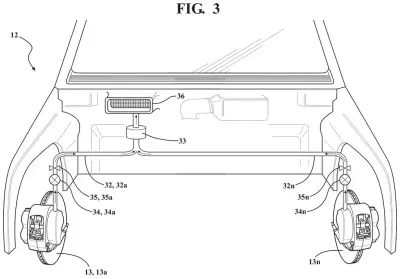
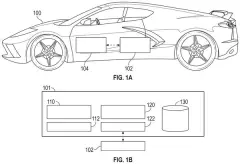
The drawings · 3 sheets
3 drawing sheets from US 2026/0364997 A1 · click any drawing to enlarge


More from GM
All 10 GM patents →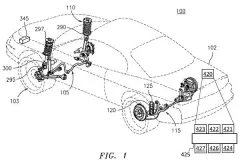
More in Automotive
All 432 Automotive patents →
Mercedes-Benz
Mercedes-Benz Files Patent for Keeping Water Out of a Motor Inside the Wheel
Volkswagen
Volkswagen Files Patent for a Car That Understands 'I Feel Hot'
Aurora
Aurora Files Patent for Scoring Which Mistakes Matter When Self-Driving Vehicles Spot Objects
Hyundai & Kia
No comments yet