
GM
GM · Automotive · Filed May 15, 2025 · USPTO published Nov 19, 2026 · This week's release
GM Files Patent for Shock Absorbers That Can Tell When They're Leaking
GM's patent describes adjustable shock absorbers that check themselves for leaks by sending an extra, faster electrical signal through a coil that is already inside. Today, nobody finds out until the ride feels off.
- Publication number
- US 2026/0366962 A1(US20260366962A1)
- Applicant
- GM GLOBAL TECHNOLOGY OPERATIONS LLC
- Filed · Published
- May 15, 2025 · Nov 19, 2026
- Inventors
- Brian K. Saylor, Nojan Medinei, Robert Patrick Marble
- Status when we published
- Waiting for an examiner
- Document
- 20 claims
- US classification
- 73/40
What GM's leak-sensing shock absorber does
Right now, if the special fluid inside an adjustable shock absorber starts to leak, nothing in the car measures it. You find out when the ride or handling feels off, or when a mechanic happens to spot the leak. GM would like the car to notice on its own, before you do.
These shocks are filled with oil carrying tiny iron particles. A coil of wire around a narrow channel creates a magnetic field that makes the fluid thicker or thinner, which firms up or softens the ride. GM's idea is to send a second, much faster electrical signal through that same coil, like adding a faint extra note on top of a song. The extra signal barely affects how the shock behaves, but the way it comes back changes when iron-filled fluid is missing or full of air bubbles.
If the readings look wrong often enough, the car alerts the driver that service may be needed.
applying a mixed-frequency signal to an inductor coil of the device, wherein the mixed-frequency signal includes an operating signal component at a first frequency that is configured to generate a magnetic field to control viscosity of the MR fluid …
Translation: The system sends a combined electrical signal to the shock coil to control its fluid thickness.
How a hidden high-pitched signal finds missing fluid
The patent covers a method, a device and a vehicle built around a magnetorheological (MR) fluid device, with a shock absorber as the main example. MR fluid is oil full of iron particles that line up in a magnetic field and turn from liquid to semi-solid. Normally the car controls it with a slow signal (under 5 kHz, with 0.1 to 1 kHz given as an example) sent through an inductor coil (a coil of wire that turns electric current into a magnetic field).
GM adds a second, diagnostic signal on top, above 10 kHz (30 to 50 kHz is the example) and weaker than the main one. The iron particles are too sluggish to react to something that fast, so the ride is not affected. A current detector measures the current in the coil, and a high-pass filter (which blocks slow signals and lets fast ones through) isolates the fast part. From that, the system tracks impedance, meaning how strongly the coil resists the fast alternating current.
The iron-filled fluid acts like the core of the coil. Air bubbles from a leak, or from cavitation (bubbles forming and collapsing where pressure is low), mean less iron in the core, so impedance drops. The filing describes three levels: full fluid, a small leak or cavitation, and a severely depleted shock.
The car compares readings to an expected baseline that can account for position, speed, current and temperature. It ignores mismatches right after a long parking spell, when particles may have settled. A large gap triggers an alert. A small one adds to a running count, and an alert goes out when the count hits a threshold.
… monitoring impedance of the high frequency component of the current to identify non-optimal MR fluid behavior …
Translation: It tracks electrical resistance changes to spot when the fluid starts leaking or failing.
Why GM wants warnings before the ride changes
The practical payoff is an early warning. A shock that has lost its fluid hurts ride and handling, and the filing's goal is to alert the driver before that becomes noticeable. The car also stores the readings for a technician, so a service visit starts with data instead of guesswork.
The approach reuses the coil and control electronics already in the damper, and the filing says it aims to work without additional sensors. It also applies beyond cars: the text says the same check could be used on any system that uses MR fluid, including other vehicles and non-moving equipment. For you, that could mean fewer surprises from a part that today fails without any warning light.
GM's seventh filing we've tracked since November in our GM coverage adds to a pattern around battery health, alongside spotting bad packs and predicting battery life.
Source: US 2026/0366962 A1 at the USPTO (PDF). Full patent text and figures are in the official publication.
Get our take in your Top Stories
Liked this breakdown? Add Patentlyze as a preferred source on Google, and our plain-English take shows up more often in your Top Stories the next time GM patent news breaks.
Add Patentlyze on Google
One click.
There are more where this came from
We read the new patents from Big Tech, carmakers and more and send you the ones worth knowing. Plain English, free, every week.
The drawings · 6 sheets
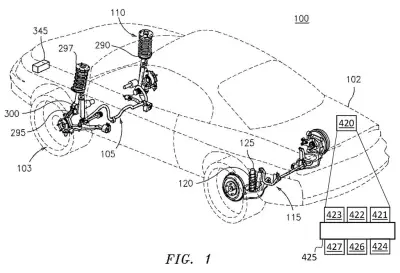
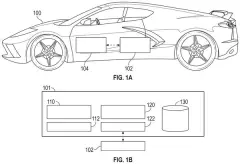
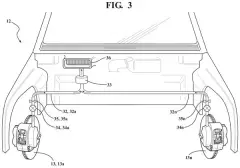
6 drawing sheets from US 2026/0366962 A1 · click any drawing to enlarge


More from GM
All 10 GM patents →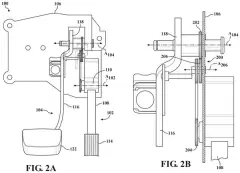
More in Automotive
All 432 Automotive patents →
Nvidia
Nvidia Files Patent for Self-Driving Cars That Can Tell When Their Sensors Are Blocked
BMW
BMW Patents a Self-Learning Steering Limit That Adapts to Each Car
Hyundai & Kia
Kia Files Patent for EVs That Coast Down to the Right Speed Before Curves
Hyundai & Kia
No comments yet