
Hilti
Hilti · Gear · Filed Jun 19, 2025 · USPTO published Nov 19, 2026 · This week's release
Hilti Patents a Nail Gun That Scans Its Fasteners Before Firing
Hilti is working on a nail gun that figures out exactly what kind of fastener is loaded before it fires, then adjusts its own power to match. Load the wrong nail by mistake, and the tool knows.
- Publication number
- US 2026/0364758 A1(US20260364758A1)
- Applicant
- Hilti Aktiengesellschaft
- Filed · Published
- Jun 19, 2025 · Nov 19, 2026
- Inventors
- Tomasz Dobromir MICHALSKI, Marco HEISS, Joaquin HERRERO FERNANDEZ, Mario GRAZIOLI, Klaus BERTSCH
- Status when we published
- Examiner raised objections; the company can respond
- Document
- 15 claims
- US classification
- 227/130
- Examiner
- MARTIN, VERONICA (Art Unit 3731)
- Parent application
- National Stage Entry of PCT/EP2023/087352 (filed Dec 21, 2023)(PCTEP2023087352)
What Hilti's fastener-scanning nail gun actually does
You're framing a wall and you grab a strip of nails from the wrong bag. The fasteners look similar, but one type is meant for steel studs and the other for wood, and driving the wrong one at full force can damage the tool or leave a fastener that won't hold. Right now, the gun just fires whatever you put in.
Hilti's patent describes a way to fix that. A small sensor inside the tool sends an energy pulse at the fastener or its carrier strip before anything fires. The fastener (or the paper strip it rides on) is treated with a special pigment that absorbs the pulse and bounces back a different signal, one that tells the tool's computer exactly what type it's dealing with.
Once the tool knows what's loaded, it can dial its motor power up or down automatically to match, alert you on a small display, and even flag a problem if it doesn't recognize the fastener at all. No separate barcode scanner, no manual dial to turn.
How the tool reads a wave bounced off each fastener
The patent covers a sensing system built into the magazine and feed channel of a driving tool (think a battery-powered nail gun or bolt driver). A transmitter fires an energy wave, which can be optical, electromagnetic, or acoustic, at the consumable sitting in the feed channel or waiting in the receptacle. The consumable or its carrier strip carries a wave modifier, typically a luminescent pigment (like fluorescent or phosphorescent dye baked into a paper or plastic strip) that absorbs the incoming wave and re-emits a response wave at a different frequency.
A receiver picks up that response wave and converts it into a signal. The tool's controller (a microprocessor on a circuit board) then runs an identification algorithm that compares how the wave changed in shape, amplitude, or wavelength against a lookup table, and assigns a fastener type. That type can include the fastener's length and what material it's meant for, for example a 15 mm stud for steel versus a 40 mm nail for wood.
With the type confirmed, the controller automatically adjusts:
- Motor voltage and current
- Driving piston speed and energy
- Whether to allow firing at all
If the system can't identify the fastener, the patent says the tool can run at reduced power or refuse to fire entirely. The patent also covers the consumable side: a fastener strip (or even an individual nail head or shaft) coated with the wave-modifier pigment that makes the whole detection chain possible.
What this means for contractors and job-site safety
For anyone who works on a job site, the practical benefit is straightforward: you get automatic confirmation that the right fastener is in the gun before the trigger pulls, instead of finding out afterward that a stud cracked or a nail didn't seat. The tool absorbs the check, not your attention.
The filing also describes wireless data transmission (Bluetooth, Wi-Fi, NFC) so the tool can report what it used and when, which opens the door to automatic restocking. Hilti's bet on connected job-site tools is relevant context here: logging every fastener type fired produces data that powers fleet management and predictive supply orders. Worth noting that the patent application received an initial rejection from the examiner as of October 2026, which is routine at this stage and doesn't reflect the final outcome.
Hilti's fourth filing we've tracked in our power tools and outdoor coverage since November follows earlier applications on a lighter drill piston and a self-locating laser.
Source: US 2026/0364758 A1 at the USPTO (PDF). Full patent text and figures are in the official publication.
Get our take in your Top Stories
Liked this breakdown? Add Patentlyze as a preferred source on Google, and our plain-English take shows up more often in your Top Stories the next time Hilti patent news breaks.
Add Patentlyze on Google
One click.
There are more where this came from
We read the new patents from Big Tech, carmakers and more and send you the ones worth knowing. Plain English, free, every week.
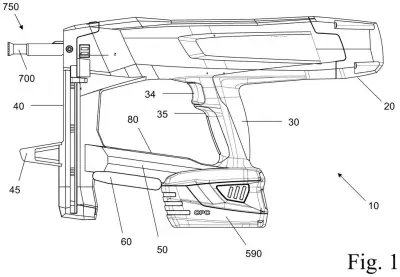
The drawings · 3 sheets
3 drawing sheets from US 2026/0364758 A1 · click any drawing to enlarge


More from Hilti
All 4 Hilti patents →
More in Gear
All 26 Gear patents →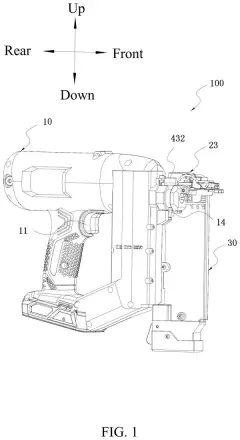
Chervon
Chervon Patents a Nail Gun Depth Dial You Can Set With One Quick Turn
Greenworks
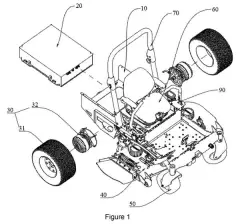
Greenworks Patents a Riding Mower With Motors Built Into Each Wheel and a Battery Mounted Below the Seat
Milwaukee
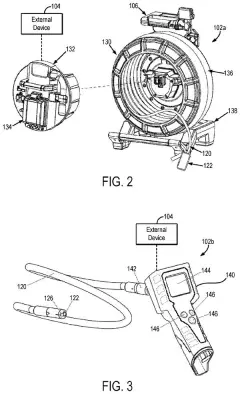
Milwaukee Tool Files Patent for Pipe Cameras That Label Rust, Cracks and Clogs
Makita
No comments yet