
Meta
Meta · Camera · Filed Mar 17, 2026 · USPTO published Oct 8, 2026 · Oct 8 release
Meta Files Patent for Glasses Cameras That Read Your Pulse Past Sweat and Glare
Sweat is a problem for heart-rate sensors. Shiny skin bounces light straight back and drowns out the faint signal of your pulse. Meta's patent application adds a light filter that throws out the glare and keeps the light that actually traveled through your skin.
- Publication number
- US 2026/0305947 A1(US20260305947A1)
- Applicant
- Meta Platforms Technologies, LLC
- Filed · Published
- Mar 17, 2026 · Oct 8, 2026
- Inventors
- Mantas Zurauskas, Robert Dale Cavin
- Status when we published
- Waiting for an examiner
- Document
- 20 claims
- US classification
- 600/476
- Parent application
- Claims priority from a provisional application 63783518 (filed Apr 4, 2025)
What Meta's glare-filtering pulse sensor does
Ever taken your pulse with a smartwatch after a hard run and gotten a wild number? Sweaty, oily skin is a big reason. It acts like a tiny mirror, bouncing light straight back and drowning out the faint color changes that reveal each heartbeat.
Meta's filing puts a polarizing filter (the same idea as polarized sunglasses) in front of a camera or light sensor. The filter blocks the glare off the surface of your skin and keeps the light that went into the skin and scattered back out. That second kind of light carries the signal of blood moving through you.
The filing places this in the cameras of smart glasses and in a watch's gesture camera. The glare it throws out turns out to be useful too, because it can hint at how sweaty, oily or hydrated your skin is.
capture a polarized light from a skin; detect a diffused light component from the captured polarized light using the polarizer; and perform a biometric measurement based on the detected diffused light component.
Translation: The glasses capture polarized light bouncing off your skin to measure your vital signs.
How the sensor splits glare from skin light
Claim 1 covers a device with an optical sensor that has a polarizer (a filter that only lets light waving in one direction pass). The sensor captures polarized light from skin, picks out the diffused component (light that entered the skin and scattered around in the tissue below), and takes a biometric measurement from it. Claim 15 adds a polarized light source, linear or circular, and claim 19 is a broader method: capture light reflected from skin, find a polarized signal in it, analyze it, and determine a measurement.
The filing describes several filter layouts:
- One linear polarizer, which the filing says is cheap but weak at telling glare from scattered light
- Two polarizers set 90 degrees apart
- Four polarizers at 0, 45, 90 and 135 degrees
- Those four plus two circular polarizers, one for each spin direction
Two-color detection is described for blood oxygen. Detectors can be a single point, a scanning system or a camera-style array.
The diffused light, tracked over time on the same patch of skin, shows blood volume changes. From that the claims list heart rate, blood oxygen and breathing rate. A bigger swing than baseline signals a widening blood vessel, and a smaller one a narrowing vessel. The glare component is optional. Claims list moisture, hydration, sweat rate and oiliness.
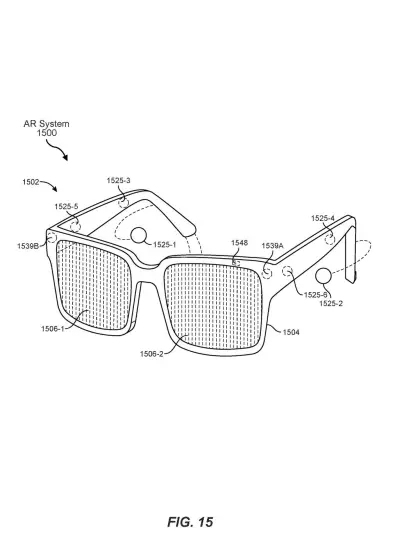
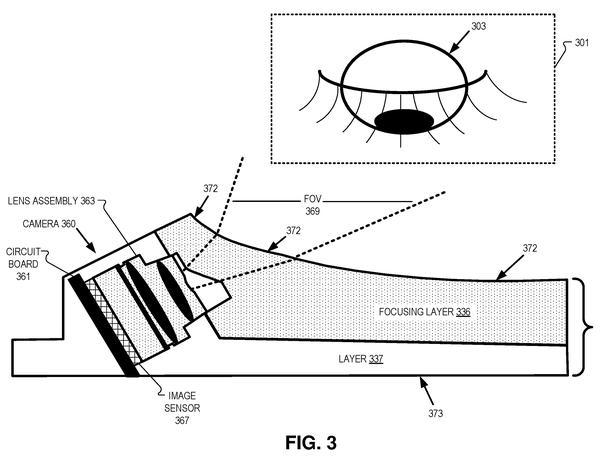
In glasses, the sensor could be an eye-tracking or face-tracking camera. On the wrist, it could be a gesture camera. The description also mentions a glasses camera reading the pulse of other people.
… detecting a specular light component and/or a diffused light component from the polarized light signal, and determining a biometric measurement based on the analyzing the specular light component and/or the diffused light component.
Translation: It separates different types of reflected light to accurately calculate your biological data.
Why sweaty skin matters for Meta's wearables
Wearables tend to give their worst pulse readings when you need them most: mid-workout, sweaty and moving. Sweat and oil make skin shinier, and the filing names that glare as a main thing that wrecks the signal. Filtering it out could help a glasses or watch camera hold a steadier reading on wet skin.
The filing also describes reusing cameras these devices already carry, such as eye-tracking, face-tracking and gesture cameras, so health sensing might not need a new part. It even describes a glasses camera reading the pulse of other people, which would raise obvious privacy questions. Remember this is a patent application, and it names no product.
Meta's 72nd filing we've tracked since May in our smart glasses work, this follows tilting lenses to slim glasses and combining microphones for noise.
Source: US 2026/0305947 A1 at the USPTO (PDF). Full patent text and figures are in the official publication.
Get our take in your Top Stories
Liked this breakdown? Add Patentlyze as a preferred source on Google, and our plain-English take shows up more often in your Top Stories the next time Meta patent news breaks.
Add Patentlyze on Google
One click.
There are more where this came from
We read the new patents from Big Tech, carmakers and more and send you the ones worth knowing. Plain English, free, every week.
The drawings · 19 sheets
19 drawing sheets from US 2026/0305947 A1 · click any drawing to enlarge


Show the other 11 sheets


More from Meta
All 192 Meta patents →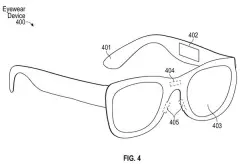

More in Camera
All 279 Camera patents →
Nvidia
Nvidia Patents a Fix for the Visible Seams That Appear in Multi-Camera Photos

Samsung
Samsung Patents a Photo Color Fix That Sharpens Tones Where Human Eyes Notice Most

Samsung
Samsung Patents a Scanner That Reads Product Tags and Camera Feeds Simultaneously

Samsung
No comments yet