
Qualcomm
Qualcomm · Chip · Filed May 8, 2025 · USPTO published Nov 12, 2026 · This week's release
A New Qualcomm Patent Has Graphics Chips Load Their Next Batch of Data While Still Working
A graphics chip that fetches its data one piece at a time spends a lot of its day waiting. Qualcomm's patent application has it load the next batch while it is still crunching the current one.
- Publication number
- US 2026/0359926 A1(US20260359926A1)
- Applicant
- QUALCOMM Incorporated
- Filed · Published
- May 8, 2025 · Nov 12, 2026
- Inventors
- Elina KAMENETSKAYA, Amir MOMENI, Fei WEI, Leiming YU
- Status when we published
- Examiner raised objections; the company can respond
- Document
- 20 claims
- US classification
- 345/501
- Examiner
- LIU, GORDON G (Art Unit 2618)
What Qualcomm's double-buffer graphics trick does
A line cook chops onions while a helper slides the next board of vegetables into reach. The cook never stops to fetch anything, so dinner comes out faster. Qualcomm's patent application applies the same idea inside the chip that draws your phone's graphics.
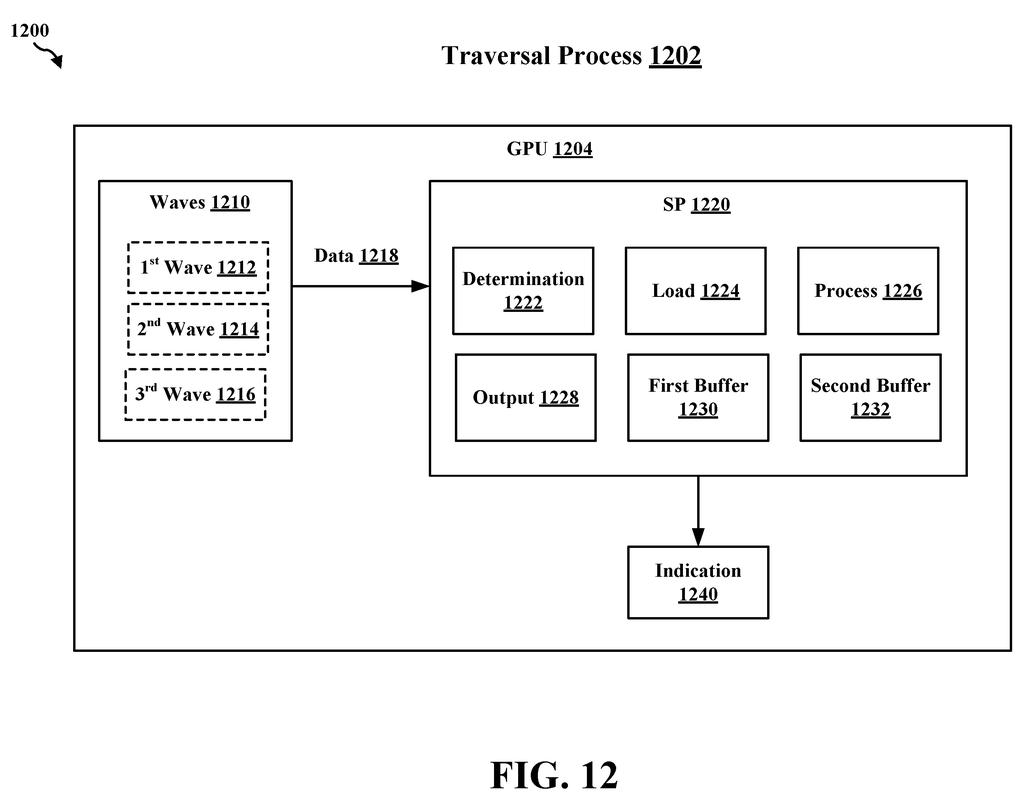
Graphics chips do enormous amounts of multiplication on grids of numbers. The slow part is often fetching those numbers from the chip's main fast storage, which other jobs need too. Qualcomm's filing sets up two small holding areas next to the math circuits. While one is being worked on, the other is being filled with the next chunk of numbers.
The chip also sends a signal when each load finishes, so the math circuits know the next batch is ready. For you, the aim is a chip that wastes less time waiting and leaves room for other work to run at the same time.
… load, into a second buffer and in parallel with the processing of the first wave of the input data, a second wave of the input data …
Translation: The chip loads the next data set while it is still working on the current one.
How the two buffers trade places each round
The claims describe a graphics processor that feeds a block of data (a tile, or grid, of numbers) to its math circuits in waves, meaning chunks of input handled together. The claimed steps run in this order:
- Load the first wave into a first buffer (a small holding area).
- Process that wave with a set of processing elements (the circuits that do the multiplying and adding).
- While that is happening, load the second wave into a second buffer.
- Send out a signal saying the second load is finished.
Later claims keep the pattern going: the second wave gets processed while a third wave loads back into the first buffer, so the two buffers trade places. The description calls this double buffering.
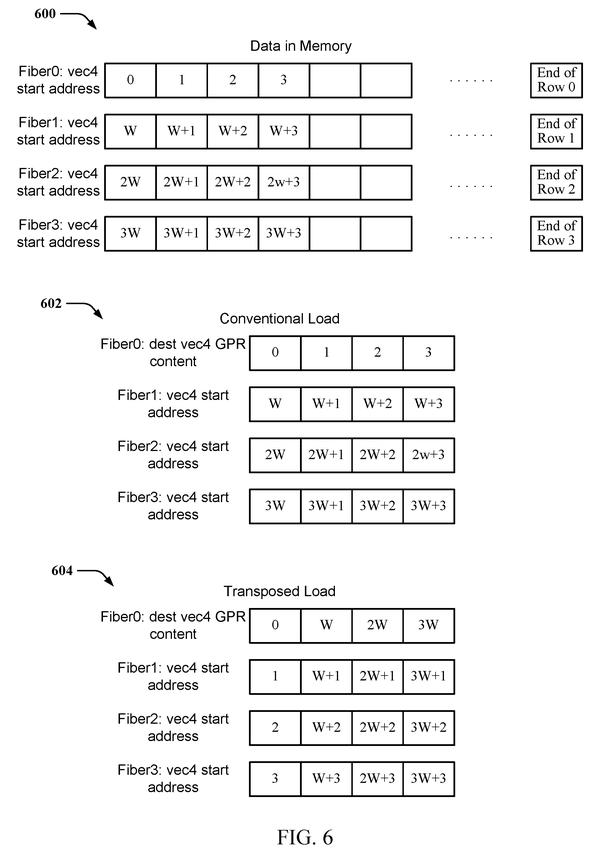
The description explains why. Matrix multiplication (multiplying two grids of numbers, common in graphics work) can be done as an inner product, which re-reads the inputs many times, or an outer product, which reads once but needs result storage that grows fast with tile size. Here, one big read pulls the tile from the general purpose registers (the shader processor's main fast storage) into the buffer. The processing elements, laid out as a 4 by 4 grid in the example, are then fed from the buffer in a fixed pattern. For a 64 by 64 tile, main-storage reads drop from 2,048 to 128, while the nearby buffer handles 2,048.
The filing also describes checking the block's size or shape against a threshold, which the dependent claims treat as an add-on.
What this means for Qualcomm's graphics chips
If this works as described, your device's graphics chip spends less time waiting on its own memory, and its main storage stays free for other jobs. The description says heavy grid math and ordinary graphics work could then run side by side instead of crowding each other out. It lists phones, tablets, game consoles, PCs, and headsets as possible homes.
Keep expectations modest. The filing gives read counts but no measured speed or power results. It is also an early application: the examiner's first review rejected the claims as filed, which is routine and usually followed by amendments.
Qualcomm's 18th filing we've tracked since July in the GPU rendering race adds to a run that includes one on reshuffling data mid-load and one on faster reflections.
Source: US 2026/0359926 A1 at the USPTO (PDF). Full patent text and figures are in the official publication.
Get our take in your Top Stories
Liked this breakdown? Add Patentlyze as a preferred source on Google, and our plain-English take shows up more often in your Top Stories the next time Qualcomm patent news breaks.
Add Patentlyze on Google
One click.
There are more where this came from
We read every patent application Big Tech publishes and send you the ones worth knowing. Plain English, free, every week.
The drawings · 15 sheets
15 drawing sheets from US 2026/0359926 A1 · click any drawing to enlarge


Show the other 7 sheets


More from Qualcomm
All 624 Qualcomm patents →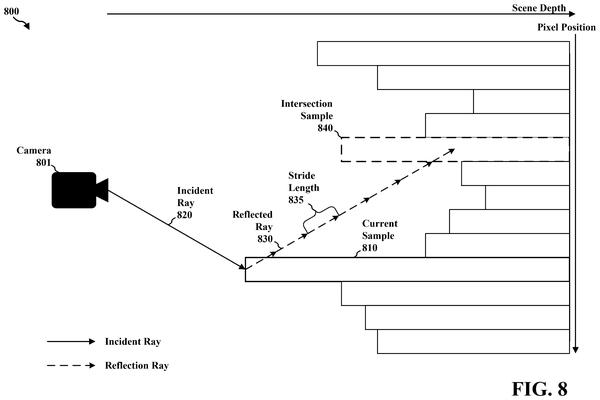

More in Chip
All 645 Chip patents →
AMD
AMD Files Patent to Let Graphics Chips Pull Game Visuals Straight From Storage
AMD
AMD Patents a Faster Way to Find Triangles in Compressed 3D Graphics Data
Nvidia
Nvidia Patents a Way to Keep Graphics Data on the Right Chip
Nvidia
No comments yet