
Qualcomm Patents a Radio Signal That Senses and Communicates at the Same Time
Most radios do one thing at a time: they either send data or they scan for objects. Qualcomm has filed a patent for a waveform design that does both simultaneously, using the same frequency channel.
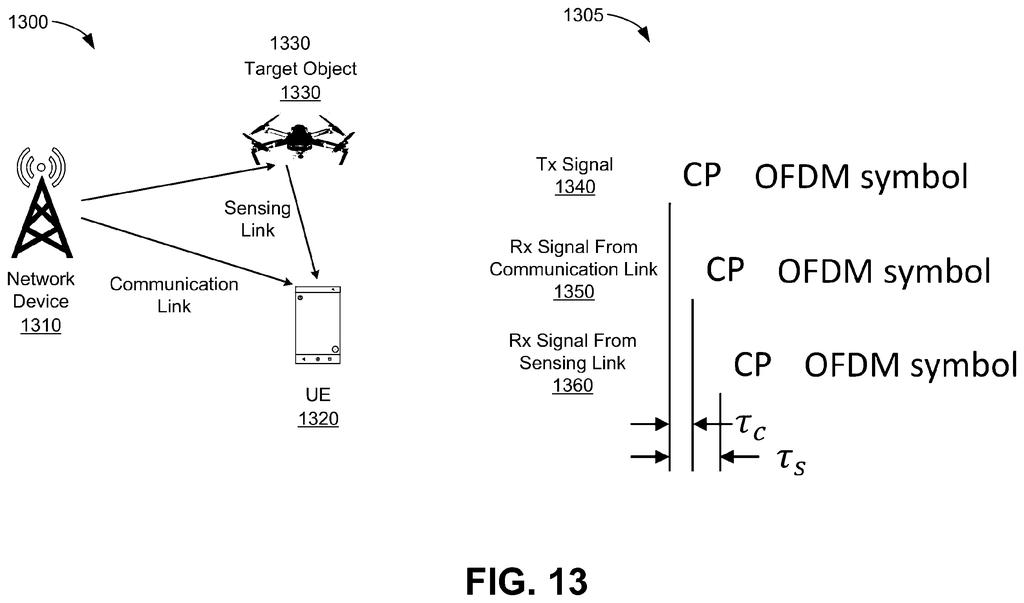
How Qualcomm's dual-purpose radio waveform works
Imagine your phone's cellular signal doing double duty, carrying your video call and acting like a tiny radar to detect objects nearby, all without needing separate hardware for each job. That's the core idea behind this Qualcomm filing.
The trick is in how the signal is built. Standard 5G radio uses a format called OFDM (think of it as a bundle of many narrow radio channels running in parallel). Qualcomm's approach stacks a sensing layer on top of the communication layer inside that same bundle. The sensing portion uses a clever structural trick, a short "prefix" that is a time-shifted copy of the main sensing symbol, so the device can cleanly separate echo signals from transmitted ones when objects bounce the signal back.
You end up with one radio transmission doing the work of two, which matters a great deal as devices get smarter about tracking motion, detecting obstacles, or mapping indoor spaces.
configure resources comprising a first Orthogonal Frequency-Division Multiplexing (OFDM) component for sensing and a second OFDM component for communication …
Translation: The device sets up one part of the radio signal to measure surroundings and another part to send data.
How the cyclic-shifted prefix keeps sensing clean
The patent describes a network device that splits its OFDM radio resources into two components: one dedicated to sensing and one dedicated to communication. OFDM (Orthogonal Frequency-Division Multiplexing) is the underlying radio format already used in 5G and Wi-Fi; it divides a channel into many smaller sub-channels that carry data in parallel.
The sensing component contains two symbols (discrete chunks of radio signal). The key innovation is that the first sensing symbol is a cyclic shifted prefix of the second. A cyclic shifted prefix is a short copy of the main signal, with its time position slightly offset. In traditional OFDM, a plain cyclic prefix guards against echoes interfering with data; here, the shift is deliberate and structured so that when the transmitted signal bounces off a target object and returns, the receiver can mathematically separate the outgoing reference from the incoming echo and extract range or velocity information.
The communication component sits alongside the sensing component in the same overall transmission, so the network device can:
- Send ordinary user data on the communication sub-channels
- Simultaneously illuminate a target area with the sensing sub-channels
- Process the reflected sensing signal to detect objects, estimate distances, or measure movement
This is the broader concept of ISAC (Integrated Sensing and Communication), a design direction the 5G standards body 3GPP has been formalizing for next-generation releases.
… a first sensing symbol includes a cyclic shifted prefix of the second sensing symbol …
Translation: The radar part of the signal uses a specially modified repeating pattern to bounce off objects.
What this means for 5G devices that also need radar
For consumers, the near-term relevance is in devices that need both connectivity and environmental awareness: think automotive radar built into roadside 5G base stations, gesture detection in phones, or indoor positioning that doesn't require separate sensor hardware. Combining the two functions in one waveform means fewer radios, lower cost, and less power draw than running dedicated sensing and data radios in parallel.
Qualcomm has been filing around integrated sensing and communication since at least 2023, which tracks with 3GPP's push to standardize ISAC in Release 19 and beyond. Whether this specific waveform structure gets adopted depends on how it holds up against competing designs in the standards process, but the structural choice here, using cyclic-shifted prefixes rather than separate pilot tones for sensing, is a concrete technical bet on one particular approach.
That makes this Qualcomm's 404th filing in our Qualcomm coverage since May, adding to work like the camera HDR application and the network prediction AI.
The cyclic-shifted-prefix design is a real engineering tradeoff, not just a clever label. Using part of your OFDM frame for sensing means you are giving up that slice of spectrum for data throughput. The patent doesn't quantify that cost, and in practice it will depend heavily on how large the sensing component needs to be to get useful radar resolution at a given range.
There's also a receiver-complexity cost. Cleanly separating the sensing echo from the communication signal in the same waveform requires precise synchronization and signal processing. That works well in a controlled lab setting or a high-end base station; it gets harder in messy real-world environments with lots of reflectors, moving people, and interference from neighboring cells.
Still, the structural choice is defensible. Reusing the cyclic prefix mechanism that OFDM already relies on for data protection is an elegant way to add sensing without redesigning the whole frame format. The question is whether the throughput hit and added processing load clear the bar for real deployments, and that answer won't come from the patent itself.
There are more where this came from
We read every patent application Big Tech publishes and send you the ones worth knowing. Plain English, free, every week.
The drawings
28 drawing sheets from US 2026/0280779 A1 · click any drawing to enlarge


Want this weekly breakdown for a company we don't cover? Patentlyze Pro →