
Qualcomm
Qualcomm · AI / ML · Filed May 7, 2025 · USPTO published Nov 12, 2026 · This week's release
Qualcomm Files Patent for AI Updates That Send the Important Parts First
Qualcomm's filing treats an AI update like a shipment sorted by importance: the pieces that matter most can be sent in a planned order, and the pieces shrink when your signal is weak.
- Publication number
- US 2026/0359710 A1(US20260359710A1)
- Applicant
- QUALCOMM Incorporated
- Filed · Published
- May 7, 2025 · Nov 12, 2026
- Inventors
- Xitong ZHANG, Shusil DANGI, Meng-Lin WU
- Status when we published
- Waiting for an examiner
- Document
- 20 claims
- US classification
- 706/12
What Qualcomm's ranked AI updates actually do
Ever tried to download something huge while driving through a patchy stretch of cell service? Now make that download an AI model, one the filing says can run past multiple terabytes, and make the car the one waiting for it.
Qualcomm's patent application splits an AI update into small chunks and ranks them by how much each one matters to the model's answers. The ranking comes from training: the system keeps randomly switching parts of the model off and tracks which parts it can least afford to lose. Chunks are then sent in that ranked order, and they get smaller when the expected signal is weak.
The receiving device can start adjusting its copy as each chunk lands, instead of waiting for the whole file. For you, that could mean a connected car or phone that improves in steps instead of going quiet during one big download.
adjust a first plurality of weights of a machine learning network based on a first received plurality of weights associated with a trained machine learning network …
Translation: It updates the first batch of neural network weights using data from a trained model.
How the model ranks which pieces matter most
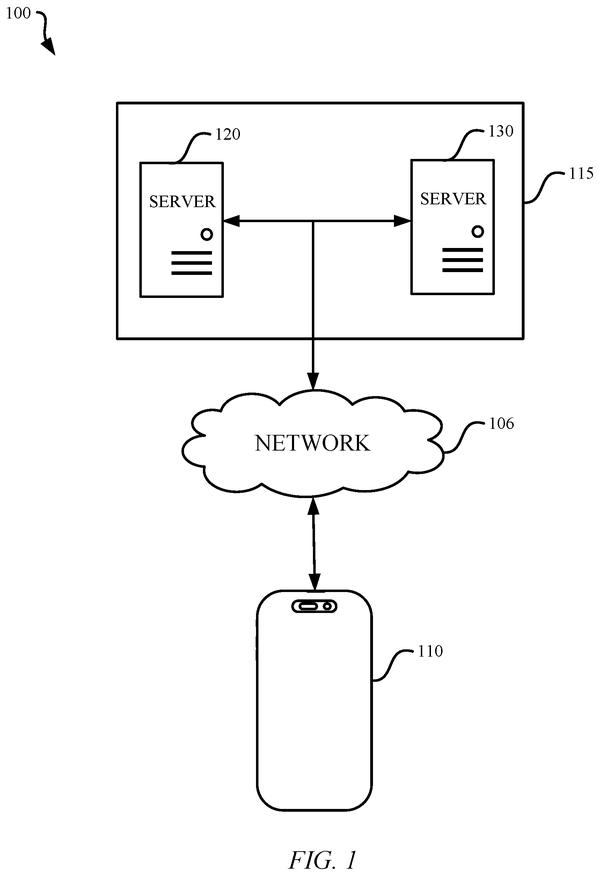
The filing describes two cooperating sides. A server or other training machine fine-tunes an AI model, then sends the changed settings, called weights (the numbers that decide how the model reacts to its input), to a device that already holds a copy of the model.
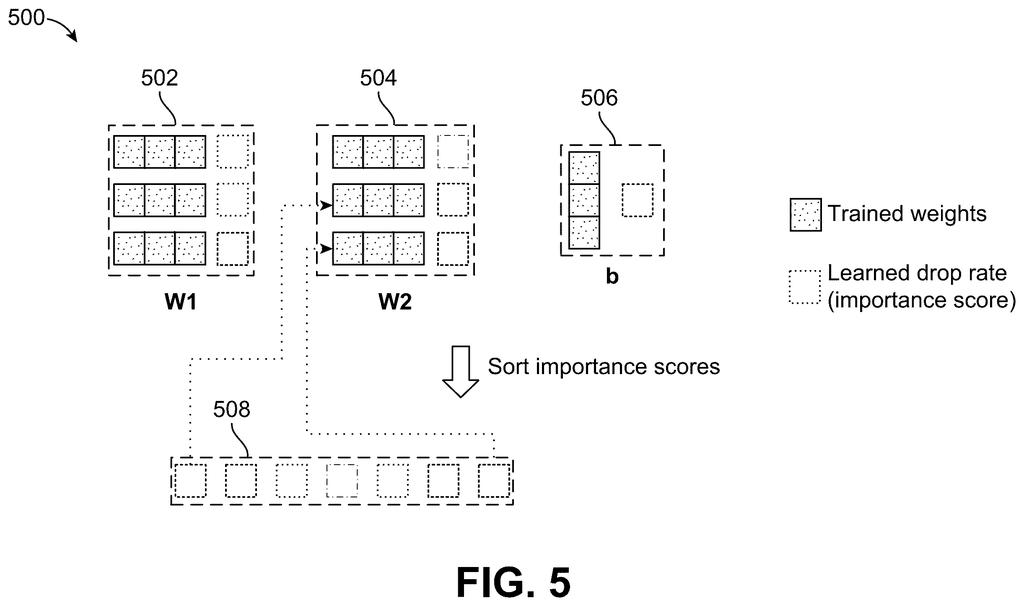
Before sending, the sender divides the weights into portions, such as rows or columns of the big table of numbers that represents the model. Each portion carries a learnable dropout parameter. Dropout is a training trick where parts of the network are randomly switched off during each round. Here, the odds of each portion being switched off are learned along the way. A portion that is switched off often is treated as less important, and one that stays on is treated as more important.
- Portions are sorted by their dropout value and streamed to the device. The filing describes both low-to-high and high-to-low orders.
- Portion size can be set by the expected signal strength: smaller portions for weak signals. Memory, battery and computing limits of the receiving device can also set the size.
- The device adjusts the matching weights in its own copy as each batch arrives, first batch before second.
During training, each round samples which neurons (the model's small calculating units) stay active, using a pair of opposite on/off masks. A penalty term keeps the learned probabilities from collapsing to zero.
The first plurality of weights is received before the second plurality of weights based on learnable dropout parameters corresponding to the first received plurality of weights and the second plurality of weights.
Translation: Prioritized parameters ensure the most important model updates arrive first.
Why weak-signal drivers could care about this
If you have ever waited on a big update over a weak connection, the problem will sound familiar. The filing says models for uses like self-driving can run past multiple terabytes, and a car's signal changes as it moves. Sending pieces in a planned order, at a size the connection can handle, aims to keep the device useful while the update arrives.
The same idea applies to the phones, laptops and other devices the filing lists, since many of them lack the power to train models themselves and depend on updates from servers. Nothing here says when or whether this shows up in a product, and the filing gives no measurements of time saved.
Qualcomm's 66th filing we've tracked in the AI chip wars since July follows work on shrinking models for phones and cutting data movement in graphics chips.
Source: US 2026/0359710 A1 at the USPTO (PDF). Full patent text and figures are in the official publication.
Get our take in your Top Stories
Liked this breakdown? Add Patentlyze as a preferred source on Google, and our plain-English take shows up more often in your Top Stories the next time Qualcomm patent news breaks.
Add Patentlyze on Google
One click.
There are more where this came from
We read every patent application Big Tech publishes and send you the ones worth knowing. Plain English, free, every week.
The drawings · 10 sheets
10 drawing sheets from US 2026/0359710 A1 · click any drawing to enlarge


Show the other 2 sheets


More from Qualcomm
All 624 Qualcomm patents →
More in AI training & infrastructure
All 316 AI training & infrastructure patents →
Microsoft
A New Microsoft Patent Tests Which Parts of an AI Can Run on Cheaper Math
Samsung
Samsung Files Patent for Giving AI Services Only as Much Computing Power as They Need
Microsoft
Microsoft Wins a Patent for Training AI on Your Gaming PC's Idle Time
Apple
No comments yet