
Samsung
Samsung · AI / ML · Filed May 7, 2025 · USPTO published Nov 12, 2026 · This week's release
Samsung Patents AI That Rebuilds the Colors in Dark Phone Photos
Samsung's patent application describes using the same family of AI behind image generators to repair the colors in dark photos, one small patch at a time.
- Publication number
- US 2026/0359932 A1(US20260359932A1)
- Applicant
- Samsung Electronics Co., Ltd.
- Filed · Published
- May 7, 2025 · Nov 12, 2026
- Inventors
- Devendra Kumar Jangid, Pavan Chennagiri Madhusudanarao, John Seokjun Lee, Hamid Rahim Sheikh
- Status when we published
- Waiting for an examiner
- Document
- 20 claims
- US classification
- 382/156
- Examiner
- WAMBST, DAVID ALEXANDER (Art Unit 2663)
What Samsung's dark-photo color fix actually does
Every time you snap a photo in a dim restaurant, your phone is guessing. Its sensor records only one color at each tiny dot (red, green or blue), and software fills in the other two by looking at the neighbors. In the dark, that guesswork gets sloppy, and a plain blue shirt can come out in patches of different blues.
Samsung's patent application swaps in an image-generating AI, the same family of technology behind AI art tools, to do the guessing. The AI works on a squeezed-down version of the photo, cleans it up step by step, then expands it back into a full-size image.
The filing also describes chopping the photo into pieces. The AI works on about half the picture, then the other half, then the whole thing, and the pieces get stitched together so the result looks consistent.
… generating, by the at least one processing device, high-quality latent features based on the low-light latent features using a stable diffusion model and a conditional network; …
Translation: AI upgrades dark and grainy photo details into a clear picture using advanced diffusion technology.
How the AI cleans a photo piece by piece
The process starts with a raw low-light frame from the camera sensor. Sensors sit behind a pattern of red, green and blue filters (a Bayer pattern), so each pixel records only one color. The first step runs the frame through Bayer filtering to produce a linear sensor output, meaning values that rise in direct proportion to the light hitting the sensor. Several frames can optionally be aligned and blended first.
Next, an encoder (a neural network that compresses the image) shrinks the data into latent features, a compact summary of edges, textures and shapes. It uses convolutional layers, which scan small regions for patterns, and max pooling, which keeps the strongest signal in each small region.
A stable diffusion model (an AI that removes noise step by step to produce a cleaner result) then refines those features. A conditional network feeds it guidance from the original dark image so the output stays faithful to the real scene, and random noise can be added as part of the process. A decoder expands the cleaned features back into a full linear image, which can then be adjusted for display.
The filing also describes patch splitting: patches from about half the image, then the other half, then the whole image are each cleaned up and merged. The text says this improves consistency between patches. The same approach could also handle sharpening, denoising and de-blurring.
What this could mean for your night photos
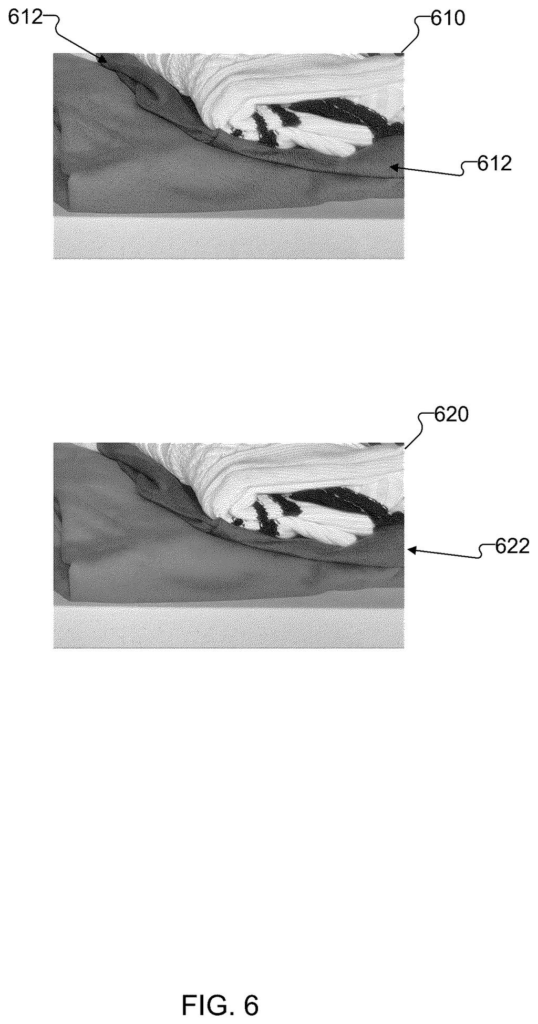
For you, the payoff would be dim-scene photos with truer colors, such as a solid-color jacket staying one shade instead of splitting into blotches. The filing lists smartphones, tablets and cameras as possible devices, so the target is the everyday cameras people already carry. Dim scenes are a common weak spot for small camera sensors, so a fix there is easy to notice.
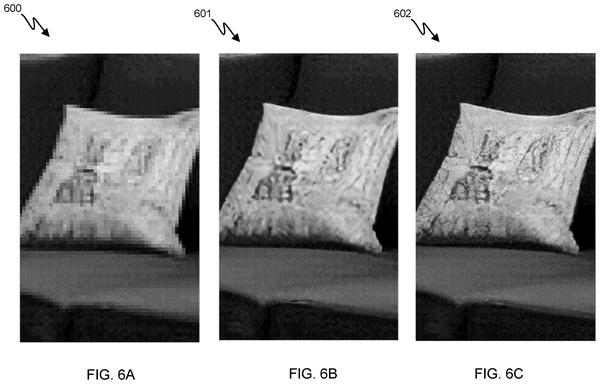
The evidence in the filing is a single example comparison against standard color reconstruction, with no timing or battery figures. It also says some of the work could run on a server instead of the device, which suggests heavy AI processing is a real question here.
Samsung's 169th filing we've tracked since May joins earlier work like one restoring blurry photo detail and one pausing cleanup for low battery in our camera sensor push.
Source: US 2026/0359932 A1 at the USPTO (PDF). Full patent text and figures are in the official publication.
Get our take in your Top Stories
Liked this breakdown? Add Patentlyze as a preferred source on Google, and our plain-English take shows up more often in your Top Stories the next time Samsung patent news breaks.
Add Patentlyze on Google
One click.
There are more where this came from
We read every patent application Big Tech publishes and send you the ones worth knowing. Plain English, free, every week.
The drawings · 10 sheets
10 drawing sheets from US 2026/0359932 A1 · click any drawing to enlarge


Show the other 2 sheets


More from Samsung
All 1,629 Samsung patents →
More in AI image & video
All 223 AI image & video patents →
Google
Google Files Patent for Fixing Blurry Phone Photos With Less Battery Drain
Google
Google Patents an AI That Fills In the Washed-Out Parts of Your Photos
Google
Google Patents an AI Gatekeeper That Decides Which Photos Are Worth Enhancing
Nvidia
No comments yet