
Samsung
Samsung · Cell phone · Filed Jul 1, 2026 · USPTO published Nov 19, 2026 · This week's release
Samsung Files Patent for Phone Autofocus That Handles Sun and Shade at Once
Your phone camera can record the same scene with a long and a short exposure, and Samsung's new patent application is about choosing which one to trust when it focuses. Choose wrong, and the person in the sun or the one in the shade can end up soft.
- Publication number
- US 2026/0370939 A1(US20260370939A1)
- Applicant
- Samsung Electronics Co., Ltd.
- Filed · Published
- Jul 1, 2026 · Nov 19, 2026
- Inventors
- Heungki LEE, Joonsub LEE, Ildo KIM, Kangmin LEE, Seungho LEE
- Status when we published
- Waiting for an examiner
- Document
- 15 claims
- US classification
- 348/345
- Parent application
- Continuation of PCT/KR2024/097125 (filed Dec 18, 2024)(PCTKR2024097125)
What Samsung's two-exposure autofocus does
Every time you snap a photo of two friends, one squinting in bright sun and the other tucked into shade, your phone has to decide where and how to focus. The catch is that the camera sensor can record the same scene two ways: a long exposure that shows dark areas well, and a short exposure that keeps bright areas from washing out.
Samsung's patent application describes a way for the phone to pick the better of the two for the part of the picture you care about. It builds a map of the scene, checks which version has more strong pixels in the spot you tapped (or a face the phone found), and focuses using only that one.
The filing says older approaches either throw one version away, run both and use more power, or merge them using a separate sensor with limited speed.
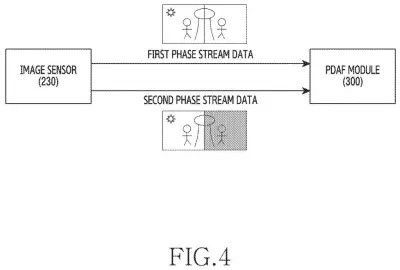
receive first phase stream data and second phase stream data from the image sensor, obtain a first image map comprising a plurality of blocks, generate a second image map based on allocating at least one pixel included in the first phase stream data and at least one pixel included in the second phase stream data to the plurality of blocks respectively …
Translation: The phone gathers dual streams of light data and maps them out into a grid of smaller sections.
How the phone picks sun data or shade data
Phase detection autofocus (PDAF) is how most phones focus fast. Light passing through the lens is split into two rays that land on paired pixels in the image sensor. If the two rays line up, the image is in focus. If they are offset, the phone knows which way and how far to move the lens.
The sensor here produces two phase streams (two parallel feeds of that focus data). The first comes from a longer exposure, so it shows dark areas well. The second comes from a shorter exposure, so it holds up in bright areas. The filing says earlier fixes either drop one stream, process both and use more power, or merge them using a separate sensor with limited speed.
Samsung's approach works in these steps:
- Build a grid of blocks, then fill it with pixels from both streams, chosen by brightness or sharpness.
- Set the region of interest (the part of the frame to focus on): your tap first, then a detected face, animal or text, then a default.
- Count which stream has more pixels in that region, and run autofocus on that stream only.
The filing says the sensor can capture both exposures at once in preview mode, and that finishing the region and choosing the stream can happen in parallel.
… set a region of interest in the second image map, select any one of the first phase stream data or the second phase stream data based on pixel-by-pixel information included in the region of interest, and perform autofocus based on the selected phase stream data.
Translation: It zeroes in on a specific area to pick the best light stream for sharpening the focus.
Why backlit photos could focus faster
The practical payoff is a phone that locks focus more reliably in awkward light. Think of a beach photo where one person squints in glare and another stands under an umbrella. The filing's own example is exactly that: one person in sun, another in shade, with the short-exposure data better for the sunlit face and the long-exposure data better for the shaded one.
It also points at a cost angle. By choosing one stream instead of running both, the phone can save processing power and battery, which matters when the camera is live in preview mode the whole time you frame a shot. The filing describes the idea for smartphones and other cameras, and says nothing about a specific device or launch.
That makes this Samsung's 173rd filing we've tracked since May in our camera sensor push watchlist, adding to one on zoom with stabilization and one on stabilization and autofocus.
Source: US 2026/0370939 A1 at the USPTO (PDF). Full patent text and figures are in the official publication.
Get our take in your Top Stories
Liked this breakdown? Add Patentlyze as a preferred source on Google, and our plain-English take shows up more often in your Top Stories the next time Samsung patent news breaks.
Add Patentlyze on Google
One click.
There are more where this came from
We read every patent application Big Tech publishes and send you the ones worth knowing. Plain English, free, every week.
The drawings · 11 sheets
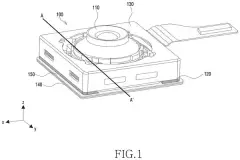
11 drawing sheets from US 2026/0370939 A1 · click any drawing to enlarge


Show the other 3 sheets


More from Samsung
All 1,662 Samsung patents →
More in Cell phone
All 494 Cell phone patents →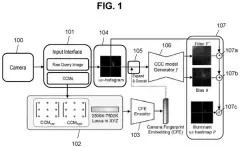
Samsung
Samsung Patents a Way to Keep Colors Consistent Across Every Camera on Your Phone
Samsung
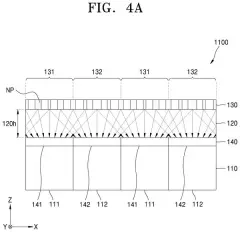
Samsung Patents a Nanostructure Lens That Splits Light Without Color Filters
Samsung
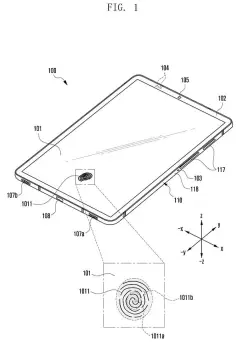
Samsung Patents a Fingerprint Reader Hidden Inside a Phone's Structural Skeleton
Samsung
No comments yet