
Samsung
Samsung · Software · Filed Jul 2, 2026 · USPTO published Nov 19, 2026 · This week's release
Samsung Patents a Camera That Stops Ignoring Your Rapid-Fire Shutter Taps
Your phone camera can ignore a second shutter tap because it is still busy finishing the first photo. Samsung's patent application describes a camera that gets ready for the next tap as soon as the first photo's raw frames are captured.
- Publication number
- US 2026/0370936 A1(US20260370936A1)
- Applicant
- SAMSUNG ELECTRONICS CO., LTD.
- Filed · Published
- Jul 2, 2026 · Nov 19, 2026
- Inventors
- BOSUNG KIM, HAENA YOON, YOUNGJUN LEE, BYOUNGGEUN CHOI, EUNAH CHOI
- Status when we published
- Waiting for an examiner
- Document
- 20 claims
- US classification
- 348/207.1
- Parent application
- Continuation of PCT/KR2024/015294 (filed Oct 8, 2024)(PCTKR2024015294)
What Samsung's camera does between two taps
Imagine you're at a birthday party and a kid blows out the candles. You tap the shutter, then tap again a split second later as the cake slides off the table. Your phone is still busy finishing the first photo, so it simply ignores the second tap.
Samsung's patent application describes a fix. Your phone grabs the raw frames for the first photo, then right away gets itself ready for another tap. The heavy work of blending those frames into one polished picture carries on behind the scenes, so a second photo can start while the first is still being finished.
The filing says the goal is less waiting between shots. Without it, a tap that lands too early can be disregarded. With it, your phone should feel quicker when you shoot several photos in a row.
acquire a first photographing command; in response to the first photographing command, acquire one or more image frames for acquiring an image corresponding to the first photographing command from the image sensor; and based on the one or more image frames being acquired, switch to a standby state to be able to acquire an image corresponding to a second photographing command …
Translation: The phone takes a picture request, grabs the image data, and immediately gets ready for your next tap instead of freezing up.
How the camera signals it's ready for more
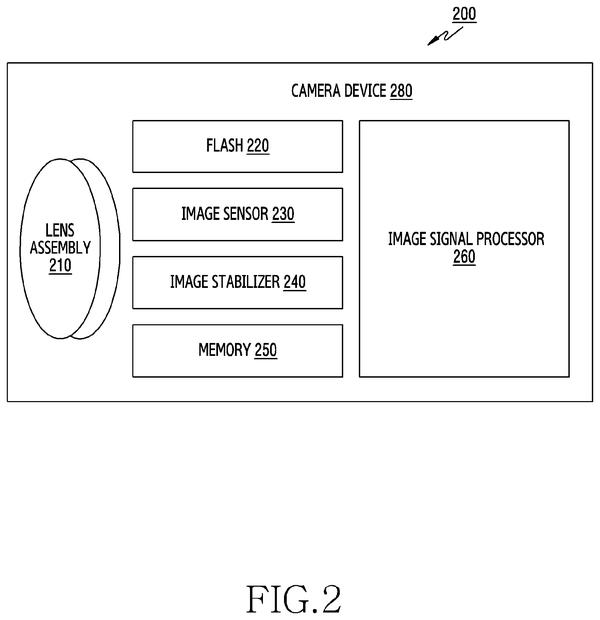
The claims cover a simple sequence. The phone gets a first photographing command (you pressing the shutter). It pulls the needed image frames from the image sensor, the chip that turns light into data. As soon as those frames are in, it switches to a standby state that can accept a second photographing command, and the pattern repeats for a third, and so on.
The description explains why. Today, a tap that arrives before image processing for the previous shot is finished may be disregarded. Here, the second tap can arrive in the window between 'frames captured' and 'processing done' and still be handled. The filing says each shot is managed independently, with its own unique label (a primary key), so photos don't get processed out of order.
A few details sit underneath:
- How many frames to use is decided when you press the shutter, based on the shooting environment. One example uses 15 frames, picking first the ones closest in time to your tap.
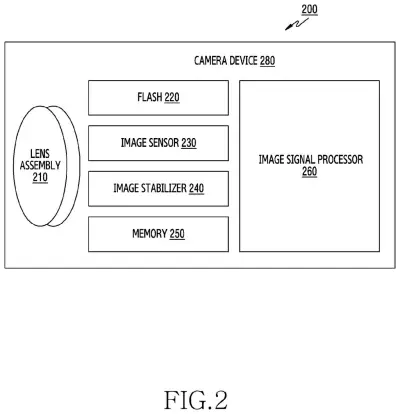
- The ready signal travels through the phone's software layers: from the hardware abstraction layer (the part that talks to the camera hardware) to the framework (shared system services) and on to the application layer (the camera app).
- A shutter-style audio cue can be part of the start signal.
- If capture and processing finish at nearly the same moment, the ready signal can ride along with the completion signal.
… switch to a standby state capable of acquiring an image corresponding to a second photographing command on the basis of the acquisition of the one or more image frames.
Translation: The camera resets instantly after capturing a frame so it is ready for your next click.
What this means for burst-style phone photos
If you've ever mashed the shutter on a fast-moving moment and ended up with one photo instead of two, this is the annoyance Samsung's filing targets. The stated payoff is lower capture delay and a camera that feels more responsive when you shoot several photos in a row.
It matters more as phone cameras do more work after the tap. Blending many frames into one better image takes time, and that time can leave the camera deaf to your next press. The filing keeps the blending and stops it from blocking the next shot. It lists smartphones, tablets, cameras and wearable devices as places this could run.
This is the 174th Samsung filing we've tracked since May in our camera sensor push watchlist, adding to work like autofocus for sun and shade and zoom with shake reduction.
Source: US 2026/0370936 A1 at the USPTO (PDF). Full patent text and figures are in the official publication.
Get our take in your Top Stories
Liked this breakdown? Add Patentlyze as a preferred source on Google, and our plain-English take shows up more often in your Top Stories the next time Samsung patent news breaks.
Add Patentlyze on Google
One click.
There are more where this came from
We read every patent application Big Tech publishes and send you the ones worth knowing. Plain English, free, every week.
The drawings · 9 sheets
9 drawing sheets from US 2026/0370936 A1 · click any drawing to enlarge


Show the other 1 sheets

More from Samsung
All 1,662 Samsung patents →
More in Software
All 814 Software patents →
Samsung
Samsung Files Patent to Catch the Sharpest Moment of a Jump on Your Phone
Samsung
Samsung Patents a Camera That Strips Out Your Voice While You Record
Samsung
Samsung Patents a Camera Lock That Lets You Reframe a Shot Without Moving the Lens
Samsung
No comments yet