
Sony
Sony · Audio · Filed Jul 27, 2026 · USPTO published Nov 19, 2026 · This week's release
Sony Files Patent to Cancel the Click of Your Controller Buttons on Voice Chat
Every trigger pull and rumble motor on a game controller makes noise that your microphone happily broadcasts to your teammates. Sony's patent describes a way to cancel that noise by working out how the sound travels through the controller itself.
- Publication number
- US 2026/0369258 A1(US20260369258A1)
- Applicant
- Sony Interactive Entertainment Inc.
- Filed · Published
- Jul 27, 2026 · Nov 19, 2026
- Inventors
- Calum Armstrong, Michael Lee Jones
- Status when we published
- Waiting for an examiner
- Document
- 20 claims
- US classification
- 381/71.11
- Parent application
- Continuation of 18/570,152 (filed Dec 22, 2023)(18570152)
What Sony's controller noise-canceling does
You're deep into a late-night match, talking strategy with your squad, and every time you mash a button your teammates hear a loud clatter. Your controller's rumble adds a low buzz underneath your voice, too. Nobody enjoys that, and nobody wants to hold a button down just to mute it.
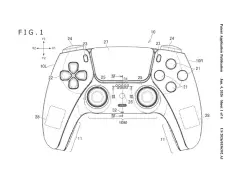
Sony's patent describes a fix that listens to the controller itself rather than the room. The system figures out how sound from a button, trigger or rumble motor travels through the plastic shell to the microphone. Then it builds a mirror-image sound that cancels the clatter out, the same basic idea as noise-canceling headphones.
It also accounts for how you hold the controller, since a tight grip muffles the vibrations and a loose one lets them ring.
… generate a transfer function representing audio output at an output element during operation of the input element based at least in part on the determined one or more characteristics; and control the output element to output an acoustic cancellation signal based at least in part on the generated transfer function …
Translation: The system figures out how the button click sounds and plays a counter sound to wipe it out.
How Sony models sound traveling through a controller
The patent covers a system that produces a transfer function (a mathematical description of how a sound changes between the place it starts and the place it is heard) for each button, trigger or other input on a controller. It then uses that to generate an opposing signal that cancels the noise.
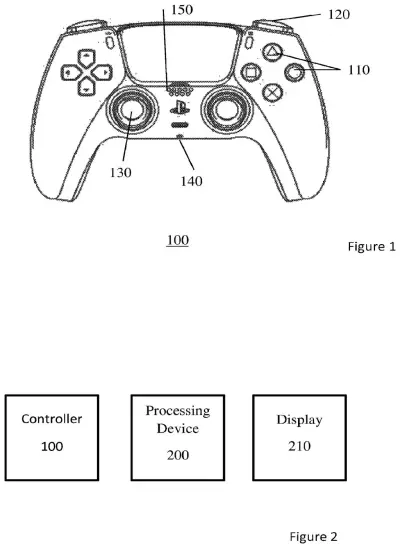
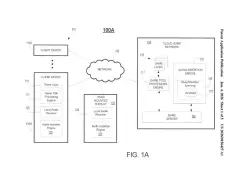
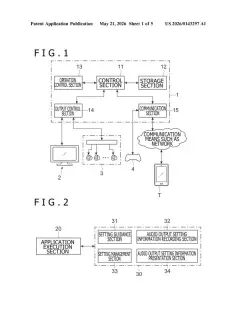
First, the system collects parameters about the controller: where the buttons, microphone and speakers are, how the controller is moving, and how it is being held. The filing says these can come from a model of the device, from camera images, or from information captured while you play.
Second, it works out the audio path from each input to the microphone. The claims name three things to measure:
- Attenuation: how much quieter the sound gets along the way
- Resonance: how the plastic shell rings or vibrates at certain pitches
- Frequency changes: how the tone shifts between source and microphone
Third, it builds the transfer function and sends an acoustic cancellation signal to an output element, such as a speaker. That signal is meant to destructively interfere with (cancel out) the sound the input made. The description also says the same result can come from editing the recorded audio directly instead of playing a counter-sound.
… the acoustic cancellation signal is to destructively interfere with and substantially cancel the audio created by the input element.
Translation: This counter sound clashes with the button click to erase it from voice chat.
What this means for gamers on voice chat
If this ever ships, your voice chat gets cleaner without you changing a thing. Button clicks, trigger thuds and rumble hum would be handled at the source, before they reach your teammates or stream viewers. The filing also says it could cancel the noise you hear yourself, so strong haptic feedback would feel less disruptive.
The approach also avoids two things the filing criticizes: push-to-talk buttons and heavy software noise suppression that can add delay. Because the controller already knows when you press a button, it can act on that knowledge instead of guessing from the audio. The description mentions game controllers, keyboards, laptops and handheld consoles, so the idea could reach beyond one gamepad.
That makes this Sony's 172nd filing we've tracked since May in our PlayStation patent watchlist, which already covers fixes for hollow game audio and a neckband that blows air.
Source: US 2026/0369258 A1 at the USPTO (PDF). Full patent text and figures are in the official publication.
Get our take in your Top Stories
Liked this breakdown? Add Patentlyze as a preferred source on Google, and our plain-English take shows up more often in your Top Stories the next time Sony patent news breaks.
Add Patentlyze on Google
One click.
There are more where this came from
We read every patent application Big Tech publishes and send you the ones worth knowing. Plain English, free, every week.
The drawings · 6 sheets
6 drawing sheets from US 2026/0369258 A1 · click any drawing to enlarge


No comments yet