Latest cybersecurity patents, Page 20
Fraud detection, encryption, sign-in and privacy controls from Microsoft, Google, IBM, Apple and others. The cybersecurity and privacy patent applications we have broken down from the companies we track, newest first.
- in the Nov 12 release
- 8
- in November so far
- 27
- filings tracked
- 341
- last 90 days
- 143
Recent filings
Newest first · 341 total-
Google · Published Jun 25
New Patent Keeps Your Account ID Hidden From Apps
Every time an app asks Google who you are, your real account identity gets passed around. Google's new patent describes a system that hands apps a throwaway stand-in code instead, keeping your actual account hidden behind Google's servers.
-
Google · Published Jun 18
Google Patents Technology to Detect Fake Faces by Measuring How Cameras See Depth
Holding a printed photo in front of a phone's face-unlock camera is one of the oldest tricks in the book. Google's latest patent describes a way to catch that — using a trick already built into the camera sensor itself.
-
Google · Published Jun 18
Google Patents a Cloud System That Keeps Private Data Locked Inside a Sealed Processing Chamber
Google is patenting a cloud architecture where your most sensitive data — health records, financial transactions, whatever — gets processed inside a mathematically sealed chamber that even Google's own infrastructure can't peek into.
-
Microsoft · Published Jun 18
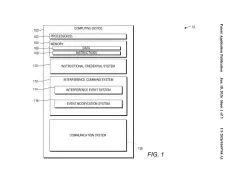
Microsoft Patents Laser Sign-In That Locks Out Anyone Not Standing Directly Opposite
What if two devices could only talk securely when they were literally pointing at each other? That's the core idea behind this Microsoft patent — a system that uses tightly aimed laser light instead of radio signals to establish a trusted connection.
-
Samsung · Published Jun 18
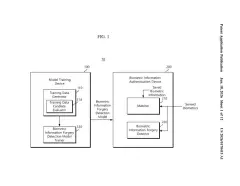
Samsung Patents Technology to Teach Security Systems to Spot Fake Fingerprints and Face Scans
Teaching an AI to spot a fake fingerprint or face scan is tricky when you don't have enough real fakes to practice on. Samsung's solution: make the fakes yourself, then test them before using them as training data.
-
IBM · Published Jun 18
Red Hat's New Patent Watches AI Models for Signs of Tampering
When an AI model quietly starts doing things it never used to do at the operating system level, that's a red flag — and Red Hat wants to be the one catching it.
-
IBM · Published Jun 18
IBM Patents a Tool That Keeps Sensitive Business Data Hidden During Code Troubleshooting
When developers debug software running in the cloud, they often get a full view of the code's internal state — including private customer data that was never meant to be seen. IBM's new patent tries to close that gap before it becomes a breach.
-
IBM · Published Jun 18
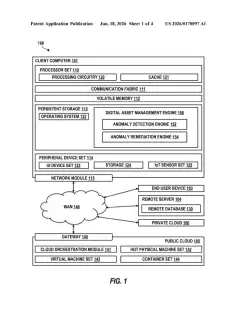
IBM Patents an AI System That Watches Digital Assets for Misuse in Real Time
IBM has patented a system where an AI model learns what your company's digital assets normally look like — and automatically steps in when something goes wrong. Think of it as a security guard that already knows every file's job description.
-
IBM · Published Jun 18
Red Hat Patents a System That Strips Harmful AI Commands Before They Run
AI models can generate code that looks helpful but contains instructions that could break — or quietly hijack — a system. Red Hat's new patent describes a filter that catches those dangerous commands before they ever execute.
-
Qualcomm · Published Jun 18
Qualcomm Patents a Double-Check System to Stop Hackers From Faking Face and Fingerprint Scans
Your fingerprint scan might be genuine — but is the data that reaches your phone's security chip actually from this moment, or could malware have slipped in a recording? Qualcomm's new patent is designed to make sure the answer is always the former.
-
Qualcomm · Published Jun 18
Qualcomm Patents a Security Screen That Blocks Manipulated Instructions Sent to AI Systems
When someone tries to trick an AI model by slipping hidden instructions into a query, Qualcomm wants a gatekeeper to catch it before the model ever sees it.
-
Intel · Published Jun 18
Intel Patents a Network Card That Can Block Programs from Secretly Copying Your Data
Network monitoring tools are everywhere in modern data centers — but Intel's new patent describes a chip-level switch that can stop those tools from actually reading the contents of your data packets.