
Google
Google · AR / VR · Filed Jul 27, 2026 · USPTO published Nov 19, 2026 · This week's release
Google Files Patent for Captions That Jump From Your Laptop to Your Smart Glasses
Put on a pair of smart glasses and the subtitles on your laptop could slide off the screen and into your lenses, so you never read them twice.
- Publication number
- US 2026/0367855 A1(US20260367855A1)
- Applicant
- GOOGLE LLC
- Filed · Published
- Jul 27, 2026 · Nov 19, 2026
- Inventors
- Ruofei Du, Volodymyr Kyryliuk, Jason Mayes, Na Li, Ping Yu, Alex Olwal
- Status when we published
- Waiting for an examiner
- Document
- 1 claims
- US classification
- 345/3.1
- Parent application
- Continuation of 19/102,099 (filed Feb 7, 2025)(19102099)
What Google's caption hand-off to glasses does
Ever put on a pair of smart glasses halfway through a movie and found the subtitles showing up twice? Once on your laptop screen, and again floating in front of your eyes. Google has filed a patent application to stop that doubling up.
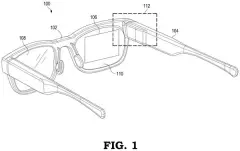
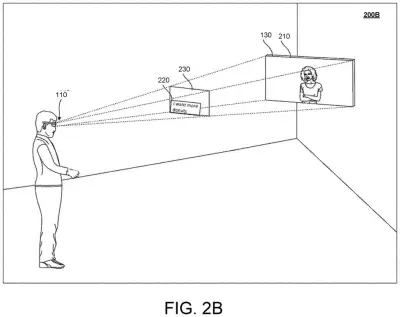
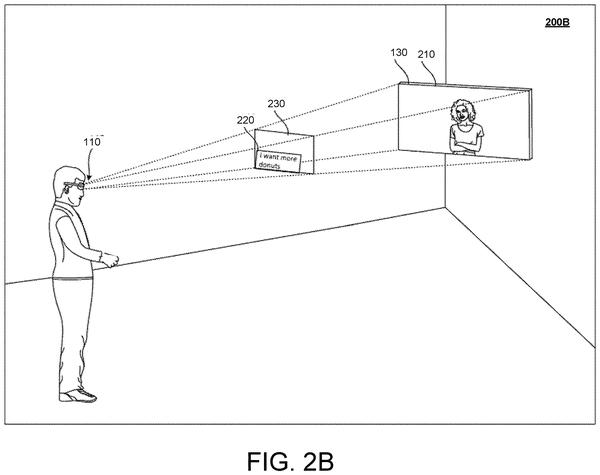
Here is the idea. Your laptop plays the video and shows the captions like normal. When it decides you are wearing your glasses and using them, the captions leave the laptop screen and appear in the glasses instead. The video stays on the laptop, and you watch it through the lenses with the text hovering alongside.
The text does not have to be a plain transcript. The filing lists translations, summaries, emojis and graphics too. If you take the glasses off, the captions can slide back to the screen, so nobody misses a word.
… upon determining that a wearable display device is in use, transferring display of the visual representation to the wearable display device to display on a wearable display.
Translation: When smart glasses are detected, the captions automatically move from your computer screen to the glasses.
How the laptop knows your glasses are on
Claim 1 covers a method that runs on a computing device, such as a laptop, phone, tablet or desktop. The device plays a video, receives a visual representation of speech (a text version of what people in the video are saying, like captions) and shows it on its own screen. When it determines that a wearable display device, such as smart glasses, is in use, it transfers the text to the wearable's display.
The claim does not say how the device works that out. The description offers several options:
- The same user is logged into both devices.
- A camera on the glasses sees the screen playing the video, or an eye-tracking camera spots the screen reflected in the wearer's eye.
- Ultra-wideband radio (a short-range signal that can measure distance and direction between devices) shows where the glasses are relative to the screen.
- A camera on the computing device sees the glasses being worn, or a machine-learning model predicts it.
The hand-off can also run in reverse. The text can return to the screen when the glasses' battery drops below a set level, when you stop using them, or when the screen is already showing the captions. If you look away from the screen, the glasses can show both the video and the text, handy if you step away to make tea.
On a shared screen in a group call, the text stays on the screen if any viewer lacks glasses. The filing also says the logic could run as a browser extension, so it would work across video services.
Methods and devices are provided to allow for the transfer of a display of a visual representation between a head mounted device and a computing device during the display of a video.
Translation: This technology lets video subtitles jump smoothly between a regular computer monitor and a headset while you watch.
What this means for captions on smart glasses
If you rely on captions, whether because you are hard of hearing or because the video is in another language, this patent application tackles a small but real annoyance: text that shows up in two places at once, or in the wrong one. A hand-off that happens on its own means you would not have to dig through settings every time you put your glasses on or take them off.
It also shows how Google is thinking about glasses as a companion to the screens you already own. The filing describes a group video call where the captions stay on the shared screen if even one person is not wearing glasses, and a browser add-on that could work with any video service. Whether any of that reaches a product is unknown. A patent application is only a description of an idea.
That makes this Google's 61st filing we've tracked since May on our smart glasses display watchlist, following applications on reading small print and sizing up objects.
Source: US 2026/0367855 A1 at the USPTO (PDF). Full patent text and figures are in the official publication.
Get our take in your Top Stories
Liked this breakdown? Add Patentlyze as a preferred source on Google, and our plain-English take shows up more often in your Top Stories the next time Google patent news breaks.
Add Patentlyze on Google
One click.
There are more where this came from
We read every patent application Big Tech publishes and send you the ones worth knowing. Plain English, free, every week.
The drawings · 11 sheets
11 drawing sheets from US 2026/0367855 A1 · click any drawing to enlarge


Show the other 3 sheets


More from Google
All 1,127 Google patents →
More in AR / VR
All 713 AR / VR patents →
Google
Google Files Patent to Make Smart Glasses Displays Look Evenly Bright
Google
New AR Glasses Patent Fixes Distortion From Bent Frames
Google
Google's New Patent Uses Rapid Light Switching to Give Smart Glasses Deeper Darks and Finer Shades
Google
No comments yet