
Hyundai & Kia
Hyundai & Kia · Automotive · Filed Jun 4, 2025 · USPTO published Nov 19, 2026 · This week's release
Kia Files Patent for EVs That Coast Down to the Right Speed Before Curves
Kia has filed a patent application for an electric or hybrid car that uses its navigation data to slow itself by coasting, aiming to hit the right speed at a curve or junction without you braking.
- Publication number
- US 2026/0365038 A1(US20260365038A1)
- Applicant
- KIA CORPORATION
- Filed · Published
- Jun 4, 2025 · Nov 19, 2026
- Inventors
- Jun Yong Park, Jun Haeng Heo, Tae Kyun Kim, Seong Joo Kim, Kyu hwan Jo, Seo Yeon Kim
- Status when we published
- Examiner raised objections; the company can respond
- Document
- 20 claims
- US classification
- 701/22
- Examiner
- INGRAM, THOMAS P (Art Unit 3668)
What Kia's coast-to-the-curve idea does
Ever lifted your foot off the accelerator for a sharp curve ahead, then still had to stab the brake because you came in too fast? Kia's patent application tries to fix that by letting an electric or hybrid car do the slowing down by coasting.
Here's the idea. Your car's navigation data already knows where the curves, junctions and speed-limit zones are. When one is coming up, the car works out how fast you should be going when you get there. Then it adjusts how hard the motor drags on the wheels so you arrive at that speed without touching the brake.
Near the end of the approach, the car switches to a more careful mode. It keeps checking how quickly it is actually slowing and corrects as needed. The payoff is less braking and less wasted energy.
… control a coasting torque of the drive unit such that a vehicle speed at the deceleration required point tracks a target speed at the deceleration required point …
Translation: The car adjusts its natural slowing down to hit the exact right speed at the exact right spot.
How the car switches from a guess to a check
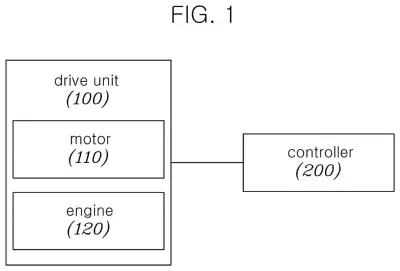
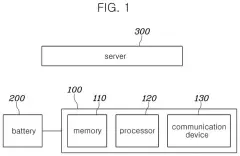
The filing covers an electrified vehicle (an EV, or a hybrid with a motor and an engine) and a controller that manages coasting torque. That is the gentle push or drag the motor applies while you aren't pressing the accelerator, and it decides how fast the car slows down.
The trigger is a deceleration required point: a spot ahead on your route where the car should be going slower. The description lists the entry to a road junction, the start of a speed-limit zone, or the start of a curve. Each type gets a preset target speed, and if several such points are ahead, the car uses the one with the lowest target speed.
The control happens in two stages:
- Feedforward stage: at the start, the car sets the motor's coasting torque from one number, the gap between your current speed and the target. A bigger gap means a stronger slowing push.
- Feedback stage: once the remaining distance drops below a reference distance, the car compares how fast it is slowing with how fast it should be slowing, and nudges the torque to close that gap.
The reference distance grows with the speed gap. The examples use 60%, 70% and 80% of the total slowing distance, and steeper hills ahead can shorten it. The car reads its real slowing rate from an acceleration sensor, smoothed with a filter to remove jitter.
… upon satisfaction of a feedback control entry condition during the coasting torque control, control the coasting torque based on a feedback torque command …
Translation: It switches to a more precise adjustment mode once certain driving conditions are met.
Why one-pedal-style coasting needs this
If you drive an EV or hybrid, this is about the everyday habit of easing off the pedal and hoping you slow enough. A car that hits the right speed on its own means fewer last-second brake taps and a calmer ride. The filing also says less braking saves energy, since the car uses its own momentum to slow down.
The approach depends on things many cars already have: a motor you can control precisely, navigation data, and an acceleration sensor. The examiner's first review rejected the claims as filed, which is routine at this stage and usually followed by amendments. Nothing here says when, or whether, a driver would see it as a feature.
Hyundai's 12th filing since November in our Hyundai coverage follows work on spreading booster wear and recharging via the power generator.
Source: US 2026/0365038 A1 at the USPTO (PDF). Full patent text and figures are in the official publication.
Get our take in your Top Stories
Liked this breakdown? Add Patentlyze as a preferred source on Google, and our plain-English take shows up more often in your Top Stories the next time Hyundai & Kia patent news breaks.
Add Patentlyze on Google
One click.
There are more where this came from
We read the new patents from Big Tech, carmakers and more and send you the ones worth knowing. Plain English, free, every week.
The drawings · 6 sheets
6 drawing sheets from US 2026/0365038 A1 · click any drawing to enlarge


More from Hyundai & Kia
All 15 Hyundai & Kia patents →
More in Automotive
All 432 Automotive patents →
IBM
IBM Files Patent to Pick the Right Moment for Your Car's Software Update
Nvidia
Nvidia Files Patent to Pick the Right Lane Without Detailed Self-Driving Maps
Ford
Ford Patents a Steering Wheel That Leans Toward the Curve During Self-Driving
Nvidia
No comments yet