
Hyundai & Kia
Hyundai & Kia · Automotive · Filed Oct 22, 2025 · USPTO published Nov 19, 2026 · This week's release
Kia Files Patent for Dashboard Warnings That Tell You to Charge to 100%
Some electric car batteries are hard to read, so the percentage on your dash is partly a guess. Kia's patent has the car keep a tally of when that guess is likely drifting, then asks you to charge to 100% to reset it.
- Publication number
- US 2026/0365077 A1(US20260365077A1)
- Applicant
- KIA CORPORATION
- Filed · Published
- Oct 22, 2025 · Nov 19, 2026
- Inventors
- Hyun Jun Jang, Tae Kyu Kang, Si Joong Kim, Eun Hwan Kang, Hyun Jin Park, Rin Choi
- Status when we published
- Waiting for an examiner
- Document
- 20 claims
- US classification
- 320/134
What Kia's full-charge warning actually does
Imagine your electric car says it has 50% left, but the battery really holds closer to 42%. You'd plan your drive around a number that isn't true. That's the risk with lithium iron phosphate (LFP) batteries, a popular, long-lasting and cheaper type. Their voltage barely changes across most of the charge range, so the car can't just read the voltage to know how full the battery is.
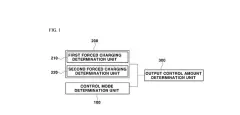
Kia's patent describes a workaround. The car keeps a running tally of how much the battery has been used: energy moved in and out, miles driven and hours on the road. When the tally gets high enough, a message appears on your dash. The higher the tally, the stronger the message. At the top level, the car can set your charging limit to 100%, even if you had chosen something lower.
Charging all the way to full gives the car a known starting point. Once the battery hits 100%, the tally resets. Until then, the car plays it safe and eases back on how hard it charges and discharges.
determining, by a controller, at least one state of charge correction indicator based on cumulative usage history information of the battery …
Translation: The car computer tracks how you drive to figure out when your battery gauge might be inaccurate.
How the battery tracks when it needs a reset
The system works by watching for signs that the battery's charge estimate may have drifted. The filing calls these state of charge correction indicators (state of charge is the car's estimate of how full the battery is). There are up to four:
- Usage capacity: the battery adds up all the current flowing through it, in both directions, so braking energy fed back in counts too. In the example, the indicator goes up by 1 each time total use reaches twice the battery's rated capacity, adjusted for its health.
- Driving distance: measured by the vehicle's own computer, using wheel or speed sensors.
- Driving time: in the example, up 1 for every two weeks of driving.
- Lost records: whether the car can still confirm its previous charge estimate. A replaced battery computer or a software update can wipe that data.
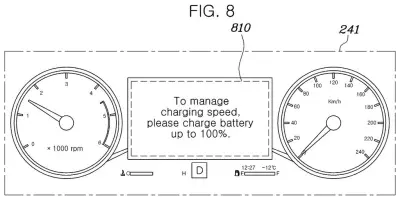
Each indicator maps to a level from 1 to 3, and the highest level wins. In the example, level 1 shows a warning for 5 seconds after the car starts. Level 2 shows it for 10 seconds and sets the charging limit to 100%. Level 3 keeps the warning up until the battery is full, and also sets the limit to 100%.
The filing also describes extra caution while the estimate is shaky. The car can shift the charge reading by a few percent (2%, 3% or 5% in the examples) and trim charge and discharge amounts by a ratio tied to the level. Once the battery reaches 100%, the indicators reset to zero.
… outputting, by the controller, full charge warning information corresponding to the determined at least one state of charge correction indicator via a display or adjusting a predetermined charging limit of the battery …
Translation: The system either pops up a warning on your screen telling you to juice up to maximum, or it forces the car to charge higher.
Why LFP battery owners may see this prompt
If you drive an EV with this kind of battery, you could see a dash message after a couple of weeks of driving, or after the car's battery computer is replaced or updated. Today the percentage on your screen is the only number you get. This filing is about keeping that number honest. It also means the car, not you, may decide when a full charge is due.
There's a tradeoff. At the highest level, the car overrides a lower charging limit you set, and the filing's own example messages warn that charging speed may drop. LFP batteries are spreading in EVs because they're cheaper and long-lived. This filing goes after their main weakness, the hard-to-read fuel gauge. The filing doesn't name a Kia model.
Hyundai's fourth filing we've tracked since November in our Hyundai coverage adds to a run that includes modular car software and sensor-built road maps.
Source: US 2026/0365077 A1 at the USPTO (PDF). Full patent text and figures are in the official publication.
Get our take in your Top Stories
Liked this breakdown? Add Patentlyze as a preferred source on Google, and our plain-English take shows up more often in your Top Stories the next time Hyundai & Kia patent news breaks.
Add Patentlyze on Google
One click.
There are more where this came from
We read the new patents from Big Tech, carmakers and more and send you the ones worth knowing. Plain English, free, every week.
The drawings · 12 sheets
12 drawing sheets from US 2026/0365077 A1 · click any drawing to enlarge


Show the other 4 sheets


More from Hyundai & Kia
All 15 Hyundai & Kia patents →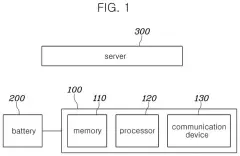
More in Automotive
All 432 Automotive patents →
GM
GM Files Patent for an EV That Tells You If Your Battery Will Last as Long as You Want
GM
GM Files Patent for Catching Bad EV Battery Packs Using Data Cars Send Home
Toyota
Toyota Patents a Dashboard Display That Shows Your Side Mirror Camera When You Signal
Ford
No comments yet