
Nvidia Patents Technology to Format AI Data Inside the Internet Connector Before the GPU Processes It
Every time an AI model trains on new data, that data has to be cleaned up and reformatted before the GPU can touch it. Nvidia thinks the network card should be doing that work, not the GPU.
What Nvidia's network-card preprocessing actually does
What happens when a data pipeline keeps your GPU sitting idle, waiting for work it could already be doing? That bottleneck is surprisingly common in AI data centers, and it eats into the performance you're paying for.
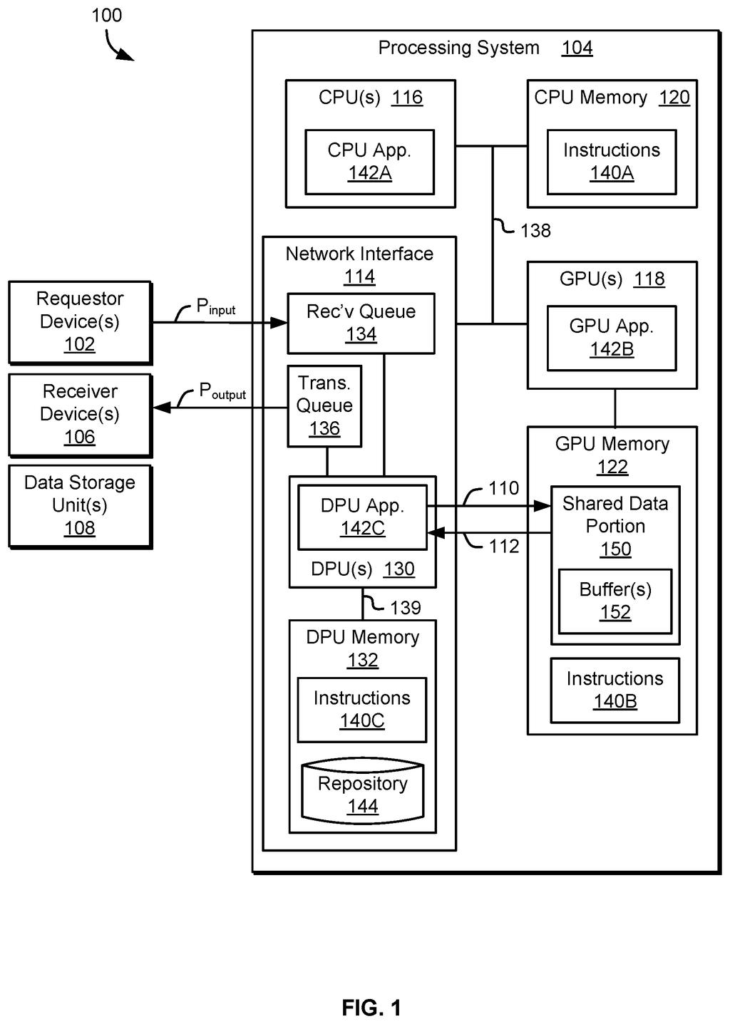
Nvidia's patent describes moving that prep work to the network interface card, the component that handles incoming data before it reaches anything else. Instead of handing raw data to the GPU and making it reformat everything, the network card converts it into the right shape, then parks it in shared memory where the GPU can grab it immediately.
The upside for you, if you're running large-scale AI workloads, is that your expensive GPU spends more time doing actual computation and less time doing housekeeping. It's a bit like having a prep cook chop vegetables so the head chef never has to stop cooking.
… a network interface separate from the at least one accelerator to convert the data and store the data in the memory in preparation of performance of the at least one operation by the at least one accelerator.
Translation: A network chip prepares incoming data before handing it off to the main processor.
How the network interface converts and stores data for the GPU
The patent describes a system with two main pieces: at least one accelerator (in practice, a GPU or similar parallel processor) and a network interface that operates independently of that accelerator.
The network interface's new job is data conversion: taking data that arrives over a network in one format and converting it to a second format that the accelerator can process directly. Once converted, the network interface writes the data into shared memory that the accelerator can access.
The accelerator then picks up the already-formatted data and runs its computations, which could include AI training or inference operations, without needing to spend any of its own cycles on the reformatting step.
- Data arrives at the network interface in its original format
- The network interface converts it to a GPU-compatible format
- Converted data is stored in memory accessible to the accelerator
- The accelerator processes it without doing any format conversion itself
The core claim is that the network interface is separate from the accelerator, meaning it has its own processing resources dedicated to this task rather than borrowing compute from the GPU.
… converting the data to a second format, storing the converted data in memory accessible by at least one parallel processing unit, and processing the converted data stored in the memory using the at least one parallel processing unit.
Translation: The system reformats the data and saves it in shared memory so the graphics chip can process it.
What this means for AI training speed and GPU efficiency
GPUs are expensive, and their time is valuable. Any task a GPU does that isn't matrix multiplication or model computation is, in a sense, wasted money. Offloading data preparation to a dedicated component lower in the stack is a well-understood design principle, but applying it specifically at the network interface level is a meaningful architectural choice for AI infrastructure.
Nvidia's interest in data-center pipeline efficiency shows up in multiple layers of their stack. For operators running large AI training clusters, reducing the preprocessing burden on accelerators could translate directly into throughput gains without adding more GPUs. For everyday users, the impact is more indirect: faster, cheaper AI services.
Nvidia's 47th filing we've tracked in AI chip wars since July adds to a run that includes GPU handling network tasks and one cutting camera power use.
Moving format conversion work from the graphics processor to the network card sounds like a small plumbing change, but it requires network hardware capable of doing real computation on the fly, which is not standard in most facilities today. It also depends on a memory setup where the network card can write directly into space the graphics processor can read, a configuration that exists in high-end data centers but is far from universal.
The shortest path to a product here runs through specialized server hardware, not a software update. Whoever builds this has to decide which data formats to support, how much dedicated memory to budget for, and how to handle failures, none of which the patent addresses.
That makes this a useful idea with a long runway before it ships as anything a customer touches.
There are more where this came from
We read every patent application Big Tech publishes and send you the ones worth knowing. Plain English, free, every week.
The drawings
48 drawing sheets from US 2026/0300779 A1 · click any drawing to enlarge


Want this weekly breakdown for a company we don't cover? Patentlyze Pro →
Be the first to weigh in