
Samsung
Samsung · AI / ML · Filed Jul 6, 2026 · USPTO published Nov 19, 2026 · This week's release
Samsung Patents a Fix for AI Photo Edits That Invent Strangers
When you erase a stranger from a photo, AI tends to paint a brand-new stranger into the gap. Samsung's patent application describes a way to stop that from happening.
- Publication number
- US 2026/0368973 A1(US20260368973A1)
- Applicant
- Samsung Electronics Co., Ltd.
- Filed · Published
- Jul 6, 2026 · Nov 19, 2026
- Inventors
- Youngjin HUR, Moonhwan JEONG, Chankyoo MOON
- Status when we published
- Waiting for an examiner
- Document
- 20 claims
- US classification
- 345/619
- Parent application
- Continuation of PCT/KR2024/020862 (filed Dec 20, 2024)(PCTKR2024020862)
What Samsung's photo-eraser patent actually does
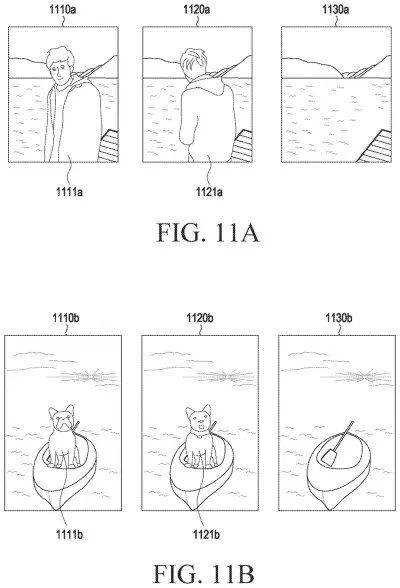
Today, when you erase someone from a photo and let AI fill the gap, the AI has no idea who belonged there. It draws a generic face based on the faces it learned from, so you can end up with a different stranger in the same spot. Stretching a photo wider has the same flaw: a person cut off at the edge can get finished into a whole new person.
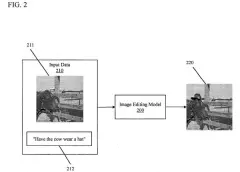
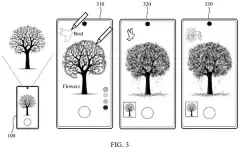
Samsung's filing describes a fix. After you pick the person or pet to remove, the phone cuts them out and gives the AI an outline of the empty spot plus an instruction not to draw a person or animal there. The AI then fills the gap with background that blends in with its surroundings.
When you extend a photo past its edges, the phone also checks people cut off at the border and removes the ones the AI would otherwise have to invent, while anyone fully in the frame stays.
… obtain a second image excluding the first part from the first image and first information related to the first part, wherein the first information includes information for preventing an image region corresponding to the first part from being generated as the person …
Translation: The system creates a stripped-down version of the photo along with special rules to stop the AI from making up a new person.
How the filing decides which people to cut out
The claims cover a device with a display that takes a request to remove part of a stored photo, then checks whether that part is a person. A further claim adds animals. If it is, the device produces two things: a second image with that part cut out, and "first information" meant to stop the empty region from being generated as that person.
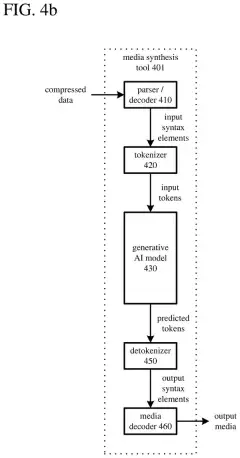
A command then goes to a generative AI model (software that creates new image content from patterns it learned) to run inpainting (filling a hole inside a photo) or outpainting (extending a photo past its edges). The result is a third image where the filled region is not a person. The first information includes a mask, an outline of the removed area, paired with instructions not to render a person or animal there.
The filing also describes rules for deciding what gets removed:
- If a face is detected in the part, the device builds the removal information.
- If no face is found, it measures how much of a box drawn around the part the figure fills. The examples give cutoffs of about 30% for a person and 50% for an animal.
- For someone cut off at the photo's edge, a box covering less than a set share of the image width (about 20% for a person, 10% for an animal in the examples) gets removed, since the AI would have to invent too much.
- People who are not at the boundary are left in the photo.
The AI model can run on the device or on a server. The finished image can be shown in an image app or sent to another device.
… obtain a third image generated by the generative AI model such that the image region corresponding to the first part is not related to the person by performing at least one of the inpainting or the outpainting …
Translation: The AI fills in the empty space left behind without accidentally generating a stranger.
Why erased photo bombers should stay erased
If something like this reached a phone's photo editor, erase tools would behave more the way you expect: the person you remove is replaced by grass, wall or sky, not by a different face. That matters most for family photos, where a surprise stranger in the background is more jarring than a visible smudge.
The edge-of-frame rules also point to a practical use. When you widen a photo, the editor decides on its own whether a half-visible person is worth keeping. The filing mentions phones, tablets and wearables as possible devices. It only describes the editing method and gives no product or release plans.
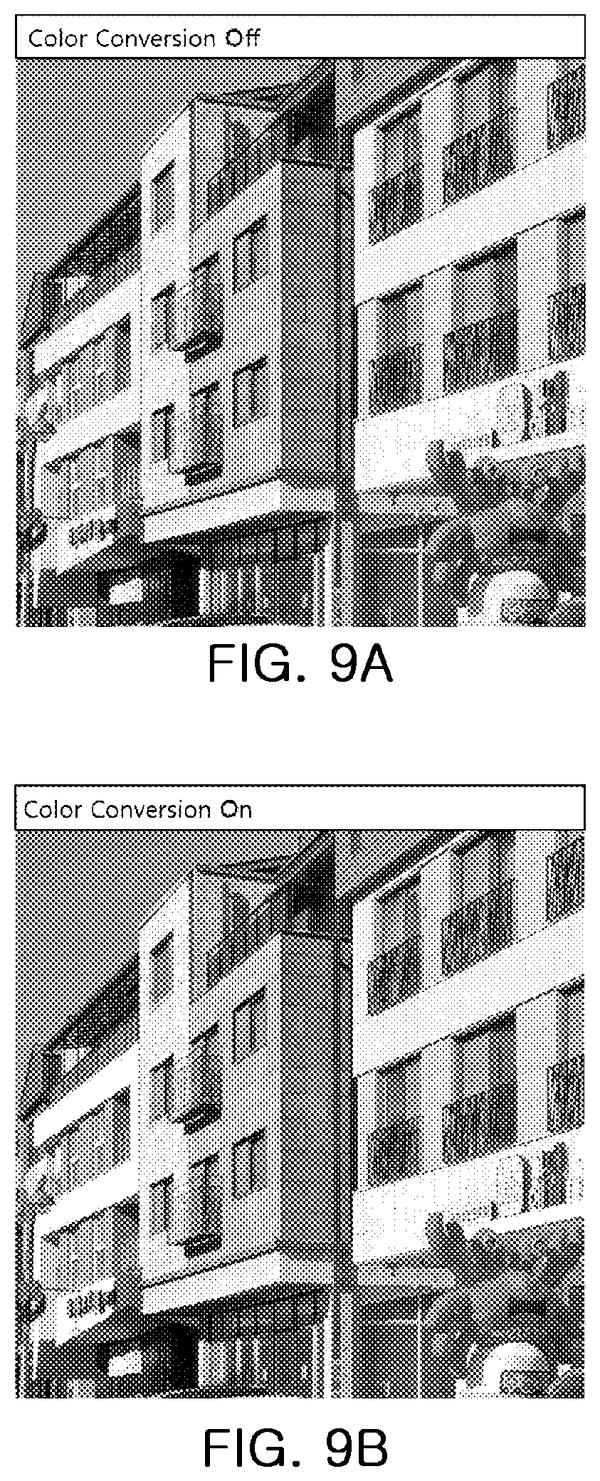
This is the 40th Samsung filing we've tracked since July in our AI photo editing race, building on one on per-channel color and one rebuilding dark photo colors.
Source: US 2026/0368973 A1 at the USPTO (PDF). Full patent text and figures are in the official publication.
Get our take in your Top Stories
Liked this breakdown? Add Patentlyze as a preferred source on Google, and our plain-English take shows up more often in your Top Stories the next time Samsung patent news breaks.
Add Patentlyze on Google
One click.
There are more where this came from
We read every patent application Big Tech publishes and send you the ones worth knowing. Plain English, free, every week.
The drawings · 15 sheets
15 drawing sheets from US 2026/0368973 A1 · click any drawing to enlarge


Show the other 7 sheets


More from Samsung
All 1,662 Samsung patents →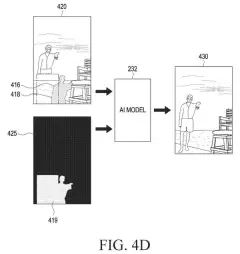
More in AI image & video
All 226 AI image & video patents →
Qualcomm
Qualcomm Files Patent for Giving AI Photo Editors a Moment to Think
Microsoft
Microsoft Patents an AI Judge That Picks the Cleanest Photo Cutout
Qualcomm
Qualcomm Files Patent for AI That Sketches Where Everyone Stands Before Drawing a Group Photo
Microsoft
No comments yet