
Waymo (Google)
Waymo (Google) · Automotive · Filed Jul 22, 2026 · USPTO published Nov 19, 2026 · This week's release
Waymo Files Patent for Suggesting Nearby Pickup Spots When Your Pin Won't Work
You drop a pin on a map, but that spot may be a busy roadside where a driverless car can't safely stop. Waymo's patent has the system offer nearby spots it knows are workable, and you choose one.
- Publication number
- US 2026/0366879 A1(US20260366879A1)
- Applicant
- Waymo LLC
- Filed · Published
- Jul 22, 2026 · Nov 19, 2026
- Inventors
- Peter Colijn, Joshua Seth Herbach, Matthew Paul McNaughton
- Status when we published
- Waiting for an examiner
- Document
- 20 claims
- US classification
- 705/7.13
- Parent application
- Continuation of 18/953,761 (filed Nov 20, 2024)(18953761)
What Waymo's pickup-spot suggestions do
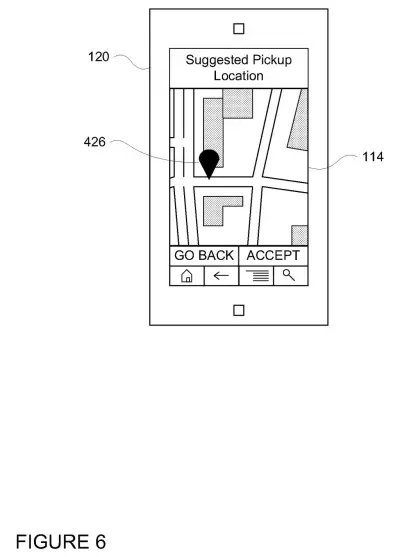
Imagine you tap a spot on your phone map to be picked up, but it sits beside a busy road where a driverless car can't safely pull over. Waymo's patent describes a ride-hailing system that catches this and offers you a short list of nearby places where a car can actually stop.
When you request a ride, the system checks a detailed map for pre-approved stopping spots close to the place you picked. The filing gives 500 feet as an example starting range, and you can widen or shrink it. The options go to your phone, you choose one, and the car is told to head there.
The filing also describes using the same idea for drop-offs, including when something like a puddle or broken glass turns up at the planned stop.
receiving, by one or more processors from a client computing device associated with a user, a request for a vehicle having an autonomous driving mode, the request identifying a location …
Translation: The system gets a ride request from your phone that includes your starting spot.
How Waymo picks spots within walking range
The core claim is a four-step loop. A phone app sends a ride request with a location. A server checks detailed map information (roads, construction zones, live traffic, and a list of places where a vehicle can stop) and picks suggestions based on that location and the rider's preferences. The suggestions go to the phone, the rider picks one, and the chosen spot is sent to the car with instructions to drive there.
The dependent claims lean on a threshold distance, meaning a cutoff radius around the requested spot, which the rider's preferences can change. The description gives 500 feet as a default, measured in a straight line or as a walking distance. If the requested spot is already an approved stop, it comes back as the suggestion.
The description also offers an optional scoring step. Each candidate spot gets points for:
- Rider effort: sidewalks, hills, and how many roads you would have to cross.
- Car effort: whether it must pass the spot and turn around, whether construction or traffic blocks it, and whether there is room to pull over.
The scores are added up, so a farther spot on your side of the street can beat a closer one across a highway. The list can be capped at about 3 spots. If nothing is in range, the rider gets a notice that the location is unavailable.
Pick up locations may include locations where an autonomous vehicle can pick up a passenger, while destination locations may include locations where the vehicle can wait for an additional passenger …
Translation: These spots are chosen so the self-driving car can safely meet you or wait for you.
What this means for your next robotaxi ride
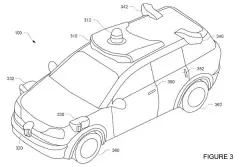
If you have ever watched a ride-share driver circle the block because your pin landed on the wrong side of a busy street, you know the problem. A driverless car has fewer options than a human driver. The filing says autonomous vehicles can't drive everywhere human-driven ones can, and that construction, emergency activity and high speed limits can make a stop unsafe. Offering a vetted spot up front means fewer failed pickups and safer places to step out.
The idea also covers the end of the trip. If a stop becomes unreachable or the car's sensors spot a hazard at the planned drop-off, the same logic can offer you a new spot or warn you. The filing is a continuation of a long chain of earlier applications going back to 2015, so expect the core idea to be familiar.
That makes this Google's 1123rd filing we've tracked in our Google coverage since May, adding to work like email updating your calendar and captions moving to smart glasses.
Source: US 2026/0366879 A1 at the USPTO (PDF). Full patent text and figures are in the official publication.
Get our take in your Top Stories
Liked this breakdown? Add Patentlyze as a preferred source on Google, and our plain-English take shows up more often in your Top Stories the next time Google patent news breaks.
Add Patentlyze on Google
One click.
There are more where this came from
We read every patent application Big Tech publishes and send you the ones worth knowing. Plain English, free, every week.
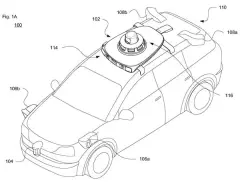
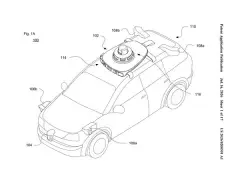
The drawings · 12 sheets
12 drawing sheets from US 2026/0366879 A1 · click any drawing to enlarge


Show the other 4 sheets


More from Google
All 1,127 Google patents →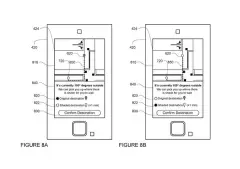
More in Automotive
All 377 Automotive patents →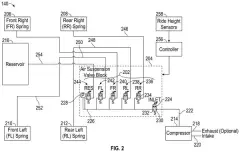
Tesla
Tesla Patents Air Suspension Valves That Ease Your Car Up Instead of Jolting It
Waymo (Google)
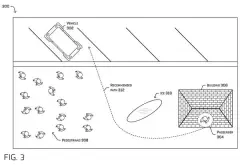
Google Patent Aims to Help Robotaxis Find Passengers in Busy Pickup Areas
Amazon
Amazon's Zoox Files Patent for Robotaxis That Warn You About Ice and Crowds
Waymo (Google)
No comments yet