
Qualcomm
Qualcomm · AR / VR · Filed Feb 10, 2026 · USPTO published Nov 12, 2026 · This week's release
Qualcomm Files Patent for AR Meetings Where Remote Coworkers Appear Beside Your 3D Model
Qualcomm's new patent application would put a coworker from another city next to your 3D model, as a stand-in that moves when they do.
- Publication number
- US 2026/0358994 A1(US20260358994A1)
- Applicant
- QUALCOMM Incorporated
- Filed · Published
- Feb 10, 2026 · Nov 12, 2026
- Inventors
- Alexander TYURIN, Gerald WRIGHT
- Status when we published
- Waiting for an examiner
- Document
- 20 claims
- US classification
- 345/419
- Parent application
- Continuation of 17/522,797 (filed Nov 9, 2021)(17522797)
What Qualcomm's remote-coworker AR patent does
Every time a team reviews a 3D design on a video call, someone ends up saying, 'No, the part on the left. Your other left.' A flat screen makes it hard to point at things, and harder still to tell where a colleague is looking.
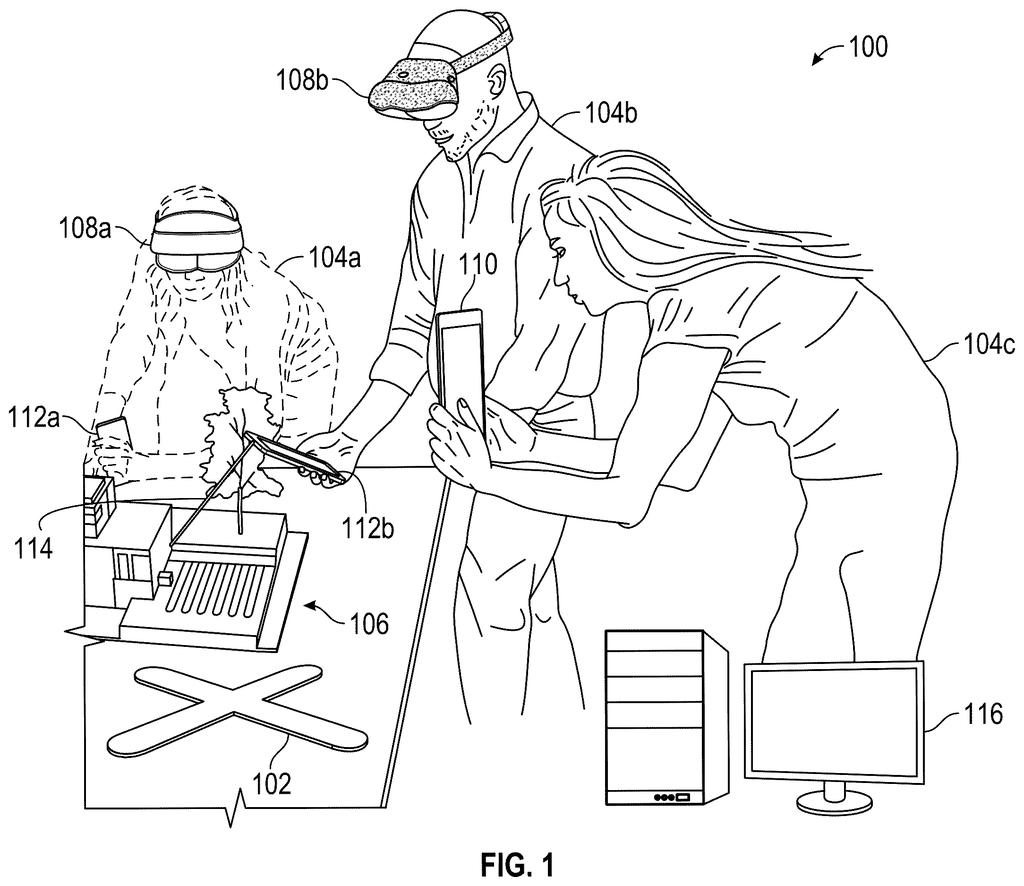
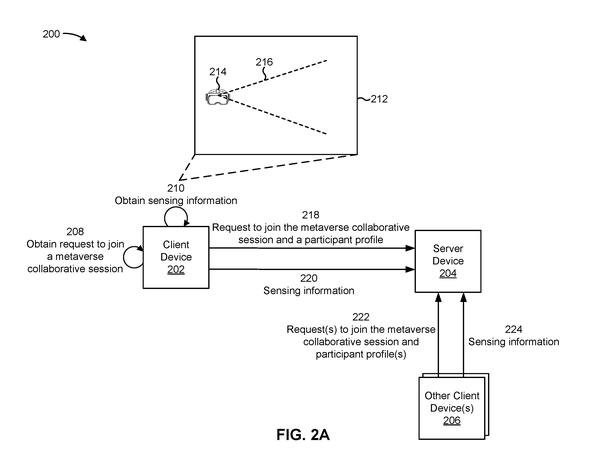
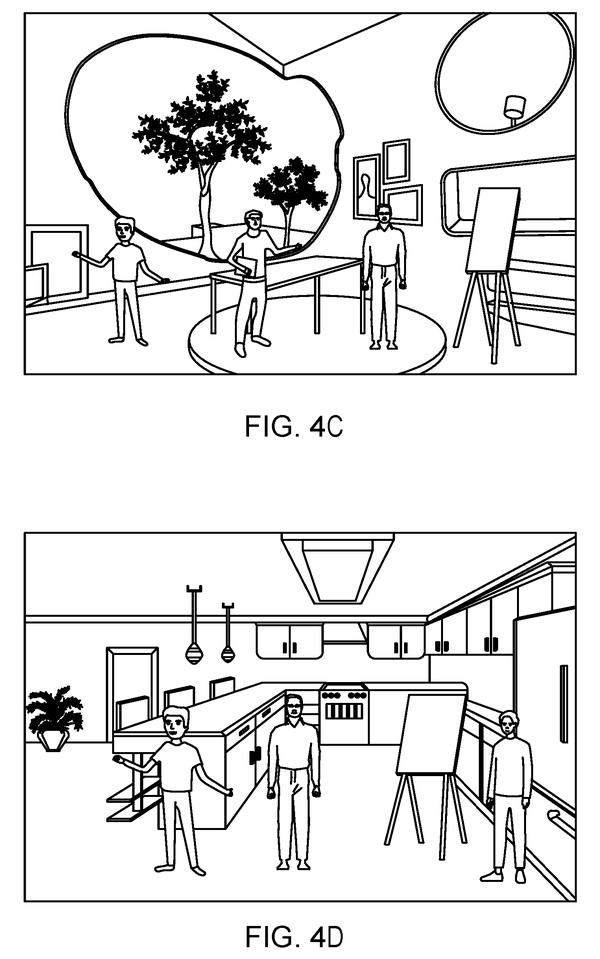
Qualcomm's patent application describes an augmented reality fix. Your headset, phone or tablet shows a 3D object, say a building or a rocket engine, pinned to a spot in your real room. A coworker in a different building shows up as a stand-in placed around that object. The filing calls it a virtual proxy, and it can be as simple as a marker for their headset. When they move around their copy of the object, their stand-in moves around yours.
You can walk around too, and the object stays put in your room. The system also saves the object, so your coworker or anyone else can open it later.
… receive a request to add a virtual proxy of a user of a second user device located in a second physical environment, the second physical environment being different from the first physical environment …
Translation: The system gets a request to bring a remote coworker into the shared augmented space.
How the headset keeps a remote stand-in in place
The claim covers a device (the filing's examples include a headset or a handheld) that first works out its pose, meaning where it is and which way it faces compared with the room. Based on that, it draws virtual content, such as a 3D model, at a spot that matches a real location in the room.
When the device gets a request to add a remote user in a different physical space, it shows that person's virtual proxy (a stand-in for them) at a set position relative to the content. Then the claim adds three behaviors:
- If you move your own device to a new pose, the content stays at its real-world spot and the proxy keeps its place relative to the content.
- If the remote user's position relative to the content changes (one dependent claim says this can be movement of their device), the proxy is redrawn in a new place.
- The content is stored so the remote user's device can get to it.
The description adds the annotation feature behind the title. On a tablet, a long press on a spot in the model freezes the view and opens a text box with a tail pointing at that spot. In the filing's example, one user types 'reroute conduit,' a second replies 'will do,' and a third adds a separate note. Notes can be text, images, video or audio, and people can add them live or at different times.
… enable a user of the first user device to create media and associate that media with the virtual content in the first image in the form of an annotation …
Translation: Users can attach notes or media directly onto the 3D models in their environment.
What this means for AR design reviews at work
If you have ever tried to review a design, a building plan or a repair job with colleagues in different cities, you know a flat video call is a weak substitute for standing around the same object. This filing describes giving each person a place around a shared 3D model, so pointing and looking carry meaning again. Because notes stay attached to a spot on the model, you could come back later and see exactly what a coworker asked for.
The filing's examples lean toward work: a rocket engine, a building, a note about rerouting conduit. It also covers phones and tablets, not only headsets, which matters because far more people own those. This one is a continuation of applications first filed in 2020 and 2021, so Qualcomm keeps filing on shared AR workspaces.
Qualcomm's 63rd filing we've tracked in our AR glasses race since July adds to a run that includes one on controller lighting and one on network-assisted 3D calls.
Source: US 2026/0358994 A1 at the USPTO (PDF). Full patent text and figures are in the official publication.
Get our take in your Top Stories
Liked this breakdown? Add Patentlyze as a preferred source on Google, and our plain-English take shows up more often in your Top Stories the next time Qualcomm patent news breaks.
Add Patentlyze on Google
One click.
There are more where this came from
We read every patent application Big Tech publishes and send you the ones worth knowing. Plain English, free, every week.
The drawings · 14 sheets
14 drawing sheets from US 2026/0358994 A1 · click any drawing to enlarge


Show the other 6 sheets


More from Qualcomm
All 624 Qualcomm patents →
More in AR / VR
All 690 AR / VR patents →
Apple
Apple Patents a System for Placing Remote Users in Shared 3D Environments
Samsung
Samsung Files Patent to Make Only What You Look At Appear 3D in VR
Microsoft
Microsoft Patents a Way for AR Headsets to Share Each Other's Views Mid-Collaboration
IBM
No comments yet