
Hyundai & Kia
Hyundai & Kia · Automotive · Filed Nov 24, 2025 · USPTO published Nov 19, 2026 · This week's release
Kia Patents a Hydrogen Car That Keeps Your Campsite Powered Without a Button Press
Kia's fuel cell cars can already run your gadgets from the battery, but you have to remember to switch modes before it drains. This patent application has the car make that call on its own.
- Publication number
- US 2026/0365076 A1(US20260365076A1)
- Applicant
- Kia Corporation
- Filed · Published
- Nov 24, 2025 · Nov 19, 2026
- Inventors
- Jae Ok HA, Joo Yeon Kim
- Status when we published
- Waiting for an examiner
- Document
- 20 claims
- US classification
- 320/134
What Kia's fuel cell campsite-power patent does
A hydrogen-powered SUV sits parked at a campsite while a few household gadgets run off its battery. The battery slowly drains, and at some point the power just stops.
Today, a fuel cell car can recharge that battery from its hydrogen fuel cell, but only after someone climbs into the car and presses a button to change modes. Forget, and your gadgets go dark. Kia's patent application has the car make that call itself.
It watches how full the battery is and how much power your gear is pulling. When the battery gets low, the fuel cell starts up and tops it back up, then shuts off once the battery is mostly full. You never have to leave your camp chair.
… a processor determining whether to drive the fuel cell stack based on a state of charge (SoC) value of the battery and a required output of the fuel cell stack based on an external electric load being connected to the battery …
Translation: The car automatically monitors the battery and plugged-in gear to decide when to run the hydrogen fuel cell.
How the car decides when to start the fuel cell
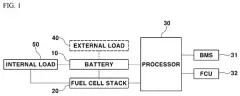
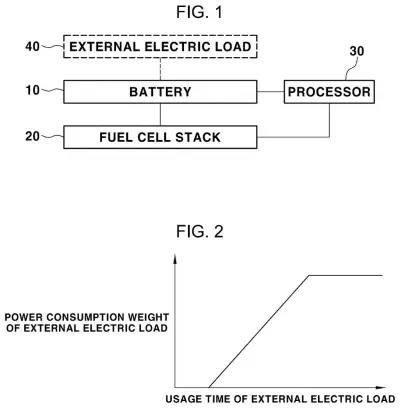
The filing covers a power supply system for a fuel cell vehicle: a battery, a fuel cell stack (a unit that makes electricity from hydrogen through a chemical reaction), and a processor. When an outside device is plugged into the battery, the processor decides whether to start the fuel cell. It uses two inputs: the battery's state of charge (how full it is) and the required output (how much power the fuel cell would need to supply).
The description says the car can tell a device is connected by whether the external discharge port door is open. It then measures how much power the device draws and how long it has been running. Longer use raises a multiplier applied to the draw, which builds in a safety margin. The multiplier can be greater than 1.
The fuel cell starts only when both conditions are met:
- The battery is at or below a lower limit (the example is 40%).
- The required output is at or above a minimum (the example is 15 kW), which keeps the fuel cell out of a low-power range that can wear it down.
Once running, the processor adjusts the fuel cell's output based on the battery level and stops it at a higher level (the example is 80%). If your gear is still plugged in and the battery drops to a second, lower threshold, the fuel cell restarts. The car is not driven in this mode.
A power supply system of a fuel cell vehicle includes a battery disposed in the vehicle, a fuel cell stack generating electrical energy allowed to be supplied to the battery …
Translation: The system combines a standard vehicle battery with a hydrogen fuel cell that charges it.
Why hands-off power matters for fuel cell owners
For fuel cell owners who camp, tailgate or ride out a power outage, this is about not getting stranded halfway through the evening. Instead of watching a battery meter and running back to the car, you plug in and the vehicle handles the rest. That makes a fuel cell car's plug-in power outlet behave like a small generator that tends itself.
There is a hardware angle too. The minimum-output rule is meant to protect the fuel cell stack from long stretches at low power, which the filing says can degrade it. That matters because fuel cell stacks are costly. Keeping the battery at a higher charge than during normal driving also avoids constant starting and stopping. The filing does not name a specific Kia model.
Hyundai's fifth patent we've tracked since November adds to our Hyundai coverage that already includes charging advice warnings and swap-safe car software.
Source: US 2026/0365076 A1 at the USPTO (PDF). Full patent text and figures are in the official publication.
Get our take in your Top Stories
Liked this breakdown? Add Patentlyze as a preferred source on Google, and our plain-English take shows up more often in your Top Stories the next time Hyundai & Kia patent news breaks.
Add Patentlyze on Google
One click.
There are more where this came from
We read the new patents from Big Tech, carmakers and more and send you the ones worth knowing. Plain English, free, every week.
The drawings · 3 sheets
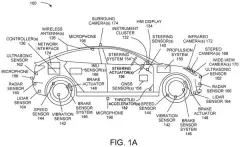
3 drawing sheets from US 2026/0365076 A1 · click any drawing to enlarge


More from Hyundai & Kia
All 15 Hyundai & Kia patents →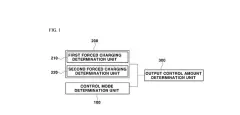
More in Automotive
All 432 Automotive patents →
GM
GM Patents a Pedal Setup That Won't Let You Press Gas and Brake Together
Nvidia
Nvidia Files Patent for Building the Driving Test a Self-Driving Car Must Pass
Sony
Sony Patents a Radar Check That Spots Interference From Oncoming Cars
Nvidia
No comments yet