
Apple
Apple · AI / ML · Filed Dec 31, 2025 · USPTO published Nov 19, 2026 · This week's release
Apple Files Patent for Keeping Follow-Up Requests From Getting Lost Between AI Helpers
You ask for one thing, then add a tweak, and the assistant loses the thread. Apple's patent describes sending that follow-up to the AI that already knows the context, and translating it for the main assistant if that AI can't help.
- Publication number
- US 2026/0368444 A1(US20260368444A1)
- Applicant
- Apple Inc.
- Filed · Published
- Dec 31, 2025 · Nov 19, 2026
- Inventors
- Chiraag SUMANTH, Trevor J. CORTEZ, Gustavo E. FAERMAN, Kenneth M. KARAKOTSIOS, Oliver P. O'NEILL
- Status when we published
- Waiting for an examiner
- Document
- 15 claims
- US classification
- 704/9
- Parent application
- Claims priority from a provisional application 63807198 (filed May 16, 2025)
What Apple's follow-up routing actually does
Imagine you ask your phone's assistant to find a pasta recipe, and a moment later you say, 'Make that vegetarian and text it to Dana.' The first half is a cooking question. The second half is a messaging job. One AI may be good at the first and have no idea how to do the second.
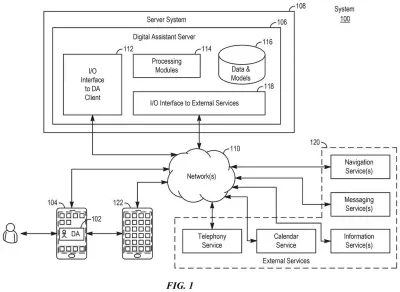
Apple's filing describes a way to keep that conversation from falling apart. Your follow-up goes first to the same AI that handled your original request, since it already knows what you were doing. If the follow-up is a kind of job that AI doesn't handle, the system rewrites your request, can add details the first AI worked out, and passes it to the device's digital assistant instead.
The goal is that you don't have to repeat yourself or explain what 'that' means. The filing also describes a second idea: when an AI is writing something for you and needs missing details, the assistant can supply what it already has and ask you only for the rest.
… detecting a second user request, wherein the second user request includes a follow-up request to the task determined from the first user request; in response to detecting the second user request: providing the second user request to the model that performed at least the portion of the task determined from the first user request …
Translation: The system catches your follow-up and sends it back to the same AI that handled your first request.
How a rewritten request reaches the assistant
The filing describes a two-step routing setup. When you make a first request, an AI model (the software that reads your request and works out what to do) performs at least part of the task. It reads a prompt (the written instructions it works from), picks the task, works out a parameter (a detail such as a name or a time), runs it, and returns the result.
When a second request arrives and counts as a follow-up, it goes straight back to that same model. The filing describes checks like whether the follow-up came soon after your first request or soon after the system showed you its answer. A brand-new request instead starts fresh with a new prompt.
If the follow-up needs a type of task the model isn't tied to, the system rewrites it and passes it to the digital assistant. The filing lists several ways to rewrite:
- Changing the format of the request
- Adding information the model gathered from your first request
- Writing a fresh prompt based on the second request
- Writing it in the format another model expects
The assistant can then do the task itself or pass the rewritten request to another model and return the result. The description also covers a separate idea: when a language model (a text-writing AI) asks for missing information, the assistant fetches what it can and prompts you only for the rest.
… systems and processes describing the routing and processing of follow-up requests to previously provided requests and performed tasks …
Translation: The patent covers methods for directing and handling follow-up questions tied to earlier tasks.
What this means for talking to your assistant
For you, the benefit is a conversation that holds together. Ask for something, then tweak it or build on it, and the system decides who handles the follow-up without making you start over. The filing says the aim is fewer interactions per request, and less processing, which saves battery.
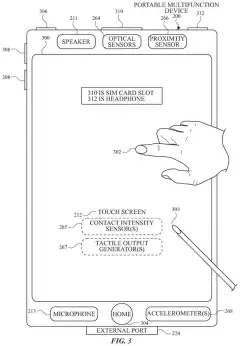
It also fits how assistants are becoming a mix of several AI models plus built-in device features. Something has to decide who gets each request. The filing adds that doing work on the device when possible, instead of sending personal data to a model, helps protect your privacy. It lists the iPhone, Apple Watch, iPad and other devices as places this could run.
This is the sixth Apple filing we've tracked since October on AI models working in teams, following a routing switchboard for AI and swapping a failing AI on cellular.
Source: US 2026/0368444 A1 at the USPTO (PDF). Full patent text and figures are in the official publication.
Get our take in your Top Stories
Liked this breakdown? Add Patentlyze as a preferred source on Google, and our plain-English take shows up more often in your Top Stories the next time Apple patent news breaks.
Add Patentlyze on Google
One click.
There are more where this came from
We read every patent application Big Tech publishes and send you the ones worth knowing. Plain English, free, every week.
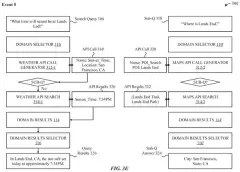
The drawings · 28 sheets
28 drawing sheets from US 2026/0368444 A1 · click any drawing to enlarge


Show the other 20 sheets


More from Apple
All 748 Apple patents →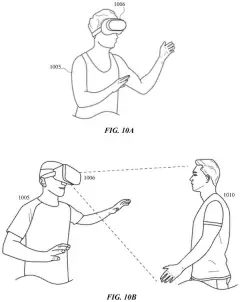
More in AI assistant & agent
All 436 AI assistant & agent patents →
Microsoft
Microsoft Patents an AI Coordinator That Picks the Right Helpers for Each Question
Google
Google Patents a Team of Specialist AI Helpers Behind a Single Chat Box
Nvidia
Nvidia Patents a System That Splits Tasks Across Specialized AI Workers
Microsoft
No comments yet