What the filings show
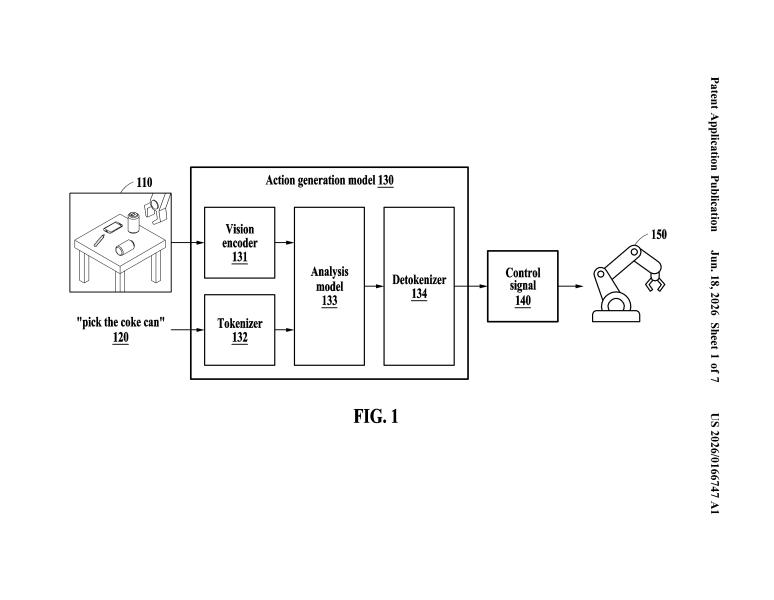
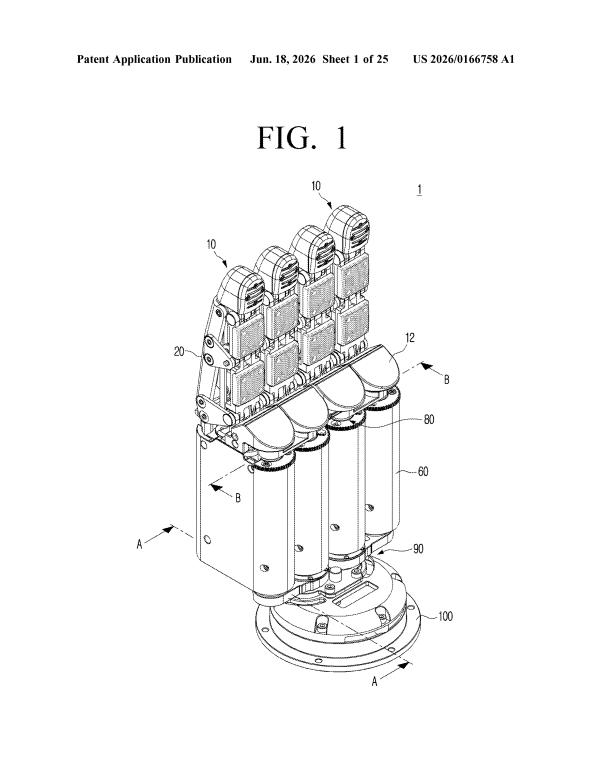
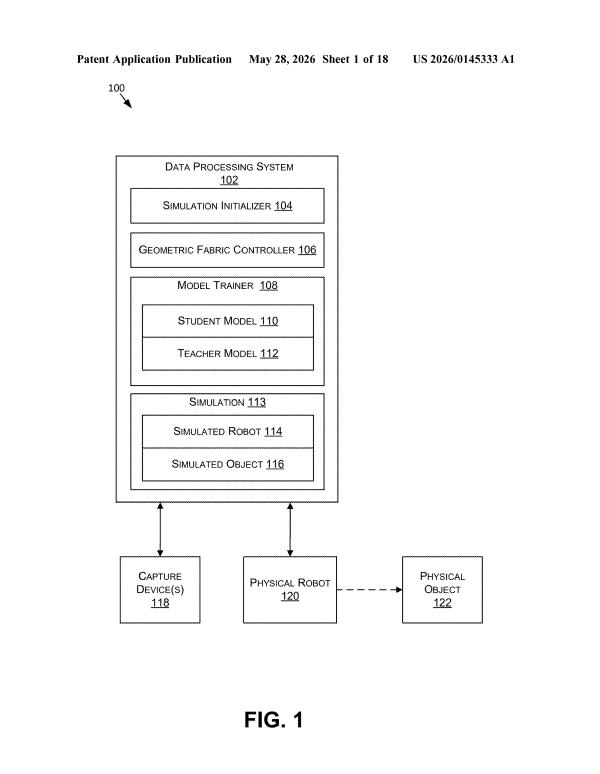
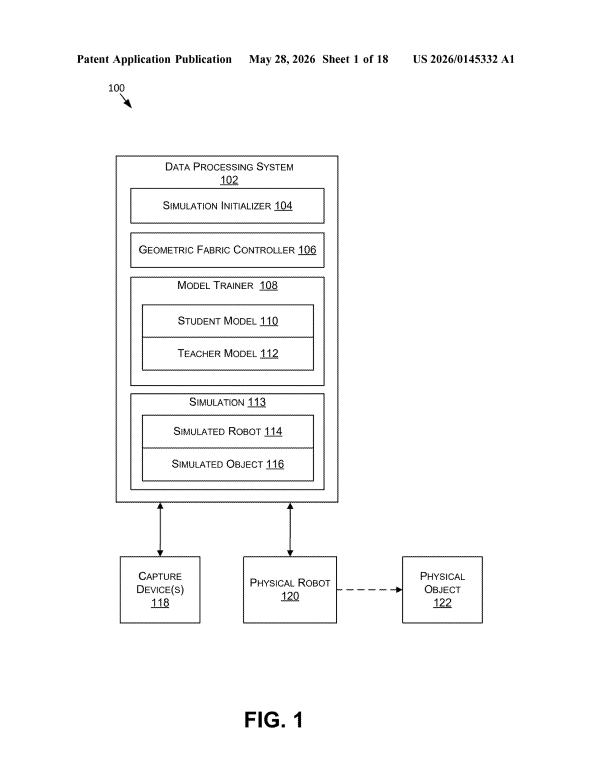
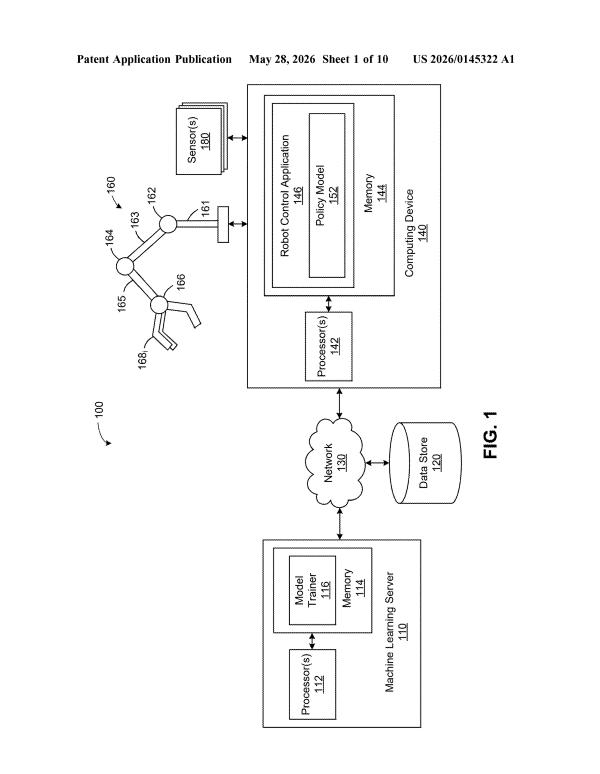
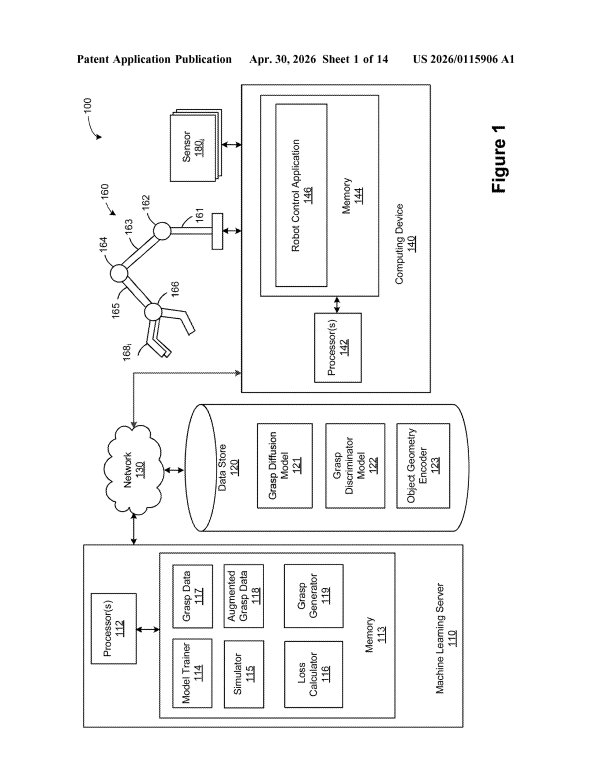
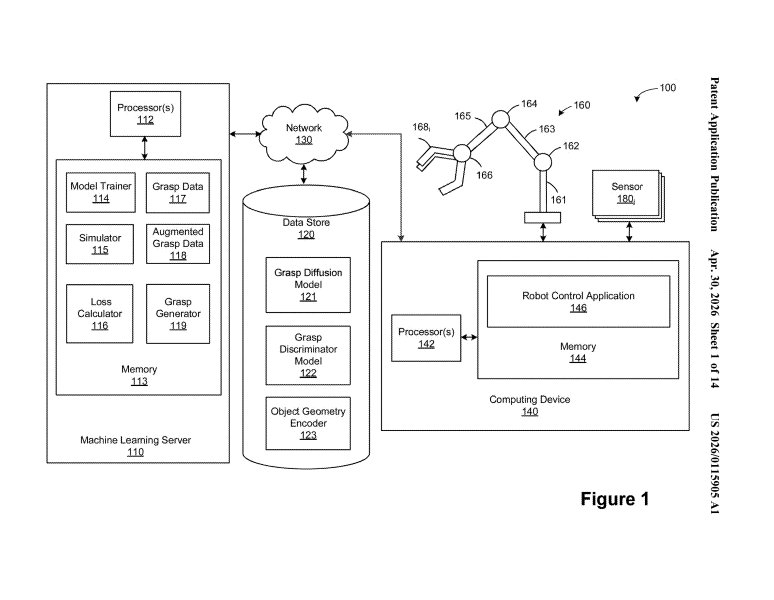
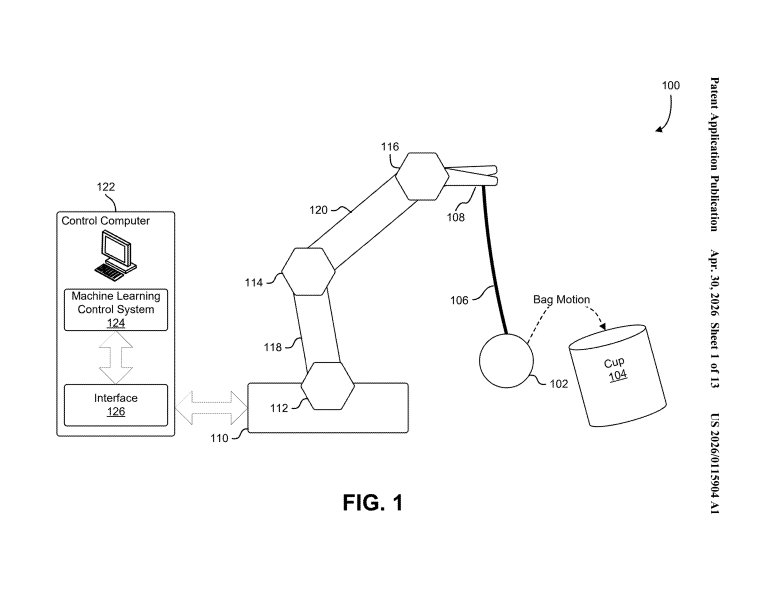
Most of the filings in this storyline focus on getting a robot hand to grasp objects that were never part of its training set. Nvidia alone has filed a two-stage grasping pipeline, a diffusion-based grasping system, a teacher-student loop for dexterous grasping, a progressive difficulty training loop, and a geometric fabrics approach to smoother motion. A separate Nvidia filing addresses a self-correcting sim-to-real loop, and another describes a system that lets a robot learn from its own failed attempts instead of discarding that data. The repetition itself is the signal: grasping remains unsolved enough that one company keeps filing new approaches.
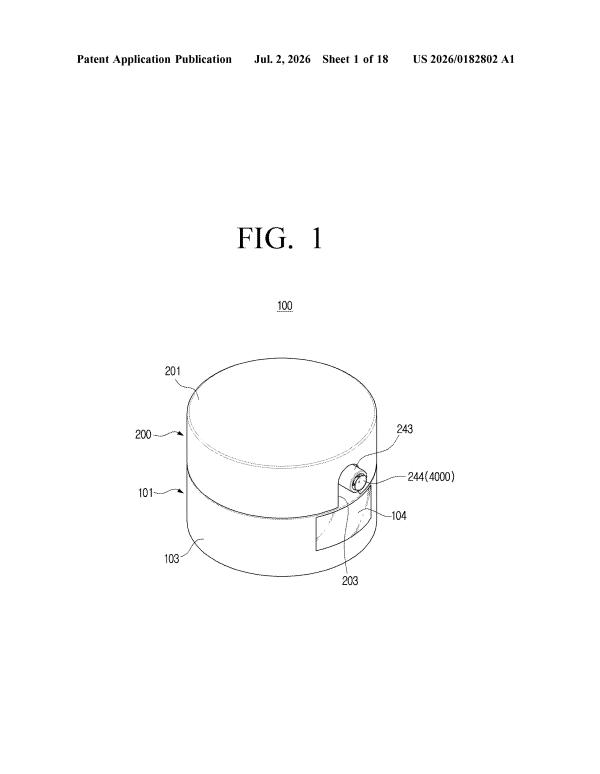
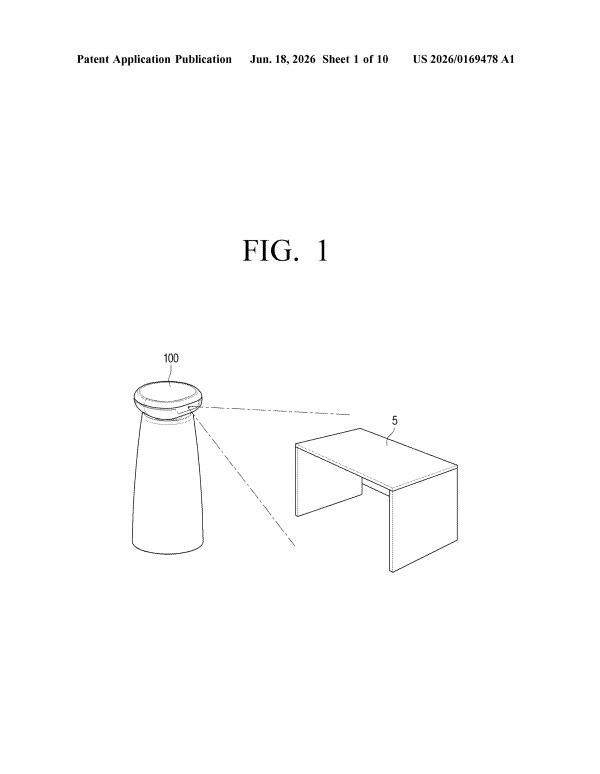
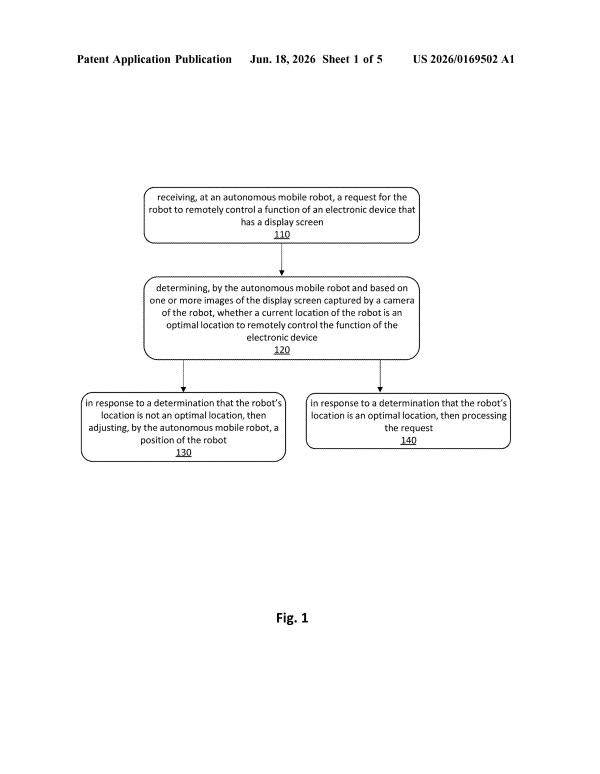
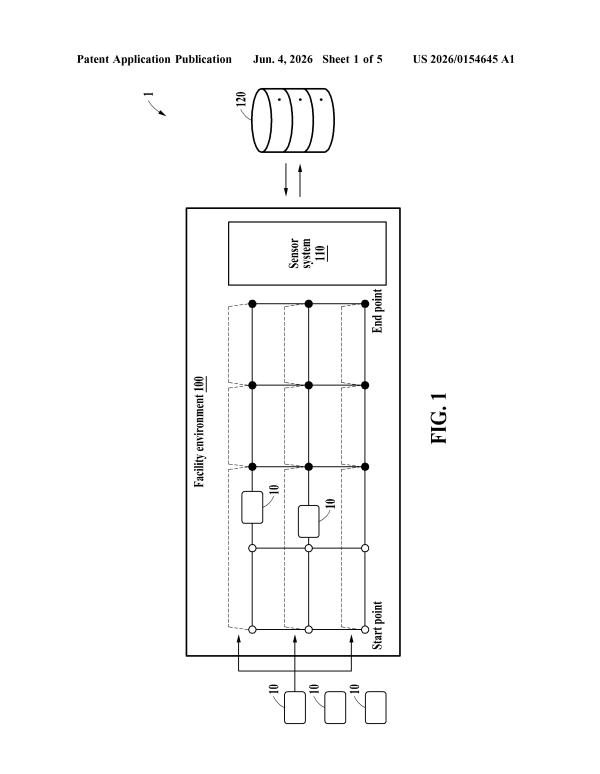
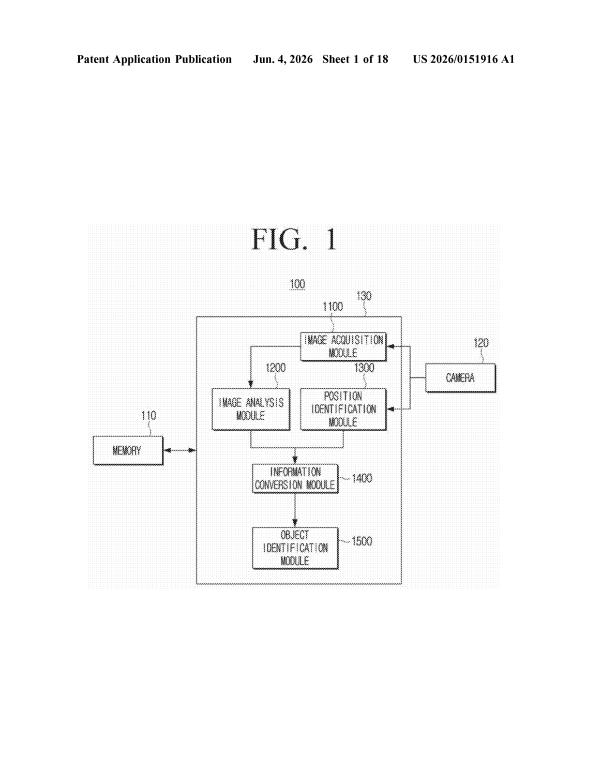
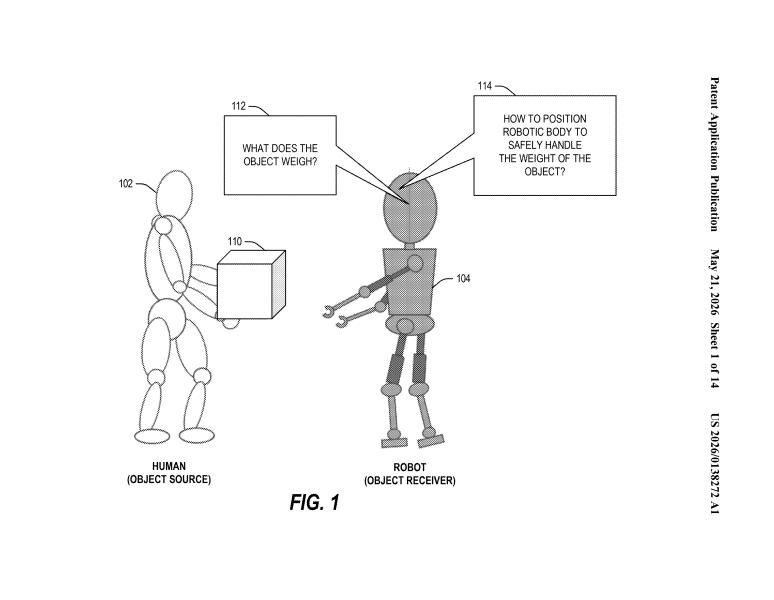
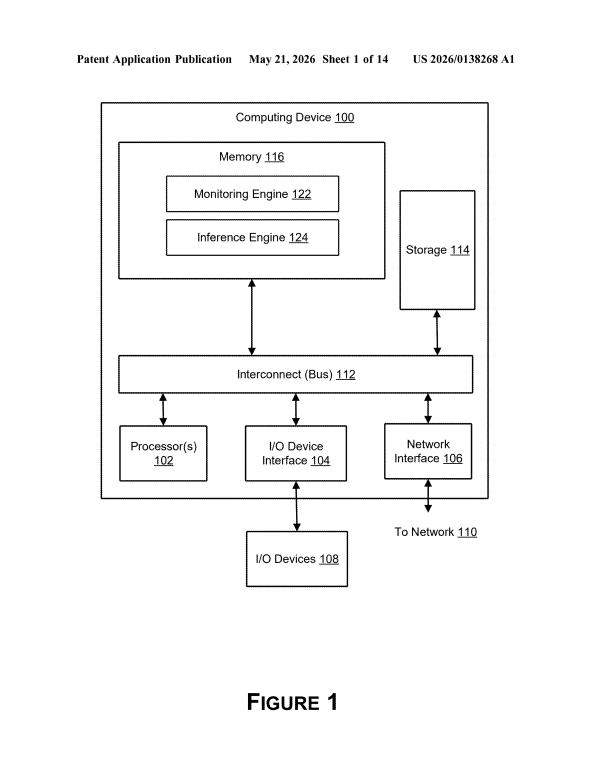
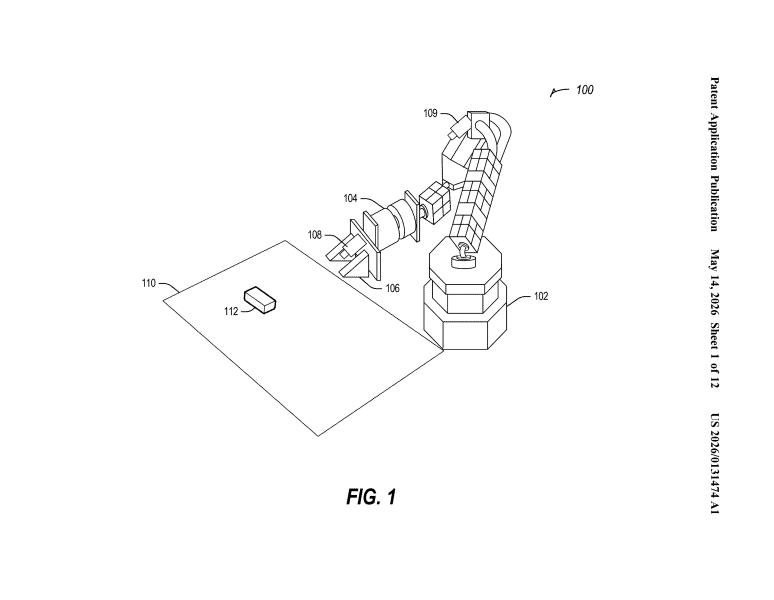
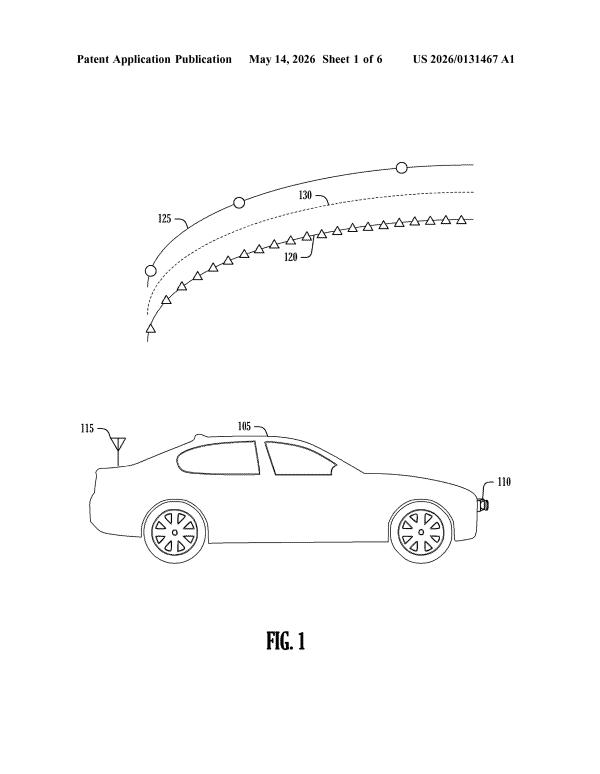
Intel's filings sit next to Nvidia's but attack different pieces of the same puzzle. One patent has a robot predict what's around a corner it can't see, another fuses sensors to stop a robot from drifting off its intended path, and a third estimates an object's weight from a person's posture before handoff. Samsung's two entries are narrower and mechanical: a two-stage braking system for wheeled robots and a robot that repositions its own sensor to see past obstacles. Together these show the same practical concerns as Nvidia's grasping work, applied to movement and perception instead.
Read across the batch, most filings target the same handful of problems: reliable grasping, staying on course, sensing around obstacles, and using failed attempts as training data. Readers should watch whether new filings keep refining these existing approaches from Nvidia and Intel, or whether other manufacturers beyond Samsung start filing in the same space with genuinely different techniques. The presence of Samsung's mechanical patents alongside Nvidia and Intel's AI-heavy filings suggests the race is not confined to software alone.
Questions readers ask
What problem are Nvidia and Intel trying to solve with these robot patents?
They're mostly working on the same core problem: getting robots to reliably grasp objects and move through real environments without constant human correction. The filings show sim-to-real training loops, sensor fusion for drift, and systems that let robots learn from failed attempts. These are research filings, not confirmed products, so they show direction rather than finished technology.
Does a robot patent mean the robot is actually being built?
No. A patent filing describes an idea a company wants to protect, not a shipping product. Nvidia and Intel file broadly across grasping, navigation, and perception, and only some of these ideas will end up in real robots. The filings are a useful signal of where engineering attention is going, not a roadmap.
Why do so many of these patents focus on grasping instead of walking or other robot skills?
Grasping keeps showing up because picking up an unfamiliar object reliably is still unsolved in robotics. Nvidia has filed multiple grasping approaches, including diffusion-based and teacher-student methods, which suggests the company sees this as worth attacking from several angles at once rather than settling on one method.
What does Samsung's involvement add to this storyline?
Samsung's filings are more mechanical than Nvidia's or Intel's, covering a two-stage braking system for rolling robots and a robot that repositions its own sensor to see around obstacles. That shows the same reliability concerns, staying in control and seeing clearly, showing up in hardware design and not just AI training methods.