What the filings show
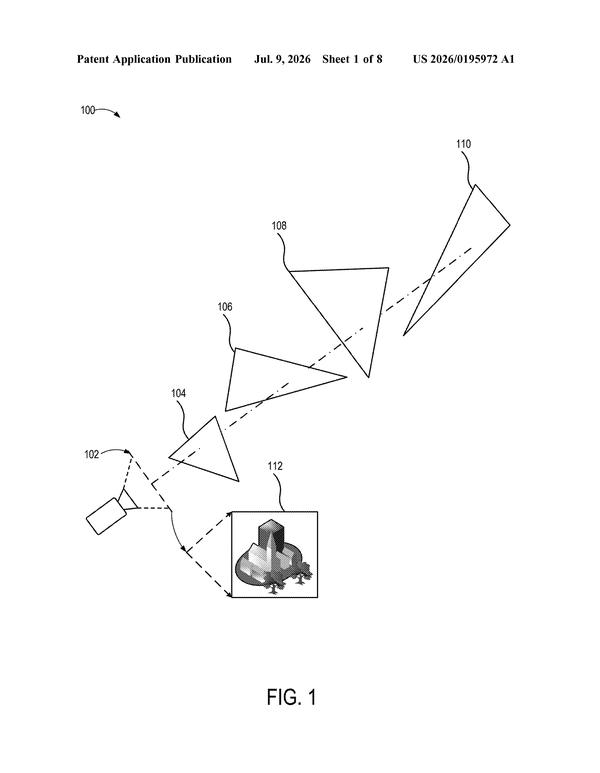
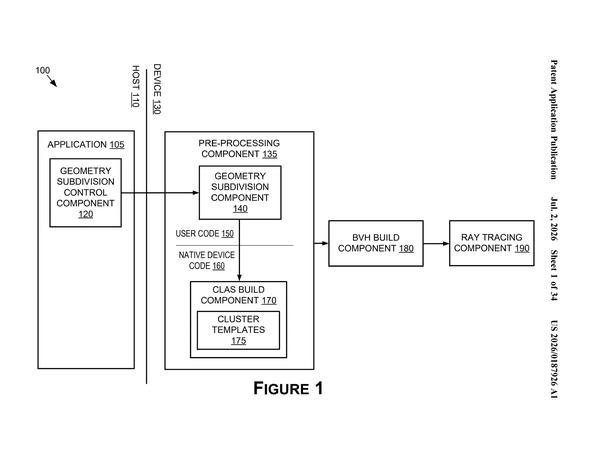
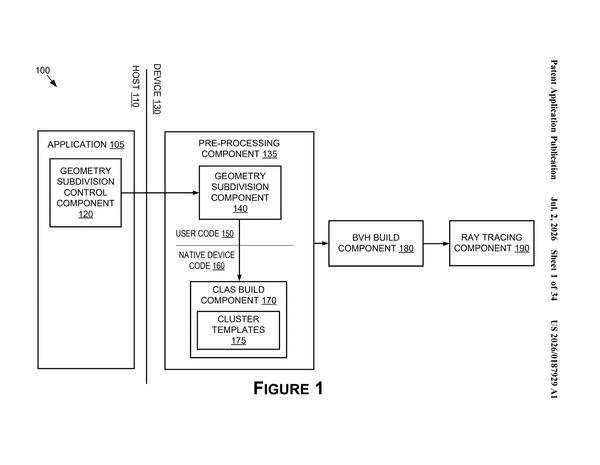
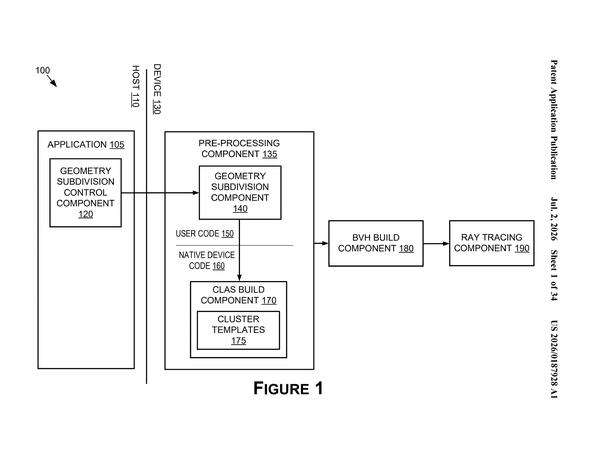
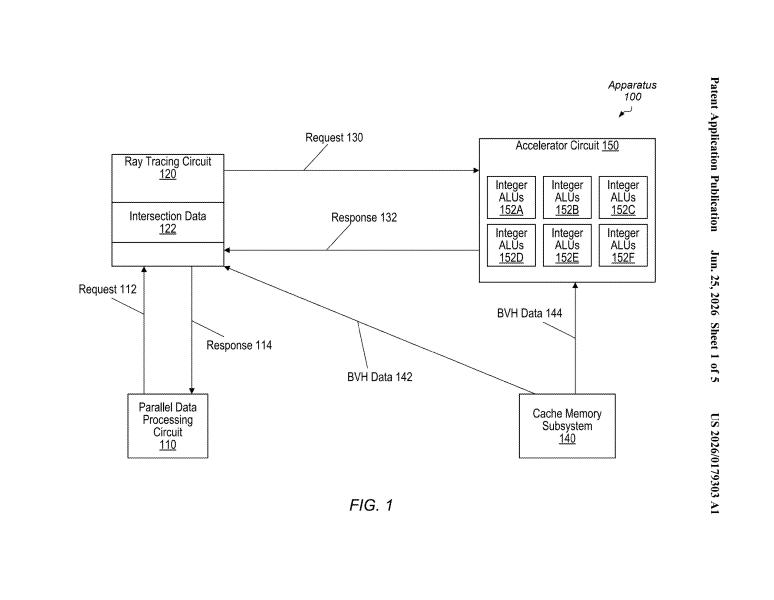
Most of the filings in this storyline cluster around ray tracing. AMD has patented faster ways to wrap 3D objects, methods to stop its hardware from requesting the same data twice, and borrowed math units to lower ray tracing costs, while ATI Technologies has filed a patent to cut wasted ray tracing tests. Intel's filings sit more on the texture and image side, covering texture conversion, camera repositioning for AI training, and smoothing rough edges on 3D lines.
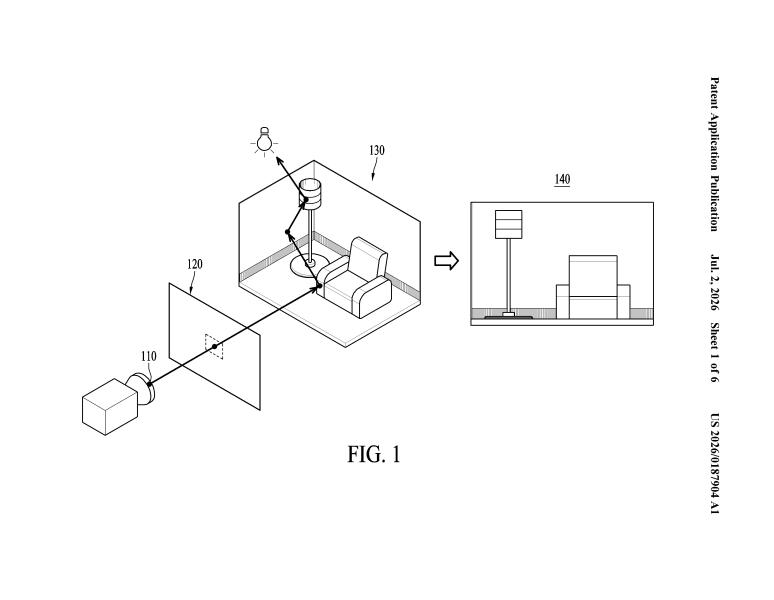
A second pattern shows up in how often the filings target redundant or wasted computation. AMD's patent on repeated data requests and ATI's patent on wasted ray tracing tests both aim at cutting work the GPU didn't need to do in the first place. AMD's lighting patent uses neural networks to speed up the expensive job of figuring out whether a light actually hits a surface, and its image-resizing patent adjusts effort based on how complex an image is, rather than treating every image the same way.
Watch for more filings that pair rendering with AI hardware directly. AMD has already patented a dedicated processing core built specifically to sharpen images with AI, and Intel has filed a patent that lets a graphics card swap a game's old visuals for more modern ones automatically. Read together, the storyline points toward GPUs that lean on AI models and specialized cores to improve quality and speed, instead of asking players to buy new graphics hardware to get the same result.
Questions readers ask
Are Intel and AMD actually building these GPU features, or are these just patents?
These are patent filings, which describe inventions a company wants to protect, not confirmed products. Filings from Intel and AMD around texture conversion, ray tracing, and AI-driven lighting show where engineering teams are focused, but a patent alone does not guarantee the feature will ship in a real GPU.
Why do so many of these patents focus on ray tracing?
Ray tracing is computationally expensive, and several filings, including AMD's work on bounding boxes, repeated data requests, and borrowed math hardware, plus ATI's patent on wasted ray tracing tests, all try to cut steps the GPU doesn't need to repeat. That concentration suggests ray tracing efficiency remains an unsolved cost problem for chipmakers.
What's the difference between Intel's and AMD's approach in these filings?
Based on this batch, Intel's filings lean toward texture handling, AI training tools, and making older games look sharper on modern hardware. AMD's filings concentrate more on ray tracing performance and AI-assisted upscaling and lighting. Both aim at squeezing more visual quality out of existing GPUs rather than requiring new chips.
Will these patents make my games run faster?
Not directly and not immediately. A patent filing is a legal claim on an idea, and the timeline between filing and any real product is unpredictable. What these filings show is that Intel and AMD are both spending research effort on cheaper lighting, sharper upscaling, and faster ray tracing, which are the kinds of gains that eventually reach consumer GPUs.