New Apple Patents For AR Glasses, and where they point
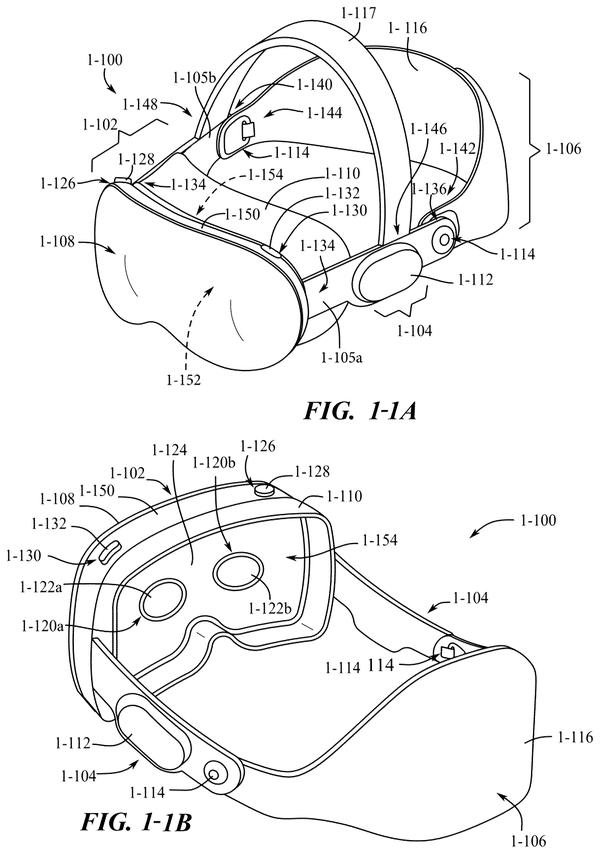
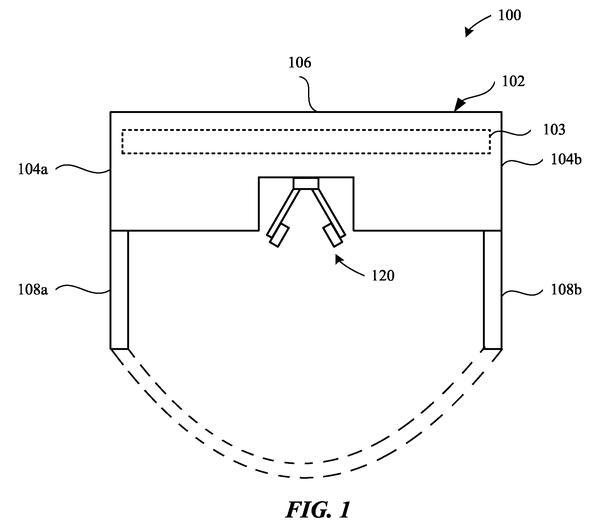
This tracker follows Apple's patent filings on how AR glasses might fit a face, sense slippage, track eyes, size virtual displays to a room, and model real objects in 3D. Together they point to a device Apple wants to feel comfortable, stay put, and understand the space around it without extra hardware.
based on all tracked filings in this watchlist · refreshes every week
Apple's 41 filings in this watchlist all point to one goal: making headsets and AR glasses feel natural and correct to the person wearing them, from how the lenses fit to how colors look to how virtual objects behave in a room.
The filings concentrate most heavily on two problem areas right now: getting the image right for each individual eye and fixing how AR content looks depending on the light and space around the wearer.
What’s new in Apple's AR glasses
a dated entry each week this watchlist moves · older entries stay archived
Sep 17, 2026 16 filings joined
Most new filings focus on making a headset fit, see, and track better: scanning your head, adjusting screens to your eyes, and following your hands in the dark. A few others cover how virtual content sits and moves in the space around you.
This week's filings focus on the glasses knowing when to act on their own: waking the camera early, deciding when to speak up about what they see, and guiding a user through taking photos. The common thread is the device making small judgment calls without waiting to be told.
This week's filings focus on comfort and usability: Apple is working on ways to stop lenses from flickering, show battery or connection status through the glasses themselves, and adjust the lenses to fit people with different vision without making custom lenses for each person.
Aug 27, 2026 2 filings joined
This week's filings focus on speed and space: one describes a way to take photos faster by using three separate chips to handle the work, and another lets people practice presentations inside virtual copies of real rooms.
Aug 20, 2026 7 filings joined
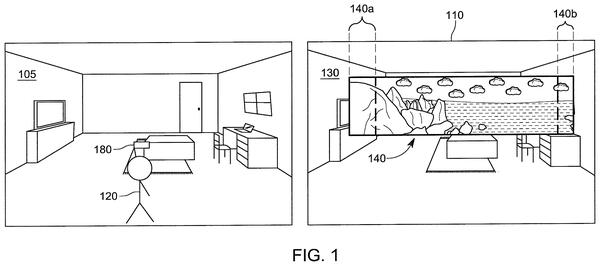
Most of this week's filings focus on how the glasses handle what you see: fixing colors, feeding each eye a separate image, and wrapping flat video into a room around you. A few others cover how the glasses handle input and sharing, like deciding if a tap counts and letting you dim or share content in 3D space.
the problems Apple keeps filing on · each with its three newest filings · new filings join every week
Lenses That Adjust Themselves 5 filings
Wearing glasses or a headset means the lenses need to match your eyes, but today that usually requires manual fiddling. These filings cover lenses filled with fluid that physically change shape, a single wire that controls that reshaping, and one knob that moves both lenses at the same time.
When you move your head or eyes, virtual images can blur or fall out of place. These filings cover sharpening what you look at through a headset, fixing blur when the camera moves fast, and shifting the camera view to line up with where your eyes actually are.
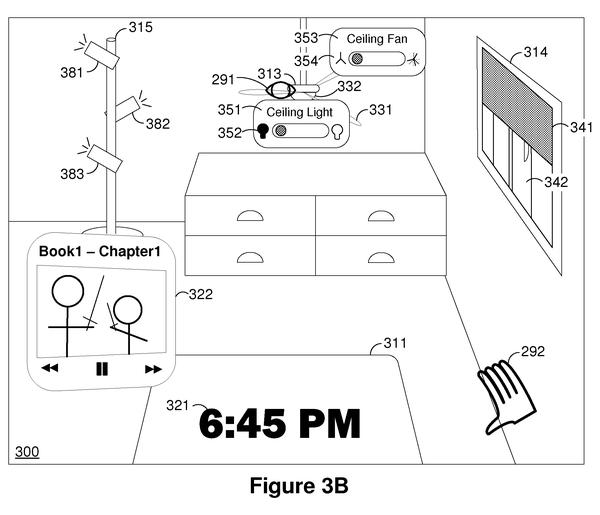
Putting a virtual object in the right spot in a real room is harder than it sounds. These filings cover grabbing and moving virtual objects, pinning digital information to specific real-world spots, changing how virtual objects look based on where you place them, and sizing virtual windows to fit your room.
A headset needs to know which way is down, where your head is pointing, and whether the lenses have shifted on your face. These filings cover reading lines in a camera image to find down, tracking your head to control a 3D display, and detecting when the headset has slipped.
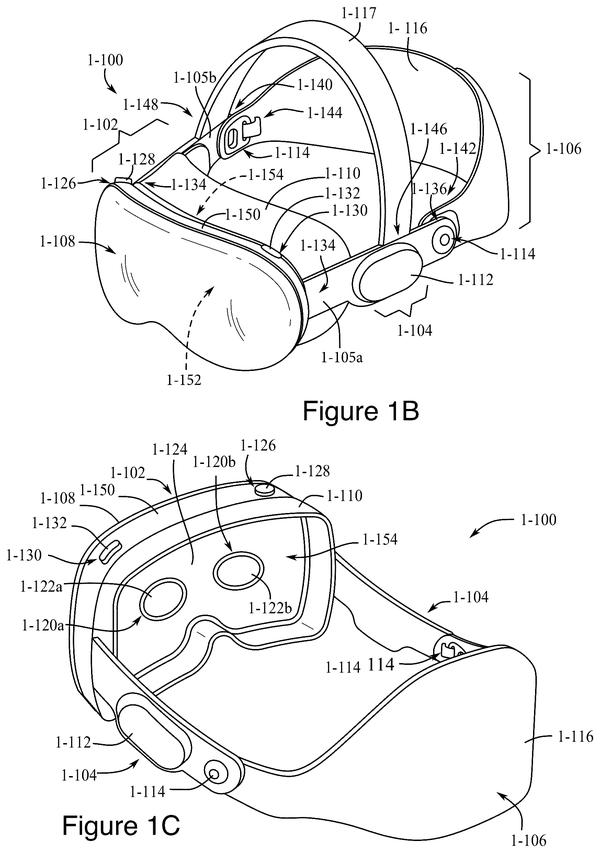
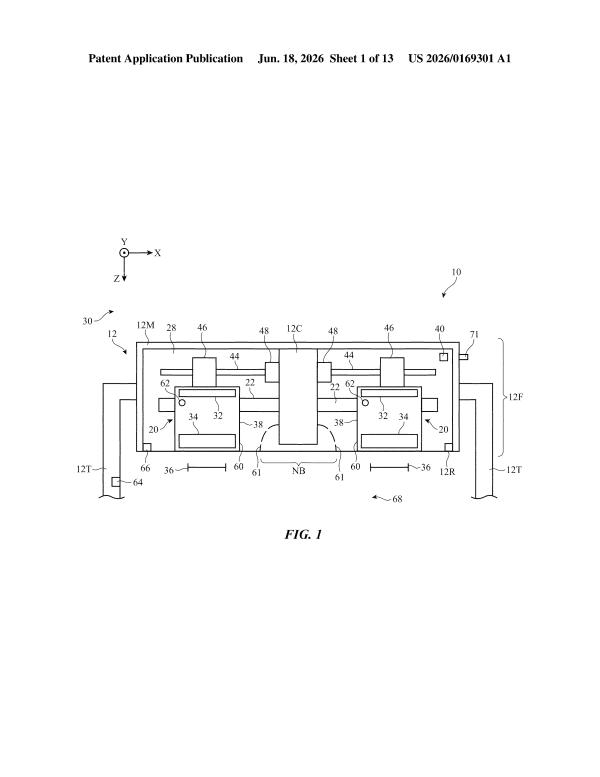
A headset or pair of smart glasses has to stay on your face comfortably and survive being dropped. These filings cover a swappable nose bridge, glasses that tighten their grip on your nose automatically, a hinge that lets the display pivot two ways, and a guard that keeps screens aligned after an impact.
Mixed reality only works well when real and virtual things interact in believable ways. These filings cover letting real people appear in front of virtual content, fixing the problem of hands disappearing behind virtual objects, and syncing timing so virtual images do not lag behind the real world.
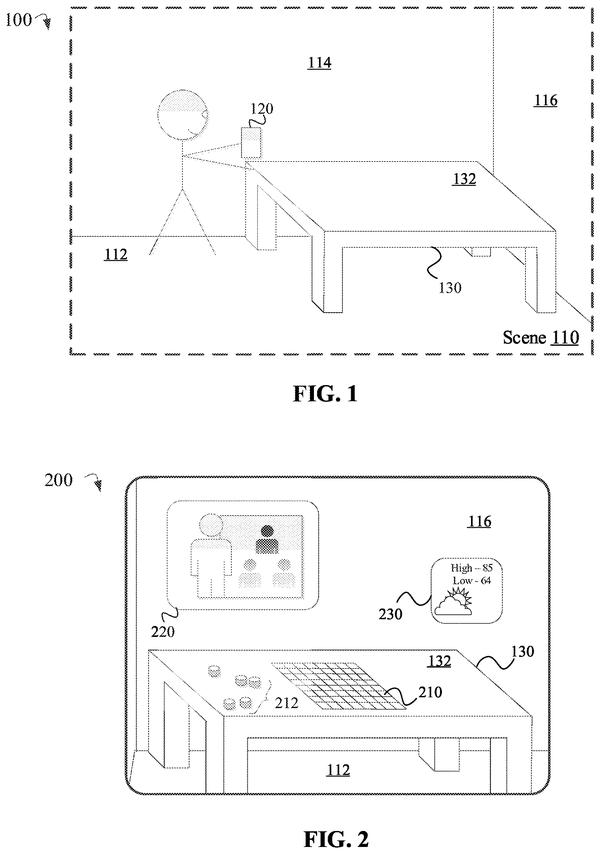
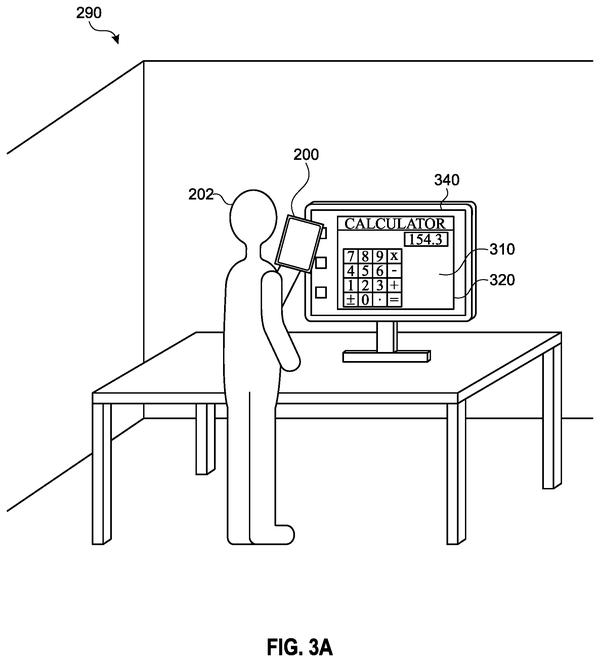
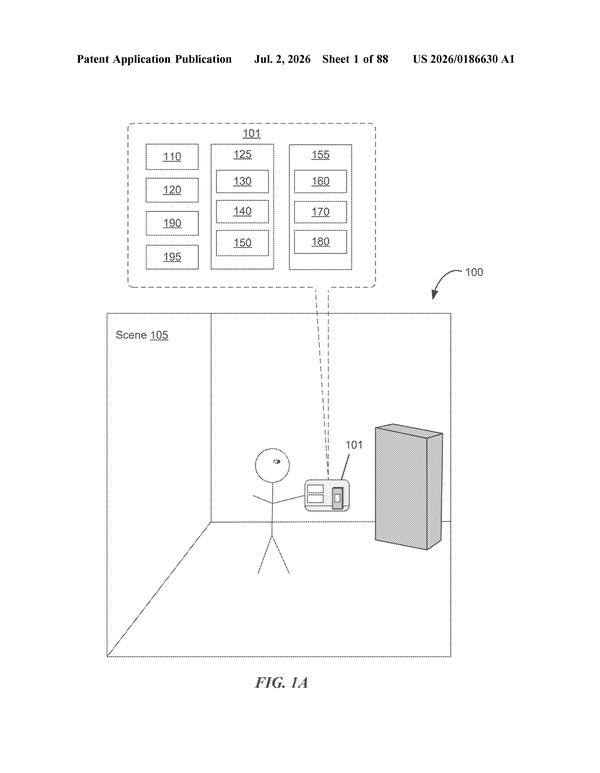
AR glasses need to know what's on your phone's screen to project it larger into space. This patent describes how they'd recognize and extend a phone's display in real time.
A gatekeeper layer prevents multiple apps from simultaneously rewriting environmental elements like lighting and sky, routing control to whichever app the wearer is actively engaged with rather than letting them conflict.
A shaped opening lets virtual content appear to recede behind a transparent plane rather than float flush at the surface, adding perceived depth to objects positioned in physical space.
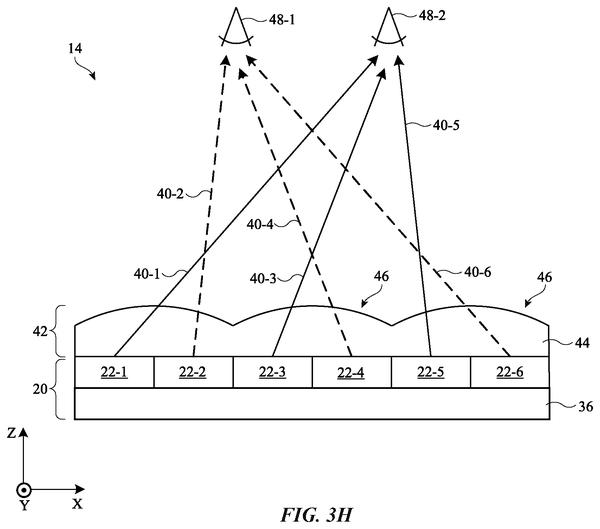
Apple's eye-tracking work gains a practical purpose here: directing rendering power to where you're actually looking lets a single chip handle the computational load that would normally require more processing muscle.
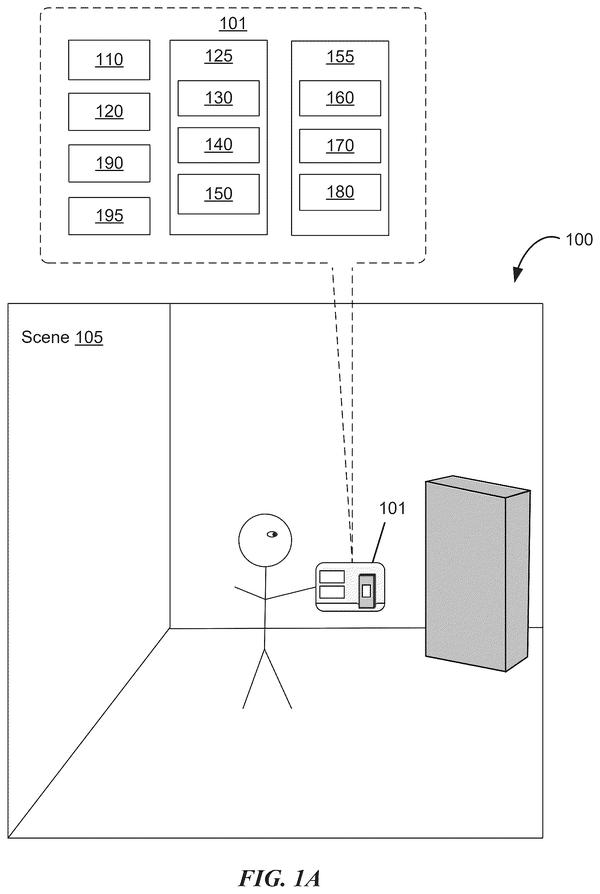
After mapping rooms and modeling objects in 3D, the device needs to know when it has gathered enough visual data to place virtual content reliably, which this filing addresses through a confidence-scoring system.
Ambient lights embedded in the frame rim change color based on gaze direction, providing contextual feedback without requiring the wearer to look at the display itself.
Continuous sensor monitoring of user movement and gaze lets the headset detect confusion or hesitation and inject contextual spatial guidance without explicit request, anchoring directions to the wearer's body position and orientation.
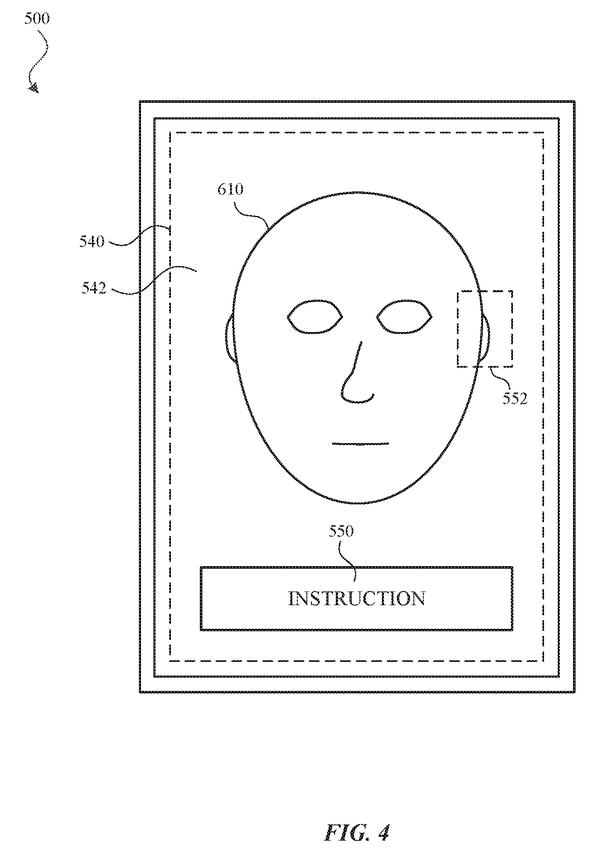
A head-scanning sensor that recommends which physical nose bridge and arm sizes fit each wearer, solving the fit variability problem that causes eye strain and optical misalignment in head-mounted devices.
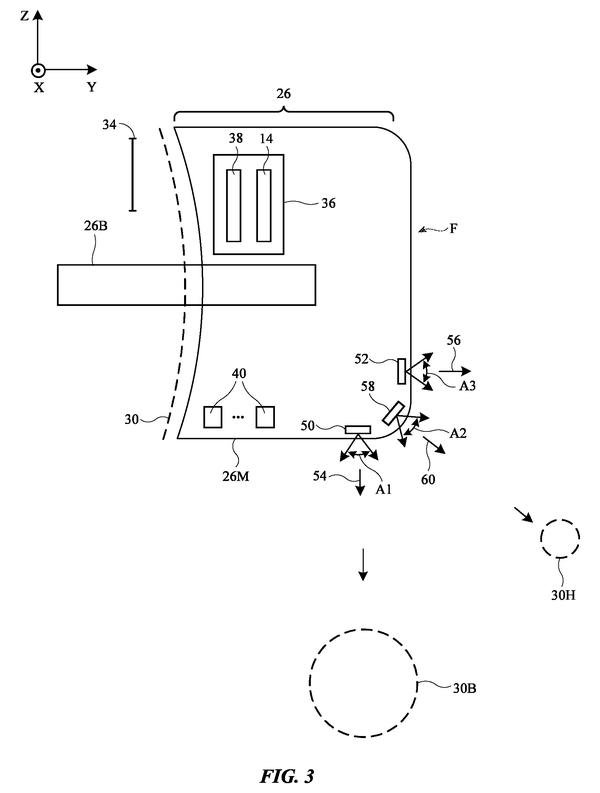
Apple's hand-tracking system needs visible light to work, which breaks down in dim rooms. This filing adds infrared illumination built into the headset itself, keeping the cameras locked onto your hands regardless of ambient lighting.
After establishing how to track eyes and size virtual content, Apple is now working on correcting the geometric mismatch between where a camera lens sits and where the wearer's eye actually is, a gap that distorts how close objects appear onscreen.
Apple's dual-sensor confirmation prevents false wake-ups from nearby objects that aren't actually a wearer, keeping the display off when the headset sits unworn.
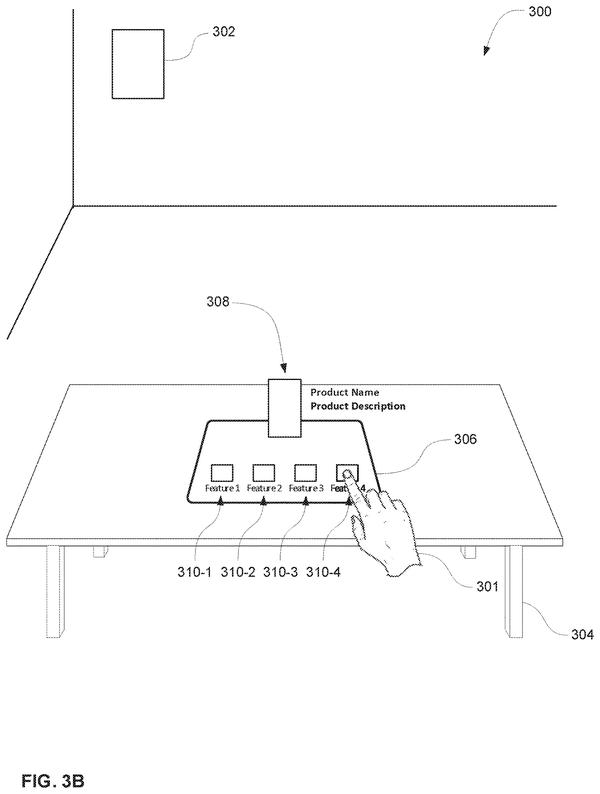
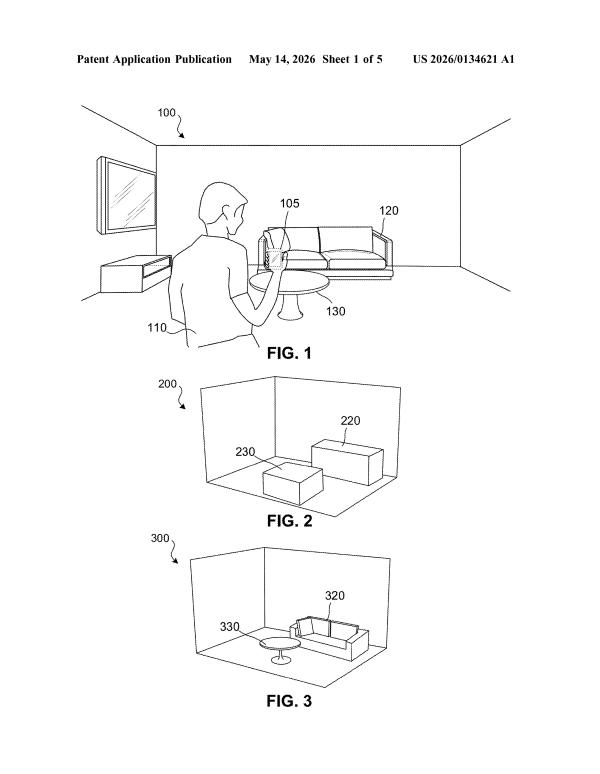
After patents on display sizing and object modeling, this filing shows how those capabilities would work in practice: letting users manipulate virtual products and preview them on their own bodies in real time within a shared 3D space.
Adjusting stereoscopic depth based on head position keeps virtual objects from appearing cartoonishly exaggerated or flat as the wearer moves closer or farther away, improving visual comfort during extended viewing.
After Apple's patents on eye tracking and spatial display sizing, this one moves to access control: how to show different content to different people in the same virtual room.
After establishing how Apple's headset tracks eyes and sizes displays to a room, this patent solves the practical problem of repositioning multiple pinned objects without scattering them, letting users grab and move entire groups in one gesture.
Adjustable screen spacing corrects for individual eye distances, solving the optical misalignment that occurs when a standard headset doesn't match a wearer's interpupillary distance.
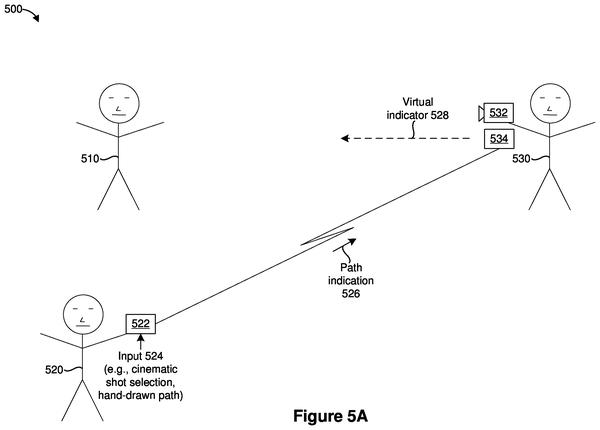
Choreographing subject movement across multiple shots. The filing shows how a camera operator's device can beam a virtual path directly to the subject's AR glasses, eliminating guesswork on positioning.
Eliminating camera startup lag on head-mounted devices. A low-power predictor chip detects incoming photo intent and preactivates the camera before the user explicitly triggers capture, reducing the delay between intention and shutter firing.
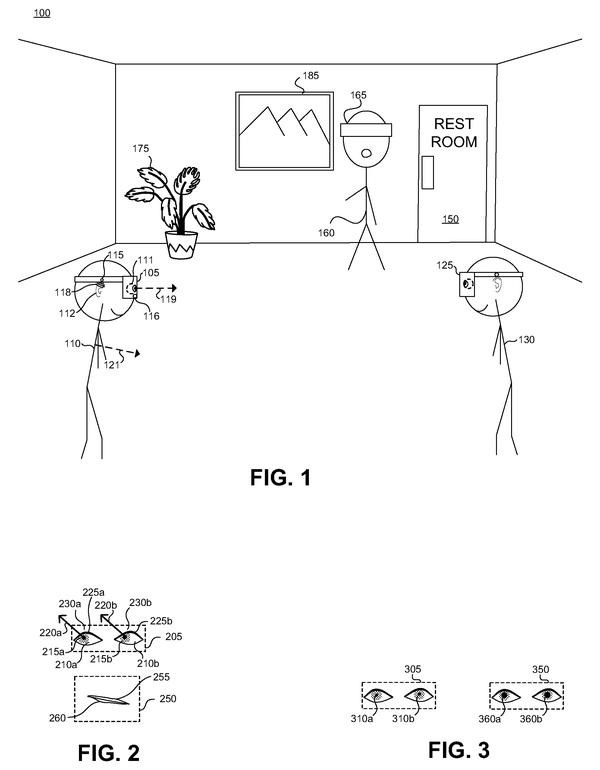
AR glasses that stay quiet about irrelevant detections would let you focus on what matters. This filing shows Apple filtering alerts based on spatial context, so the device only speaks up when objects appear in zones you've marked as significant.
Adjustable optical elements inside the headset itself let demo stations serve multiple prescriptions from a smaller stock of physical inserts, reducing the need for stores to maintain dozens of corrective lens variants.
Gaze-triggered object recognition lets the glasses identify physical devices by where you're looking and display their status without requiring manual input, extending the eye-tracking capability beyond navigation into real-world device management.
Varying the electrical signal frequency across the lens prevents interference patterns when the control rhythm syncs with nearby lighting pulses, a common source of visual artifacts in electronically tinted optics.
Presenter immersion in AR: wrapping slide decks in photorealistic venue models so the person delivering feels positioned in an actual stage space, not isolated at a desk.
Startup lag when capturing photos demands a dedicated always-on chip that can wake the camera and main processor simultaneously, shrinking the gap between button press and shutter.
A camera that samples room lighting through the virtual content already on screen lets the headset correct color shifts without adding extra sensors, solving a core reason virtual objects look misplaced in real spaces.
The eye-tracking and room-modeling work gains a practical partner: using nearby devices' cameras to calibrate how virtual objects should look under actual lighting conditions in the user's space.
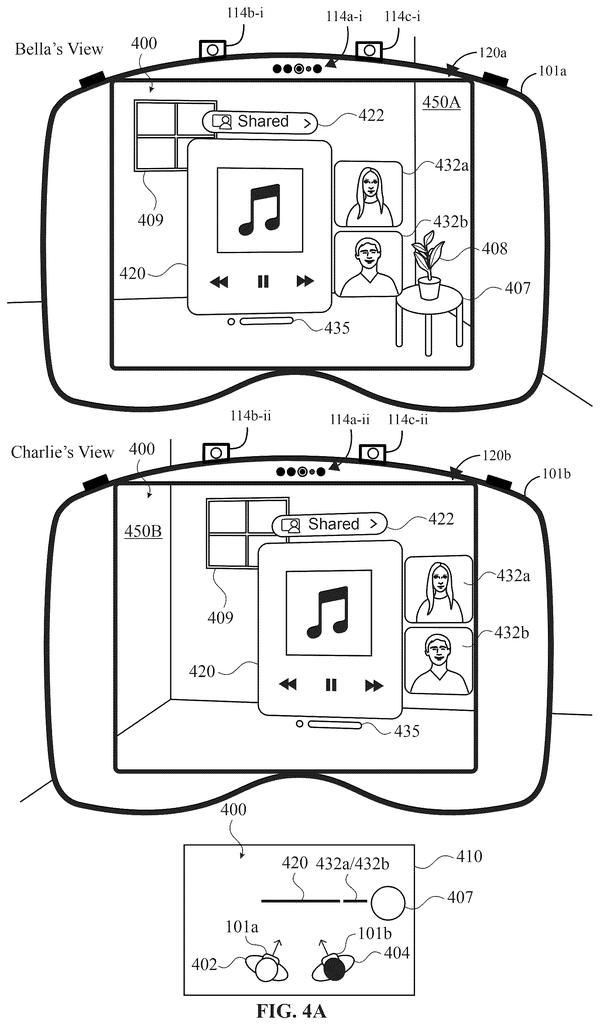
Syncing virtual participant positions across multiple local headsets solves a coordination problem: remote callers need to appear in the same spots for all in-room wearers so gestures and eye contact map consistently to the same person.
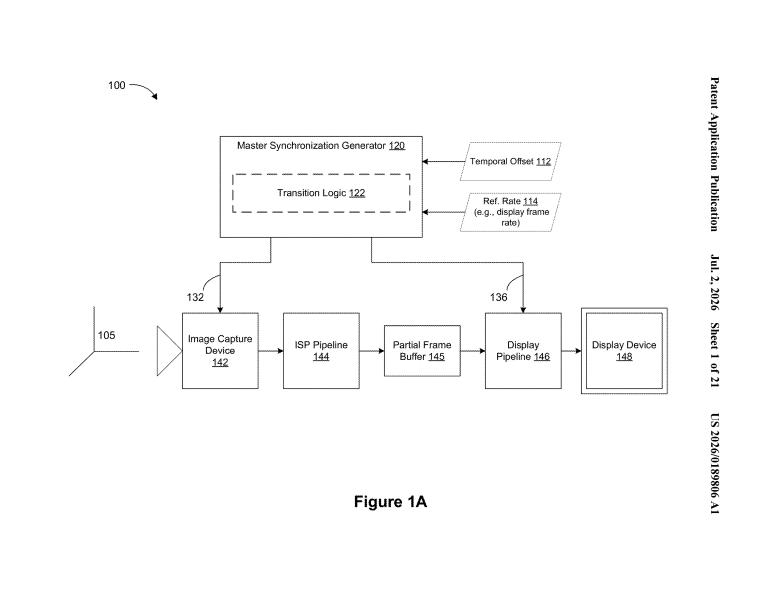
The eye-tracking and display pipeline so far has assumed parallel processing. This filing shows how to run dual cameras and displays through a single chip by staggering their workload, keeping latency low without doubling hardware.
Dimming the real environment around shared content lets multiple people focus on the same virtual object without passing the headset between them, solving a core challenge for collaborative AR use.
Eye and hand tracking alone can't filter false taps in AR, so Apple's system now checks whether the headset itself is moving at the moment you tap, rejecting inputs that arrive during head motion.
Apple is working on a system that takes ordinary flat video, think a movie or a TV show, and automatically reconstructs it as a three-dimensional scene you can stand inside, rather than watch on a screen.
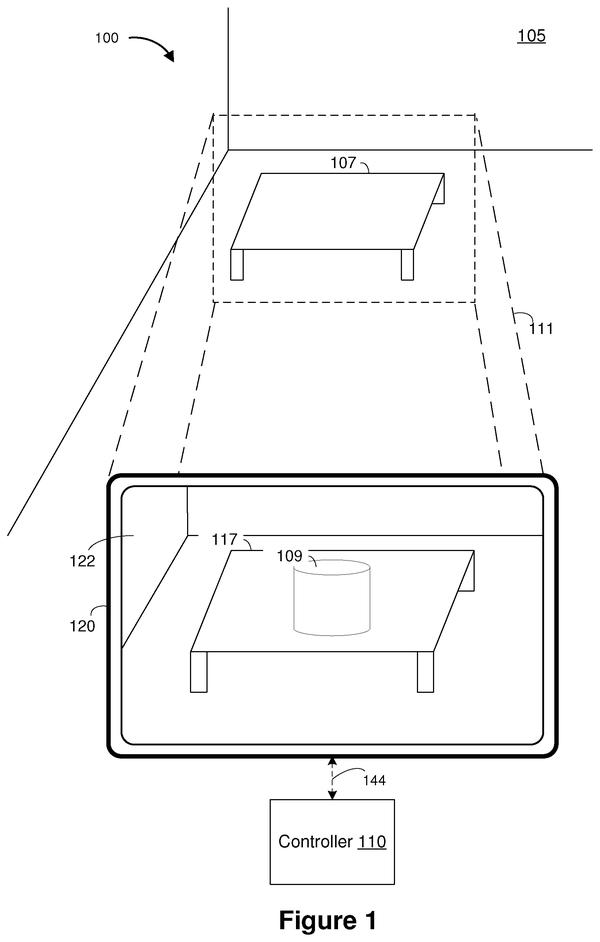
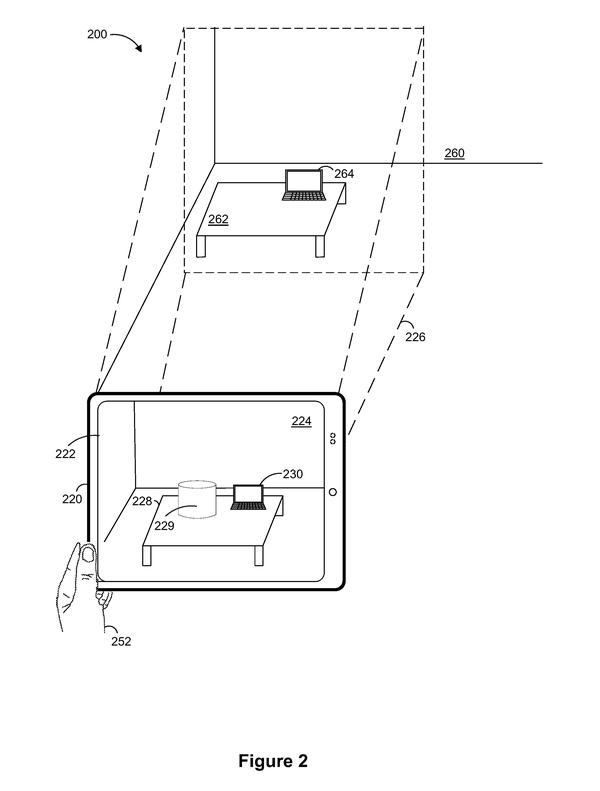
AR glasses would need to know what surfaces surround a virtual object and reshape it to match the space it occupies, solving how to make digital content feel rooted in real rooms instead of floating arbitrarily.
AR glasses need sharp passthrough video to feel natural. This filing shows Apple plans to solve that by intelligently enhancing only the region you're actually looking at, rather than processing the entire camera feed.
Soft mounting for the display modules absorbs impact energy instead of letting screens collide with the housing frame, protecting the optical alignment that IPD adjustment requires.
Repositioning the virtual camera viewpoint to match the wearer's actual eye position prevents the uncanny misalignment in video calls and mixed-reality scenes where camera-to-eye offset becomes visible and jarring.
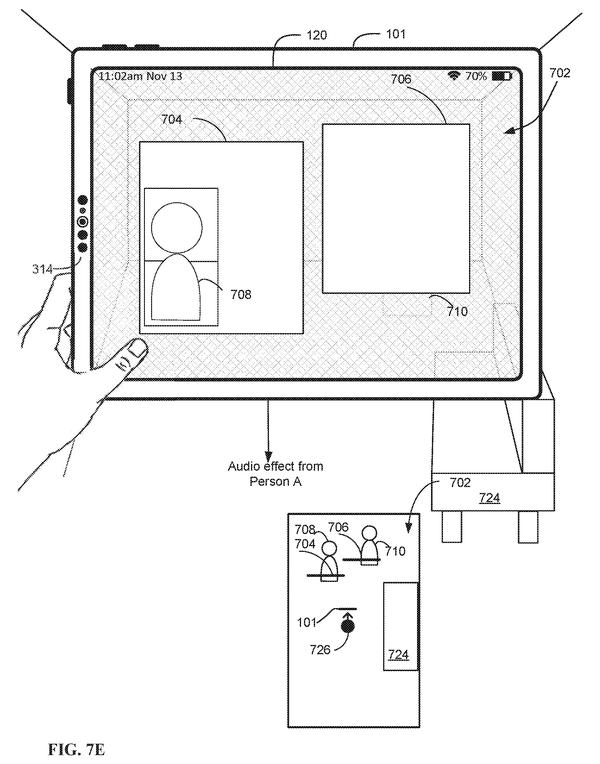
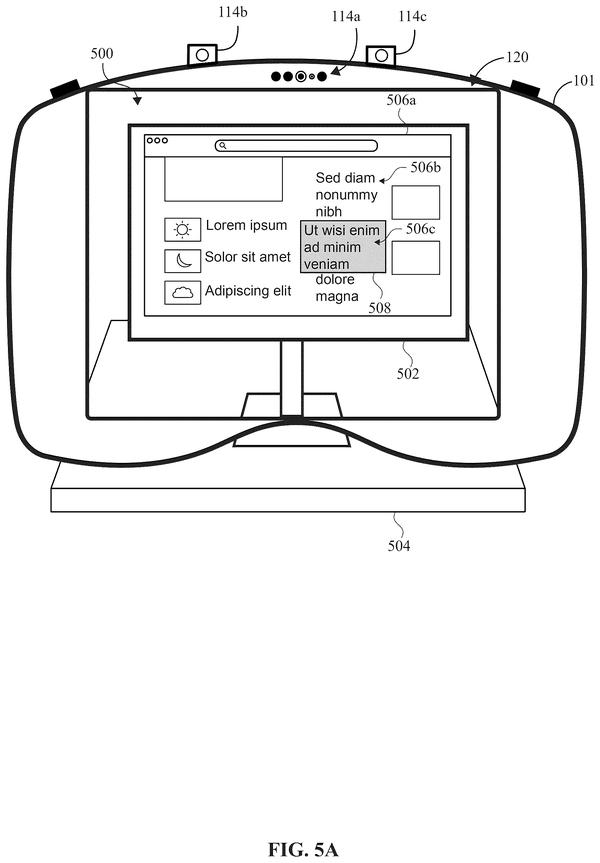
Dual wearables with motion sensors feed head position data to a flat screen, letting the display adjust perspective in real time without a dedicated headset strapped to your face.
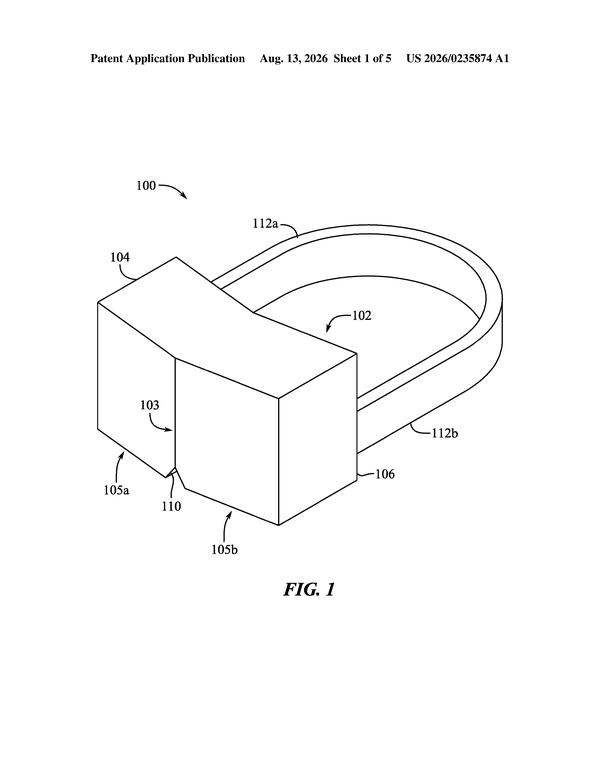
The fit watchlist now extends below the frame itself. Rather than adjust straps or lens position, swappable nose bridges let users customize the single pressure point that determines whether glasses stay put or slip during wear.
AR glasses need hand gestures to feel natural, and this filing maps out the physics rules for when users grab and manipulate virtual objects, how they rotate, settle, and transfer between hands.
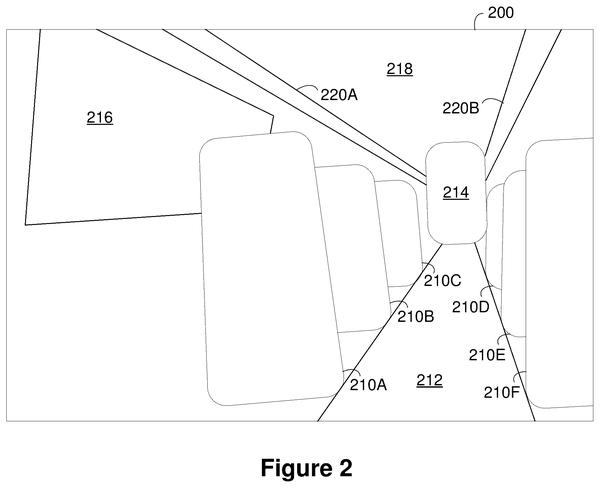
The device needs gravity reference points to place virtual objects convincingly on real surfaces. This filing adds a camera-based backup to gyroscope drift, letting the system read floor and wall lines to confirm which way is down.
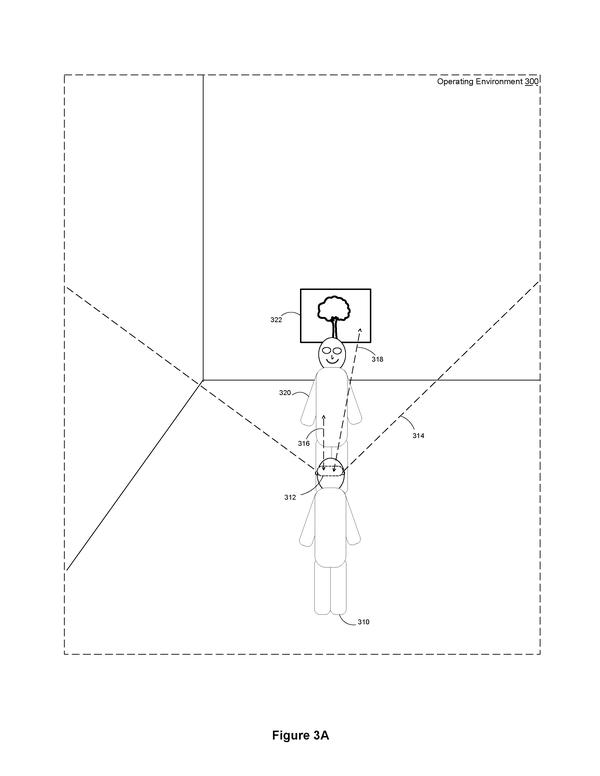
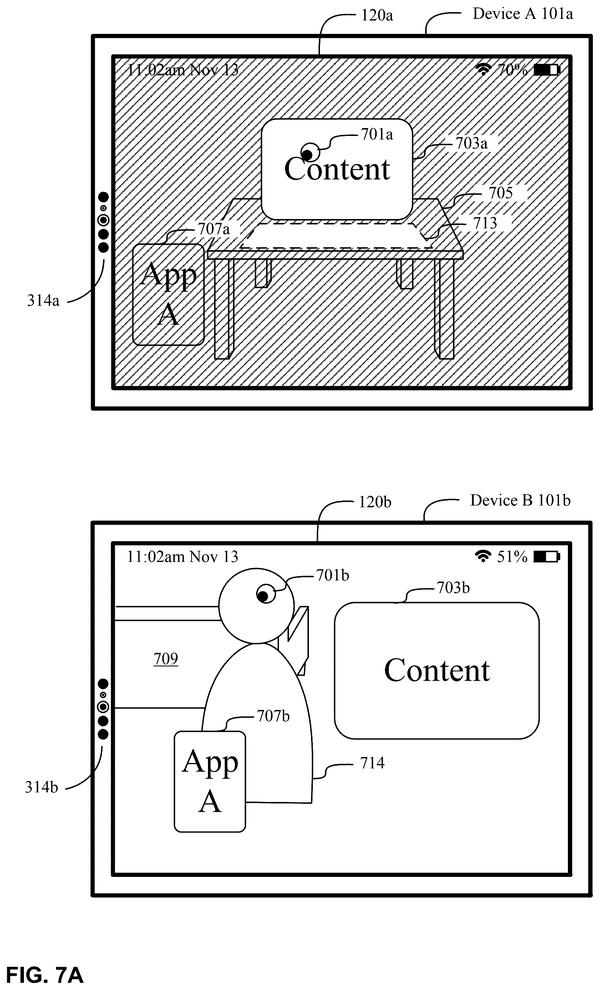
Detecting people occluded by virtual windows, the system either dims the content or shifts it aside depending on whether the person is in your social circle or a stranger.
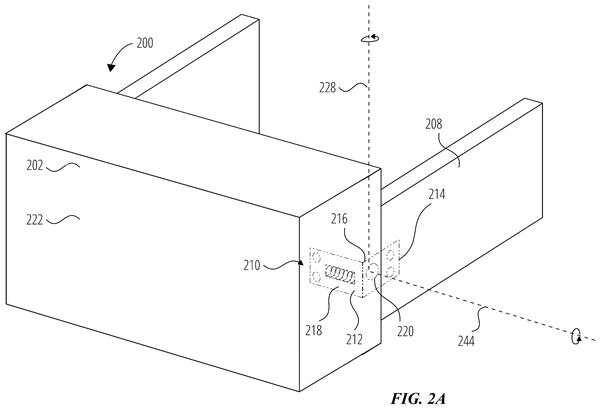
A compound hinge that rotates on two axes lets the arm both fold flat and tilt to match head contours, solving the fit problem glasses need without bulky adjustments.
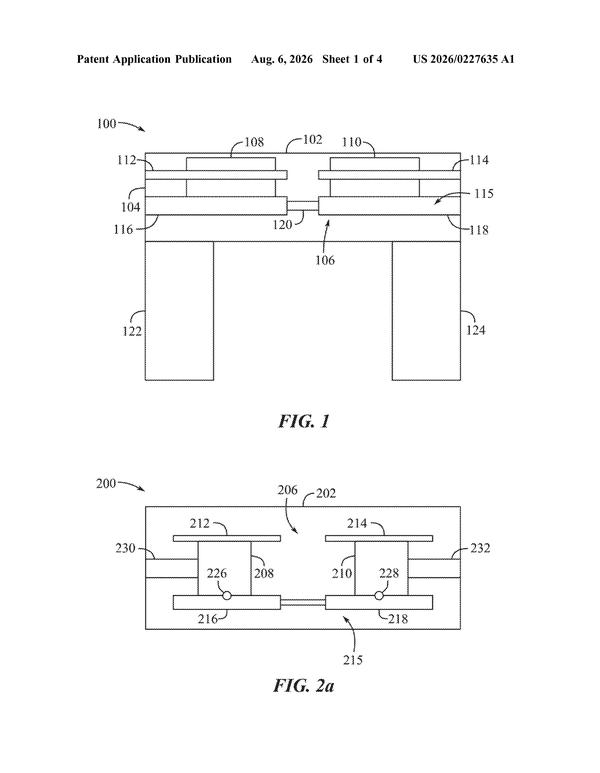
AR glasses that auto-focus as your eyes move from near to far objects would need some way to shift the lens shape fast. This patent shows one mechanical path: heating a wire to tighten it around the lens edge, squeezing the glass into a new curve.
Populating virtual scenes with independent behavior requires characters that pursue their own goals rather than follow predetermined paths, a shift that could let AR environments respond dynamically to what users do.
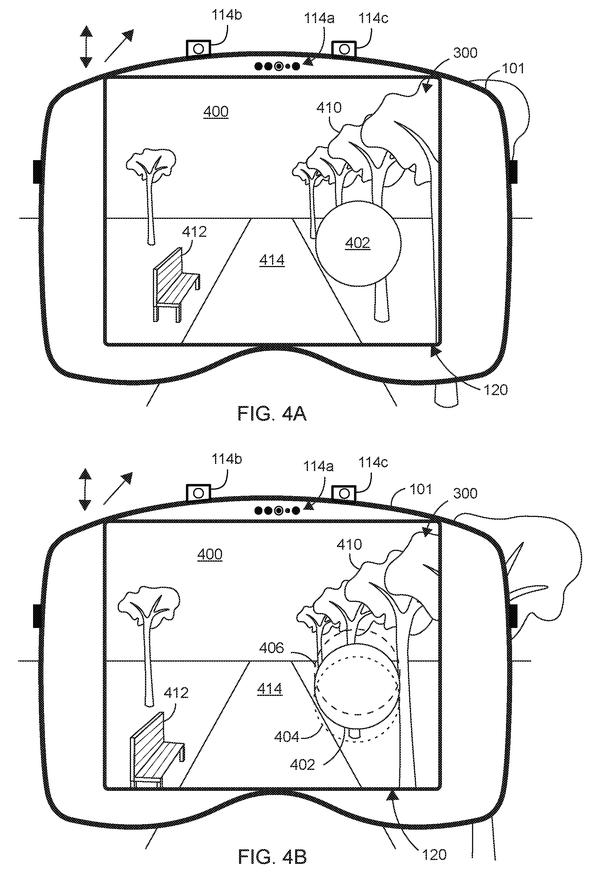
Rendering virtual objects transparently when hands move in front of them keeps users oriented during interaction, solving a core usability problem in mixed-reality interfaces where occlusion breaks the sense of presence.
AR glasses need lenses that shift focus as your eyes move between nearby virtual objects and distant scenes. This fluid design cuts the power drain that would kill battery life in a headset.
Panels that rotate in shared virtual spaces let both users view obscured content without breaking the spatial illusion of a shared room, advancing how Apple's AR glasses could handle collaborative viewing angles.
Anchoring virtual objects to fixed coordinates in physical space lets the glasses update what appears on screen as the wearer moves, rather than locking content to the device itself.
The eye-tracking and display-sizing work assumes the headset can show you a sharp, believable view of the real room. This filing solves the synchronization problem that would otherwise make that view feel disconnected from your actual head movements.
Directing user attention in VR space requires the assistant to enter from the periphery rather than materialize mid-view, signaling that Siri exists as a persistent object in the environment rather than a floating overlay.
Keeping AR glasses stable on the face during movement requires active feedback, not just passive fit, this filing proposes nose pads that clamp down when sensors detect slipping.
The rendering-speed problem: when head motion outpaces scene redraw, Apple proposes using lower-quality Gaussian data to fill the gap, keeping objects legible rather than frozen or blurred while the full render catches up.
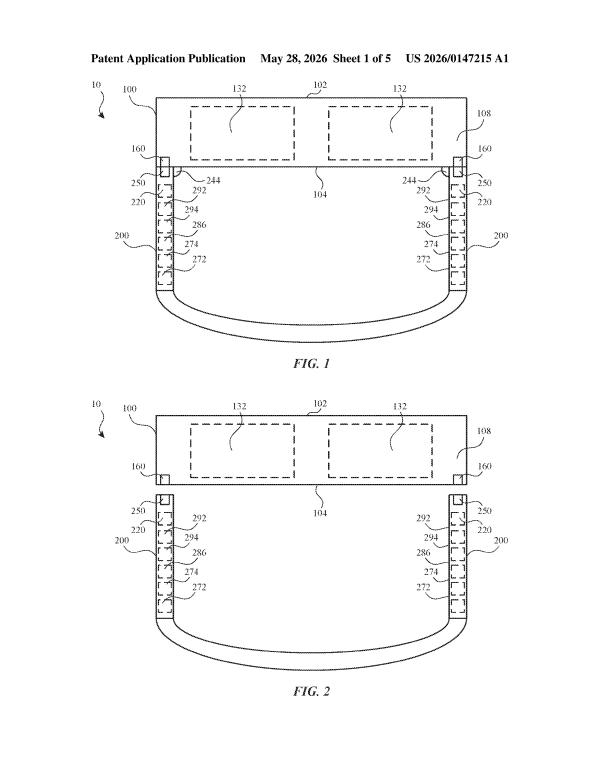
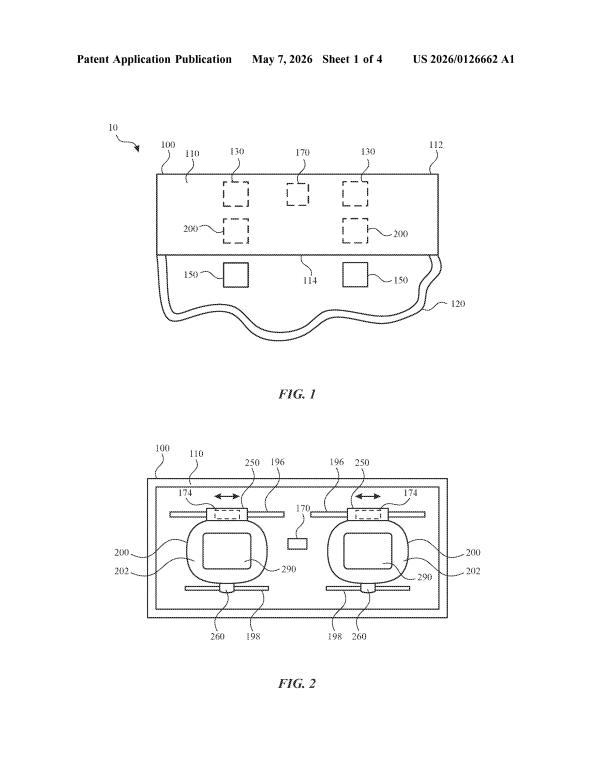
The sensor-filled rails solve a gap in the earlier patents: once lenses slide to fit your face, the headset now knows their exact position and can calibrate the display accordingly.
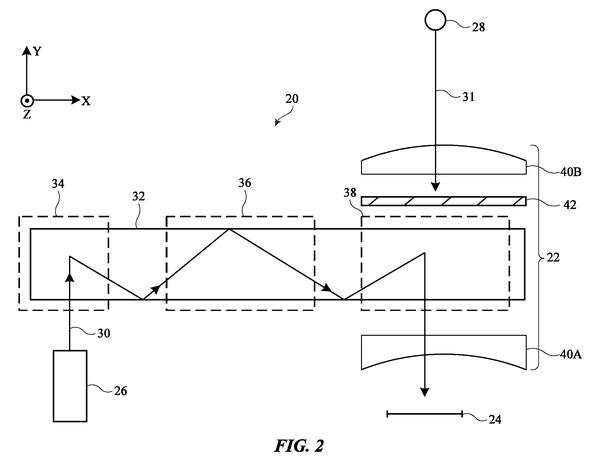
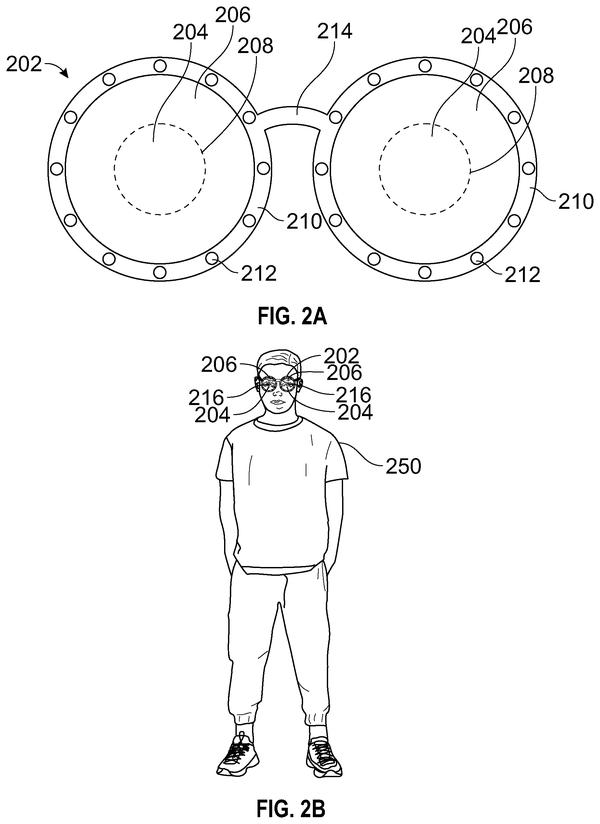
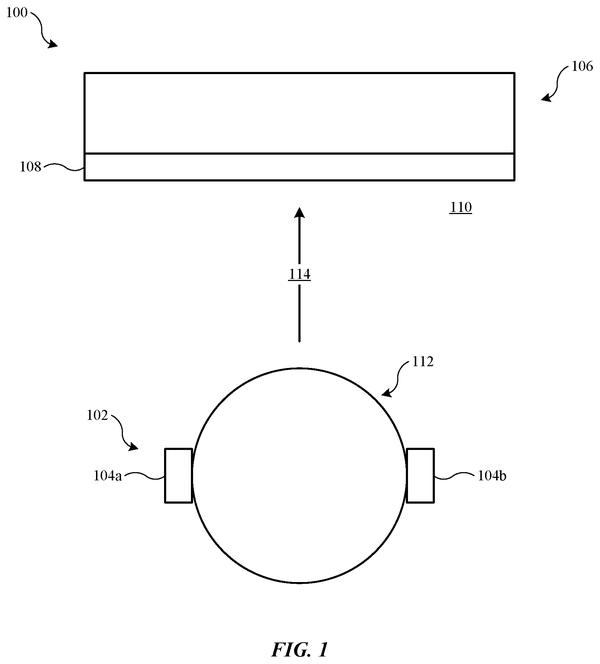
AR glasses that look like regular eyewear instead of a visor need eye-tracking without cameras on the front. This patent routes the sensors to the arms and uses an infrared-coated lens to bounce the tracking beam, keeping the face uncluttered.
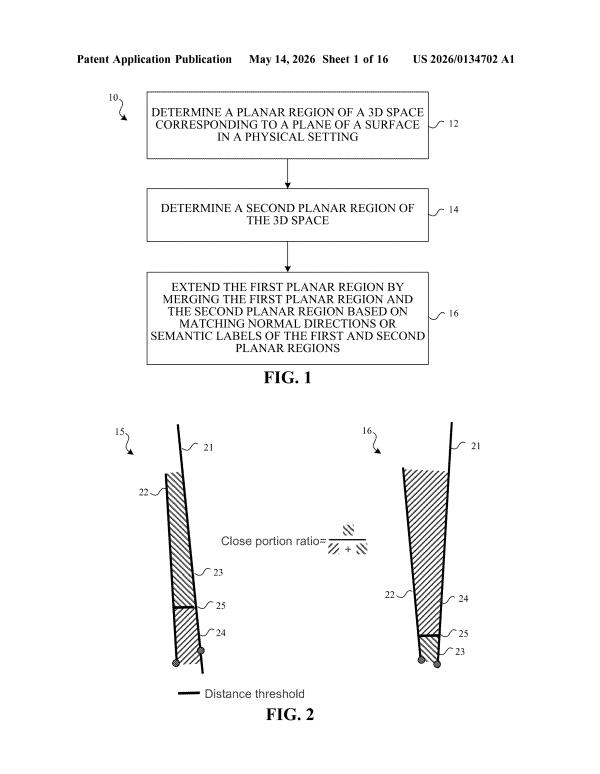
Distinguishing walls from floors trips up standard plane detection, so Apple's ML approach learns to read semantic context in camera images rather than relying on geometry alone, letting virtual objects anchor to the right surfaces.
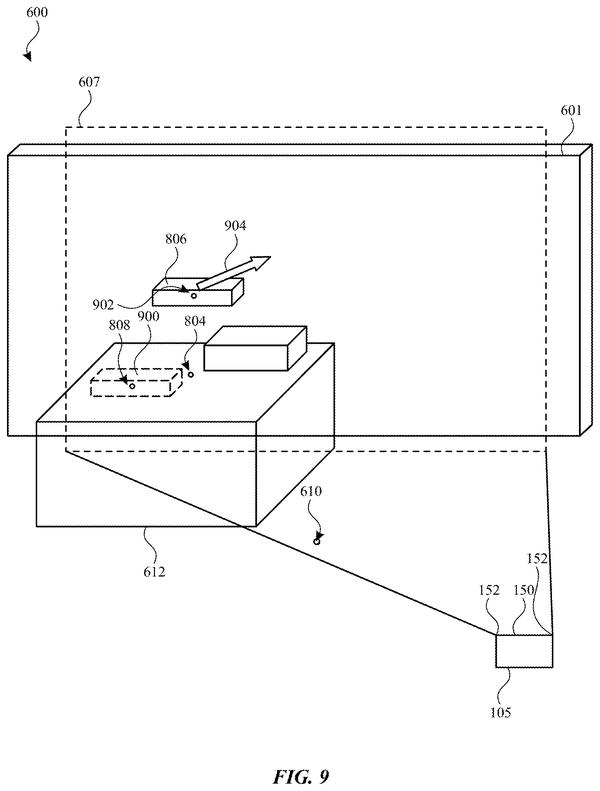
Combining depth maps with image data lets the system recover both overall structure and surface detail, solving a core problem for AR glasses that need to understand and interact with physical spaces in real time.
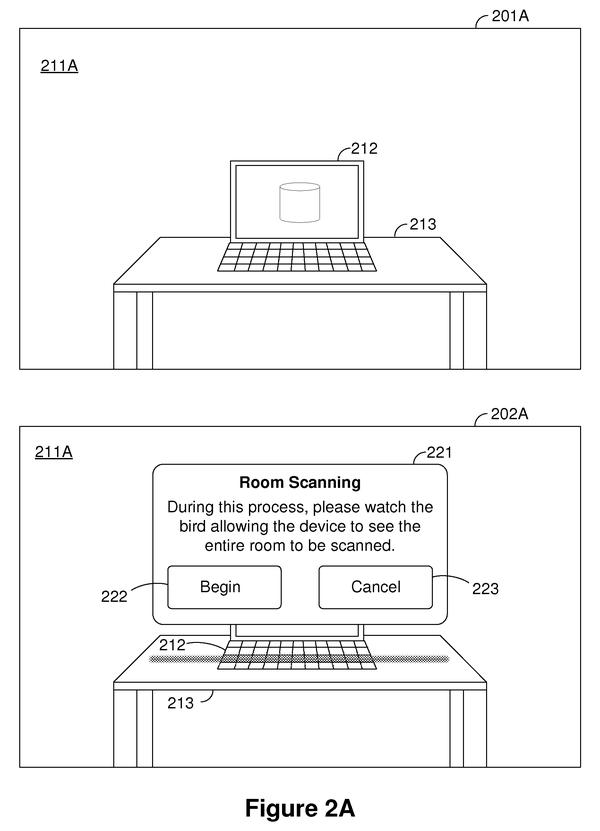
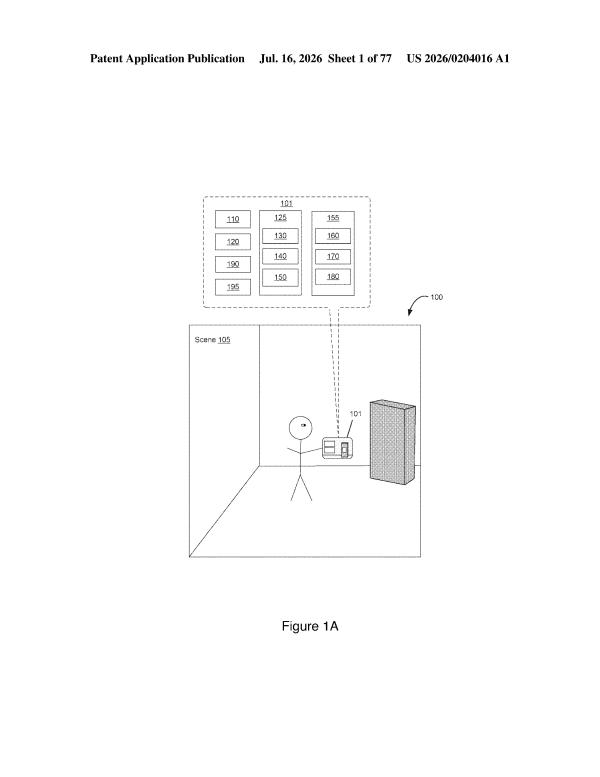
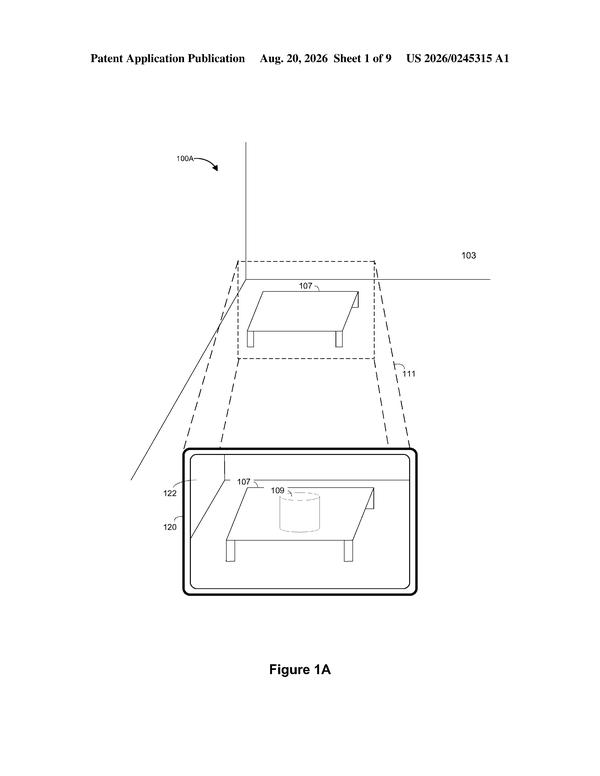
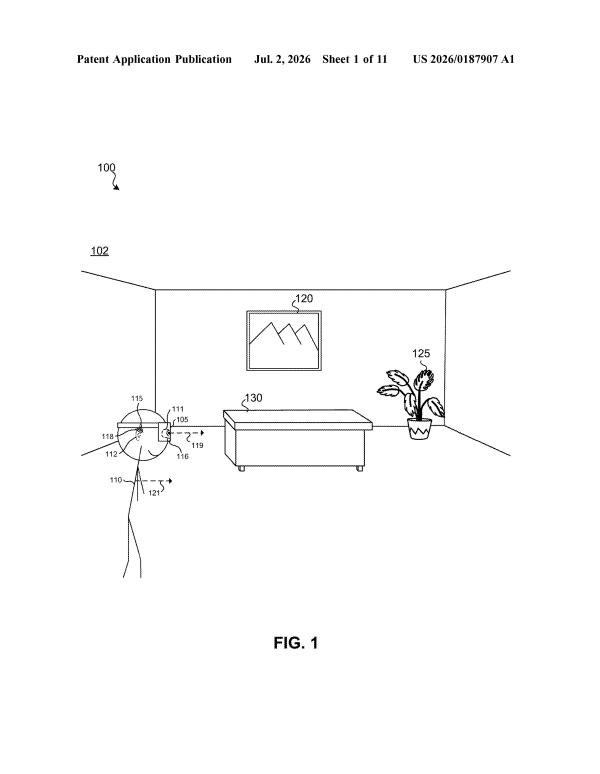
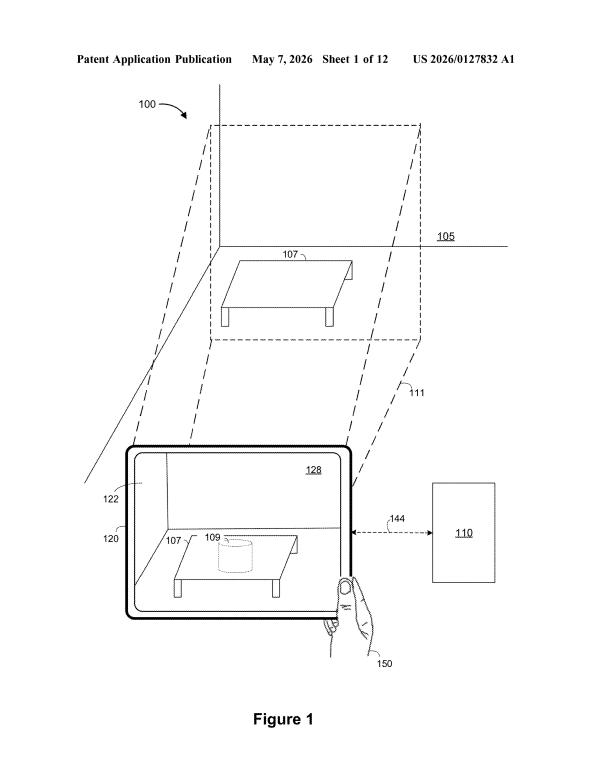
A spatial mapping system that positions virtual windows based on measured room dimensions rather than fixed default placements, ensuring AR content fits naturally into spaces of different sizes.
AR glasses need optics positioned precisely for each wearer's eye spacing. This filing details a sliding lens mount that adjusts automatically, solving the mechanical problem of fitting different face geometries without sacrificing image quality.
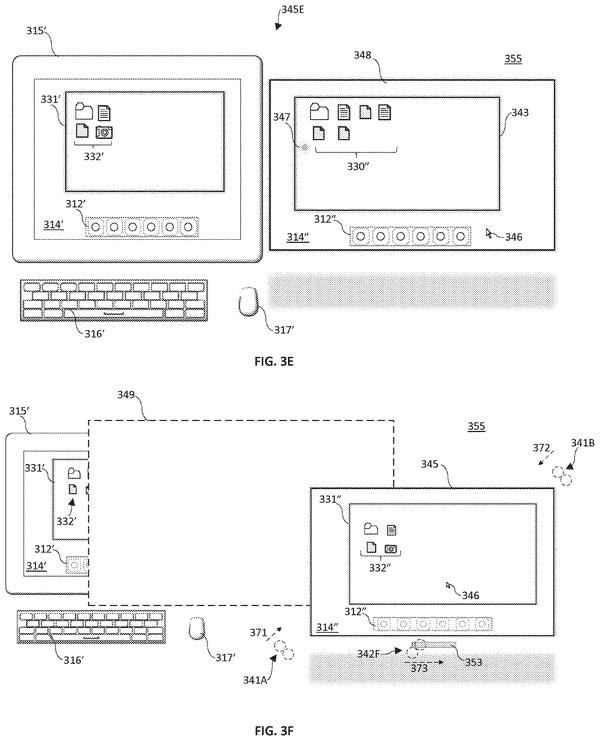
The sensor and software pieces come together here: spatial input (where you point) drives what controls surface, letting one physical display serve multiple spaces at once.
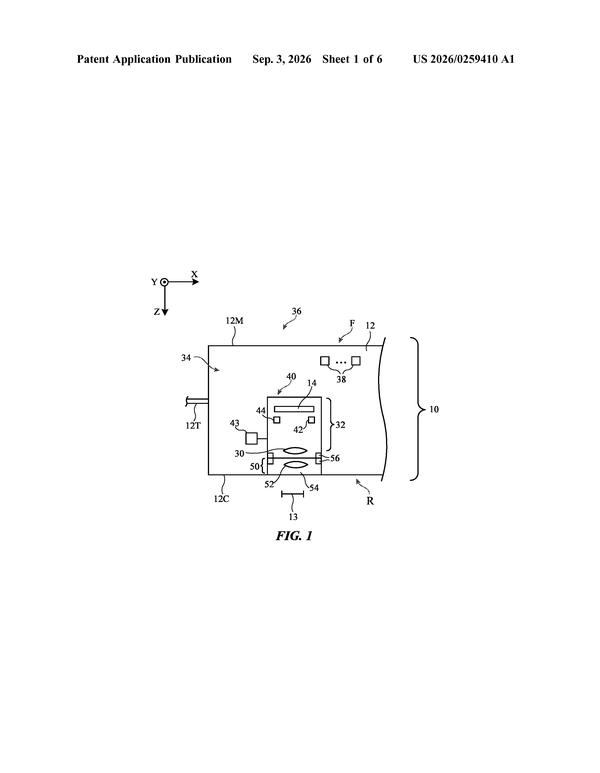
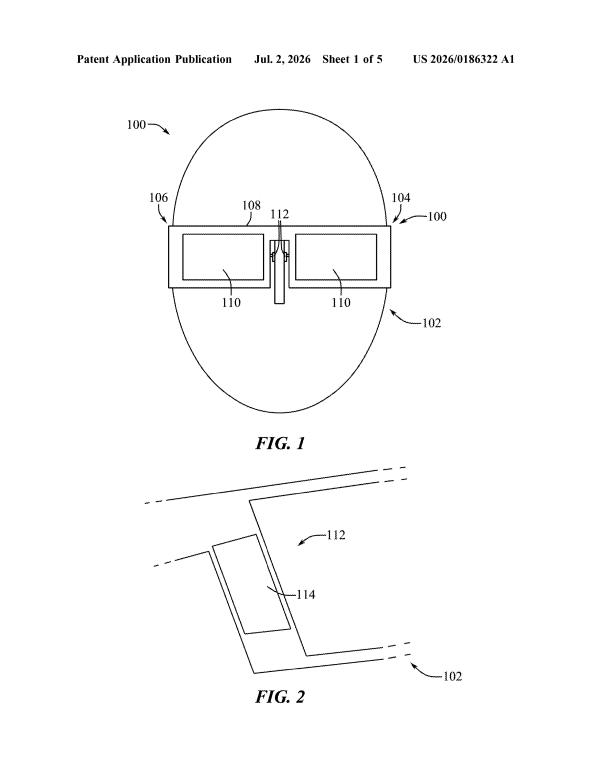
Keeping the headset from sliding down your face requires detecting motion in real time. Apple's laser-speckle sensor in the nose pad catches micro-movements before they break eye-tracking alignment and display calibration.
Questions readers ask
Does this mean Apple is definitely launching AR glasses?
No. These are patent filings, which show research directions Apple is exploring, not confirmed products. The filings cover fit, sensing, and software problems that would need solving before any glasses could ship, but patents alone don't guarantee a release.
Why do so many patents focus on how the glasses fit?
Several filings address how headsets slip, how lenses shift, and how glasses grip a nose, suggesting Apple treats physical fit as a core problem for any wearable display. Comfort and stability seem to matter as much as optics or software in this batch.
How does Apple plan to track eye movement without bulky cameras?
One filing describes moving eye-tracking cameras into the arms of the glasses instead of the front frame, which could let the frame stay slim while still monitoring gaze. It's an early-stage patent, so exact hardware placement could change before any product appears.
What software features come up most often in this watchlist?
The batch includes semantic plane detection for placing virtual objects on real surfaces, 3D reconstruction of physical objects from depth data, and windows that size themselves to a room. These filings suggest Apple wants software that reacts intelligently to physical space, though implementation details remain unclear.
Want this weekly breakdown for a company we don't cover?
Patentlyze Pro →
The weekly email: the best of Big Tech's filings, in plain English. Free.