Apple, Google, and Meta's AR Glasses Patents, and what they reveal
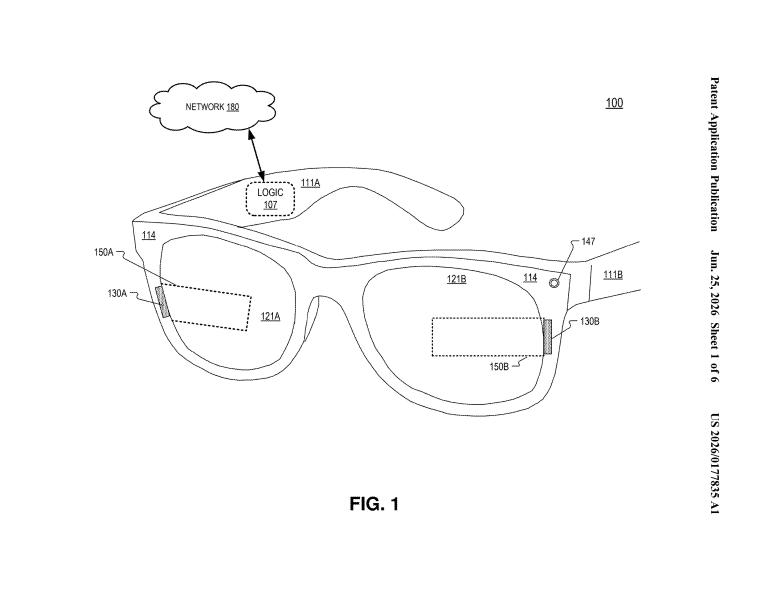
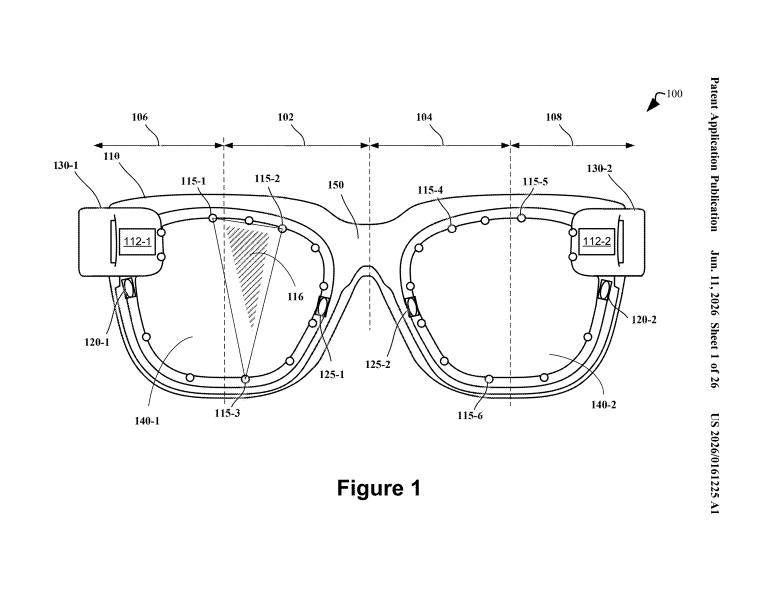
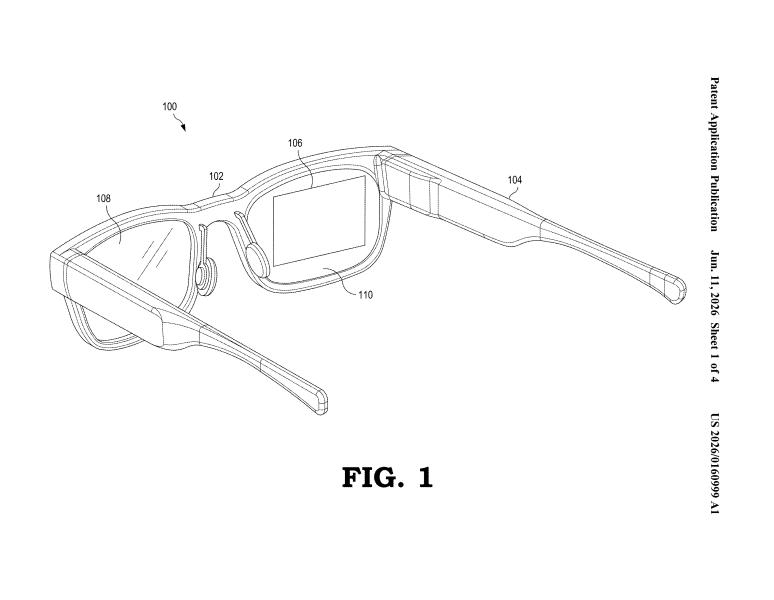
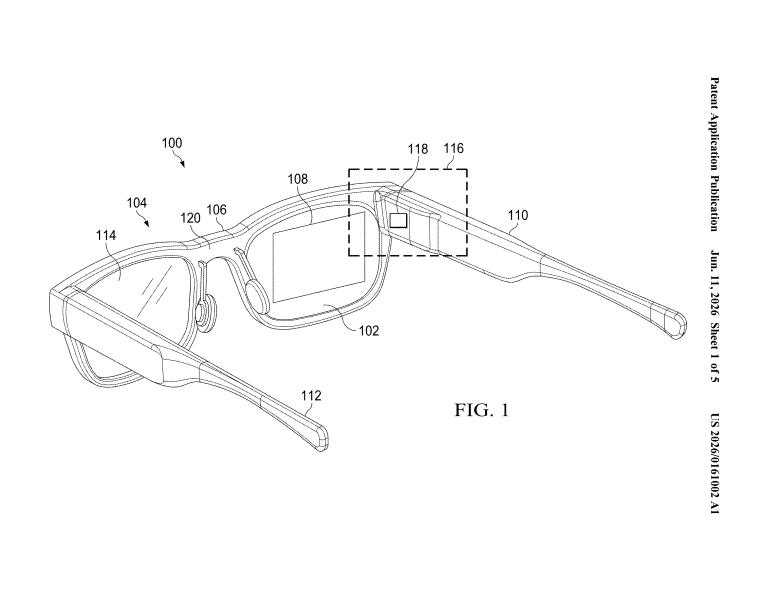
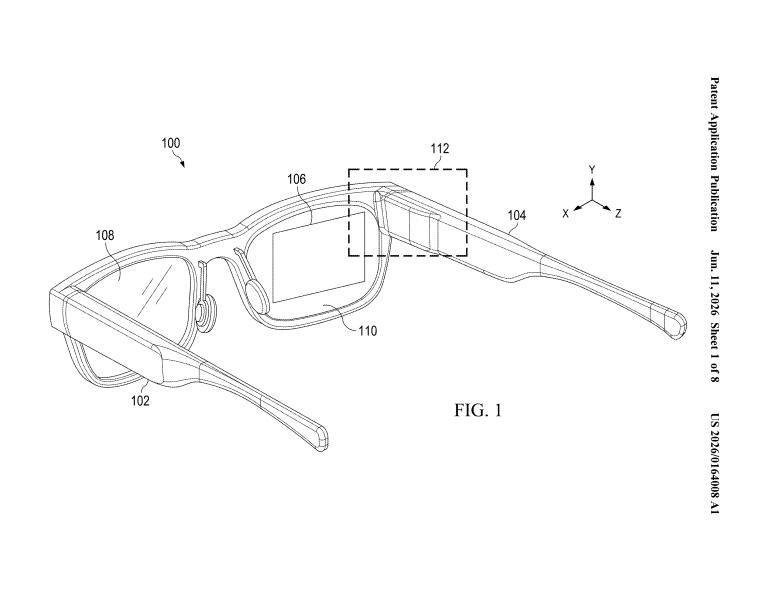
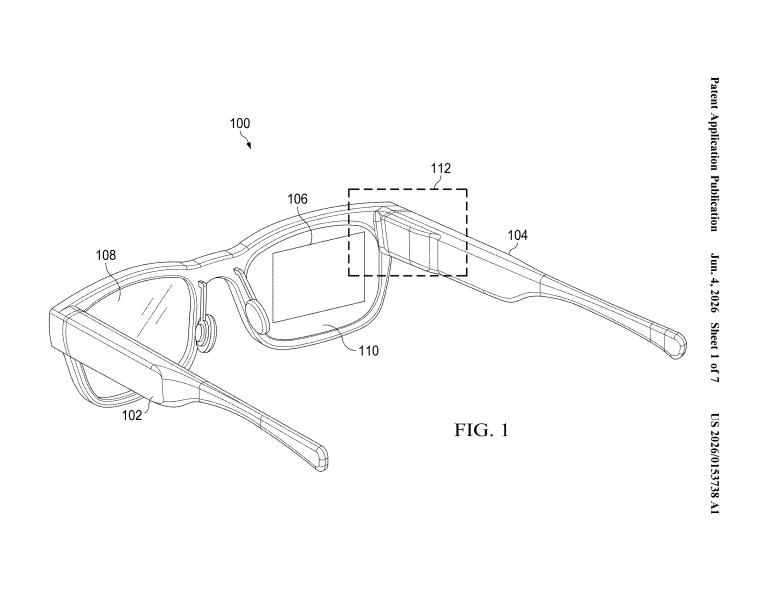
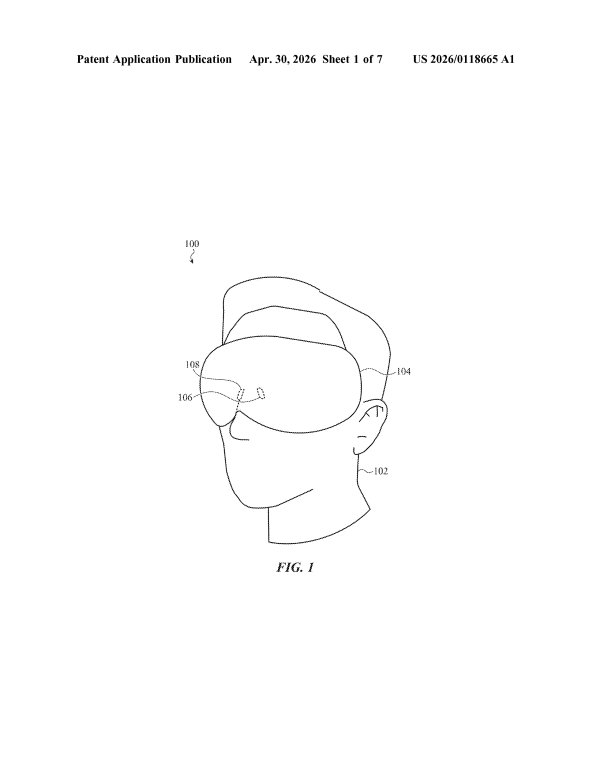
This tracker follows patent filings from Apple, Google, and Meta that solve concrete problems in AR glasses and headsets: eye tracking, waveguide optics, hinge fit, and slip detection. Together the filings show each company chasing comfort, clarity, and control before any device ships.
based on all tracked filings in this watchlist · refreshes every week
This fight is over who controls how digital images get placed, sharpened, and tracked in front of your eyes, covering everything from how light bends through lenses to how your gaze steers what you see.
Meta and Samsung carry the most weight here, with Meta pushing hard on how glasses sense and respond to the person wearing them, and Samsung covering a wide range of display and input problems.
What’s new in the AR glasses race
a dated entry each week this watchlist moves · older entries stay archived
Sep 17, 2026 30 filings joined
This week's filings focus heavily on making AR and VR displays sharper and better matched to each person's eyes. Samsung and Sony led the pack, each filing multiple patents covering eye tracking, display focus, and headset fit.
This week's filings lean heavily on display clarity, eye tracking, and keeping virtual images stable on your face. Microsoft and Samsung led the pack, each filing multiple patents covering how light moves through lenses and how headsets stay locked to what you see.
Qualcomm filed the most this week, with five patents around eye tracking, smooth visuals, and blending digital images with the real world. Apple, Sony, Microsoft, and Google all added filings focused on similar ground.
Aug 27, 2026 17 filings joined
Samsung and Meta filed the most this week, with Samsung focused on fixing display and camera problems in AR headsets and Meta working on how its glasses hear, see, and explain themselves to users. The overall push across all four companies is making AR and VR feel more reliable and natural to wear.
Aug 20, 2026 20 filings joined
This week's filings lean heavily toward making AR and VR images look and feel more real, covering sharper visuals, truer colors, and realistic lighting. Sony and Samsung filed the most, with Sony focused on display accuracy and Samsung spreading across optics, sensors, and overlaying phone controls into physical space.
Who’s filing patents in the AR glasses race
counts from tracked filings · focus read from each company’s own filings
the fights inside the fight · each with its three newest filings · new filings join every week
Eyes as the Main Control 40 filings
Apple 11, Qualcomm 7, Samsung 6
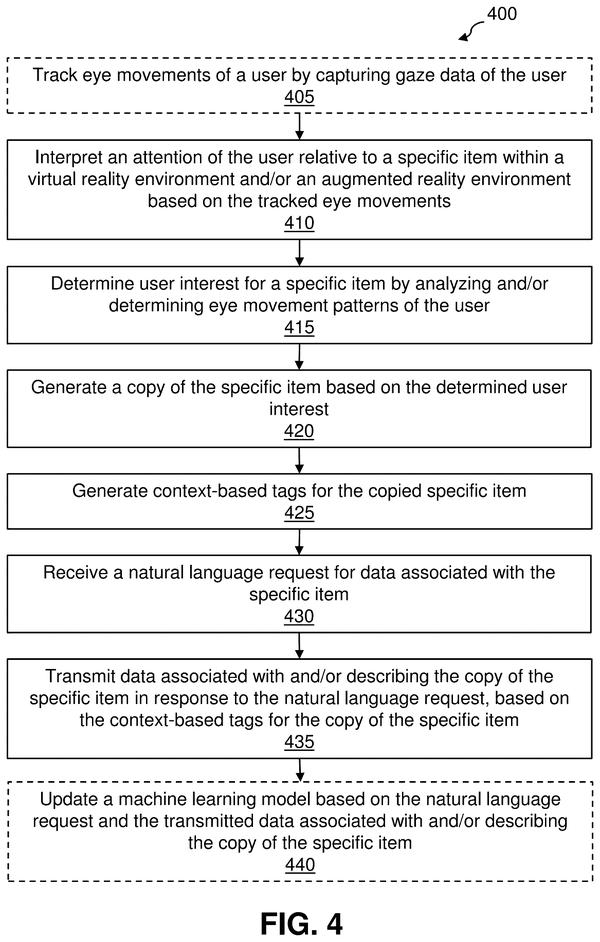
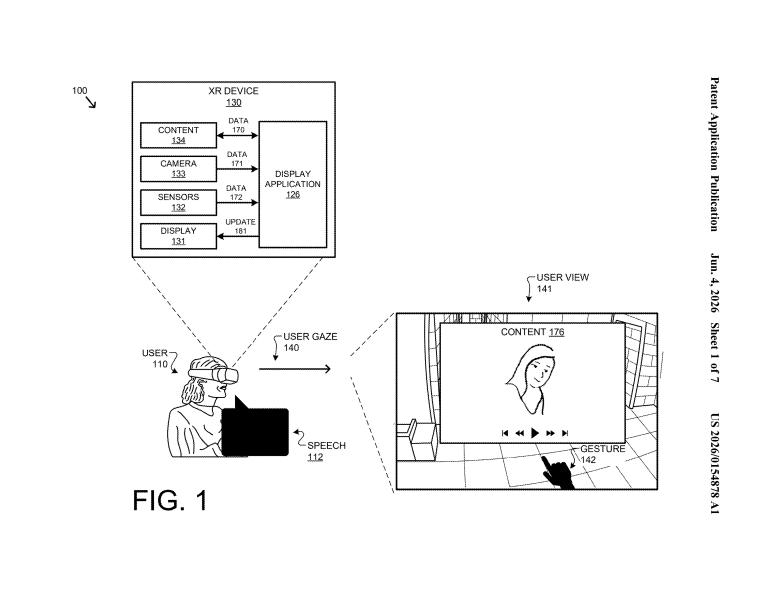
Several companies are filing around the idea of using where you look to control menus, select objects, resize windows, and trigger actions, making your gaze the primary input instead of buttons or touch. Apple, Meta, Google, Samsung, and Qualcomm are all pushing versions of this.
Splitting the Hard Work Between Devices 23 filings
Qualcomm 15, Samsung 4, Meta 2
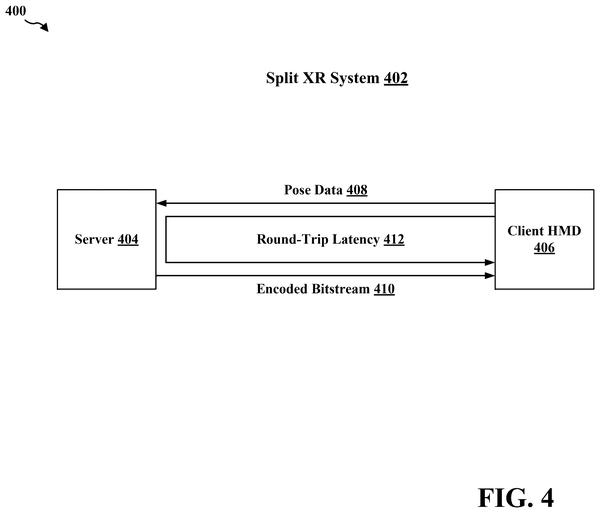
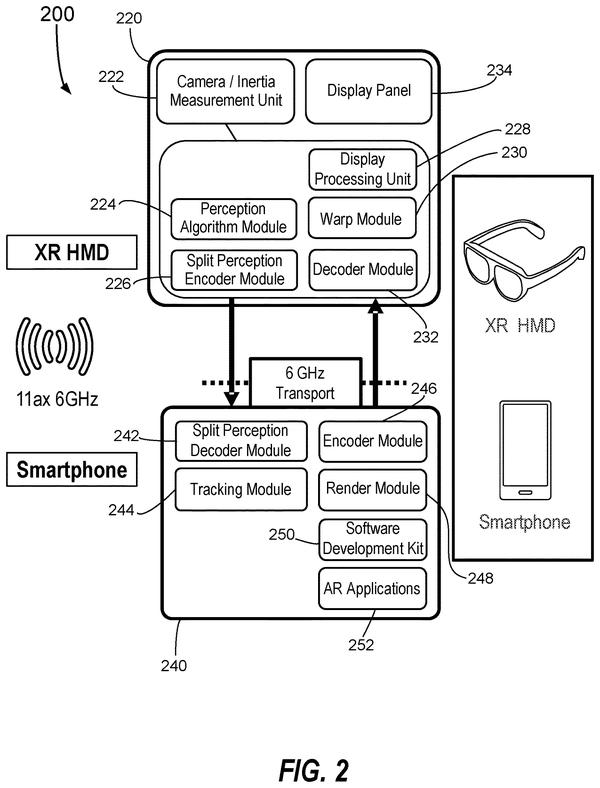
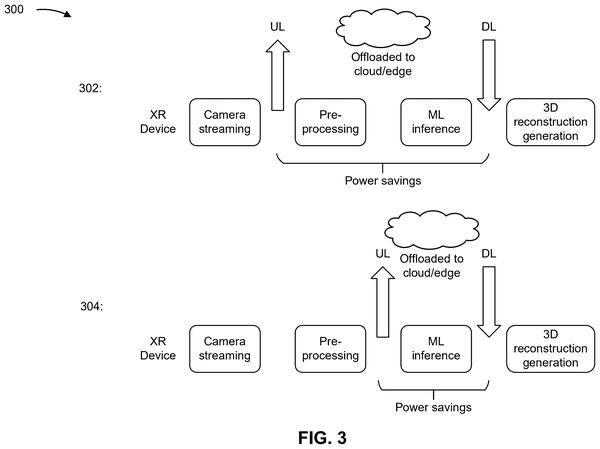
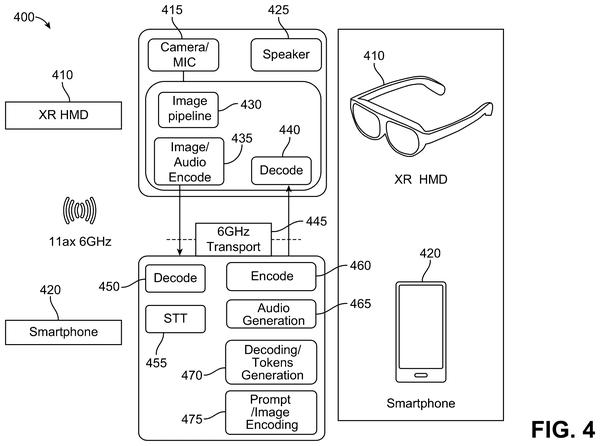
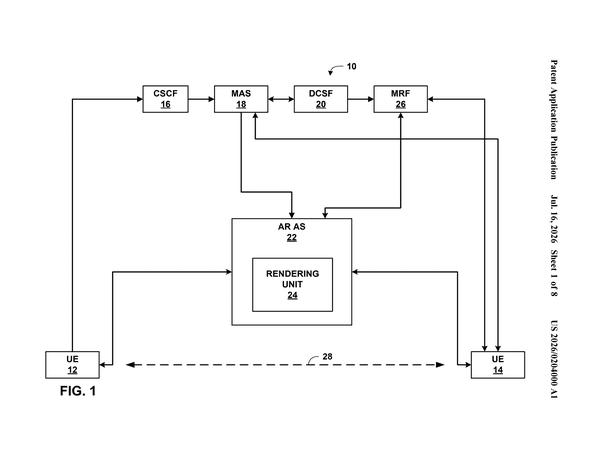
A cluster of filings tackles the problem of AR glasses being too weak to do everything on their own, with patents covering how to hand off processing to a phone, a server, or the network and keep the picture smooth. Qualcomm leads here, with Meta also filing.
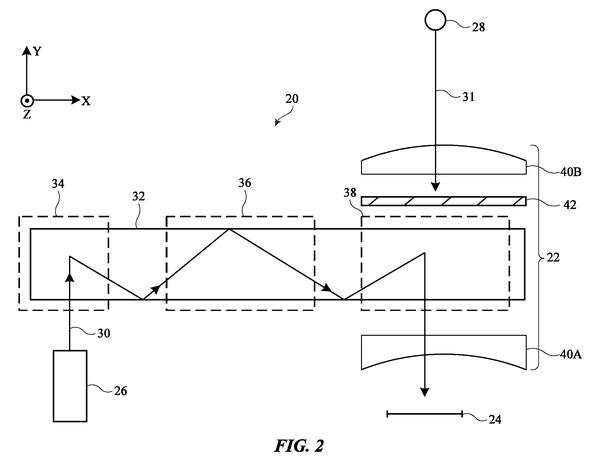
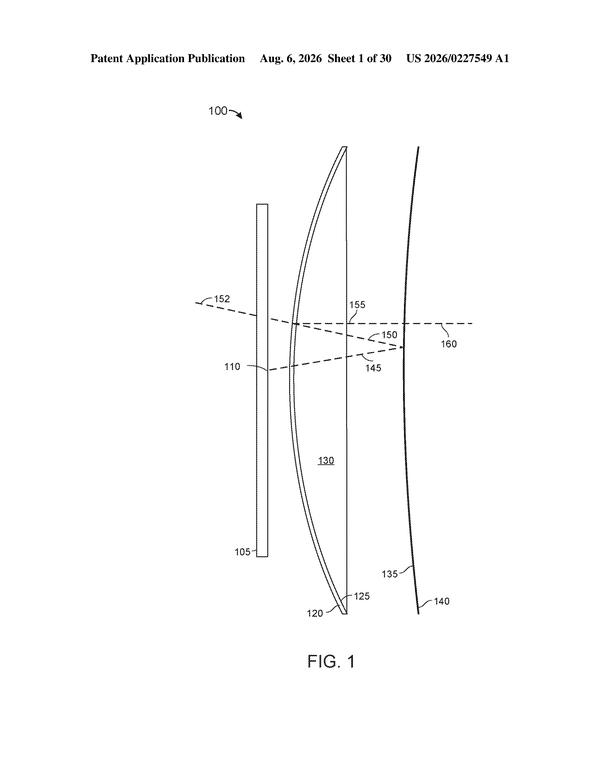
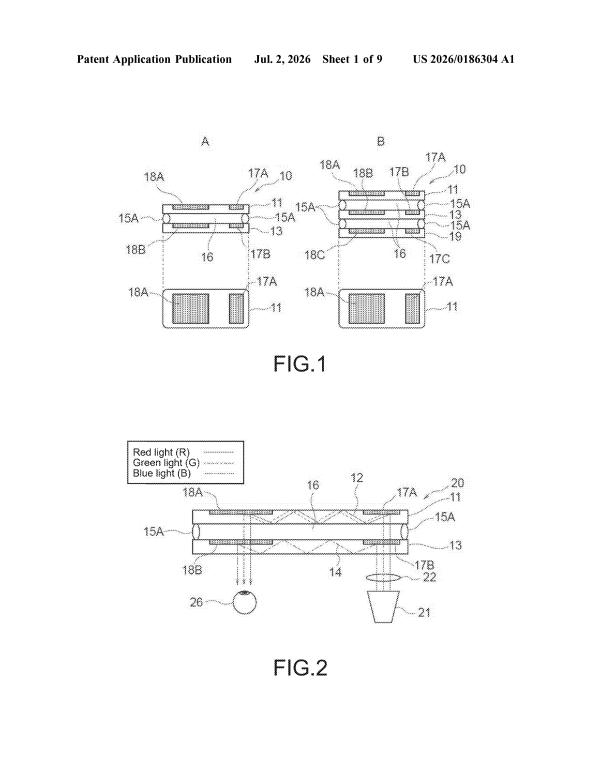
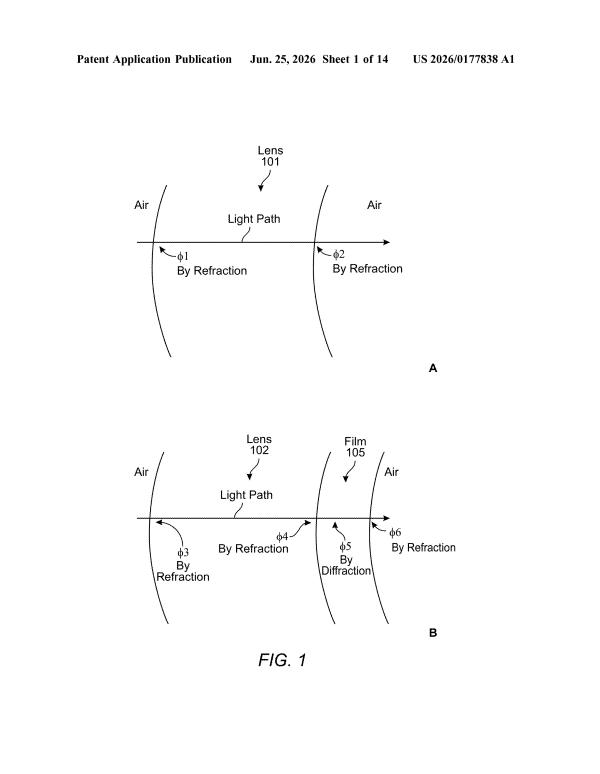
Multiple companies are filing on new lens materials, folded light paths, and waveguide designs that could shrink the thick optics that make today's headsets heavy and awkward. Meta, Apple, Google, and Samsung are all working this problem.
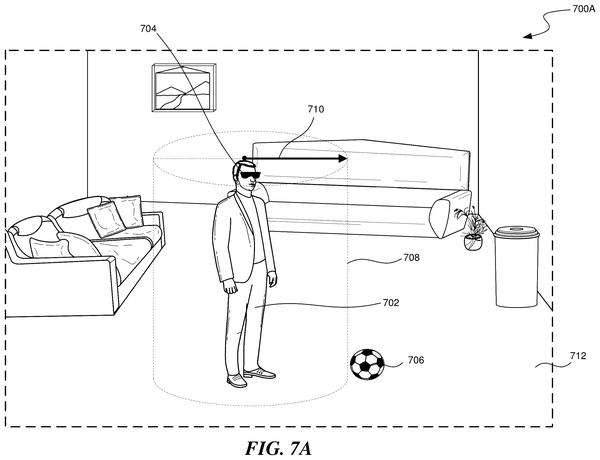
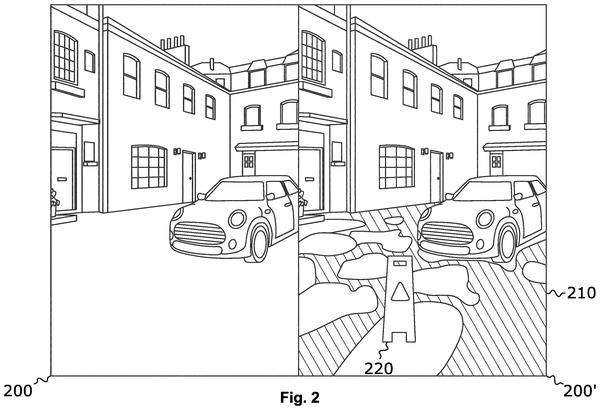
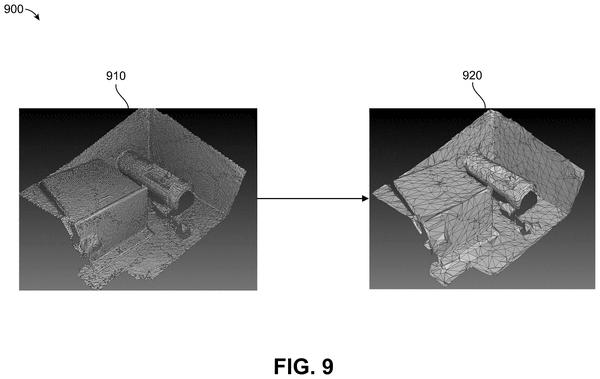
A set of filings covers glasses that scan the physical space around the wearer to understand surfaces, objects, and hazards, then adjust what virtual content is shown based on what is actually there. Samsung, Meta, Google, and Qualcomm are filing here.
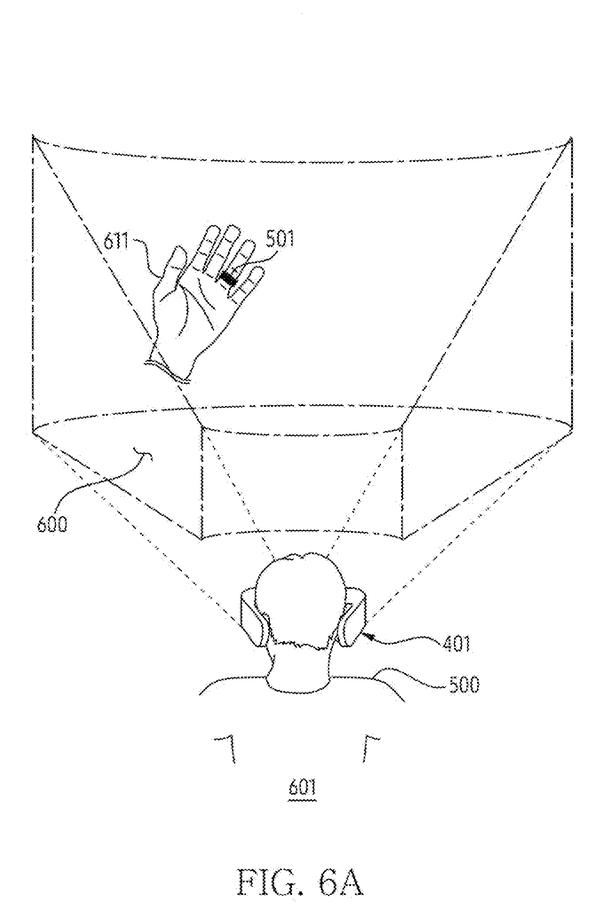
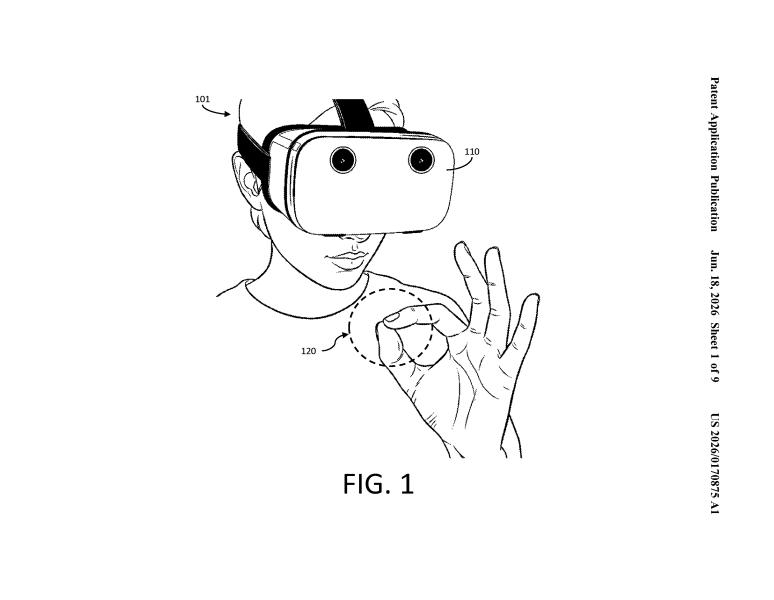
Companies are filing on ways to let wearers control glasses and headsets by moving their hands, fingers, or wrists, covering everything from two-hand gestures in open air to gestures detected by a phone camera or a ring. Apple, Meta, Samsung, and Google are all active here.
Anchoring Virtual Objects to Real Space 25 filings
Google 6, Samsung 5, Qualcomm 5
Several filings address the core challenge of making virtual images stay locked to real-world positions as the wearer moves, covering head movement prediction, display correction, and 3D map building. Qualcomm, Google, Samsung, and Meta are all filing on this.
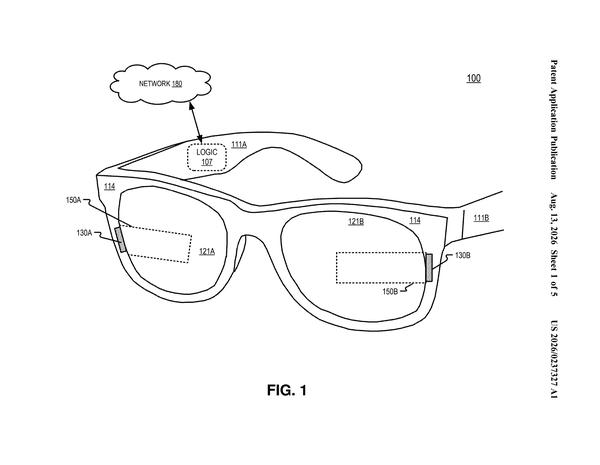
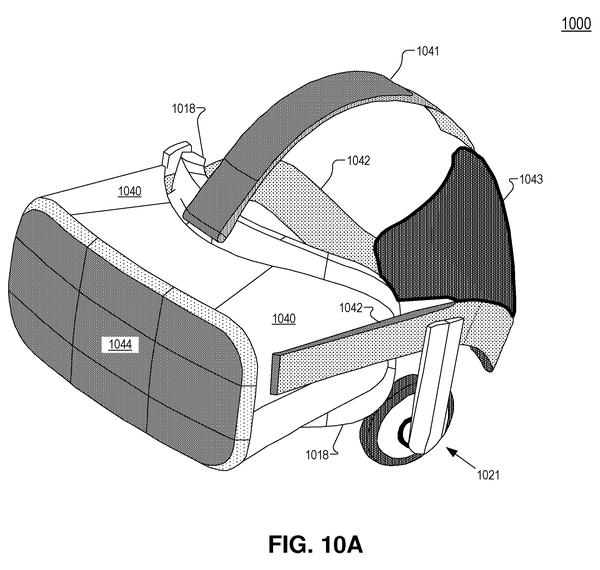
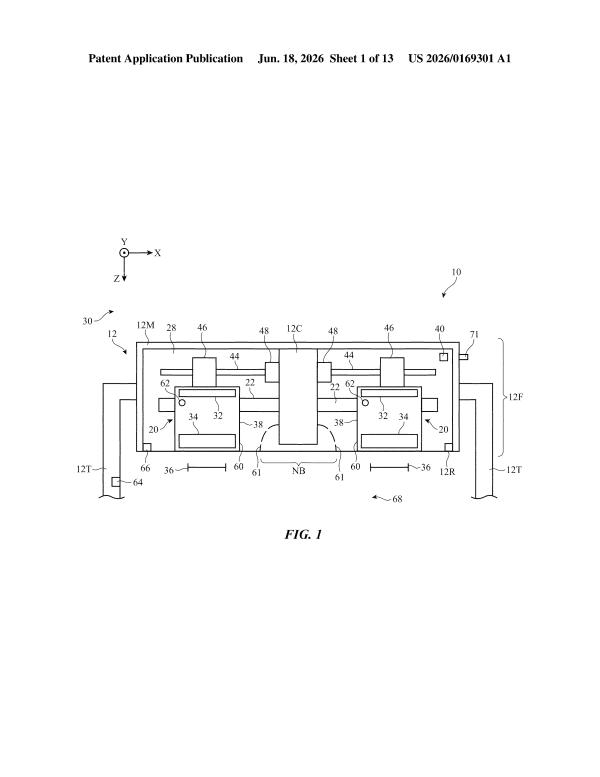
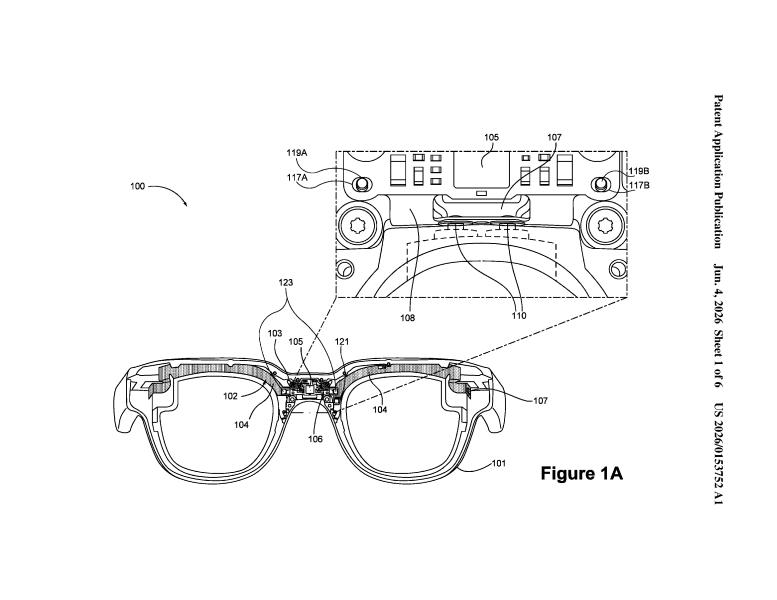
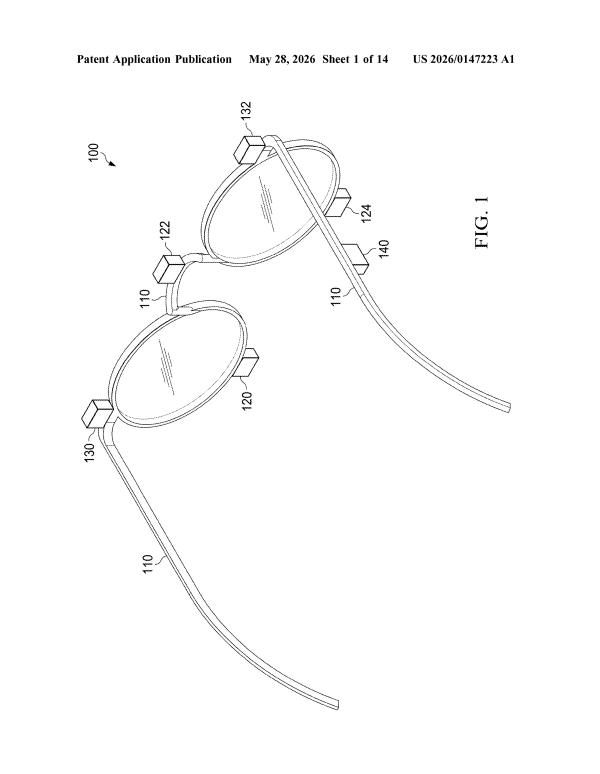
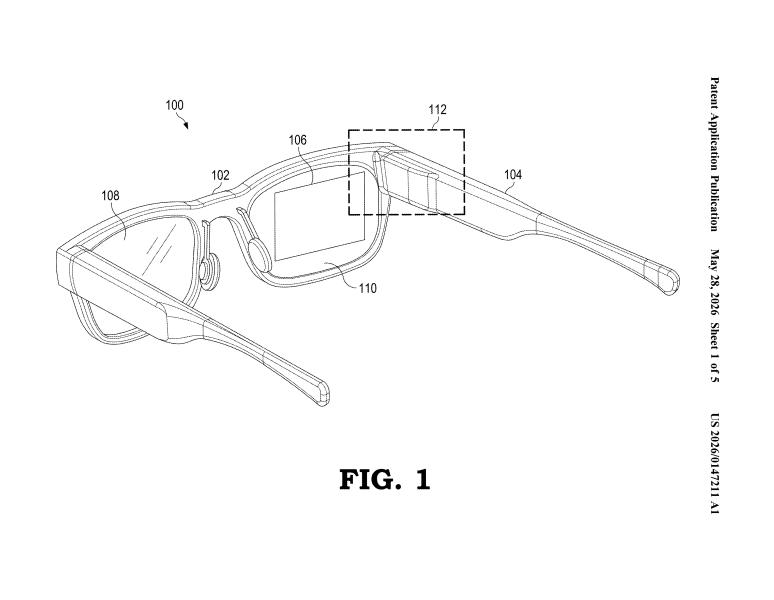
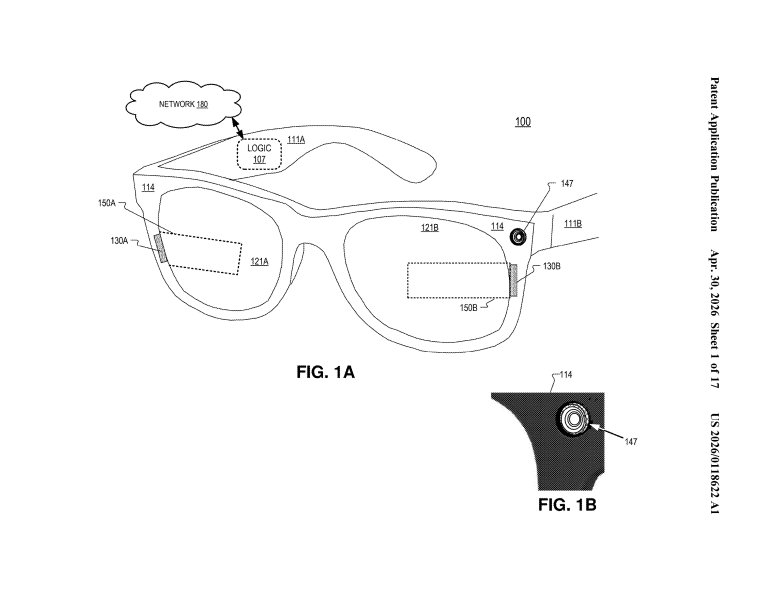
The plain hardware of glasses: hinges that hide wiring and seal out water, nose bridges that adjust, and sensors that notice when the frames slip. Apple, Meta, Google, Samsung and Sony are all filing on it.
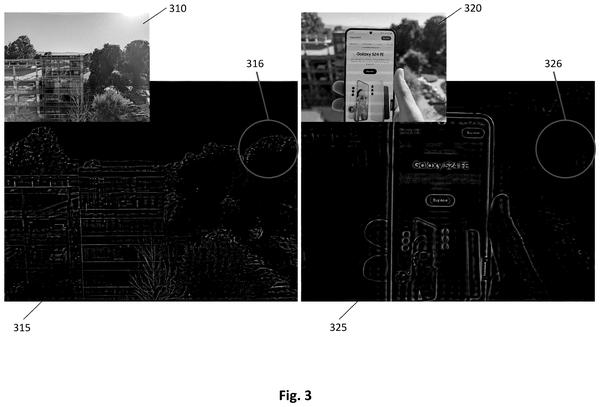
Making the picture hold up outdoors and in a busy room: fighting sunlight, glare, ghost images and washed-out text. Google, Meta, Samsung, Sony, Microsoft and Apple are pushing here.
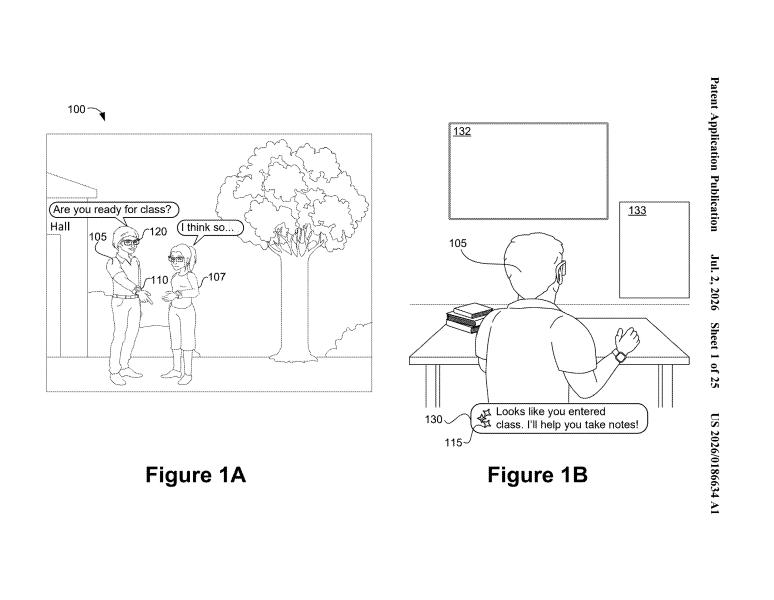
Glasses that listen, pick one voice out of a crowd, translate what you read, take notes and decide when to speak up. Meta, Google, IBM and Nvidia are the filers.
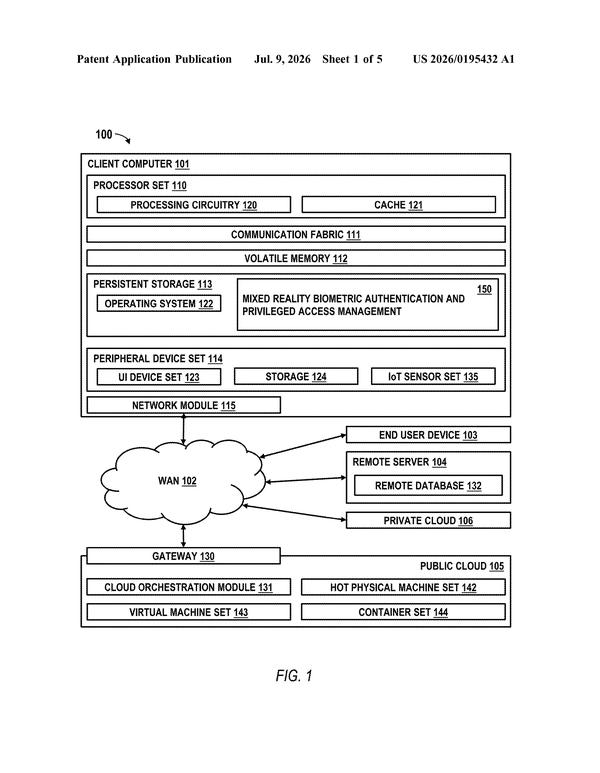
Login and identity built into the glasses: iris scans, skin contact, a hardware mute switch and avatars locked behind a login. Apple, Samsung, Sony, Meta and IBM have filed.
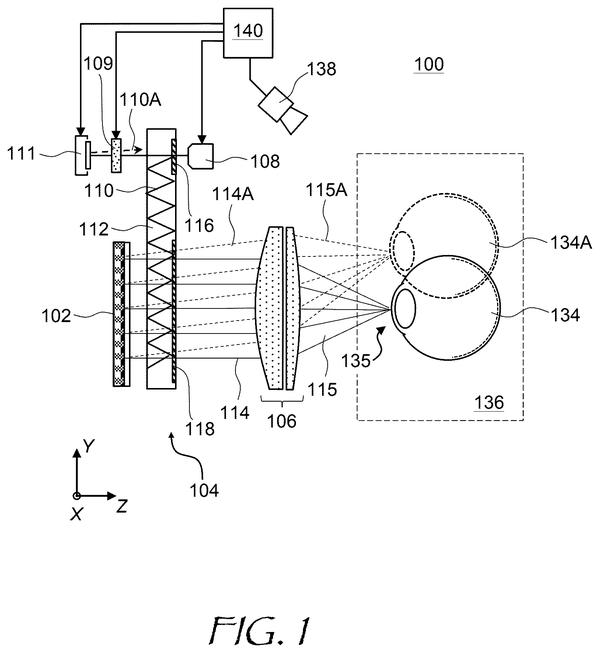
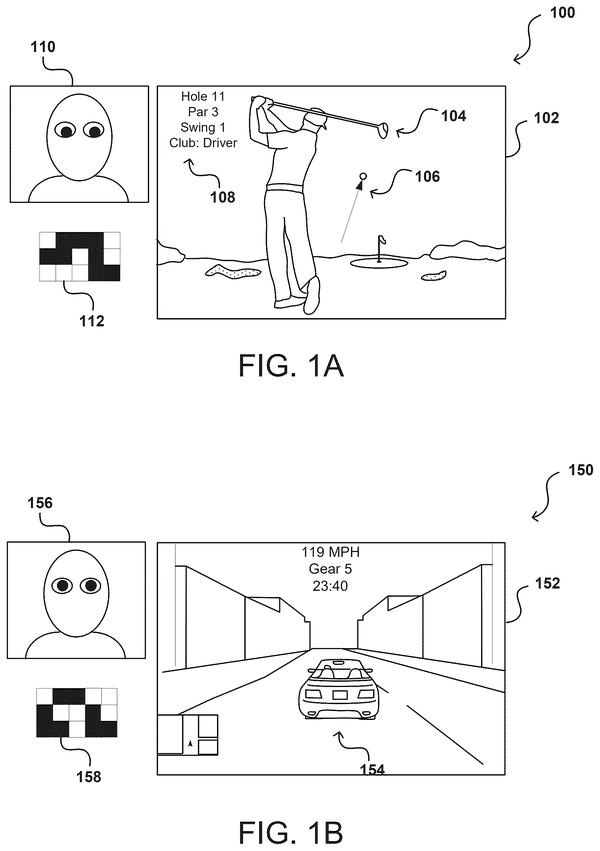
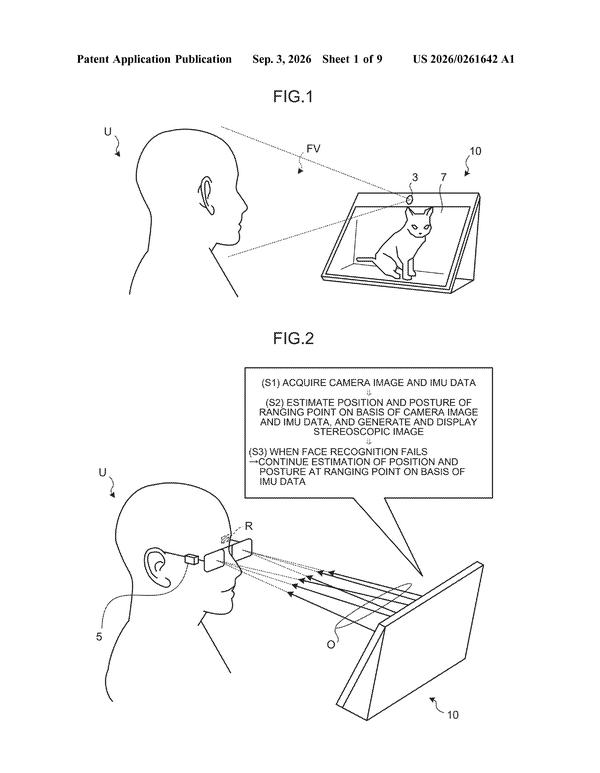
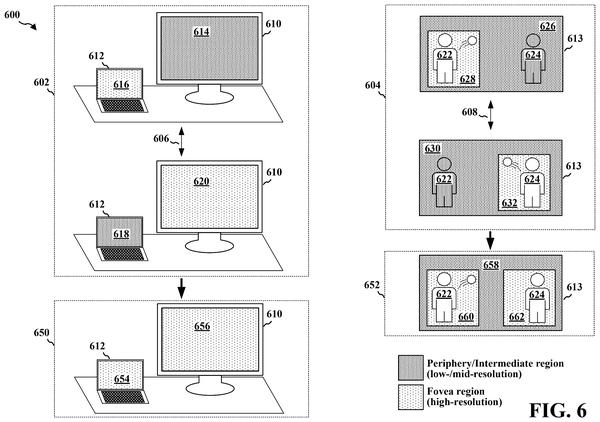
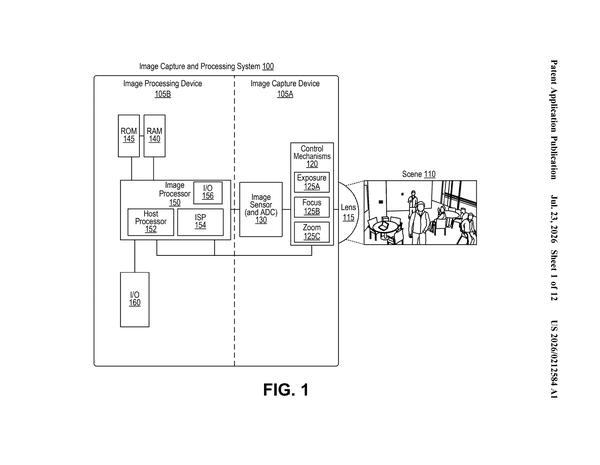
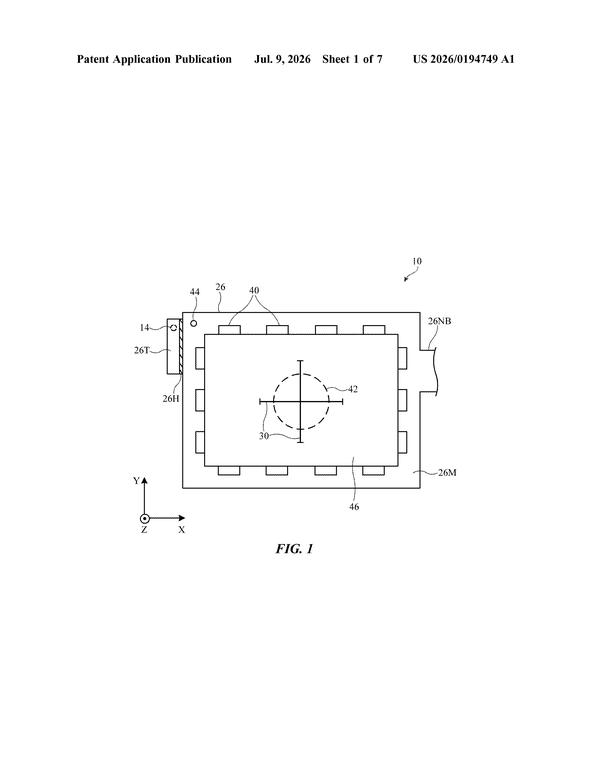
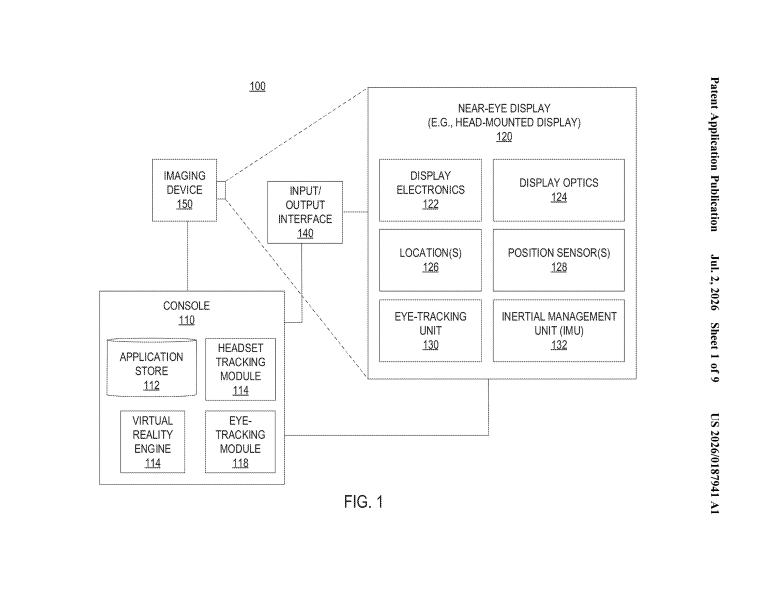
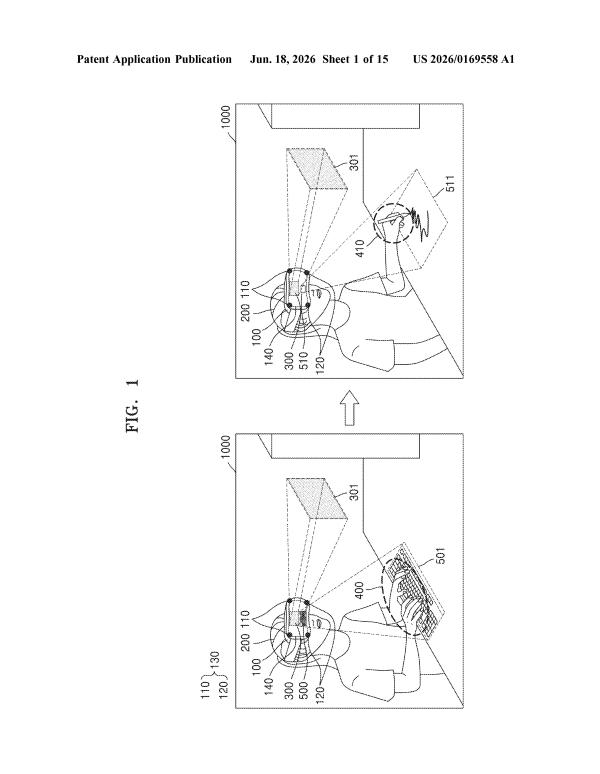
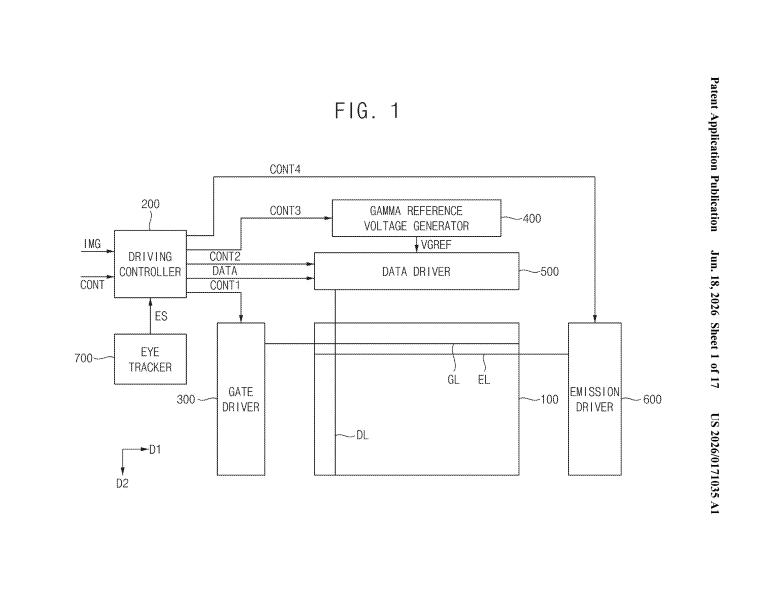
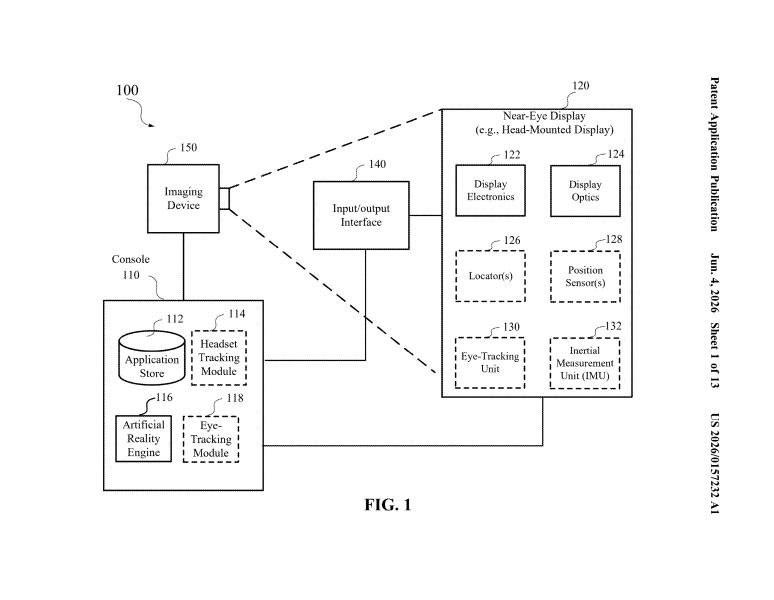
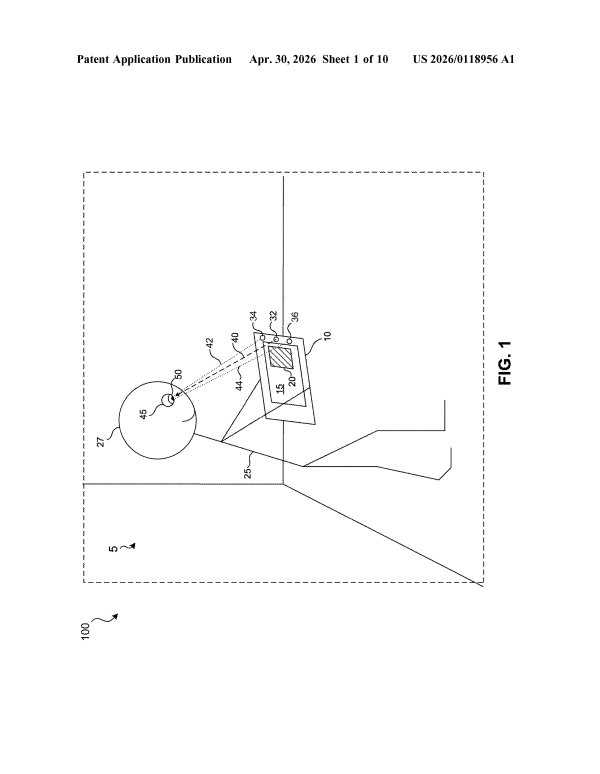
The AR glasses race has centered on eye tracking as a sensing problem; Samsung's filing shows how that data enables a rendering solution, concentrating compute only where the eye actually looks and leaving periphery lower-fidelity.
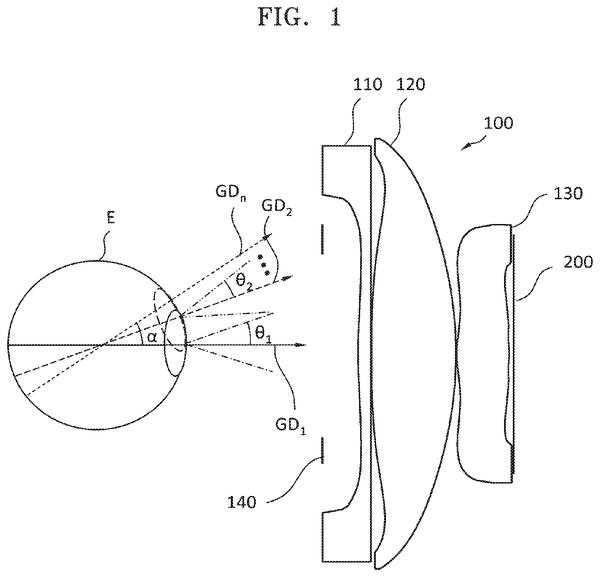
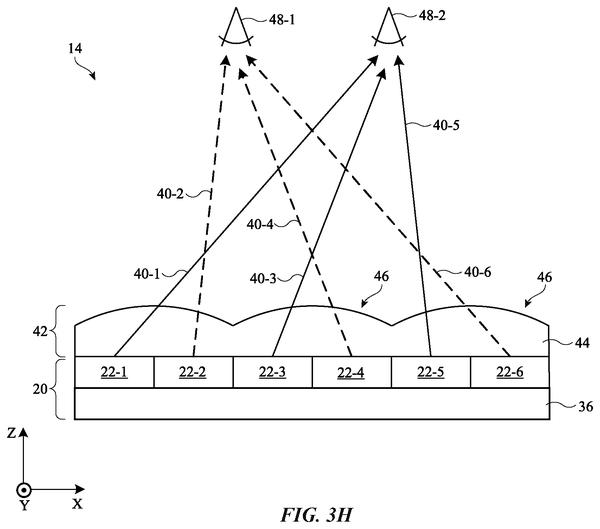
Eye tracking unlocks dynamic light output: Meta's switchable diffuser adjusts beam width in real time as pupils dilate and contract, keeping image brightness consistent across lighting conditions without user intervention.
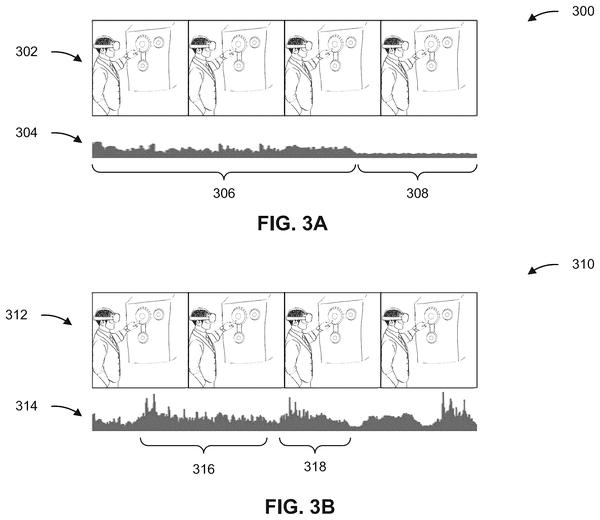
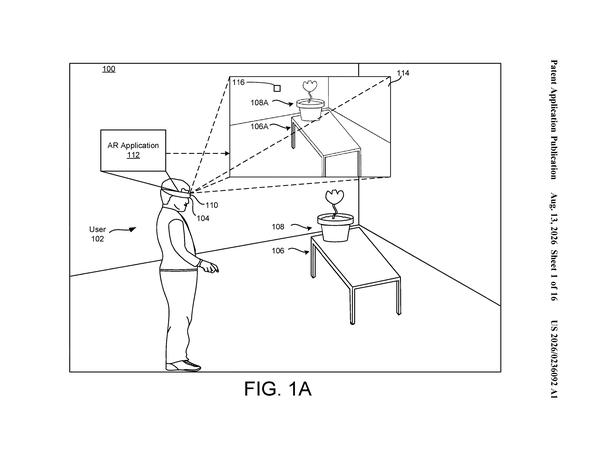
AR glasses need rock-solid image registration when wearers move. Google's approach uses motion sensors to compensate for head shake in real time, keeping virtual objects locked to their real-world anchors.
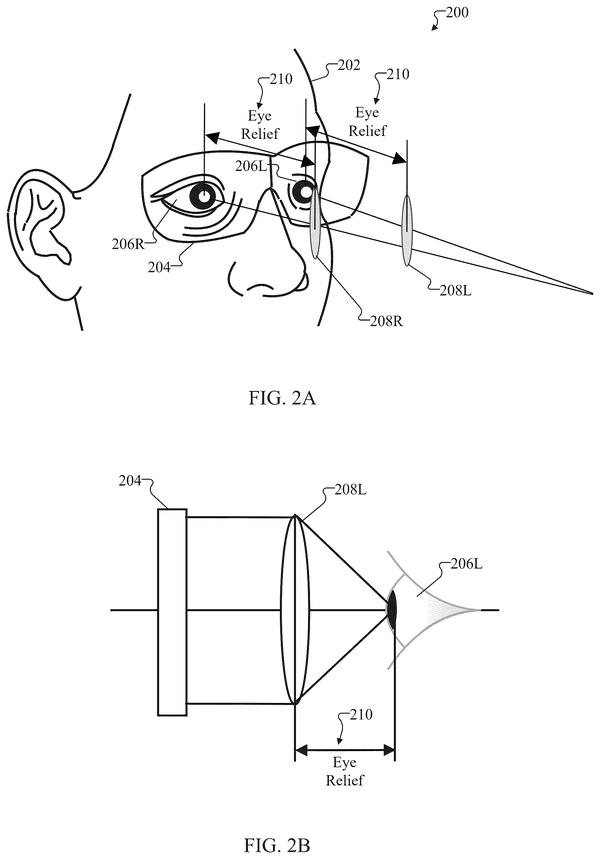
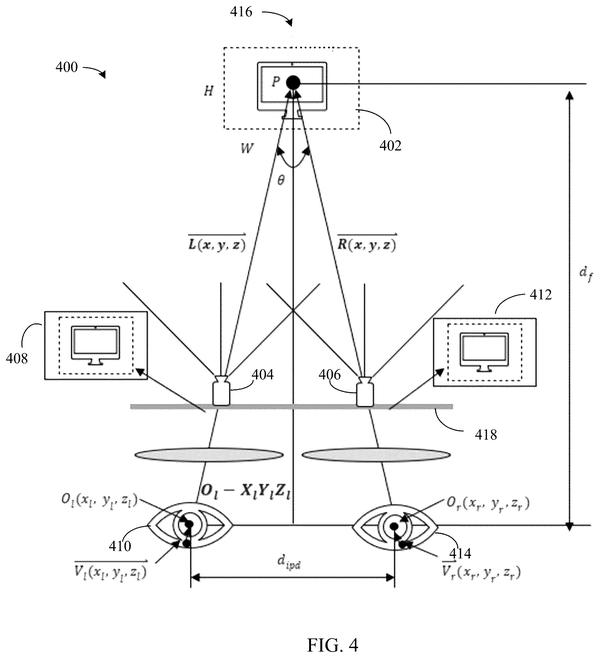
The gap between lens and eye is where most wearers struggle with image quality. Samsung's system uses eye-tracking data to measure that distance and adjust the optics automatically, sidestepping the manual fitting problem entirely.
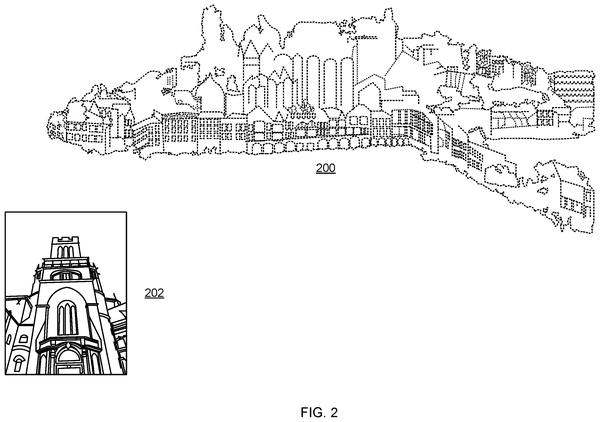
Hierarchical image indexing speeds up relocalization by organizing stored visual landmarks into layers, letting the headset skip irrelevant matches instead of scanning every reference frame.
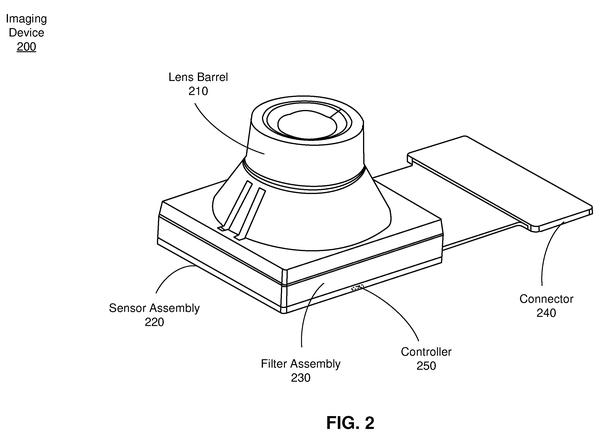
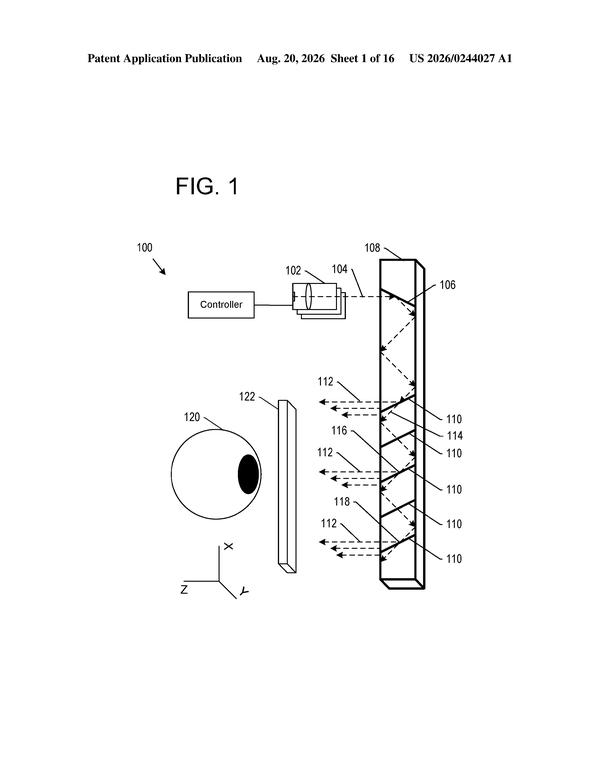
The AR glasses race has hinged on shrinking the mechanical guts of focus systems. Meta's approach embeds an electrical conductor directly in the lens barrel wall, eliminating the motors and moving parts that eat up space and battery power.
Neural upsampling across multiple frames solves the core passthrough clarity problem: extracting fine detail from low-quality camera feeds fast enough for real-time display without the lag that kills headset usability.
Uniform brightness across the lens field matters for usable AR glasses. Google's approach embeds the fix into the waveguide's mirror structure itself, rather than trying to compensate for uneven light after the fact.
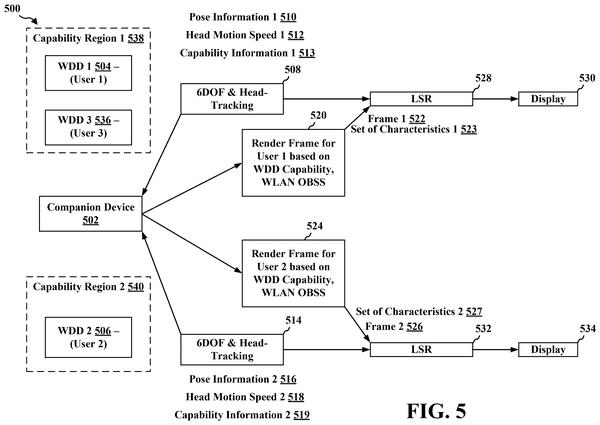
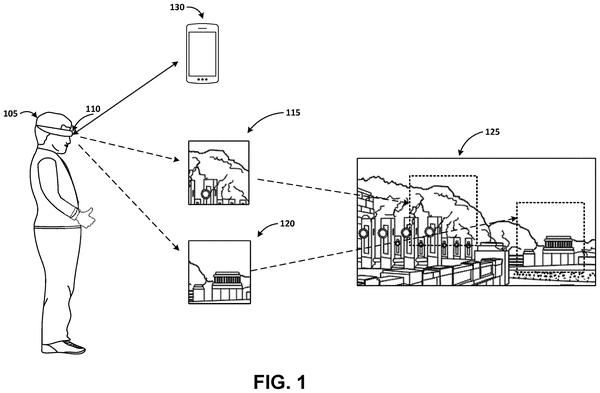
Eye tracking efficiency: Apple splits rendering between a main headset and a secondary device, concentrating processing power on the foveal region where human vision perceives detail while reducing quality in peripheral areas.
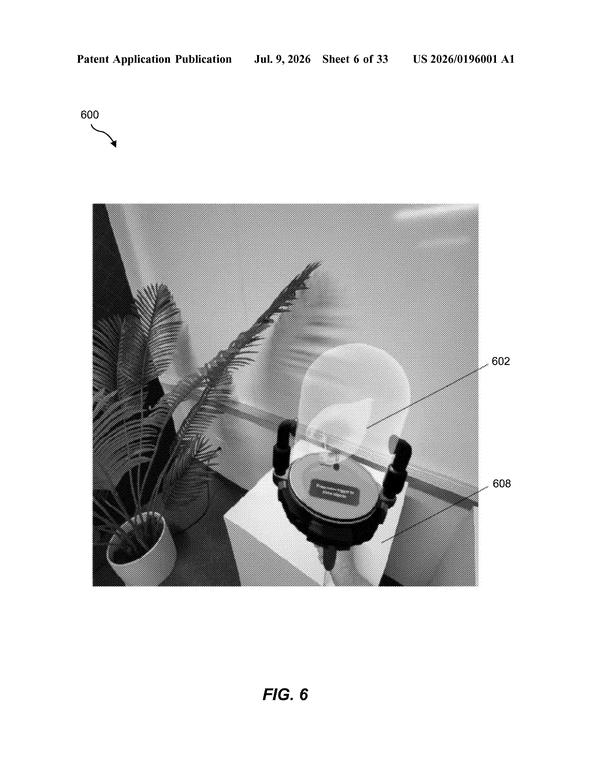
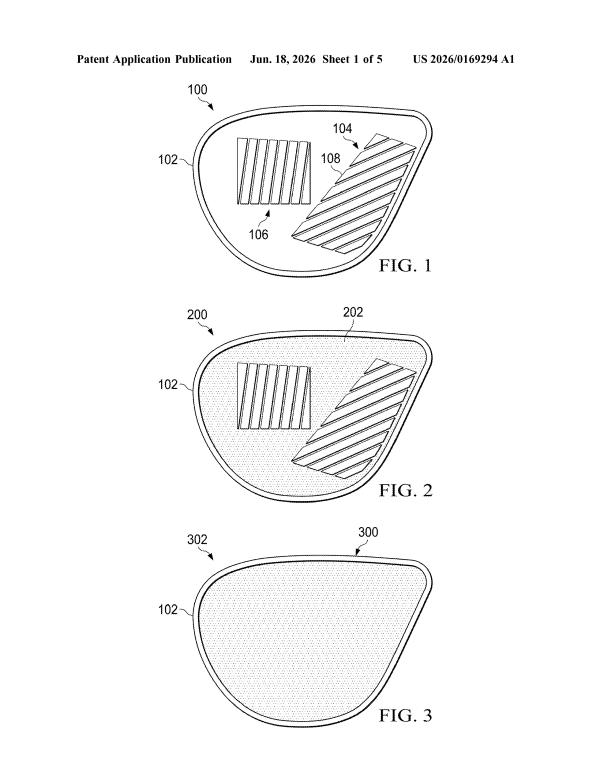
AR glasses need a way to show information without blocking your view. Apple's approach embeds lights into the frame rim itself, letting them signal context about what you're looking at without occupying screen real estate.
Within the race to nail indoor positioning: Microsoft's approach uses visual matching against pre-built 3D maps, sidestepping GPS entirely for AR glasses in signal-dead zones like airports and tunnels.
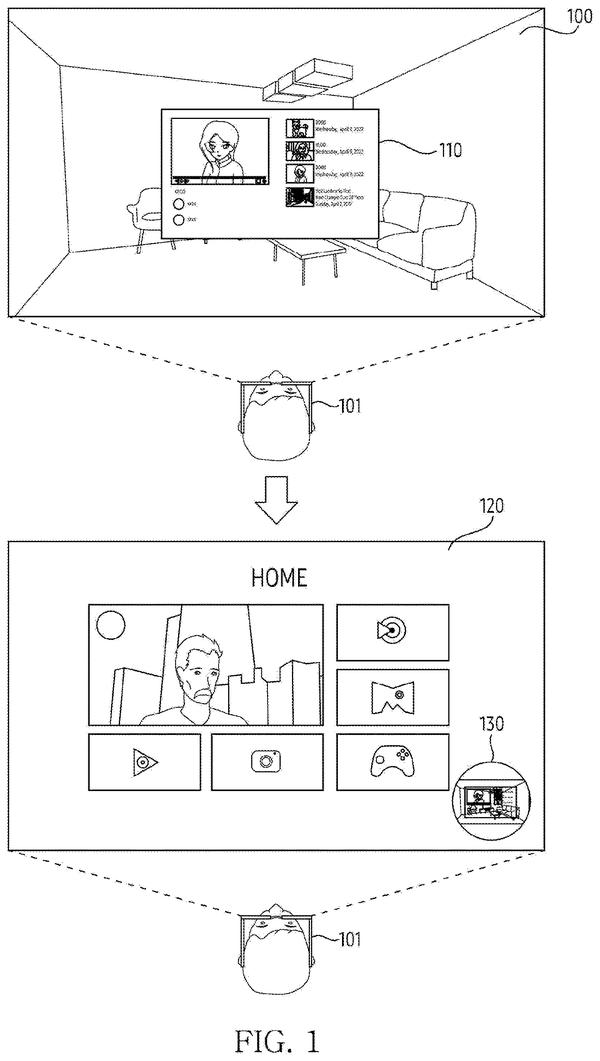
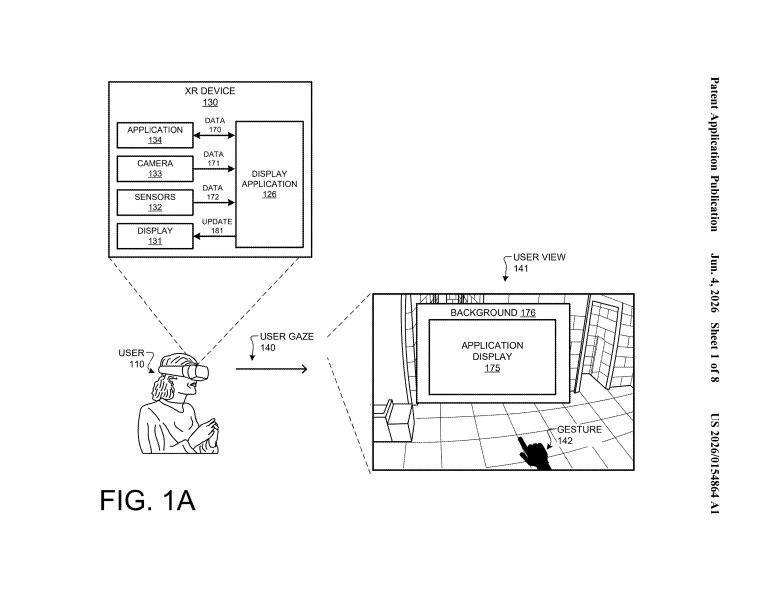
Head tracking during app switches lets the headset preserve virtual context in a corner window while displaying system notifications, avoiding the full exit from immersive content.
The race has focused on hardware limits within a single headset. Qualcomm's approach solves the software problem: letting mismatched devices share AR space without one person's gear bottlenecking the other's display.
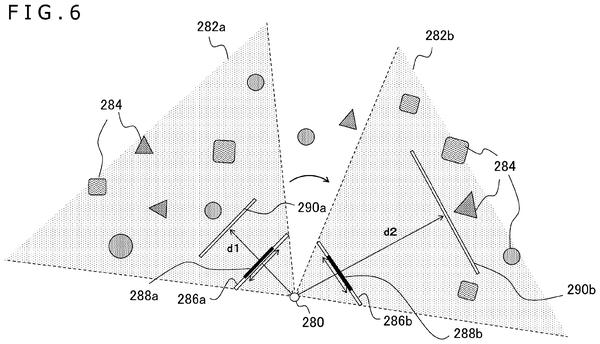
Depth anchoring remains a core comfort problem for AR displays. Sony's approach uses environmental scanning to lock virtual objects at optically correct distances, moving past the flat-plane rendering that causes eye strain in current headsets.
Eye gaze prediction fills gaps when hand tracking loses the fast-moving controller, using gaze direction to infer hand position during rapid gestures rather than relying on vision alone.
The AR glasses race has centered on optics and eye tracking; Samsung's patent anchors virtual content to head position and gaze simultaneously, keeping images stable across head movement and viewing angle.
Watching for occlusion and drift, the system repositions labels in real time as users move or objects shift position, keeping annotations legible without constant manual adjustment.
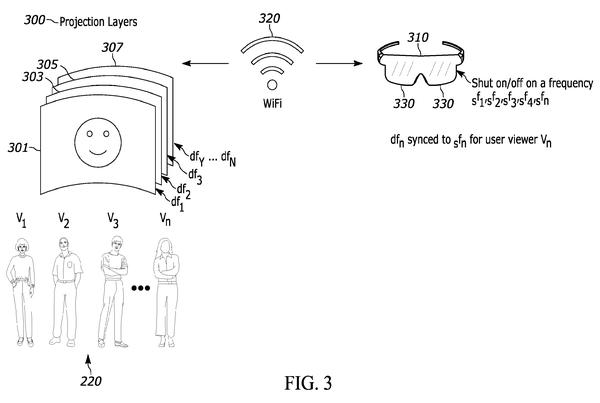
The AR glasses race has largely focused on personal displays built into headsets; Sony's approach inverts this by syncing wearable shutters with public screens to create private viewing layers, sidestepping the need for each user to generate their own image.
Zoned lens apertures that match eye rotation patterns cut rendering load by concentrating detail where gaze actually lands, rather than across the entire field of view.
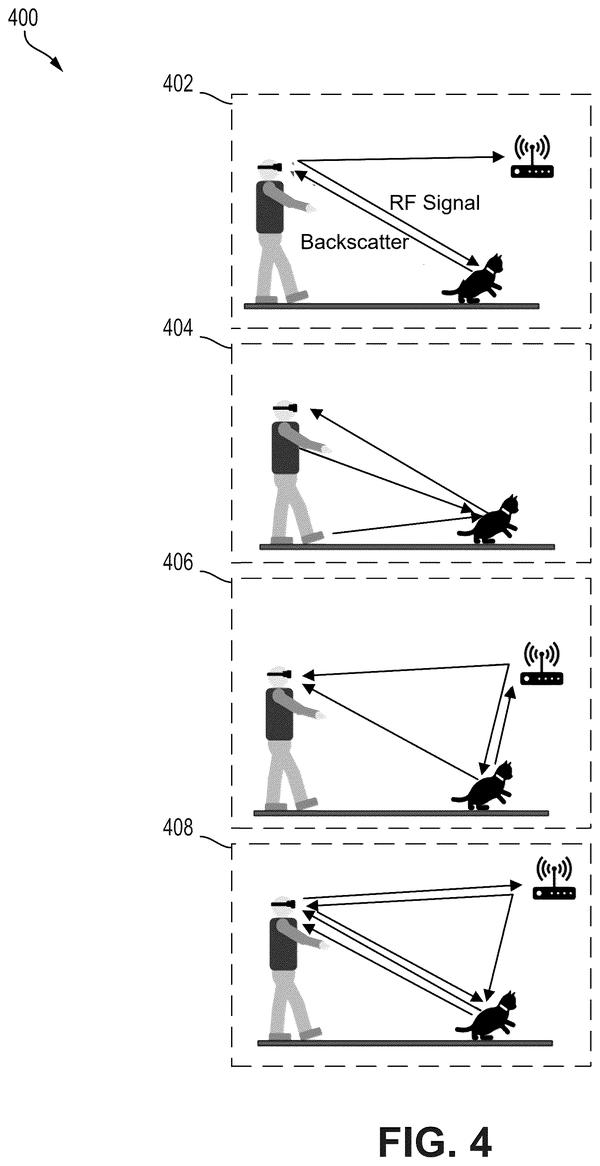
The AR glasses race has largely focused on optics and eye tracking, but indoor positioning remains unsolved. Qualcomm's approach uses ambient RF signals to localize and map indoors without GPS, filling a gap the optical players haven't addressed.
Sparse spatial audio transmission reduces bandwidth by sending only key sound positions and letting the headset interpolate the rest, cutting the data load for real-time 3D audio in AR and VR.
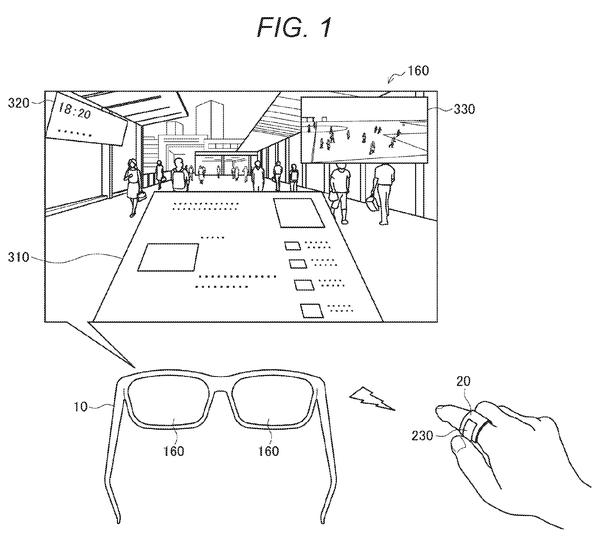
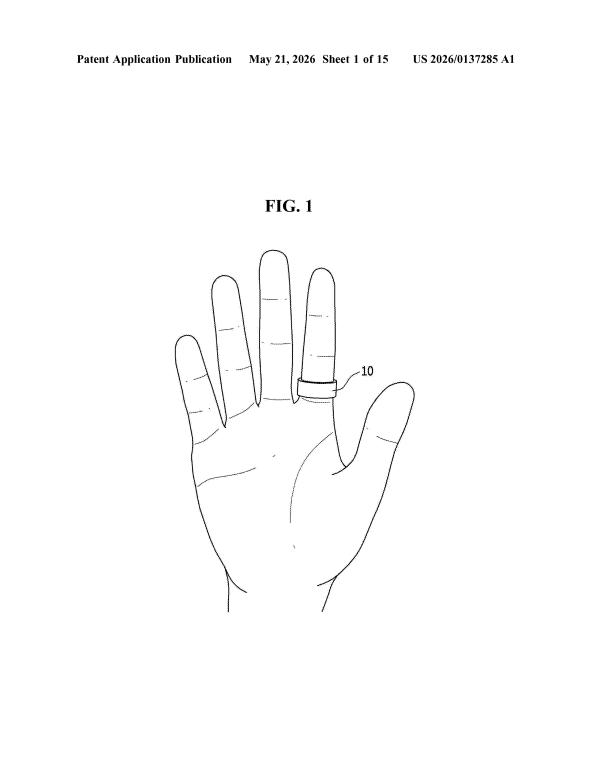
As the race shifts toward input methods, Sony's ring-based approach offers a wired-free alternative to hand tracking and gesture recognition, letting users control AR displays through finger taps without requiring cameras to read hand position.
A trigger-based display system that spawns virtual objects automatically when real-world conditions match preset rules, shifting AR from passive overlays to reactive content that appears without user initiation.
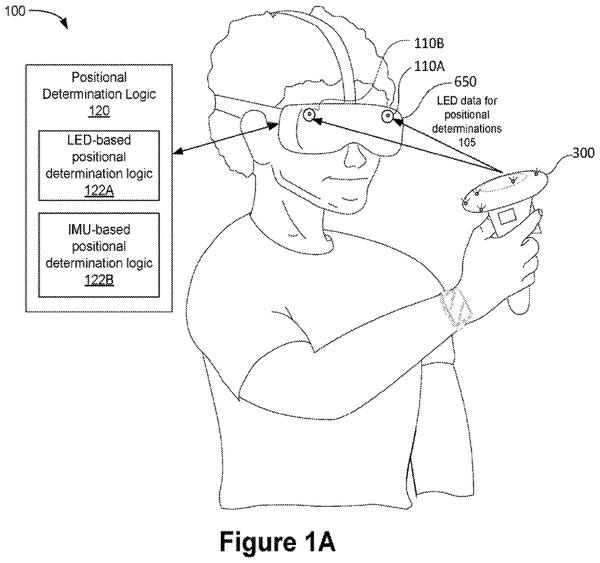
Hand occlusion during grip breaks camera-based position tracking. Meta distributes tracking lights across the controller, under finger contact zones and elsewhere, so cameras maintain line of sight regardless of grip.
AR headsets could show 3D content that stays perceptually stable as users move their heads, rather than shifting between flat and exaggerated depth depending on viewing angle.
AR glasses need audio that moves with the scene, not just visual effects that feel real. Intel's patent applies ray-tracing precision to sound propagation, so spatial audio responds to room geometry and obstacles the way light already does.
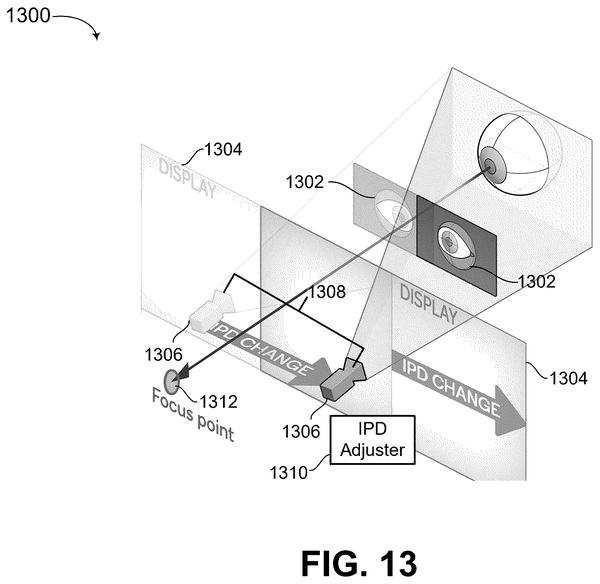
Correcting the interpupillary distance mechanically means users won't need custom-fitted optics or software workarounds to get sharp, comfortable vision.
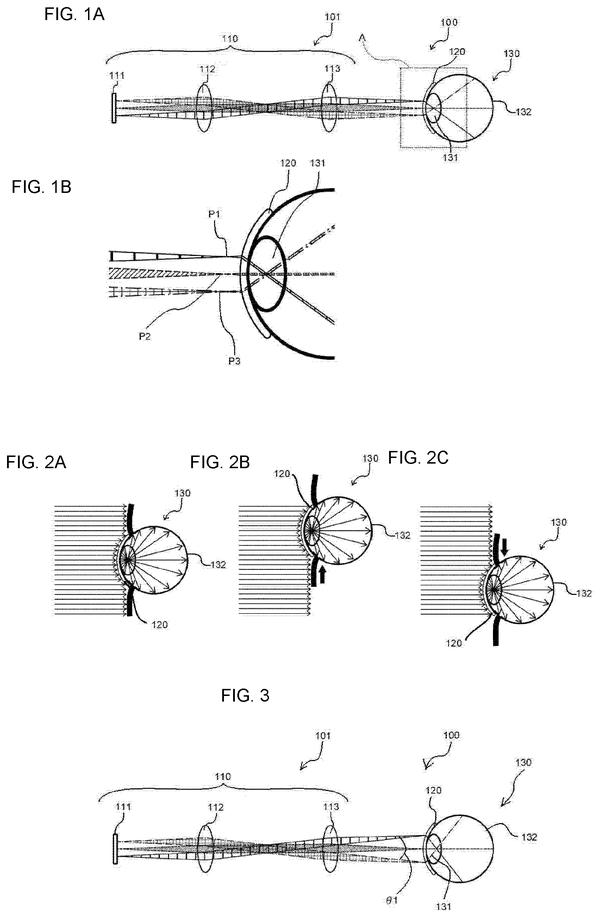
The race so far has centered on waveguides and lenses that bend light efficiently. Sony's filing proposes bypassing those intermediates entirely, routing light straight to the retina instead.
Multiple cameras distributed across the frame let one wide-angle sensor capture the full scene while narrower cameras zoom into specific regions, then software stitches the feeds together for detail that a single small lens cannot deliver.
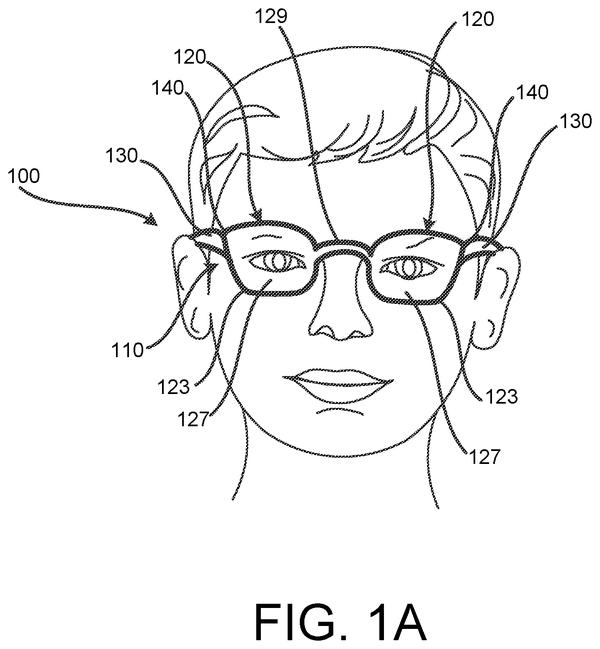
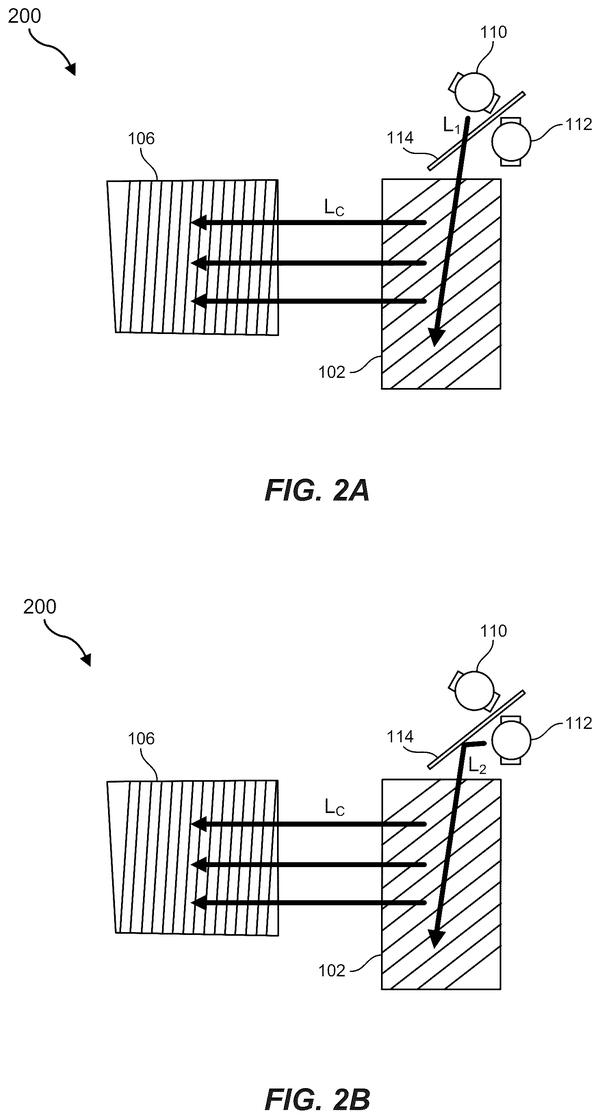
The slip detection problem gets a new sensor approach: Samsung measures tilt by bouncing light off the lens itself, letting glasses auto-correct their optical alignment without relying on head position alone.
AR glasses need input methods that don't kill the battery. Google's two-stage system uses a cheap sensor to spot hands, then engages full processing only when needed, letting gesture control run all day.
AR glasses need images that stay put when headsets slip on the face. Google's approach routes this through waveguide geometry alone, avoiding the sensor overhead that competitors like Apple have relied on for stabilization.
Eye position verification without full iris scanning: Samsung proposes using LED reflections in the eye to confirm proper fit before attempting biometric authentication, reducing processing load on a device worn close to the face.
AR glasses need to show content larger than the display can render at once. Samsung's approach lets virtual windows spill into unmapped physical space around you, solving the zooming problem without forcing users to pan or shrink.
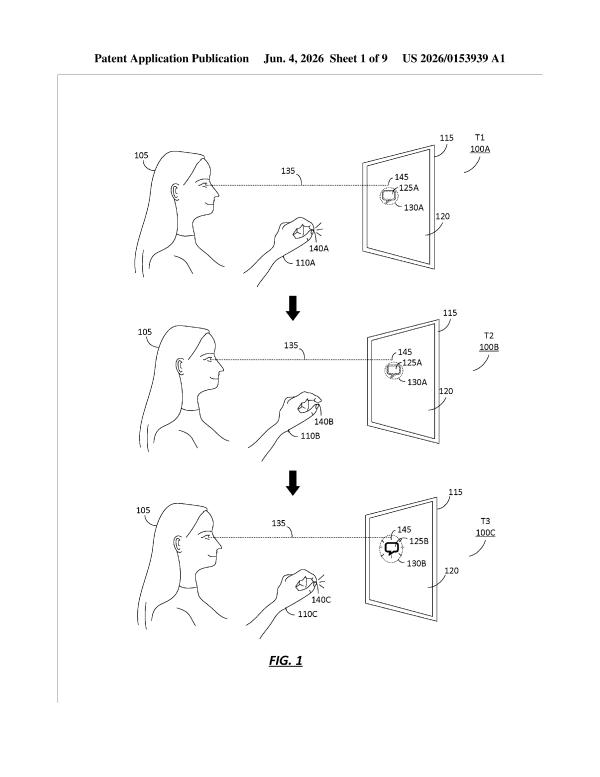
Eye tracking can skip the search step: identify what you're looking at, then surface relevant controls instantly rather than requiring manual navigation through menus.
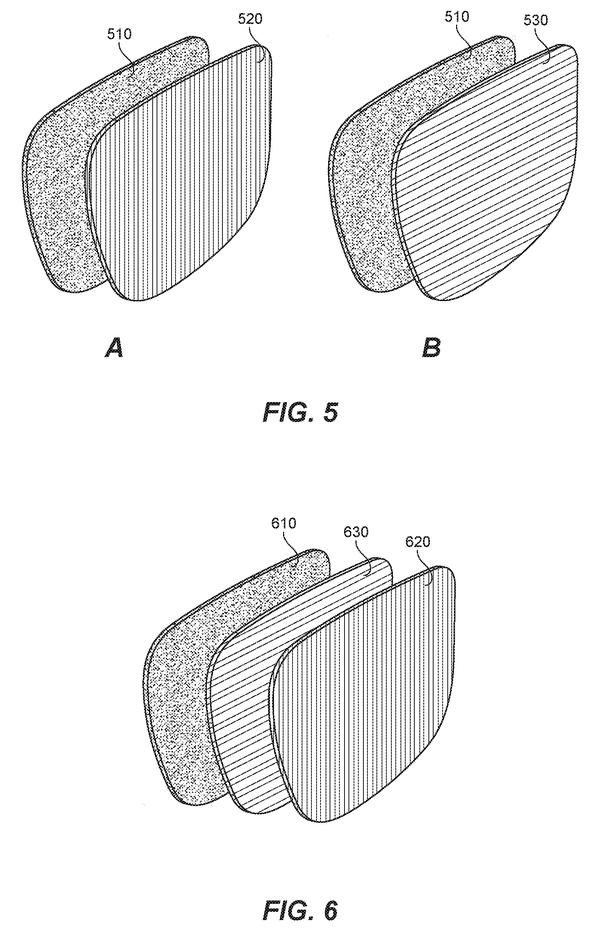
Clearer AR images depend on controlling how light bounces through the optics. Samsung's layered lens stack uses polarizers to cut the internal reflections that dim and ghost the display.
Anticipatory gaze prediction extends eye tracking to moments when the target isn't visible yet, handling blocked or off-screen objects that current systems miss.
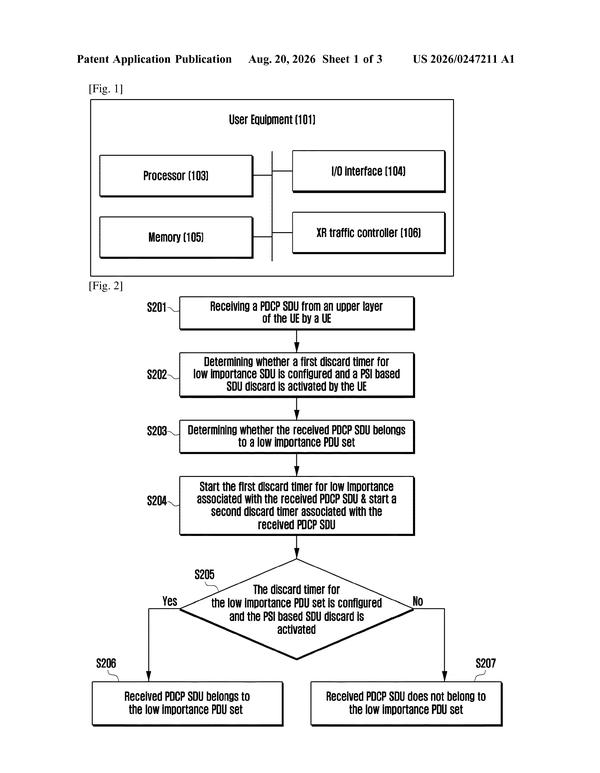
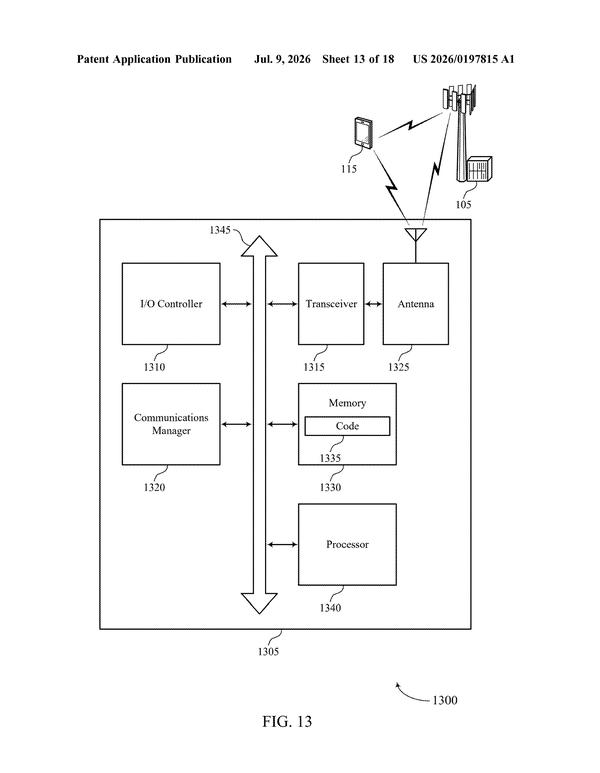
Network efficiency for wireless AR depends on the headset signaling unused upload slots rather than leaving the network guessing whether data was lost or simply absent.
Better spatial audio in AR glasses means accounting for real room geometry, not generic acoustics. Sony's system maps the actual space first, then positions virtual sounds accordingly for convincing placement relative to the wearer's position.
Pooled training data from many headsets would let AR glasses generate custom virtual objects instead of relying on pre-built assets, making content adapt to individual spaces in real time.
Eye tracking and gaze prediction guide where the headset maps space at high detail, reducing compute load by ignoring peripheral areas you won't interact with.
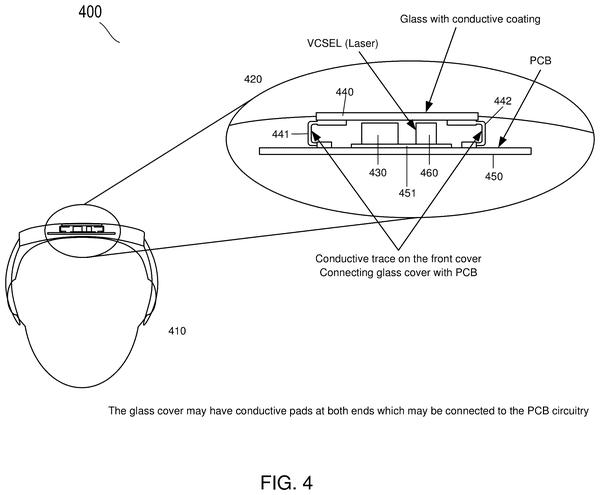
Cracked cover glass on a depth-sensing laser becomes a safety hazard the moment someone puts on the headset. Qualcomm's detector stops the laser from firing until the damage is caught, removing a gap in the eye-safety chain.
Uniform brightness across the lens would let AR glasses finally show crisp, usable images. Microsoft's approach uses microscopic surface patterns to scatter light evenly through the waveguide instead of concentrating it in dim hot spots.
Waveguide optics: Microsoft's nanoscale gratings control how display light exits the lens into your eye, reducing the wash-out and ghosting that happens when internal reflections scatter.
Wearers with prescription lenses would see virtual objects at the correct scale instead of distorted by their correction strength, solving a key usability gap for everyday wear.
Embedded motion sensors detect when the frame flexes and automatically recalibrate the projected image, keeping the digital overlay stable even as the physical structure warps from wear or environmental stress.
Eliminating the millisecond lag between left and right displays cuts eye strain and nausea. Samsung's syncing approach keeps both drivers locked to the same refresh cycle.
Sharper waveguide grooves mean brighter, more uniform images across your field of view. Google's etch-depth control directly improves the light routing that other companies are still struggling to perfect.
The companies racing to ship AR glasses have all hit the same wall: rendering 3D scenes fast enough that they don't lag. Sony's approach streamlines how encoded object data gets unpacked, cutting the computational drag that slows scene loads.
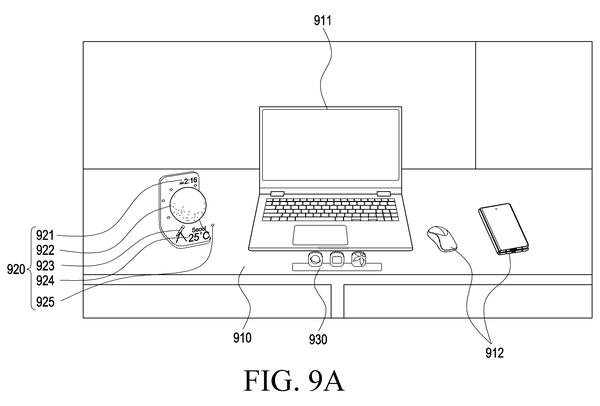
Expanding the field of view by treating nearby screens as secondary displays for AR content, rather than relying solely on the headset's built-in optics.
Eye tracking moves from self-monitoring (detecting your own gaze for UI control) to remote operation, where your head position steers cameras at distant locations rather than controlling local interfaces.
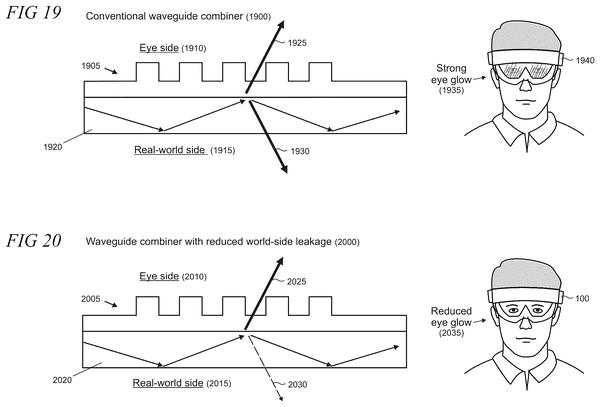
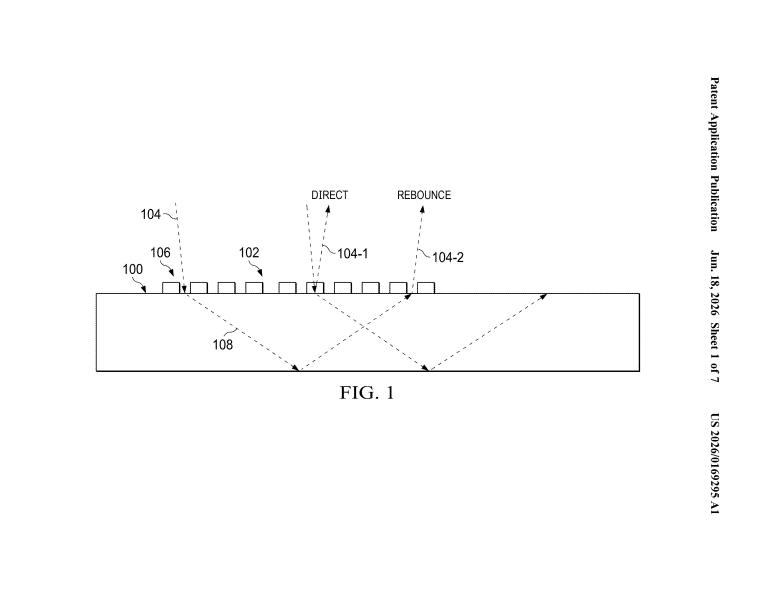
An optical absorber layer positioned behind the waveguide prevents light meant for the wearer's eyes from bouncing back outward, directly reducing the visibility problem that makes AR headset users appear to glow to people nearby.
Latency spikes during head motion: Qualcomm's filing describes dynamic GPU scaling that prioritizes frame delivery over sustained full power, cutting the lag window where visual drift triggers discomfort.
AR glasses that keep adjusting the display when you move your head need tracking that survives occlusion. Sony's patent chains camera-based face tracking to a wearable motion sensor, eliminating the blackout moment when your face leaves the frame.
The three companies so far focus on hardware perception, eyes, optics, hinges. Microsoft shifts to the software layer, showing how to render user input on complex surfaces without lag that would break immersion.
Eye and expression tracking: consolidating dual functions into one sensor reduces the component count that currently drives up headset weight and power consumption.
The AR glasses race needs objects that sit naturally in real space, not float above it. Qualcomm's patent maps environmental lighting and surface properties so digital content can cast shadows and reflect light like it belongs there.
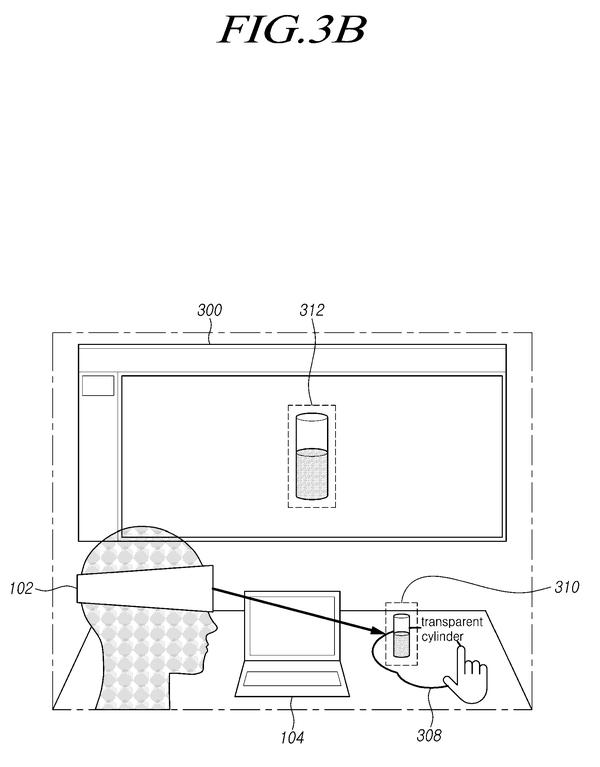
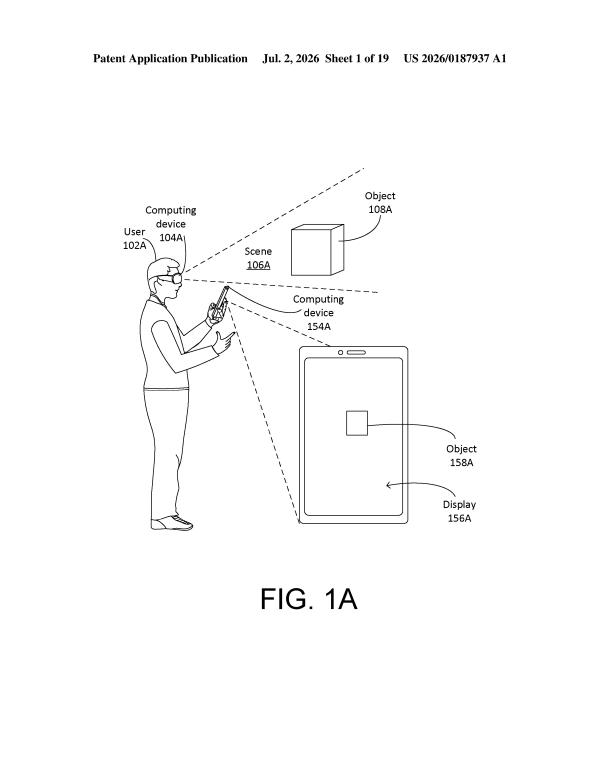
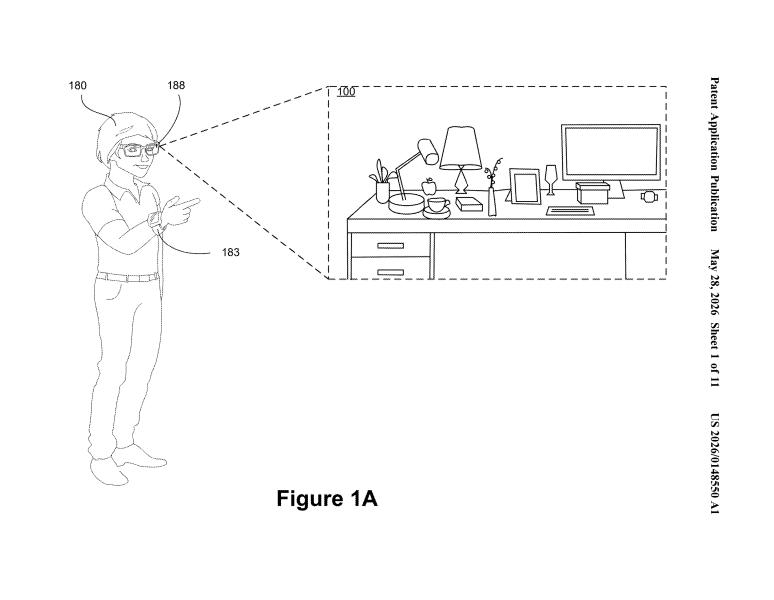
AR glasses that recognize physical objects through gaze alone could eliminate menu navigation entirely, letting users check device status with a glance instead of reaching for their phone.
Eye tracking helps solve the clutter problem: by knowing where you're actually looking, a headset can prioritize which overlays to render rather than overwhelming users with every nearby digital object at once.
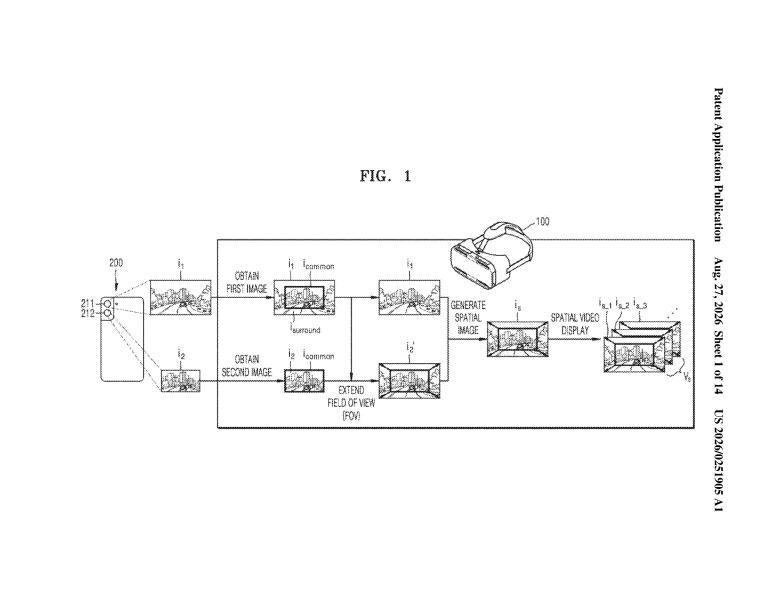
For AR glasses to show depth accurately, both camera feeds must see the same field of view. Samsung's method stretches narrow-angle camera data to match wider lenses before blending them, solving the depth errors that come from misaligned capture angles.
Eye tracking and camera alignment: Samsung's window repositions with the camera's tilt and rotation, keeping the feed spatially coherent rather than floating in a fixed spot.
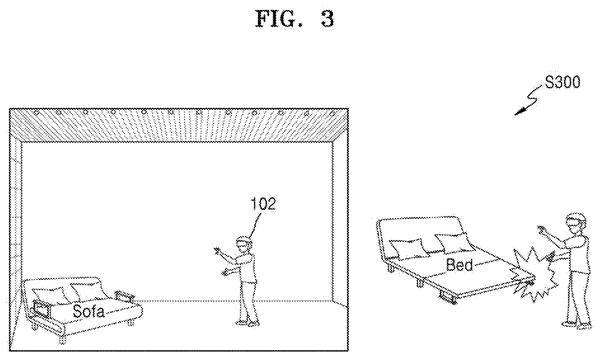
Predicting real-world collisions from virtual arm movements could let headsets warn you before you swing into a lamp, rather than only after you've crossed a boundary. Samsung's approach infers physical risk from what you're reaching for onscreen.
Wireless latency management: Samsung proposes auto-discarding outdated frame packets before they reach the renderer, preventing outdated visuals rather than trying to correct them after display.
AR glasses that pair with nearby devices could skip the scanning delays. Meta's patent speeds up the handshake by having both gadgets briefly tune to a shared radio channel, cutting the time each spends searching blind.
Video latency management: Qualcomm proposes letting AR glasses prioritize which data streams get bandwidth first, so video calls stay smooth even when connection quality drops below what's normally acceptable.
Extends the sensory toolkit beyond visual tracking: AR glasses now filter ambient sound to isolate specific voices, turning the frames into active hearing aids for noisy environments.
Electronic dimming layers in AR lenses can flicker when their control signal syncs with nearby light sources. Apple's approach shifts the signal frequency dynamically to prevent that interference.
The AR glasses race has focused on visual problems so far. Meta's filing extends the race into audio: using head orientation to filter background noise and isolate speech you're actually attending to, turning physical attention into a machine signal.
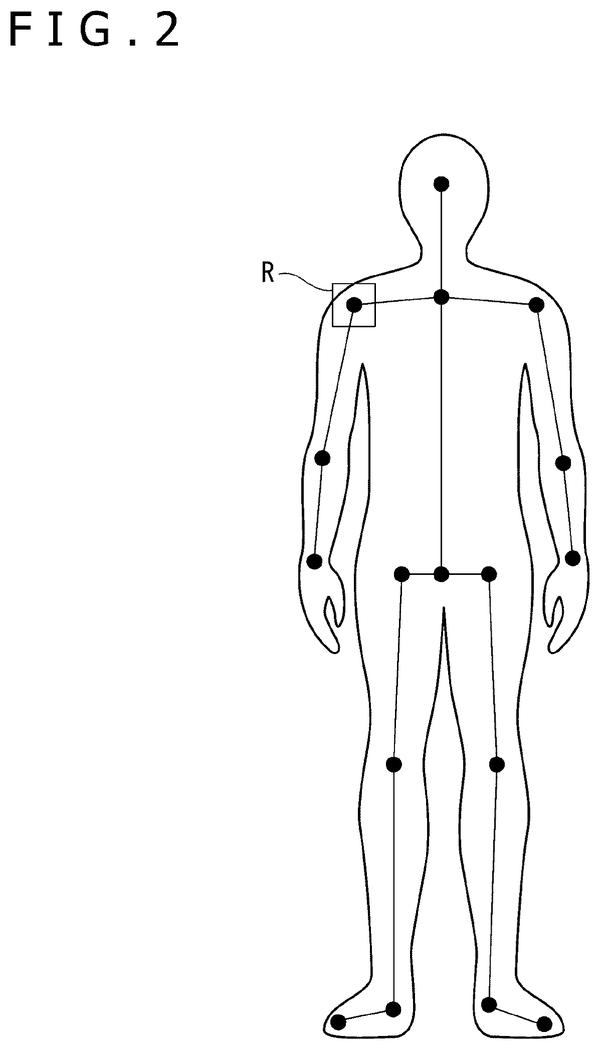
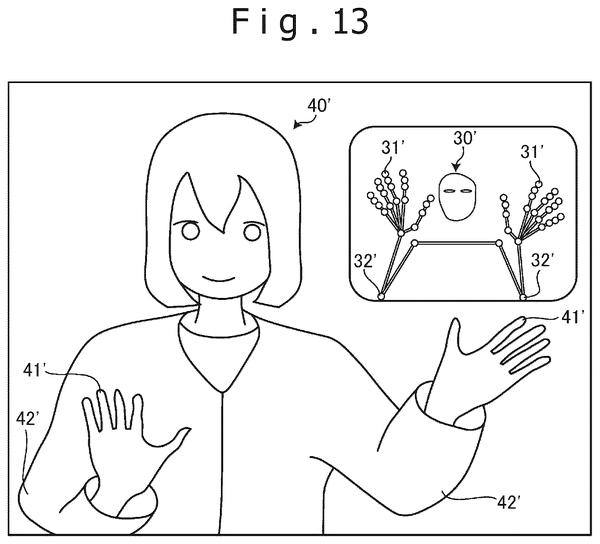
Hand-joint misalignment in gesture recognition: Samsung's approach constrains errant markers back within the hand boundary, correcting pose data before gesture interpretation.
AR glasses that know where walls and furniture are in real time could let users move safely without pre-drawn boundaries. Meta's approach uses the headset's own sensors to map obstacles continuously, eliminating setup steps that most users skip anyway.
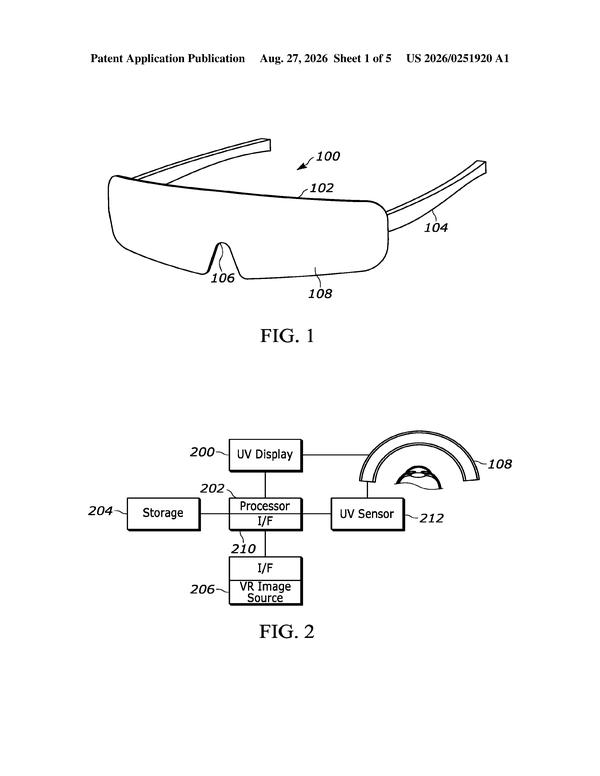
AR glasses that pass for regular sunglasses require a display that doesn't need a bulky projector or waveguide. Sony's UV-phosphor approach keeps the optics slim by painting images directly on the lens surface.
Sharper peripheral detail means less jarring refocus when eyes dart between action and UI elements, reducing the processing load that foveated rendering normally demands.
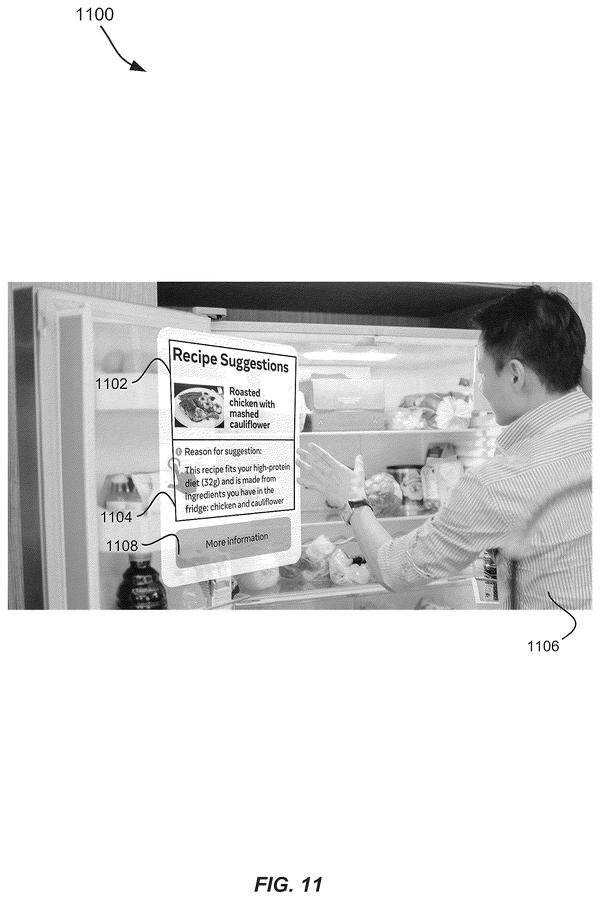
AR glasses that narrate their reasoning could let users trust what they're seeing. Meta's patent describes how headsets would expose the sensor inputs and inference steps behind each AI suggestion, moving beyond just showing answers to showing the work.
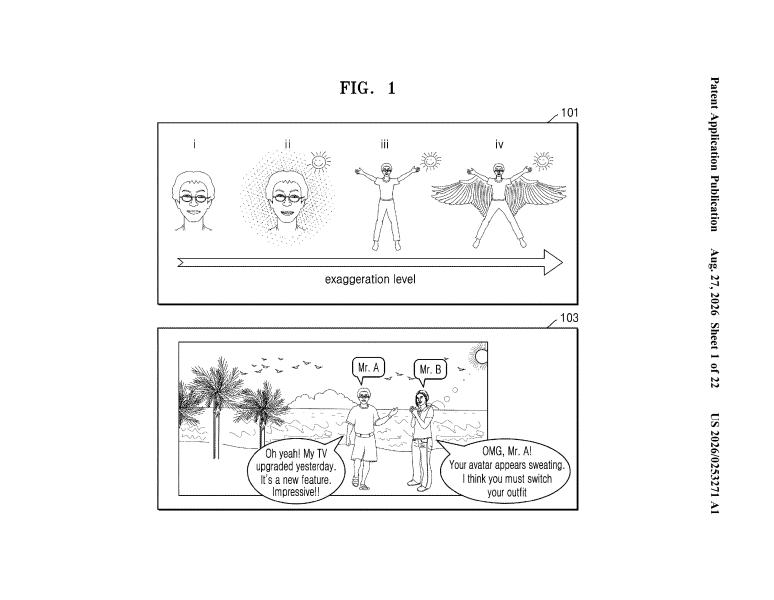
Better avatar expressions mean conversations in VR feel less one-sided. Samsung's system extracts emotion from speech itself, so your character reacts without needing hand controllers or facial capture gear.
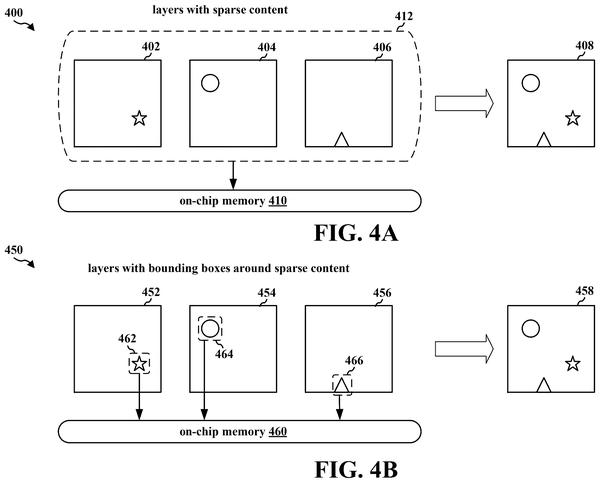
Eye tracking and gesture recognition need fast, local processing. This filing shows how to compress video frames on-device so AR glasses can run AI analysis without cloud latency, keeping the compute load light enough for a wearable.
Sharper AR visuals without draining the headset's limited memory. Meta's approach uses selective processing to focus sharpening power only where the eye can actually resolve detail, freeing up resources for other display tasks.
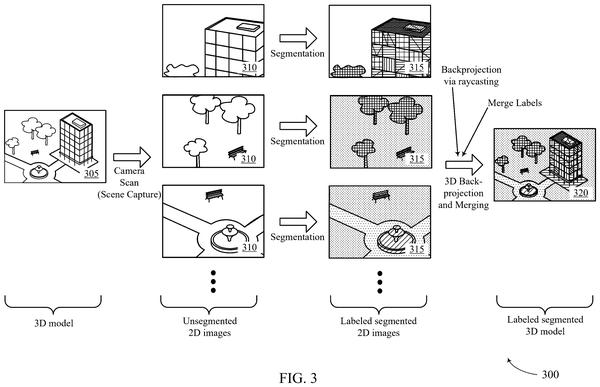
AR glasses need to recognize individual objects in a room, not just see geometry as one blob. Qualcomm's automatic labeling system separates walls from furniture from décor, making real-time scene understanding possible without manual annotation.
A neural network that predicts how virtual light sources cast shadows and reflections onto real surfaces, solving the mismatch that makes placed objects look pasted rather than present in the space.
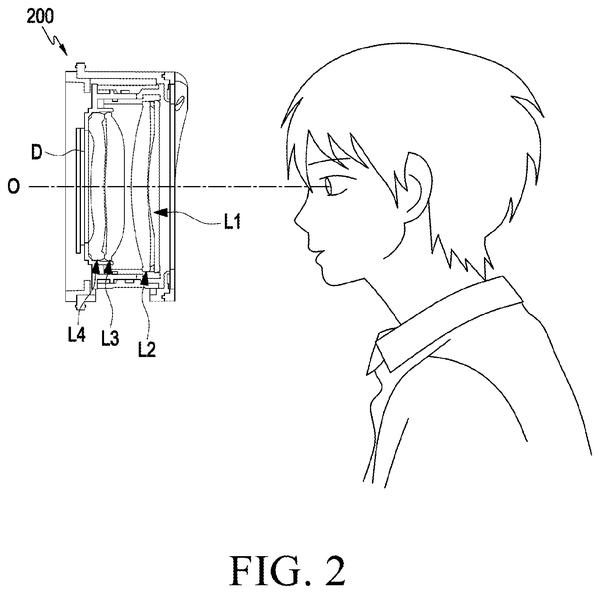
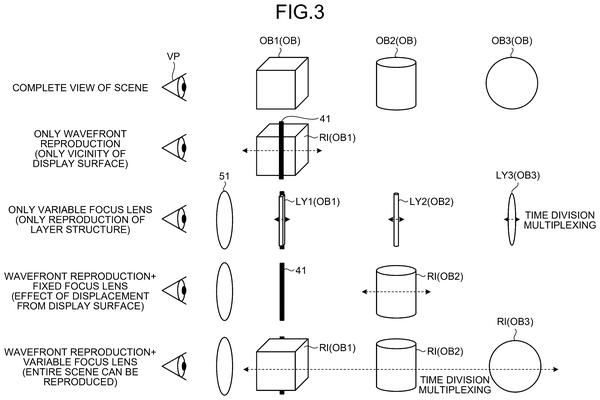
A stacked lens system with electrical tuning lets the optics refocus across distances, directly solving the fixed-focus blur that plagues current VR headsets.
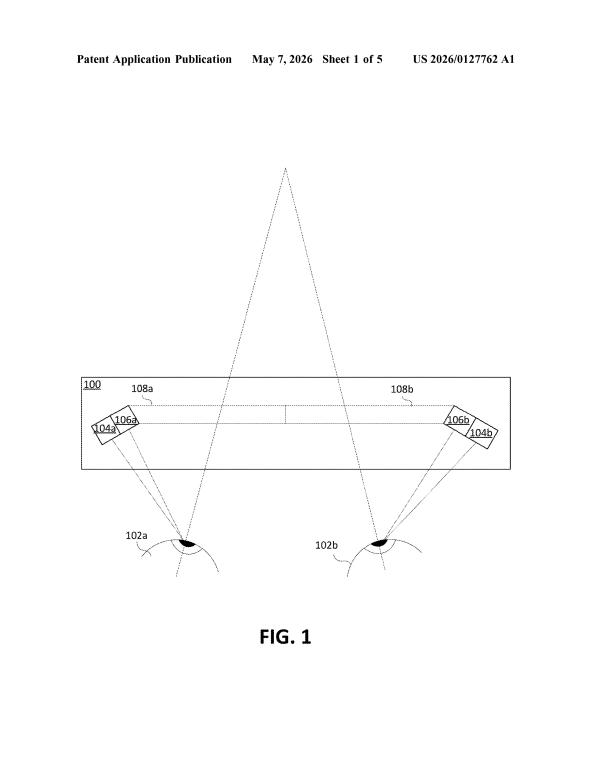
The eye-tracking problem so far has been latency and accuracy gaps between sensor speed and actual eye movement. Sony's dual-sensor approach uses a fast backup detector to catch and correct misreads from the primary camera in real time.
A buffer that delays incoming frames by the precise amount needed to sync with the headset's display refresh cycle, solving the stuttering that occurs when cloud rendering introduces variable network lag.
The AR glasses race has focused on eye tracking and optics; Sony's filing suggests avatar realism matters too. Tracking elbows alongside hands lets software stop guessing at arm geometry and render natural movement.
AR headsets need cameras that map ambient light in real time, not just capture static snapshots. Apple's system adapts its imaging based on what's already rendering on screen, so virtual objects match the actual room's brightness and color cast.
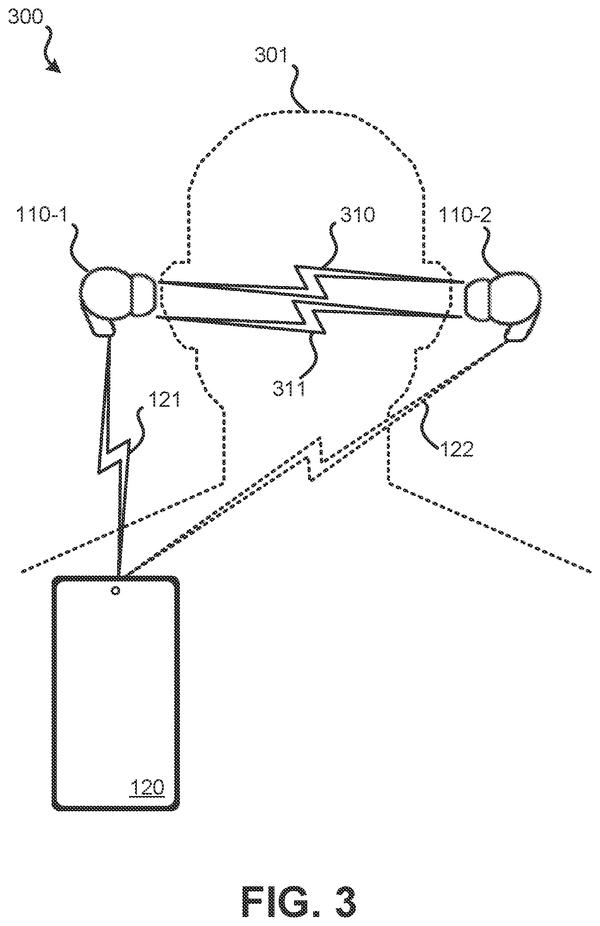
Meta is exploring a way to let your eyewear communicate with other devices by using your own body as the wire. No Bluetooth handshake, no radio signal bouncing through the air, just a tiny electrical signal running along your skin.
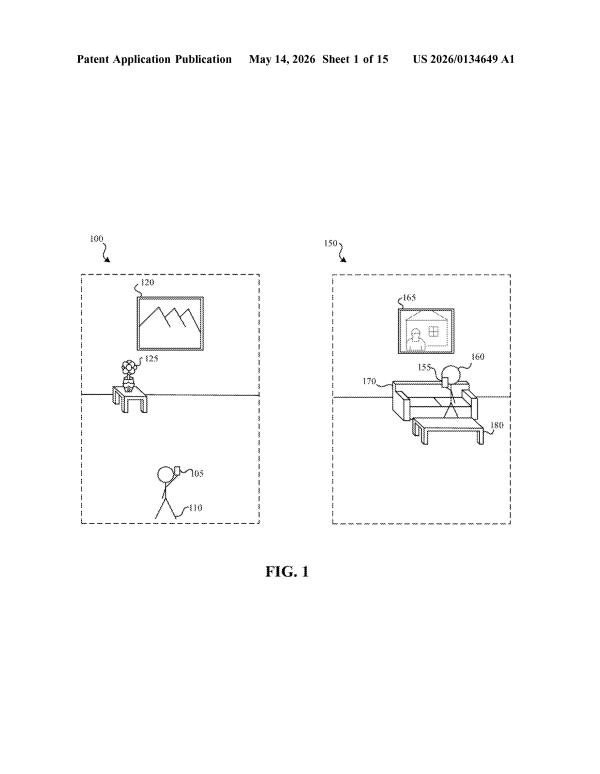
A second device with known position acts as a reference point, letting a headset or robot learn its own location and camera angle from shared visual features without needing GPS or pre-mapped environments.
Hardware-level sensor shutoffs remove the risk that software updates or exploits could silently re-enable mics and cameras without the wearer's knowledge.
The race so far has focused on how AR glasses see the wearer's eyes and hands. Samsung's filing shifts the problem: how does the headset know where in physical space the user wants interface elements to appear and stay put?
A grid of coordinated micro-projectors replaces the single high-power emitter, letting each handle a narrower slice of the field of view and reducing the optical load on any one component.
The power drain problem cuts deeper than software bloat. Samsung's coordinator prevents apps from spawning duplicate sensor streams, which matters because AR glasses run on battery and every watt counts in a form factor with no room for a larger cell.
Holograms look amazing in movies, but real ones fall apart the moment you try to project them at different depths. Sony's new patent targets exactly that problem.
Scrolling through air menus without a physical surface requires translating hand gesture speed into navigation steps. Meta's approach treats the force and tempo of a thumb rub as a variable control that adjusts scroll velocity in real time.
The AR glasses race has focused on hardware constraints like optics and fit. IBM's filing shifts attention to a different bottleneck: the software layer that turns what a headset sees into actionable documentation, capturing defects before memory fades.
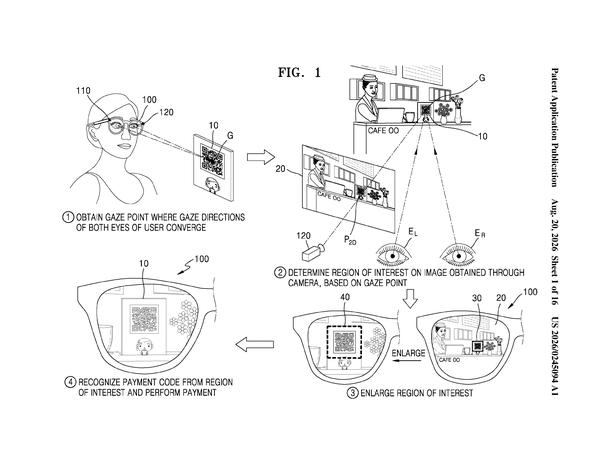
The payment angle opens a new use case: eye tracking here works as an input method to confirm intent and trigger action, rather than purely for display rendering or user interface control.
Eye tracking's bottleneck has been collecting thousands of real photos to train the AI. Nvidia's synthetic image generator skips that step entirely, letting models learn from simulated infrared reflections instead.
The AR glasses race has mostly focused on the hardware side. This filing shifts to the data pipeline: how to keep wireless connections stable when bandwidth drops, so the image stream doesn't collapse mid-use.
Processor bottleneck in dual-eye systems: Apple proposes staggering image capture and processing between left and right eyes so a single chip can handle both feeds without dropping frames.
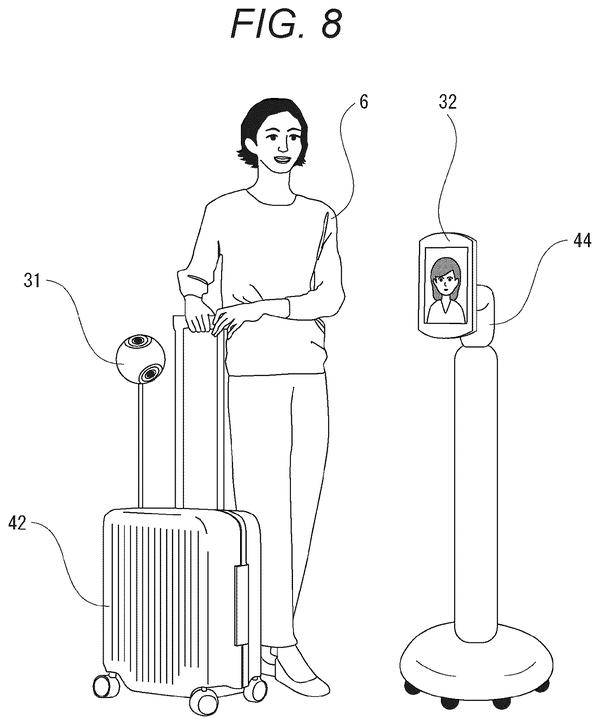
Nvidia has filed a patent for a system it calls 'teleportation': a way to scan a real room, swap its physical objects for polished 3D virtual versions, and then let a remote person walk through that reconstructed space as if they were actually there.
The eye-tracking drift problem has been persistent in AR glasses development. Google's approach uses head motion as a calibration signal, letting the system self-correct without asking users to recalibrate manually.
AR glasses that don't need a visible sensor ring around the eyes could finally look like regular sunglasses instead of ski goggles. Meta's approach embeds the tracking lights directly into the lens stack, collapsing what currently requires bulky side hardware.
Slip detection expands beyond fit monitoring into active occlusion avoidance, the glasses now reposition overlays in real time when they drift in front of critical objects in your physical environment.
AR headsets need a way to know what you actually want to share without clicking menus. IBM's patent lets eye gaze itself trigger object transfers between devices, cutting out the manual handoff step entirely.
Audio-responsive display content could extend the AR glasses race beyond optical hardware into synchronized sensory feedback, where music drives real-time visual changes rather than user input alone.
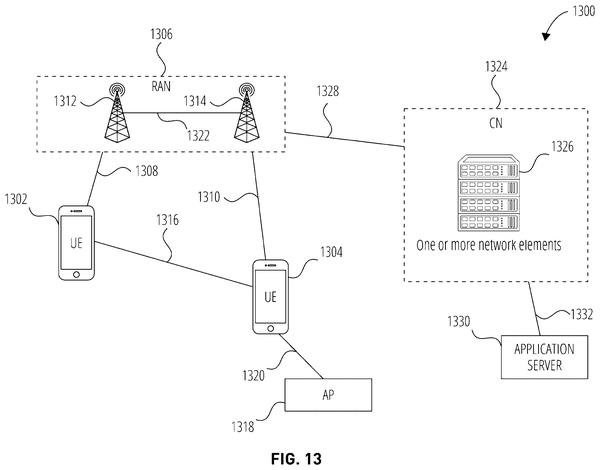
AR glasses fed by a tethered phone need steady frame delivery to stay smooth. Qualcomm's system lets the phone prioritize headset rendering during active sync windows, preventing the interruptions that come from juggling two devices' competing demands.
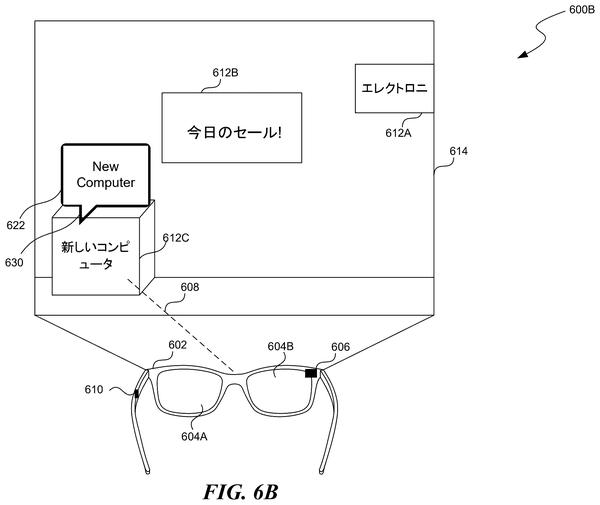
The eye-tracking capability now serves a filtering role: glasses pre-translate text in the wearer's visual field, then only surface translations when gaze actually lands on them, cutting processing load and display clutter.
Users running two apps simultaneously need a shared brightness level that keeps both readable. Meta's solution automatically finds a compromise setting rather than forcing one app into an unusable state.
Spatial audio syncing requires constant head-position updates from the headset. Google's approach piggybacks these orientation signals onto existing acknowledgement packets, eliminating the need for a dedicated tracking channel.
Adaptive content intensity solves the mismatch between stationary use and mobile contexts. Samsung's approach lets the headset dial down immersion when you're moving or in cluttered spaces, keeping virtual content from interfering with real-world awareness.
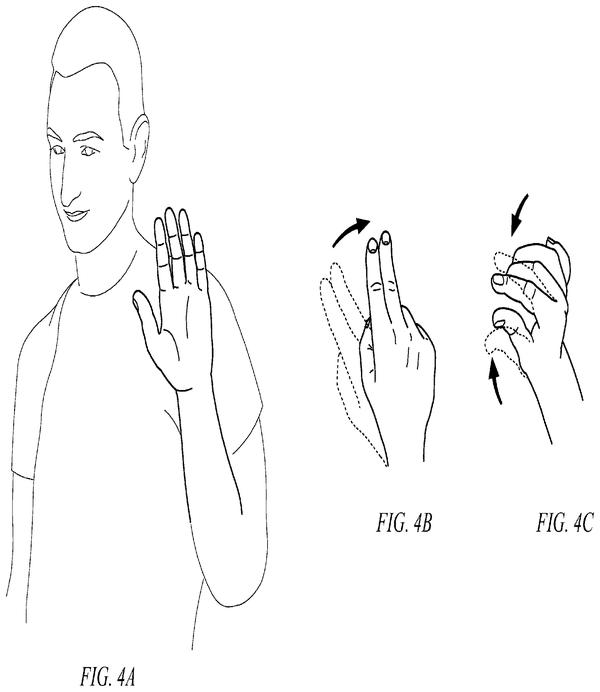
Distinguishing intentional pinches from accidental hand movements requires the system to track gesture sequences over time rather than reading each motion as a standalone command.
Color separation in compact optics remains unsolved. Meta's dichroic mirror approach keeps red, green, and blue light on distinct paths to prevent the wash-out effect that plagues current thin headset designs.
AR glasses that recognize exercise opportunities in real spaces could convert passive observation into action prompts, extending the use case beyond navigation or information lookup into real-time behavioral nudging.
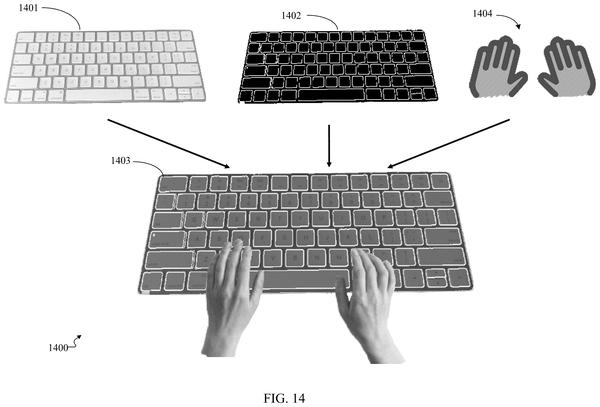
AR glasses need to show your real keyboard accurately positioned in mixed reality so typing feels natural instead of misaligned. Samsung's depth-sensor approach lets the headset map physical keyboards into virtual space with minimal lag.
Idle headsets stay dark to find-my networks unless manually reactivated. Qualcomm's chip automatically wakes location beacons on sleep mode, solving recovery of misplaced devices without user intervention.
Splitting compute load between device and network requires real-time negotiation about what each can handle. Qualcomm's filing lets the headset signal its current capacity constraints so the network can dynamically offload or retain processing tasks.
Prioritizing which reprojection stages get cache access lets the chip handle frame repositioning without slowing the whole pipeline, keeping latency low when rendering can't keep pace with head movement.
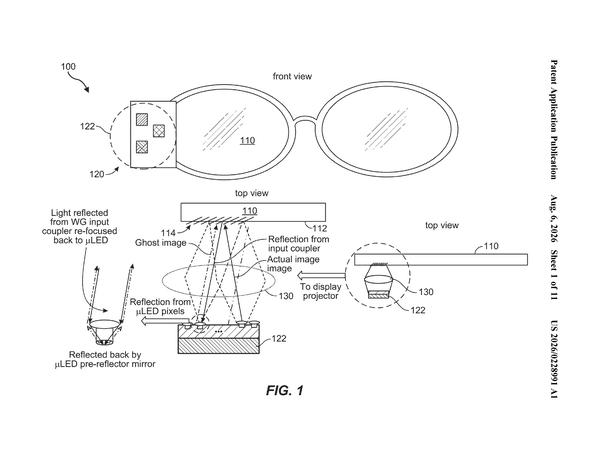
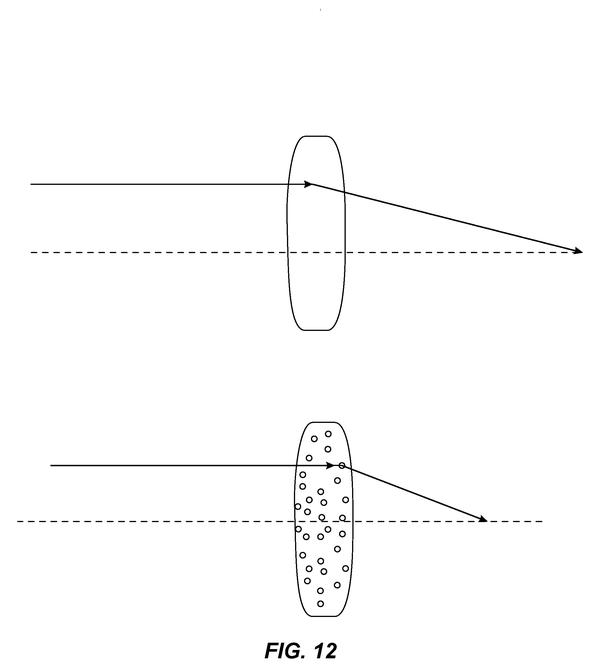
Angling the projectors inside the waveguide reduces stray light reflections that create ghost images, a physics problem that affects image clarity more directly than software workarounds.
The battery drain problem gets a specific fix: caching object recognition results across frames so the glasses don't re-analyze the same scene repeatedly, letting the processor do less work per second.
Waveguide optics need to hide the glow that marks someone wearing AR glasses. Google's grating design reduces those telltale reflections by controlling how light bounces off the lens surface.
The waveguide optics problem has centered on glass and polymer materials; Meta's approach swaps in organic crystals to reduce the refractive index mismatch that forces lenses thicker than needed, cutting bulk without redesigning the entire optical path.
Stacking two color-converting layers per pixel lets Samsung reach deeper color saturation while keeping the optics compact enough for a glasses form factor, directly solving the brightness-accuracy tradeoff that has limited existing microdisplays.
Shape-memory wire eliminates the mechanical complexity of focus adjustment by relying on thermal expansion alone, removing a potential failure point in the slip-detection and optical alignment chain that plagues current prototypes.
The eye tracking problem keeps expanding: after solving where eyes point, Samsung now uses that data to monitor environmental hazards rather than just user intent or display calibration.
Foveated dimming links eye-tracker data to localized backlight control, letting displays reduce glare only where the user is actually looking rather than blanking the whole screen or nothing at all.
A secondary display showing the wearer's face to bystanders solves the social presence gap, with privacy controls that adjust image fidelity based on viewer proximity or identity.
Predicting hand movement before it enters the frame lets glasses wake the ring with enough lead time to capture gesture data from the start, solving the latency problem that would otherwise lose the initial motion.
The power budget for sustained AR has forced a choice between frame rate and visual quality. Qualcomm's upscaling method suggests the answer lies in rendering cheap, then enhancing cheap output rather than optimizing the renderer itself.
Offloading object identification to local processors rather than cloud servers cuts latency for real-time labeling, pushing the glasses toward practical retail and navigation scenarios where instant feedback matters.
The eye-tracking problem splits into two: gaze direction needs different light settings than biometric authentication. Sony's approach uses separate cameras tuned to each task rather than forcing one sensor to do both jobs well.
Dual tracking modes let the headset switch from camera-based position sensing to lower-power alternatives when head motion stops, cutting battery drain during stationary use like video watching.
Filtering vehicle motion from head motion requires Samsung's approach: motion sensors that distinguish between the wearer's actual head movement and acceleration from the car itself, keeping AR content anchored during driving.
Grouping nearby objects into clusters before matching 3D scans reduces drift in spatial maps, a key problem when AR headsets need to track their position across multiple camera frames.
Persistent object labeling across head movements relies on matching visual features between frames, letting the system keep IDs stable as viewpoint shifts during simultaneous mapping and tracking.
The waveguide and eye-tracking race now has a bandwidth constraint: Meta's method adapts compression per image region, cutting the data stream without blurring fine detail.
Variable-resolution encoding shrinks bandwidth by concentrating detail where the wearer's gaze lands, a bandwidth play that complements eye-tracking hardware already central to the race.
A motorized camera mount that reorients the lens toward feature-rich surfaces keeps visual tracking stable without software workarounds, addressing the slip-detection problem that plagues headsets in sparse environments.
Correcting image data before it hits the display panel sidesteps optical misalignment, a path toward keeping the virtual world stable as users move their heads.
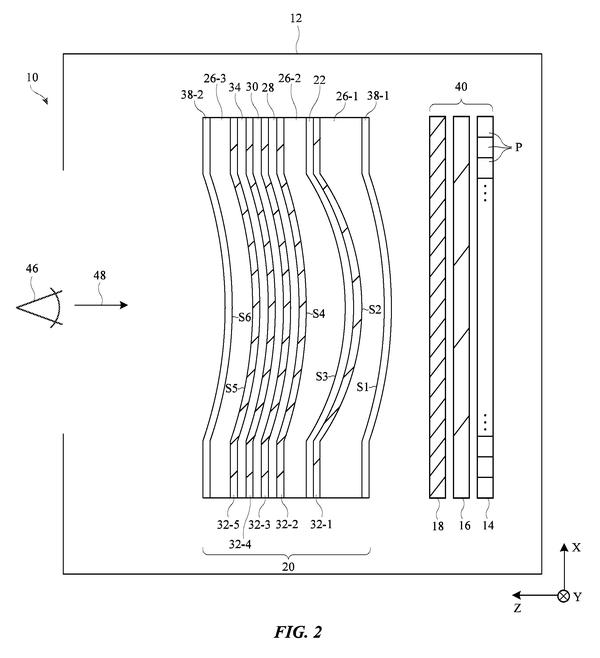
Bouncing light through stacked mirror layers lets Apple compress the optical path into a thinner package, directly attacking the depth problem that makes current headsets bulky enough to fatigue the wearer's neck.
Lens thickness has forced AR glasses into chunky designs. Meta's crystal-polymer composite aims to pack the optical power of thick glass into thinner material, moving closer to eyeglass proportions.
The race so far has centered on seeing through AR glasses to the real world. Sony's filing suggests a different path: detecting when a wearer needs that view and switching automatically, rather than relying on the user to manage it themselves.
The AR glasses race has focused on tracking where users look; Samsung's filing shows why that data matters most during head movement, when rendering lag creates perceptual mismatches.
Ultra-high-molecular-weight polyethylene film conducts heat away from display light sources without metal or active cooling, letting Meta shrink the thermal management layer in waveguide optics.
A neural network that maps 2D pupil images to 3D eyeball position confirms the single-camera approach to eye tracking, trading the cost and space of multi-sensor systems for computational speed on headset processors.
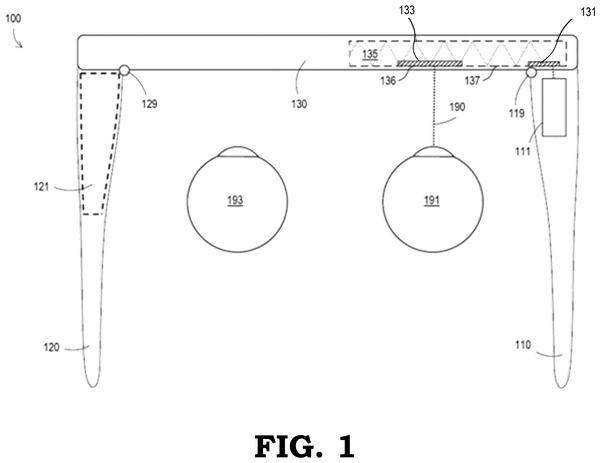
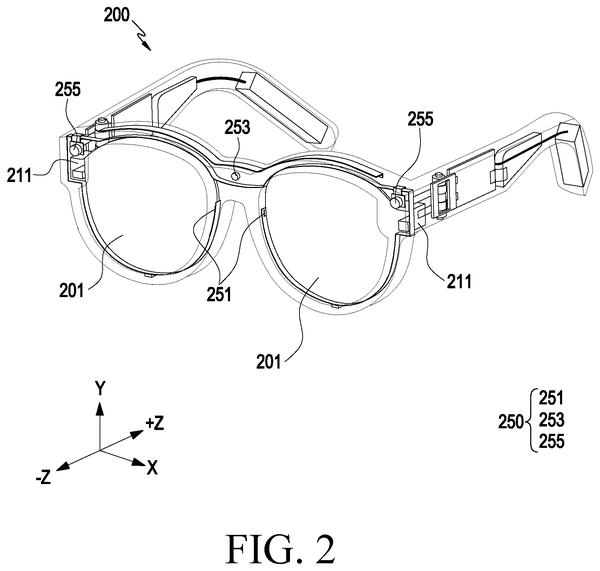
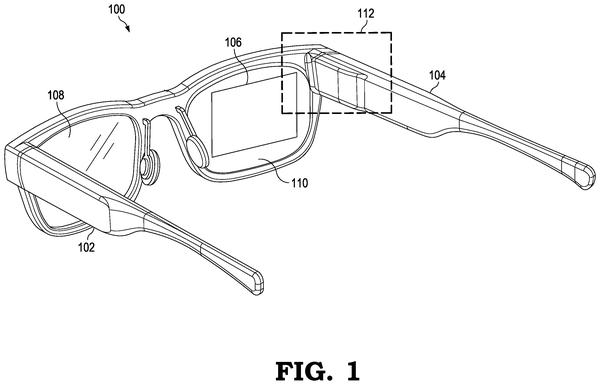
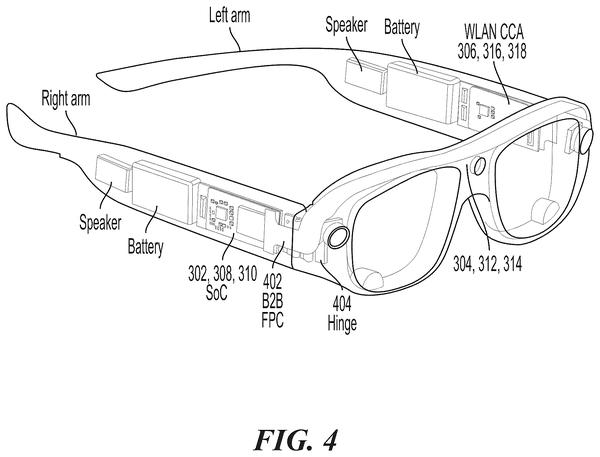
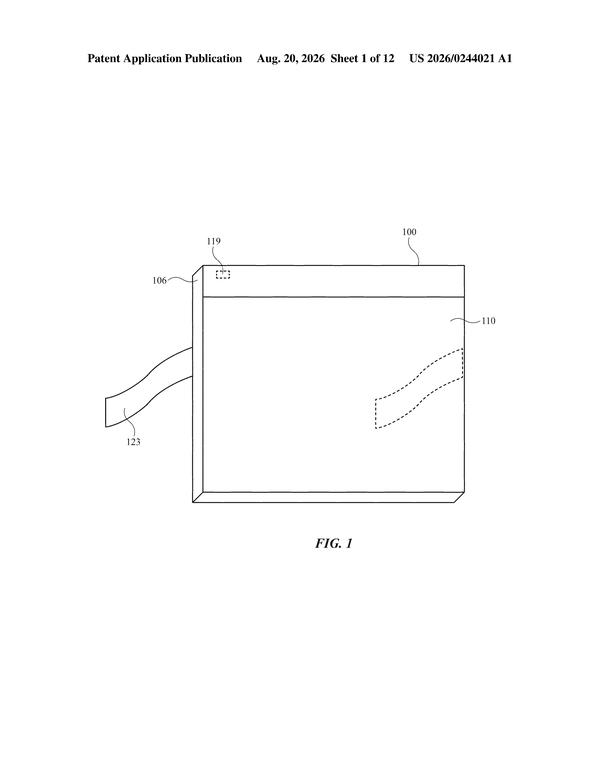
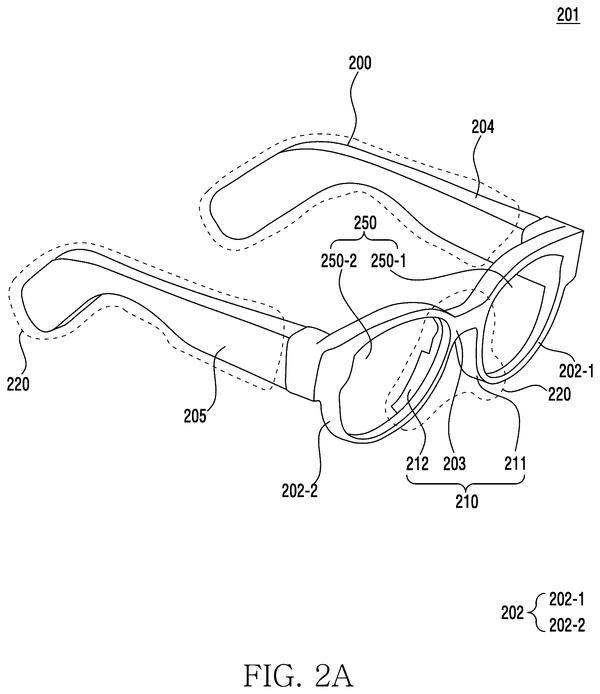
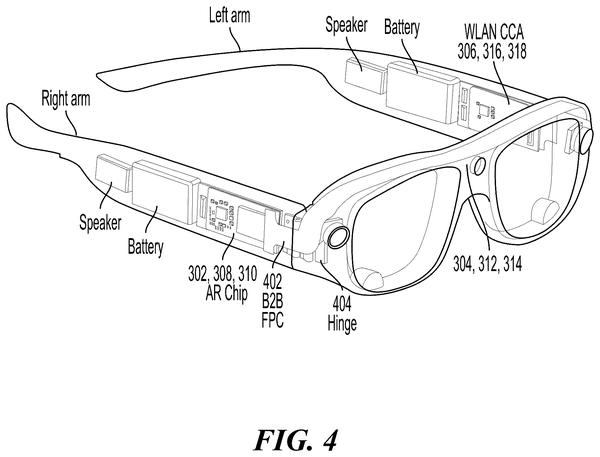
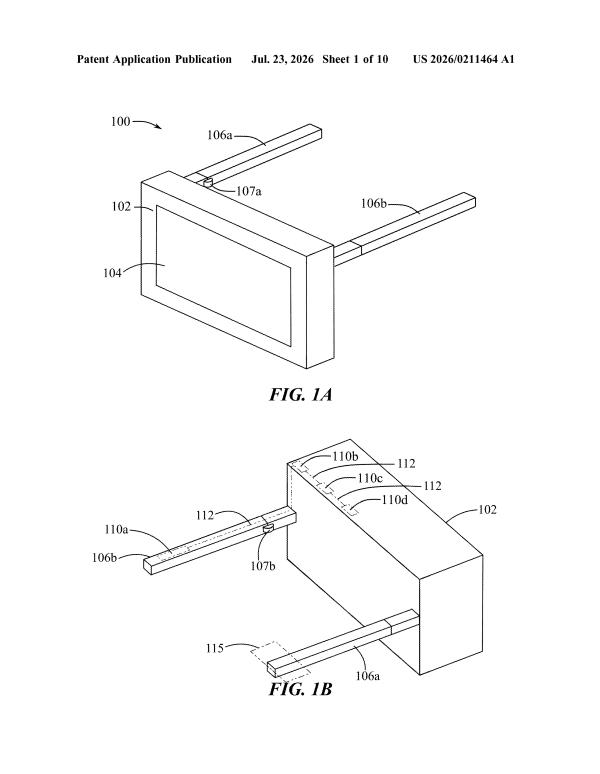
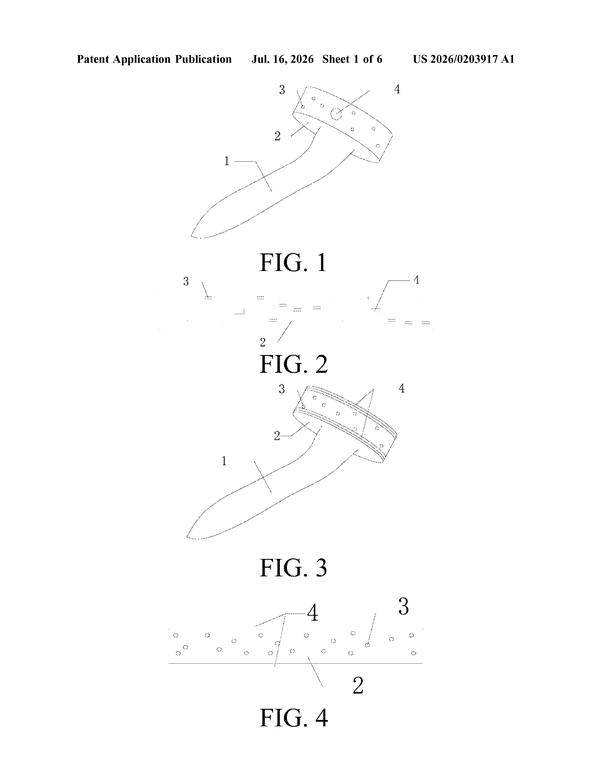
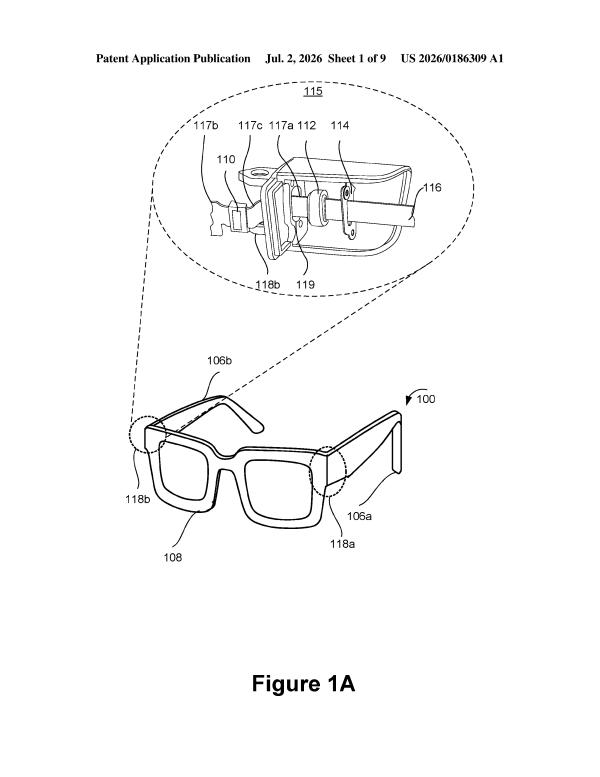
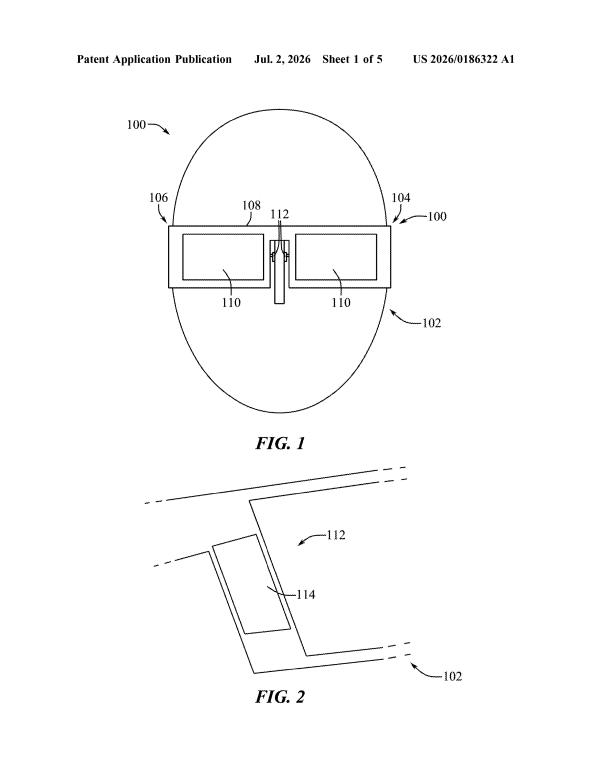
A hollow hinge shaft routes wiring through the fold joint itself, solving the cable-routing problem that forces current AR designs to choose between bulky arms or exposed connectors along the frame edge.
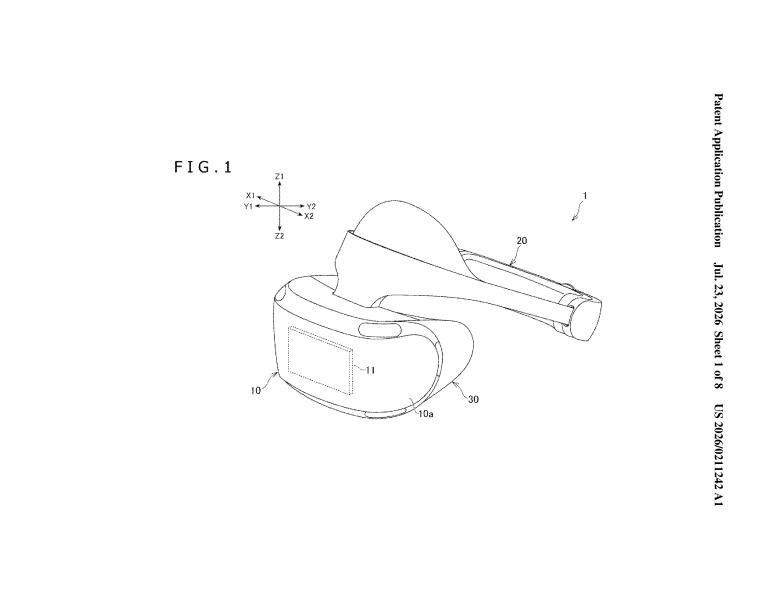
The slip-detection problem in AR glasses hinges on maintaining consistent face contact, which Sony addresses here by replacing rigid padding with flexible compression that adapts to individual facial geometry rather than forcing uniform pressure.
Polarizing films positioned at different depths in the display stack absorb reflections that would otherwise bounce between layers, reducing the ghost images that plague compact optical stacks used in AR headsets.
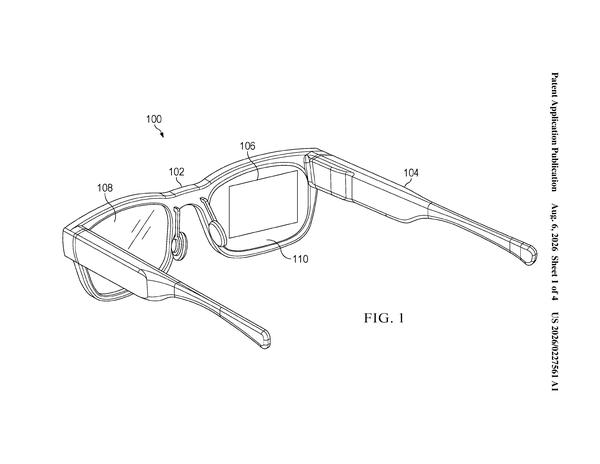
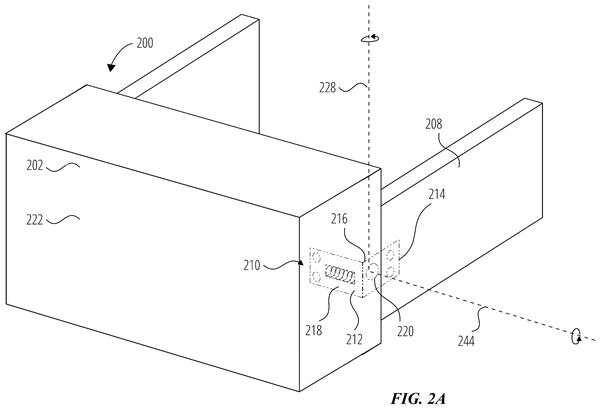
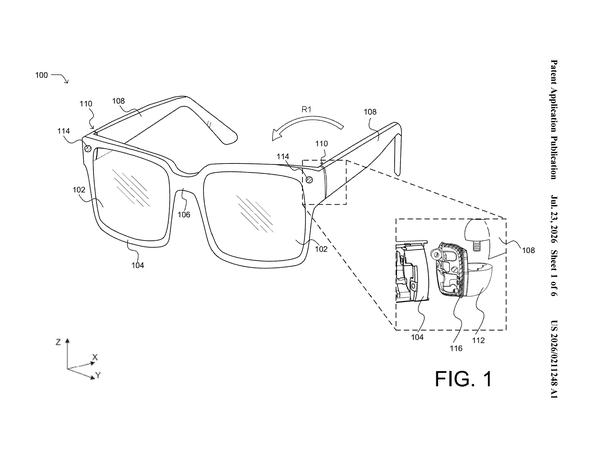
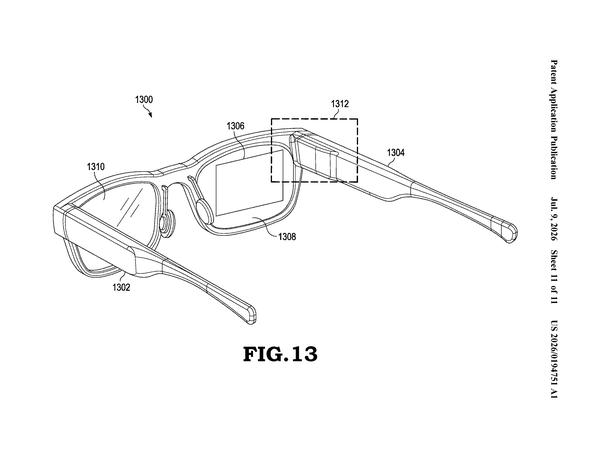
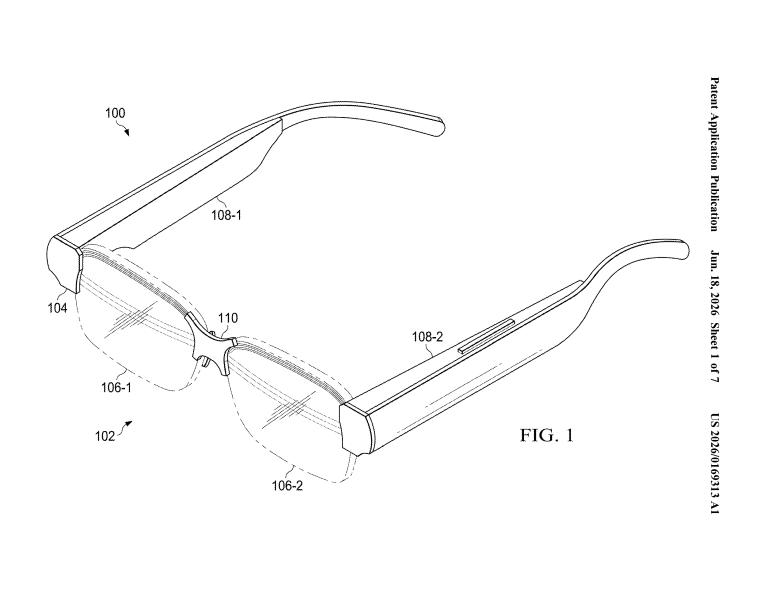
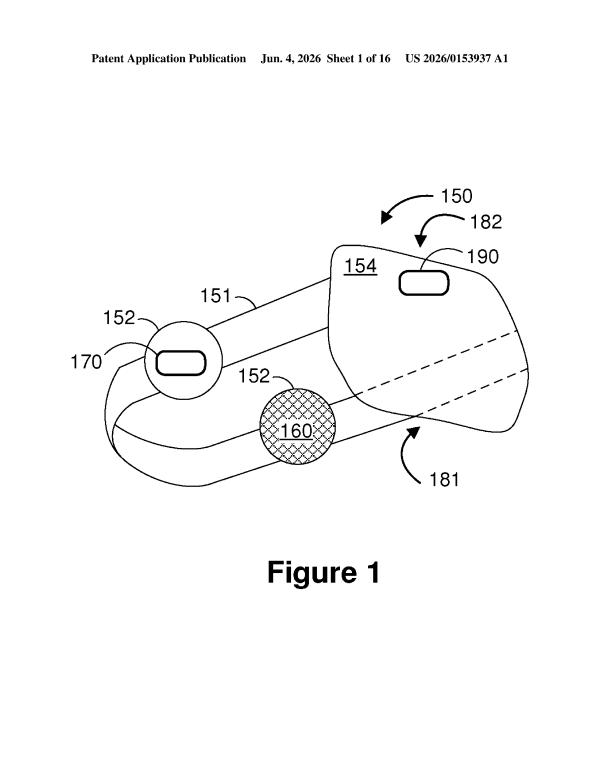
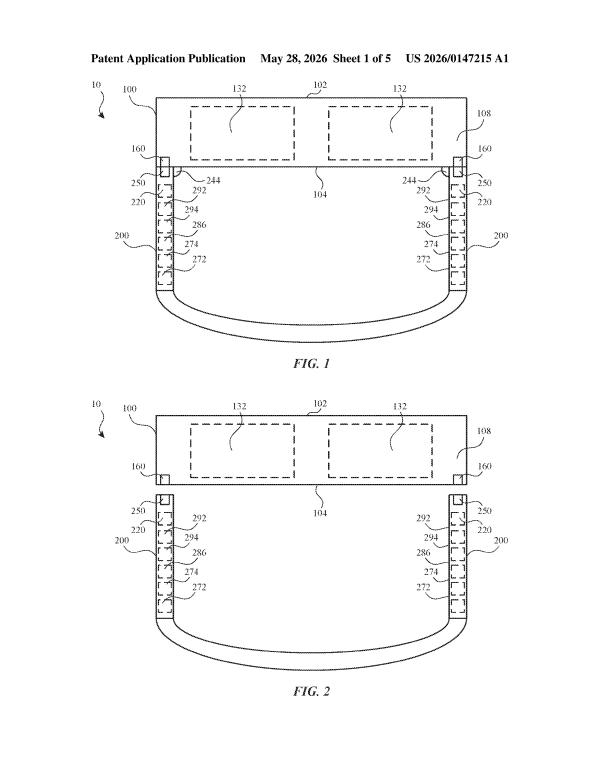
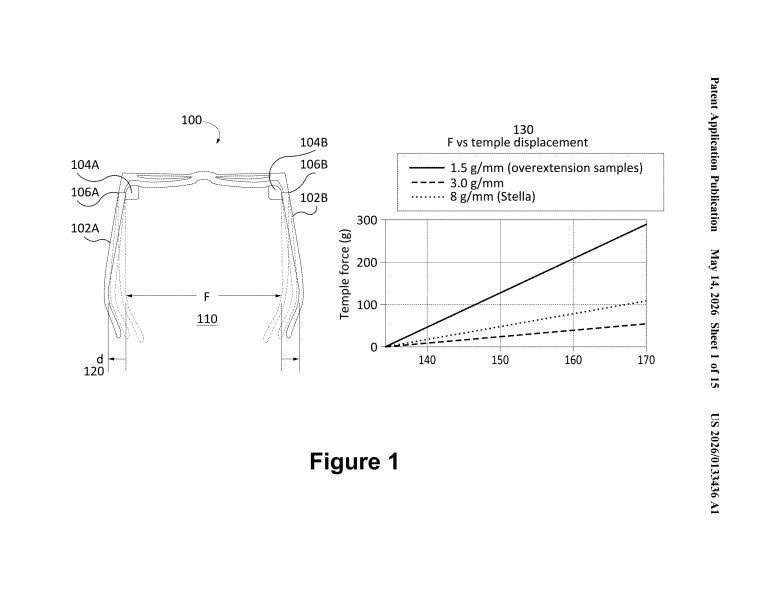
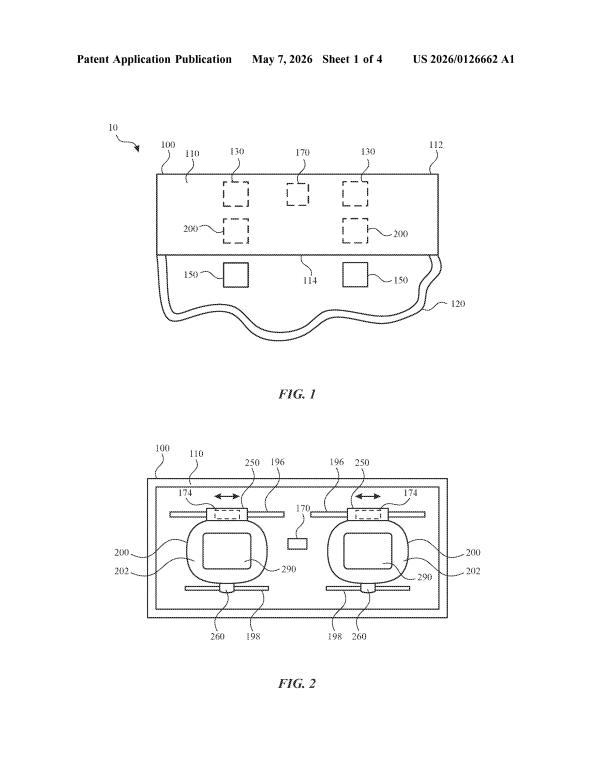
AR glasses need arms that conform to different head shapes without gaps. Apple's compound hinge lets the temple both fold and tilt, solving fit across a wider range of users.
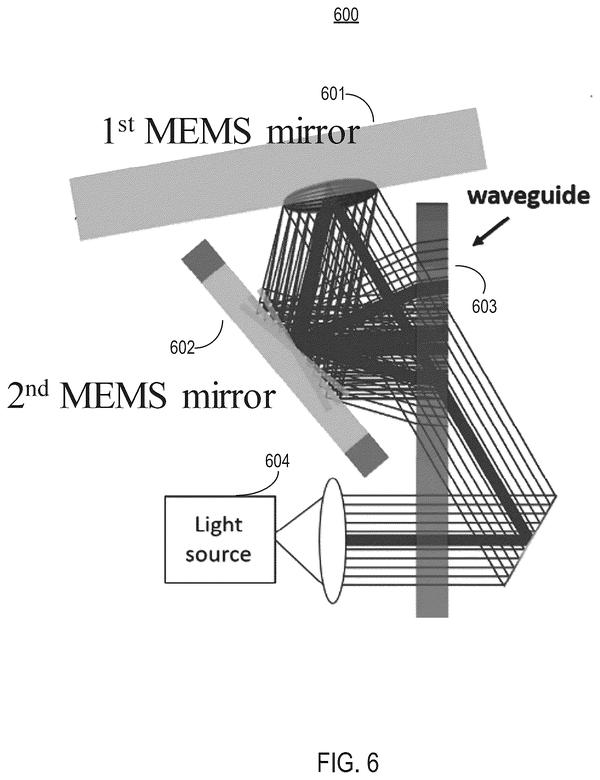
The waveguide optics problem requires light to enter at exact angles or the image vanishes. Meta's spinning micro-mirror solves this by dynamically adjusting the beam angle to compensate for misalignment.
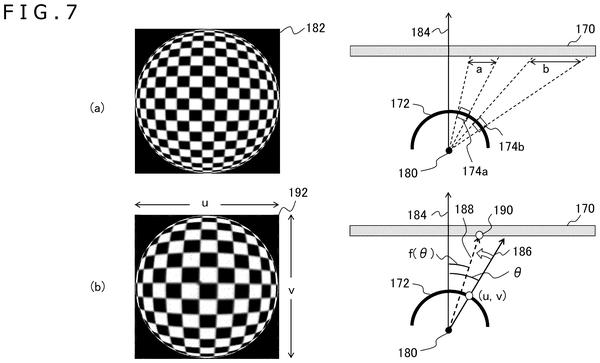
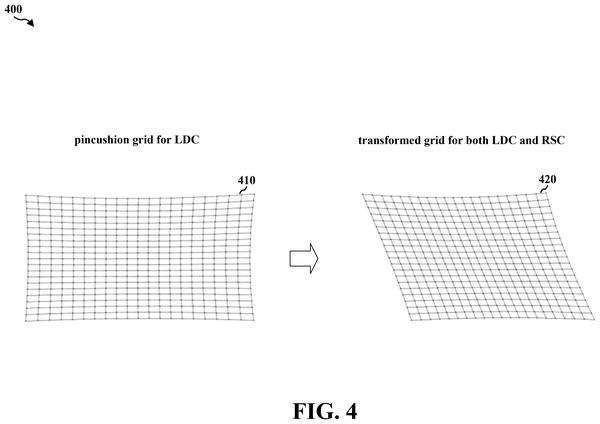
The AR glasses race has focused on optics and eye tracking, but this filing suggests a parallel solution: predicting head motion to correct lens distortion in real time rather than after the fact. It's a processing-side answer to a hardware problem.
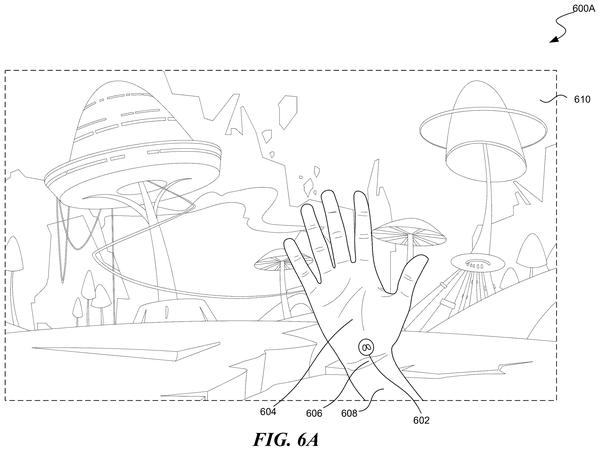
Input detection on the user's body solves the control problem without requiring controllers or hand gestures in free space. Meta's wrist-based button approach keeps interactions close to the body where occlusion and precision are easier to manage.
The race depends on rendering speed: Qualcomm's pipeline moves 3D-to-2D conversion onto the headset itself, cutting the latency that would otherwise make AR scenes feel sluggish or out of sync with head movement.
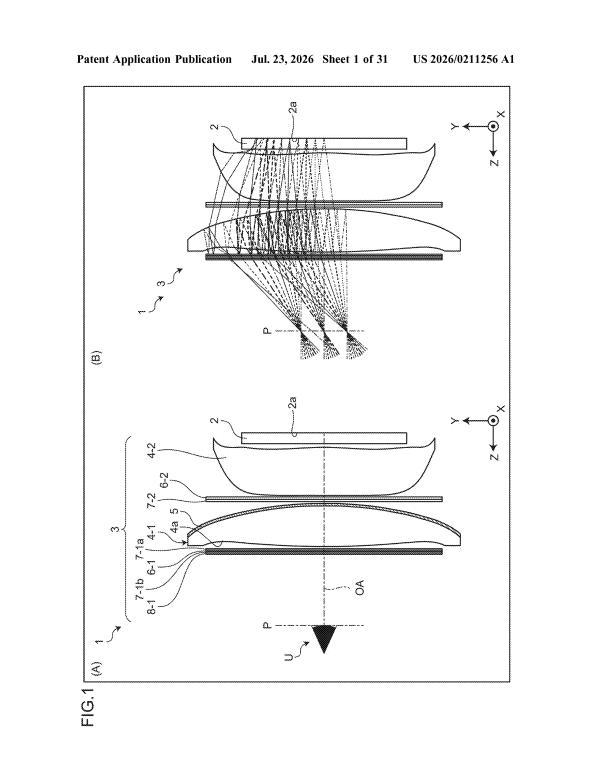
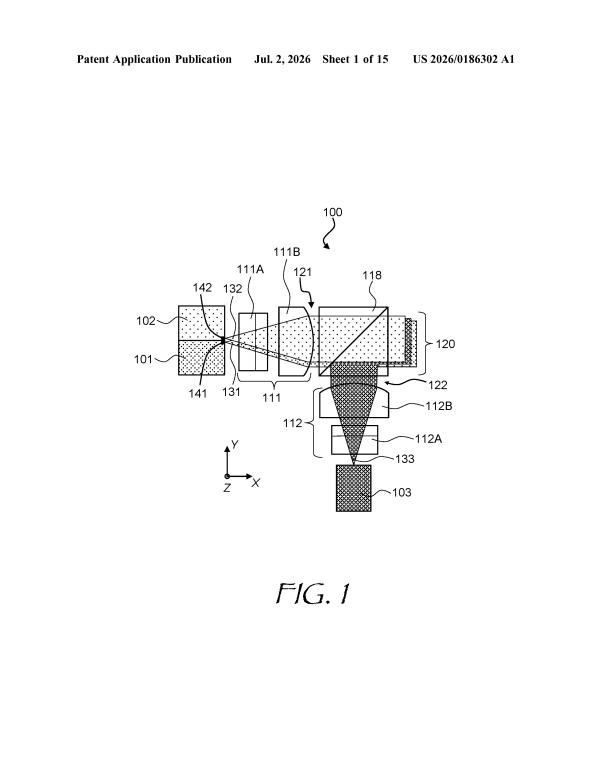
Pairing a standard focusing lens with a specialized second lens cuts optical aberration across the full field of view, directly improving image sharpness where waveguide designs struggle most at the edges.
Selective scene reconstruction cuts the compute load by identifying static geometry versus dynamic objects, letting headsets maintain real-time 3D mapping without redrawing unchanged surfaces.
Users folding glasses repeatedly in wet conditions need the hinge gap sealed, or moisture ruins the electronics inside. Meta's wiper gasket design prevents water ingress at the frame joint where flex happens.
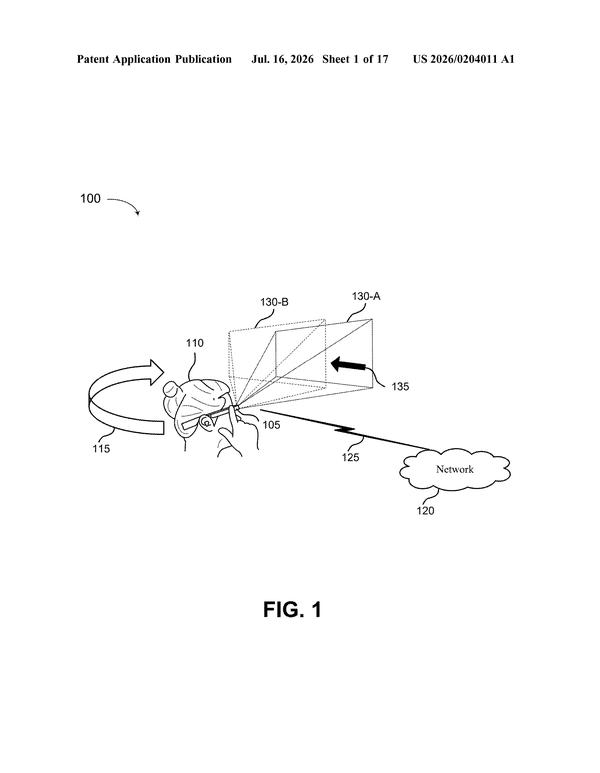
Predicting head position before it arrives lets the renderer start drawing pixels sooner, cutting the lag between actual head movement and when the image refreshes on screen.
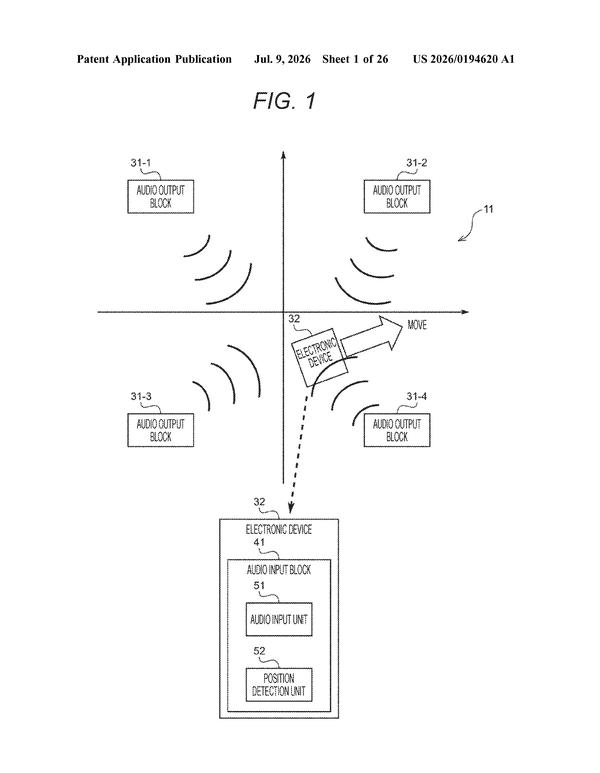
Anchoring virtual sound to fixed world coordinates rather than the listener's head removes spatial audio from the eye-tracking layer, letting sound design work independently from gaze detection.
Optical correction built into the display itself cuts the need for contact lenses or clip-on adapters, letting people with vision prescriptions use AR glasses without layering multiple eyewear solutions.
Field of view expansion requires real-time image stitching from multiple cameras. Samsung's three-camera setup, dual eye-tracking plus wide-angle, suggests the race is moving from narrow passthrough to seamless peripheral awareness.
AR users need to feel where to grip a real object when virtual graphics hide it. Sony's filing maps grip zones on physical items so the overlay won't obscure the spots your hand needs to find.
Motion controller tracking loses accuracy when fingers occlude the device. Sony's filing teaches cameras to infer hidden geometry from partial views, keeping pointing precision intact during normal grip.
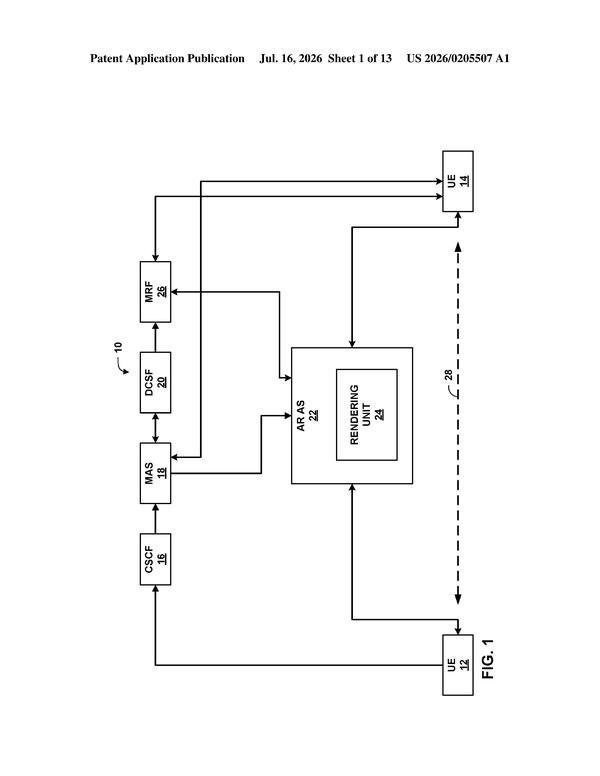
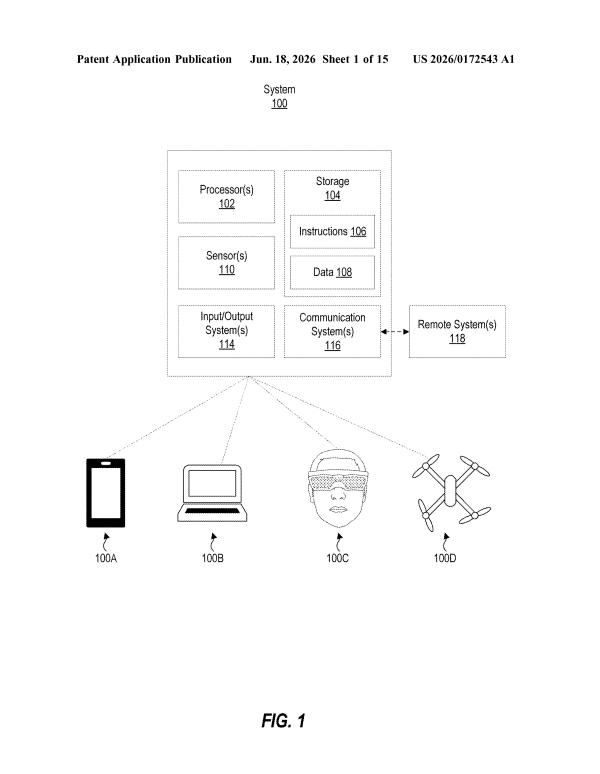
AR glasses that dynamically offload processing to a nearby phone could run for hours instead of minutes on battery alone. This confirms the race is shifting from pure standalone power to seamless handoffs between devices.
Routing messages to specific devices rather than just contacts lets Meta build social features that work across phones, headsets, and shared virtual spaces simultaneously.
Sensor feedback on frame positioning lets the headset guide users toward correct wear in real time, moving the hinge-fit problem from guesswork to measurable adjustment.
AR calls won't need to push every polygon of your avatar to every participant. Qualcomm's approach selects which avatar components matter for each viewer and sends only those, cutting the data load on live calls.
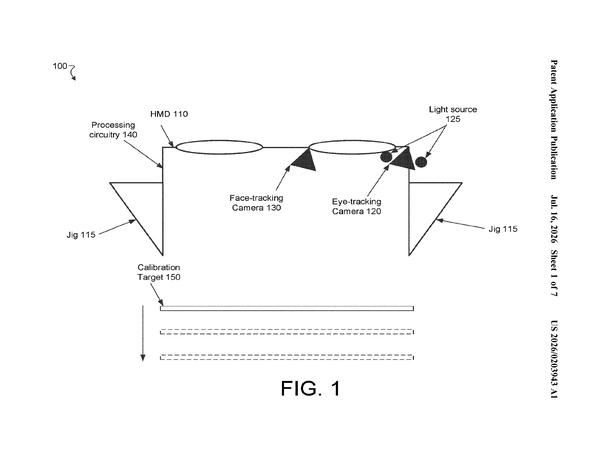
Camera alignment during manufacturing determines whether eye tracking stays accurate after assembly. Google's approach uses a factory calibration rig to map each camera's exact position, preventing the drift that makes tracking feel off to users.
Collision avoidance during immersion requires real-time detection beyond fixed boundaries. Qualcomm's two-stage AI monitors the actual environment and interrupts the virtual experience when people or obstacles enter the user's immediate space.
Hand and object detection in the wearer's environment removes the need for a physical controller tether. By mapping real surfaces as input zones, Meta sidesteps the ergonomic friction that has plagued mobile AR adoption.
AR glasses need to track hand controllers without draining the battery. Qualcomm's approach uses fewer LED markers to locate and orient a controller in space, cutting the power cost of constant position updates.
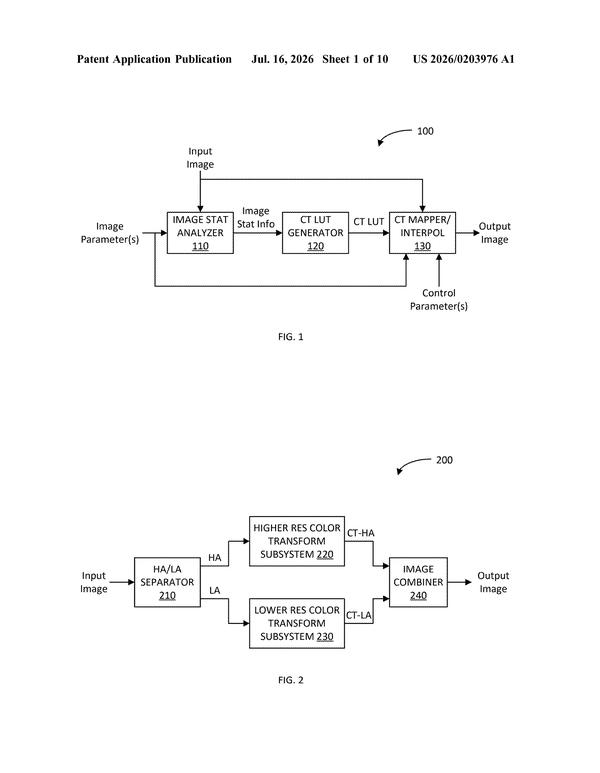
AR headsets waste processing power on peripheral vision users ignore anyway. Qualcomm's color processor applies less computation to blurry edges, freeing resources for sharper central vision where users actually look.
AR glasses that read where you're looking could skip the controller entirely, letting users navigate by gaze alone. Qualcomm's system maps eye position to screen regions, then reorganizes menus to match what the user likely wants next.
AR glasses need to stream different views and audio based on head position in real time, which Qualcomm's system handles by adjusting content server-side rather than requiring local processing power.
Directional microphone arrays positioned in the frames isolate sound from the wearer's line of sight, letting AR glasses function as gaze-contingent hearing aids that suppress ambient noise rather than amplify it uniformly.
Audio reflection off room geometry replaces the line-of-sight requirement that camera-based trackers need, letting controllers work even when blocked from view or in bright sunlight.
The waveguide optics path keeps narrowing: offloading distortion correction to dedicated silicon means the main processor stays free for eye tracking and scene rendering, the two features that actually need its full power.
A biometric login that reads skin texture patterns adds a physical-layer security option beyond face geometry, locking the headset to individual users even in shared AR spaces where multiple people wear the same device.
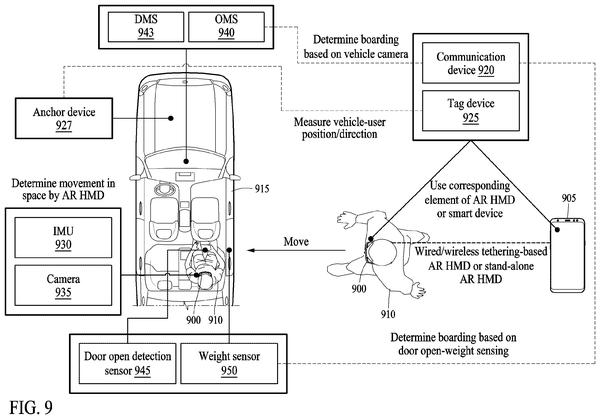
The AR glasses race so far has centered on hardware, optics, hinges, eye tracking. This filing pivots to identity verification and access control, showing how glasses become authentication hardware that communicates with physical infrastructure in real time.
AR glasses need eye tracking that doesn't drain the battery in hours. Apple's dual-camera approach, pairing a low-power sensor with a high-res camera, lets the headset stay responsive without constant full-resolution processing.
Adaptive feedback timing between headset and remote server cuts wasted transmission cycles, letting the glasses skip sending redundant requests while waiting for results.
Splitting display light into separate optical paths lets each beam travel through a narrower waveguide, reducing the physical depth and width needed for the lens stack, the core constraint keeping AR glasses oversized compared to regular frames.
Requiring separate authentication before a virtual representation activates in calls prevents impersonation when a device is unlocked but unattended, pushing the security boundary beyond device access alone.
Smart glasses need ways to command objects without controllers. Using both hands as context for what each one does lets wearers issue more commands in less physical space.
Smart glasses that fold repeatedly need circuits that survive thousands of bends without breaking connections. Meta's sealing method protects wiring at the hinge, the stress point where failure happens fastest.
Photon-to-photon latency, the lag between camera input and screen output, can trigger nausea in mixed-reality use. Apple's filing synchronizes multiple headset components to shorten that delay below the threshold where human perception detects it.
Collision prediction requires cameras that track both user movement and object trajectories in real time. Meta's approach uses learned behavior models to generate warnings before hazards materialize, extending the safety layer beyond simple obstacle detection.
The race includes accessibility from the start: Meta's filing shows glasses that generate and voice replies for non-speaking users, treating speech assistance as a core headset feature rather than an add-on.
The race assumes users need hand-free controls in AR, but Apple's filing shows the company betting on gaze-locked adjustments rather than gesture or voice for precise settings like volume.
Battery life on face-worn AI hinges on dormant sensors waking only when needed. Meta's staged activation system keeps glasses mostly idle, firing up processing only when real-world triggers appear.
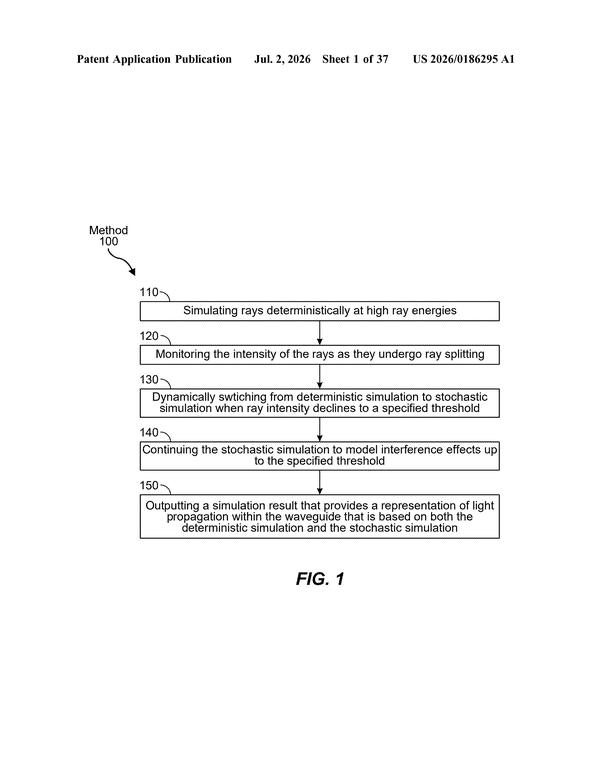
A faster simulation method for light paths through waveguides could let Meta skip the brute-force calculations that slow down optical design, moving AR display development away from guesswork toward validated prototypes.
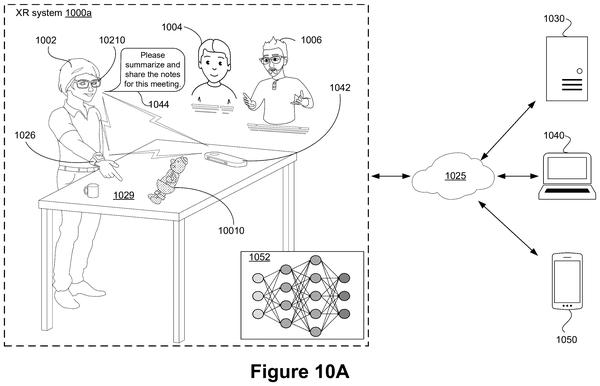
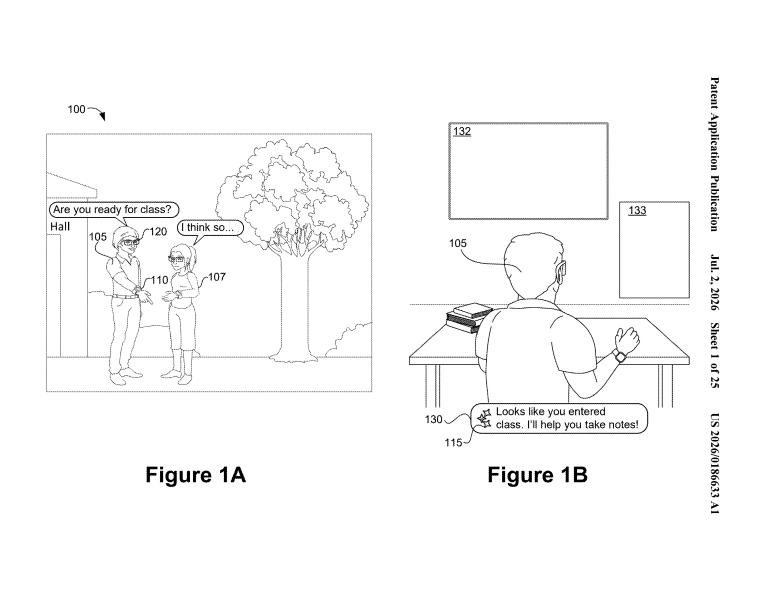
Smart glasses that auto-transcribe meetings and generate summaries let users stay engaged instead of juggling a notebook, shifting the glasses from a display device into an active work tool.
The race to shrink display optics hits a specific bottleneck: keeping three laser colors aligned and bright inside a headset frame smaller than existing prototypes allow.
Predicting finger position before contact reduces the lag between intention and response in VR interfaces. Apple's approach uses proximity sensing to preview selections, making virtual touchpads feel less sluggish than current tap-and-register systems.
A motorized nose pad that clamps tighter when it senses slipping solves a core problem for active-use AR glasses: keeping the optics stable enough to track your eyes and display information reliably during movement or perspiration.
Smart glasses that stay visible outdoors would finally work for navigation and real-world tasks, not just indoor demos. Google's solution trades color accuracy for visibility by boosting display brightness when sunlight floods in.
The race hinges on field of view, and Google's dual-waveguide approach expands it without ballooning the frame size. This solves a core physics problem that single-lens designs keep running into.
The wireless bottleneck gets sharper focus: AR apps need the radio to know what kind of data they're pushing so it can pick the right antenna setup on the fly, not guess based on signal strength alone.
The sync problem cuts across the AR glasses race: headsets need to work alongside traditional screens, not replace them. Google's filing describes how to keep 3D and 2D views of the same app in lockstep, solving a fundamental usability gap for shared work.
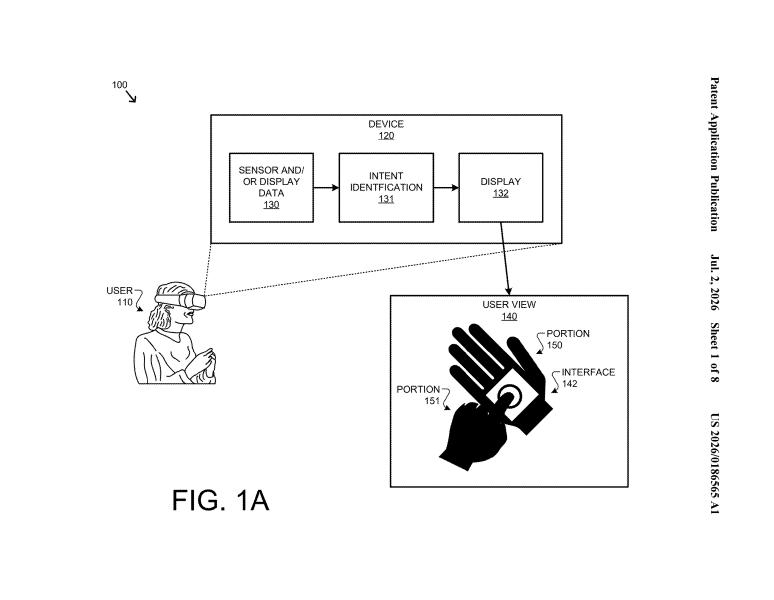
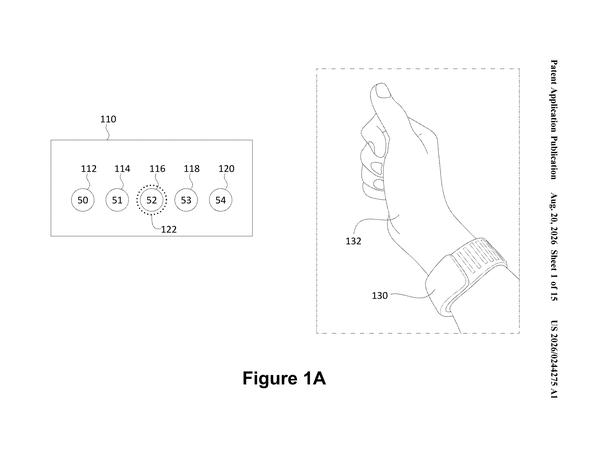
Projecting controls onto skin sidesteps the need for physical buttons or screens on the glasses frame itself, letting the device stay lighter and less cluttered while keeping inputs within arm's reach.
A camera-based content anchoring system that matches real-world objects to pre-loaded digital information, letting context like location and user identity determine what overlay appears on screen.
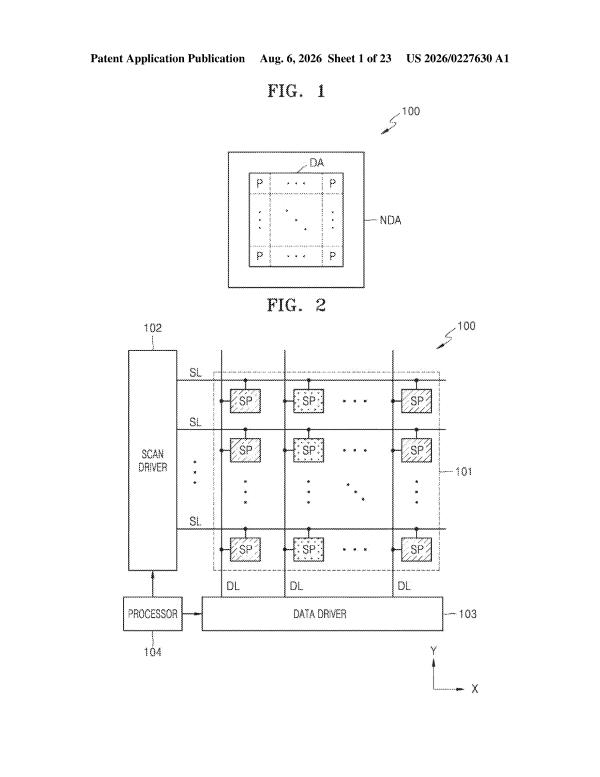
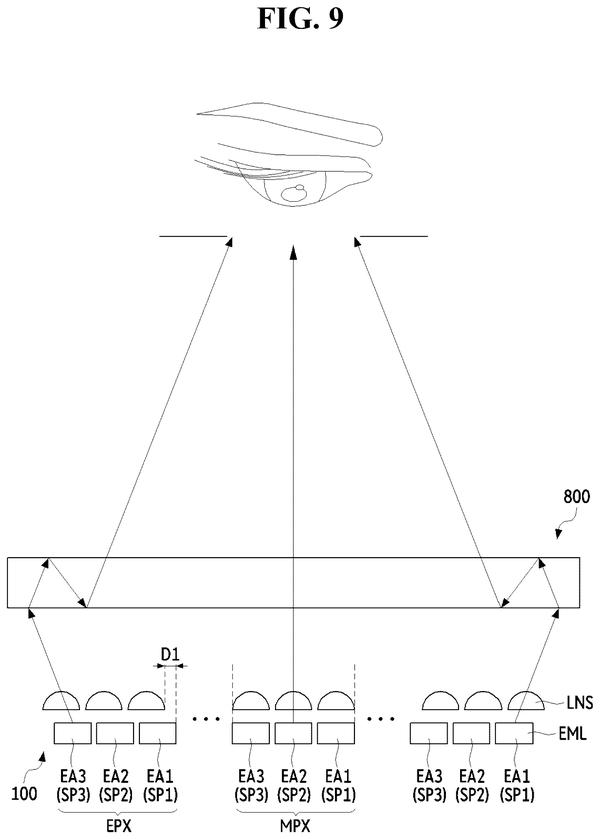
The display clarity push now extends to foveated rendering with a hardware angle: Samsung's three-panel approach concentrates pixel density where eye gaze falls, cutting wasted resolution on peripheral vision that users ignore anyway.
The waveguide race now includes surface finish as a controllable variable. Samsung's filing suggests manufacturers can tune roughness at bounce points to direct light precisely, moving beyond just waveguide geometry into the physics of the light path itself.
The color-balance problem in waveguide optics gets a material fix: Sony separates red, green, and blue paths through dual light-guiding plates to prevent the tinting that plagues current see-through displays.
Selective labeling based on user context cuts down the visual clutter that makes AR wearables exhausting to wear in dense urban areas, a key usability barrier the race keeps circling back to.
Selective camera activation based on prior spatial maps reduces power drain during repeated visits to known environments, trading real-time sensing for stored scene data.
Adaptive video quality based on movement speed and signal strength keeps AR glasses responsive during connectivity gaps, preventing the stutter that kills immersion when users leave strong network zones.
The race so far has centered on optics and display quality, but Samsung's approach shifts focus to the mechanical seals that separate virtual from physical space. Light leakage remains a distraction that even advanced displays can't fully solve on their own.
Smart glasses need to feel like talking to a person, not a machine. Meta's filing shows how to route questions to different AI personalities based on context, making responses feel matched to the moment rather than generic.
The race has centered on display brightness; this filing shifts focus to the optical layer itself, suggesting Meta sees automatic dimming as a prerequisite rather than a workaround for outdoor AR to actually function.
Prescription wearers currently need separate inserts or accept blurry AR displays. Meta's filing proposes embedding the holographic layer directly into prescription lenses, letting one lens handle both vision correction and virtual content.
Camera drift ruins spatial tracking when multiple sensors have to work in sync. Meta's single molded part replaces separate brackets and fasteners to keep alignment stable over time.
A display that doubles as iris-scanner light source cuts the infrared hardware Samsung would otherwise need to embed. This confirms the race is pushing toward fewer, cheaper sensors packed into the same frame.
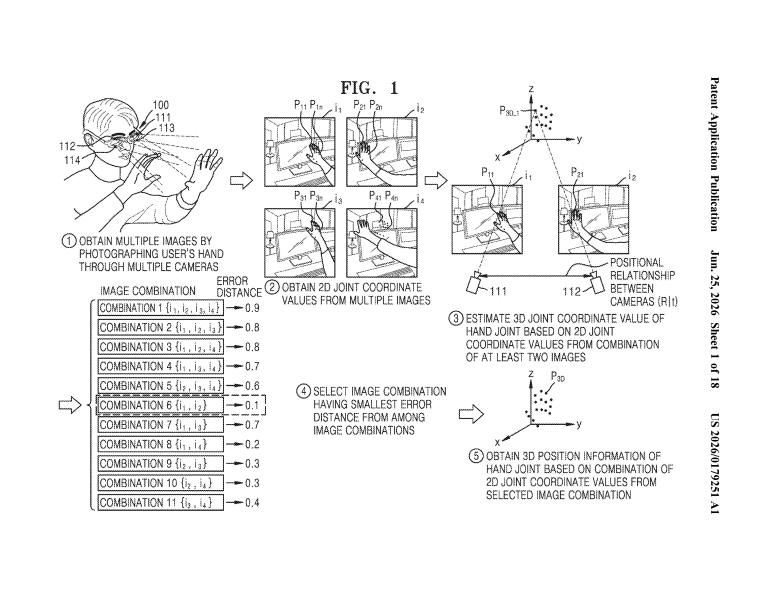
AR glasses need reliable hand tracking to let users interact with floating objects. Samsung's multi-camera selection method cuts tracking error by choosing the best camera pair for each hand position.
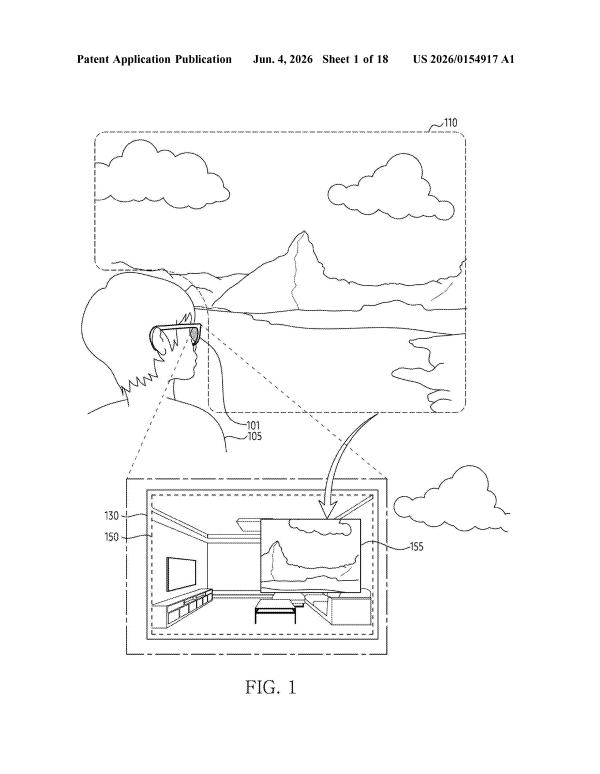
Making AR lenses optically uniform so they don't broadcast their internal mirror structures to onlookers, a cosmetic barrier to everyday wearability that Google's coating approach could remove before products hit shelves.
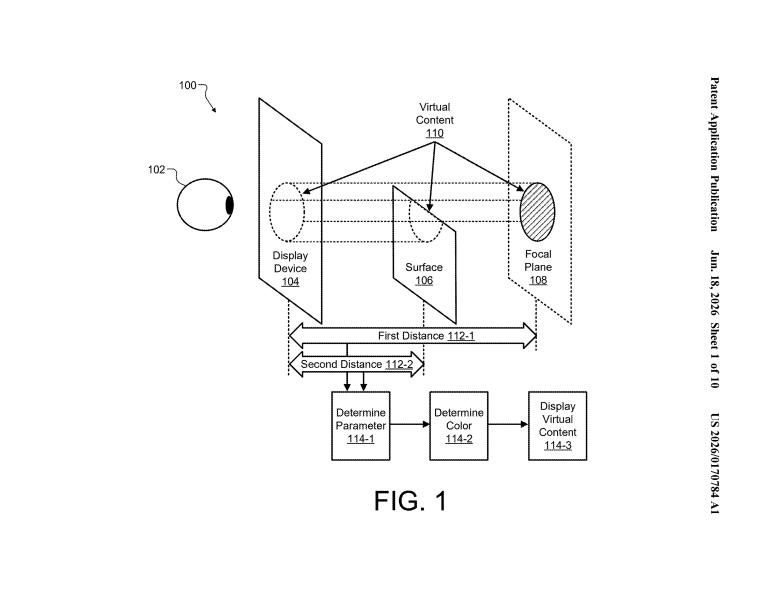
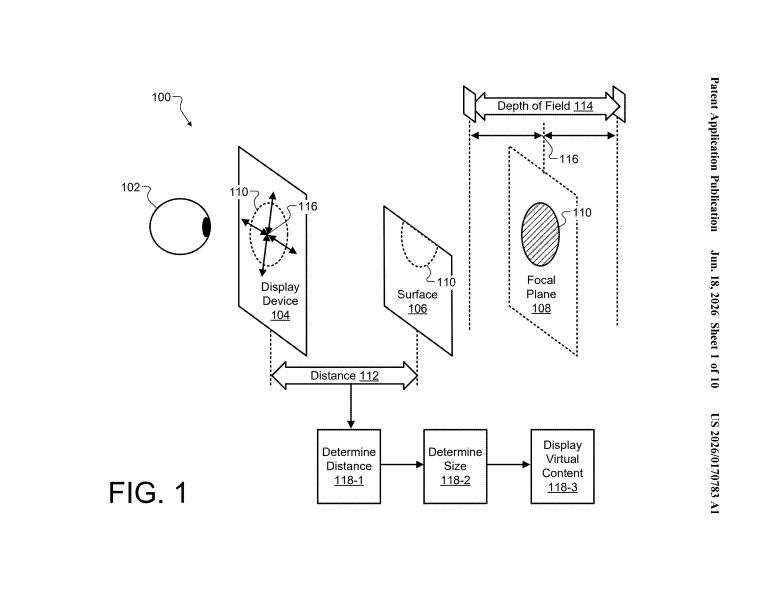
Color shifts in virtual text based on eye-focus depth could reduce the visual strain that comes when AR content floats at a different plane than what you're looking at.
Waveguide optics demand precise light angles to work at all. Google's prism design could finally make compact projectors practical by conditioning light before it enters the lens, rather than fighting the lens's strict requirements.
The race so far hinges on making glasses understand commands in real noise. Google's approach adds physical vibration sensors to separate your voice from background clutter, avoiding the need for better audio processing alone.
Body position recognition could replace physical controls entirely. Samsung's patent shows AR glasses detecting posture shifts to navigate menus, sidestepping the need for controllers or voice input.
Shrinking the frame without sacrificing connectivity: Google routes power and data through a printed trace on the lens itself, eliminating the internal wiring that currently forces bulkier frames.
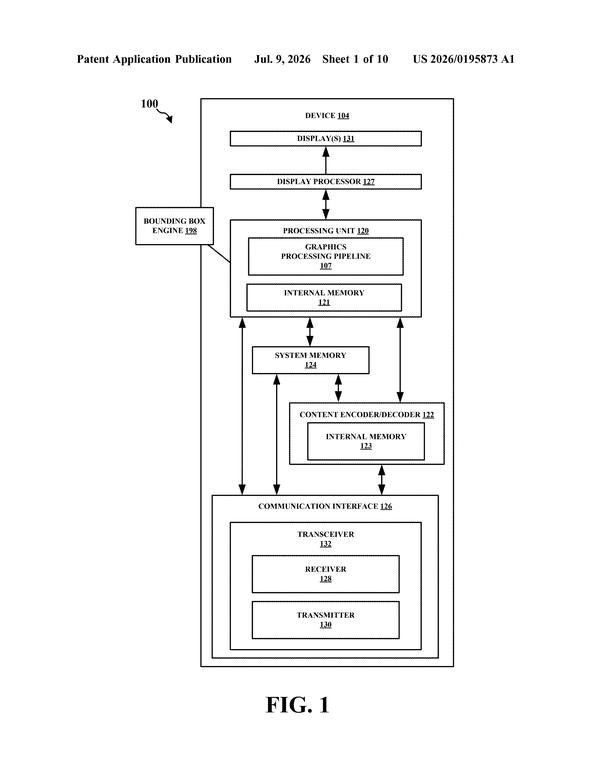
Eye-tracking that shrinks rendering load to the foveal zone cuts the compute needed to drive high-resolution AR displays, a direct answer to the power budget problem that has kept headsets tethered or short-lived.
Dual-window rendering lets one camera feed show both full-room context and magnified detail simultaneously, solving the problem of reading distant text without breaking presence or requiring manual zoom controls.
Sharper contrast between center and periphery in AR scenes means users won't have to choose between seeing what's in focus and what's around it. Microsoft's solution processes different brightness zones separately before display.
The race so far has centered on making glasses the primary interface. Meta's move here suggests a different priority: reducing how much you actually need to speak aloud, which could matter more in shared spaces than sleek hardware.
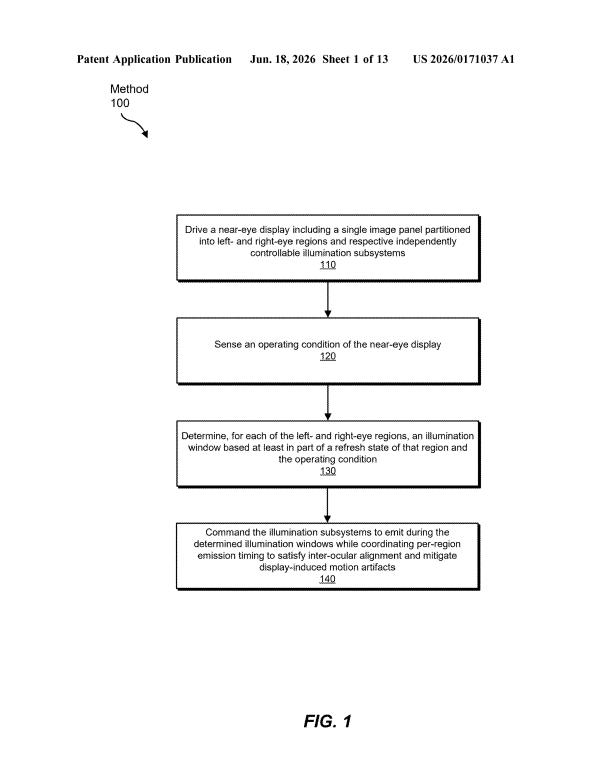
Motion blur in VR causes disorientation and nausea. Meta's approach uses one screen with independently timed backlights for each eye zone, syncing illumination to actual pixel changes rather than fixed refresh cycles.
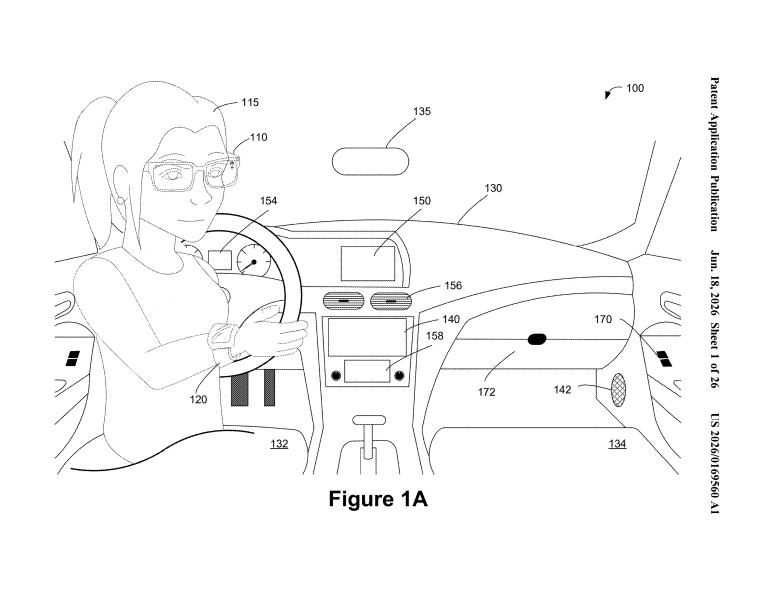
Eye-tracking paired with hand gestures lets AR glasses become a car interface without requiring drivers to look away from the road or use their hands on physical controls, solving a key safety constraint for in-vehicle AR.
Smart glasses that know what you're looking at without a prompt could turn browsing physical spaces into searchable experiences, matching the speed of online shopping.
Embedded sensors in the lens rails let the headset track adjustment positions in real time, solving the calibration problem that currently requires manual input or guesswork about interpupillary distance.
The race has focused on what you see; Samsung's filing suggests the next frontier is what you can actually touch, making virtual interaction feel less like pointing at a screen.
Smart glasses need to tell intentional gestures from accidental finger movements. Google's filing suggests asymmetric hand tracking, where the system weights one hand's actions more heavily than the other, could cut down on unwanted commands.
The glasses-wearer's depth problem gets a practical fix: Google's system detects wall distance and adjusts virtual text size to match where eyes naturally focus, cutting the blur that kills readability.
Smart glasses need to look sharp even when lighting changes suddenly. This patent lets the headset adjust its rendering trick based on how bright the environment gets, so the image stays crisp whether you're indoors or squinting in sunlight.
Placing virtual controls on actual surfaces nearby instead of floating them in space solves the reach problem that makes most AR interfaces clunky to use in real rooms.
The race so far has focused on getting glasses to see and hear what users want. This filing shows how combining gesture with speech lets the AI connect what someone points at with what they're asking about, cutting out the need to name things aloud.
Gesture recognition across multiple sensor types requires separate training for each one. Meta's filing shows how to train a single model deeply, then transfer that knowledge to sensors using different physics, cutting development time for multimodal headsets.
Polarized-light cameras embedded in the frame edges let Meta track gaze without the infrared sensors that would bulk up AR glasses, moving eye-tracking from add-on accessory toward invisible integration.
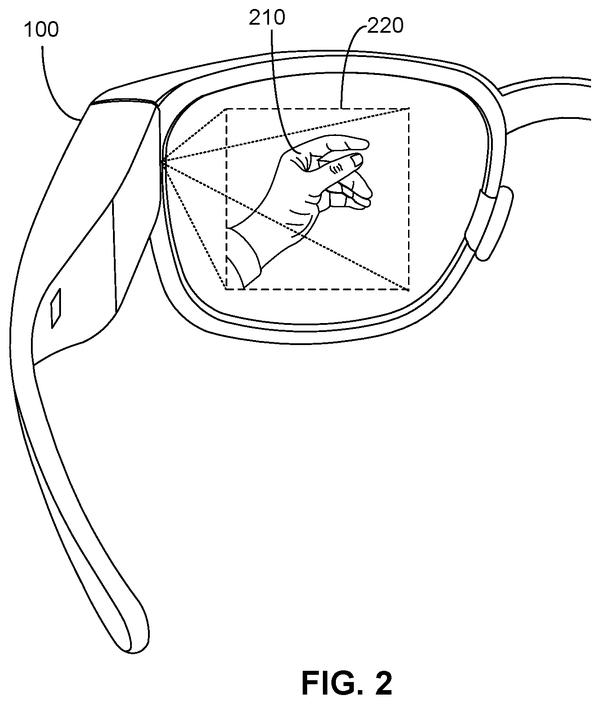
Smart glasses that rely on a phone's camera for hand tracking could cut the cost and bulk of the frames themselves, shifting the sensing load to hardware users already carry.
The race has always assumed a tight fit between projector and waveguide. Google's filing shows what happens when that spacing loosens, and proposes optical fixes that keep the image intact even with physical separation constraints.
Detecting invisible optical damage in real time keeps AR glasses safe to wear without requiring users to notice performance degradation first. This confirms Google's focus on the reliability checks that consumer headsets need before mainstream adoption.
Optical correction built into the headset itself eliminates the need to wear prescription glasses underneath, removing a major friction point for the roughly half of adults who need vision correction.
The race so far has assumed fixed optics. Samsung's sliding displays suggest a different path: letting hardware physically reshape to match individual eye geometry rather than forcing users into one standard fit.
Switching between AR and VR modes requires virtual objects to reshape themselves on the fly. Samsung's filing shows how overlays could automatically reconfigure their behavior based on whether the wearer sees the real world or a fully synthetic one.
Gesture recognition tolerance shifts how forgiving the interface becomes after a near-miss, turning failed attempts into training data that expands hit zones on retry.
Eye-gaze combined with hand gestures lets users trigger menus without looking away from their task, setting up a two-handed interaction model that keeps hands visible and tracked throughout AR use.
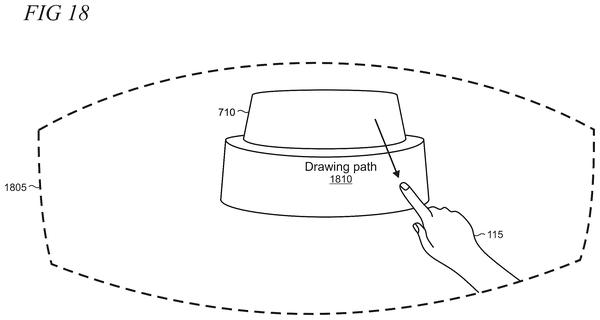
Smart glasses need fast interaction with the physical world. Apple's filing shows a path toward skipping the virtual interface layer entirely, letting users command real objects through direct gesture at the target itself.
The glasses need to show convincing video calls in shared space. This filing solves the problem of what happens when spatial tracking fails mid-call, proposing a graceful fallback rather than a broken experience.
Readability across varying backgrounds requires the headset to analyze what's physically behind each virtual element and adjust contrast dynamically, rather than displaying fixed-color text that vanishes against bright surfaces.
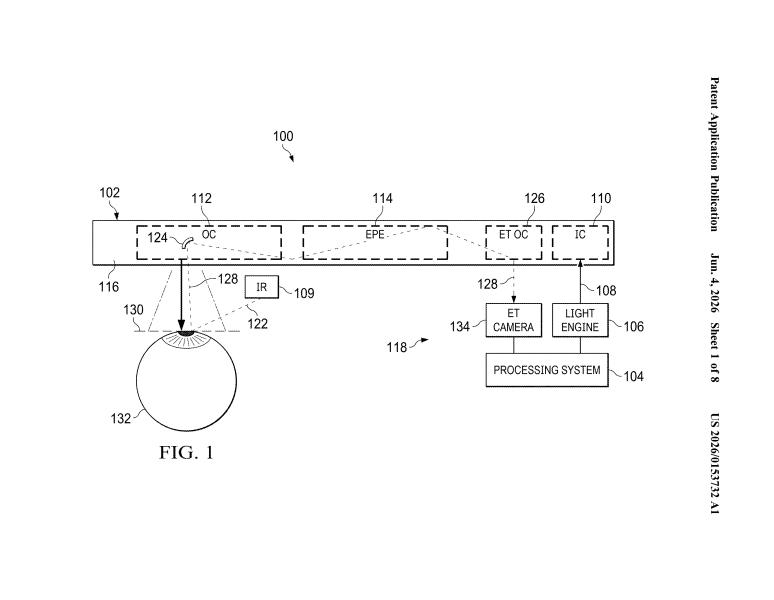
Embedding eye tracking into the waveguide itself eliminates the external camera module, moving toward frames that look like regular glasses rather than sensor-laden headsets.
Smart glasses will need to stream video inside custom environments instead of floating panels. Google's patent sketches a direct communication channel between the headset and streaming apps so they coordinate placement automatically, eliminating manual setup.
The race demands optics that don't degrade the image quality users see. Google's approach stops internal light scatter at the hardware level, a path toward AR that feels sharp rather than washed out.
Contextual answers during video playback require AI that tracks narrative position. Google's patent shows how to feed what's onscreen into a query system so responses don't lag behind the story.
A flexible circuit in the nose bridge handles both wireless charging and optical sensor alignment, condensing two separate subsystems into a single contact point where the headset meets skin.
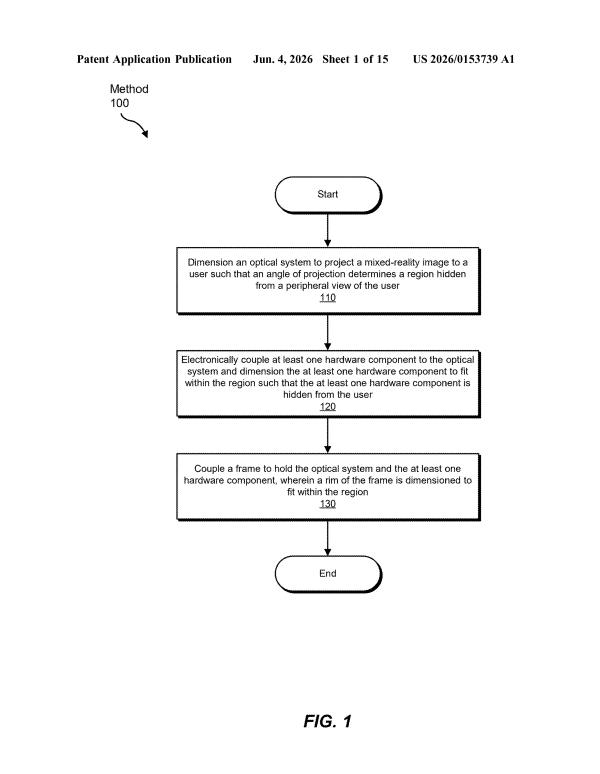
Shrinking the visible frame means AR glasses could finally look like regular eyewear instead of a tech device, removing a major barrier to mainstream adoption.
AR glasses that show sharp detail where you're looking and lower-res edges would expand what you see without draining the battery as fast as a uniform high-res display would.
The race assumes depth sensing is solved. Samsung's filing shows the real bottleneck: keeping virtual objects locked to their actual spatial position so they don't float or sink through the physical world around you.
Inferring hidden mouth positions from partial camera views lets avatars stay expressive during real-world interruptions like eating or drinking, solving a core problem in persistent social VR where camera occlusion currently breaks presence.
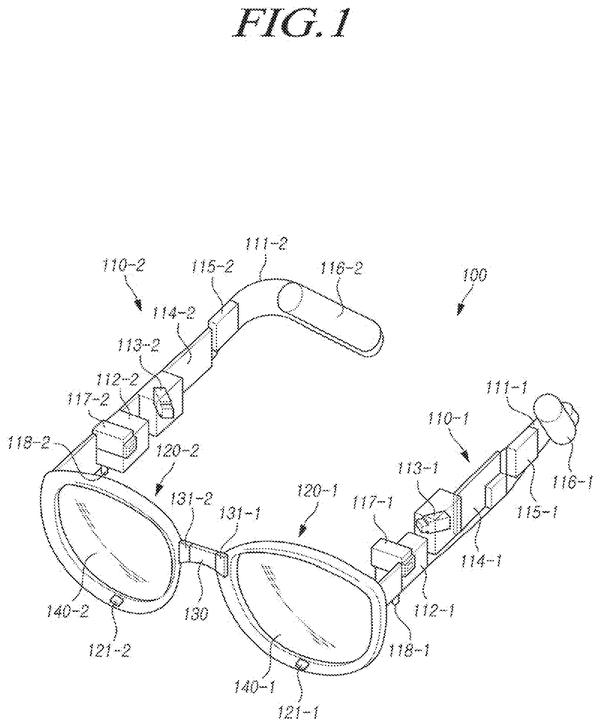
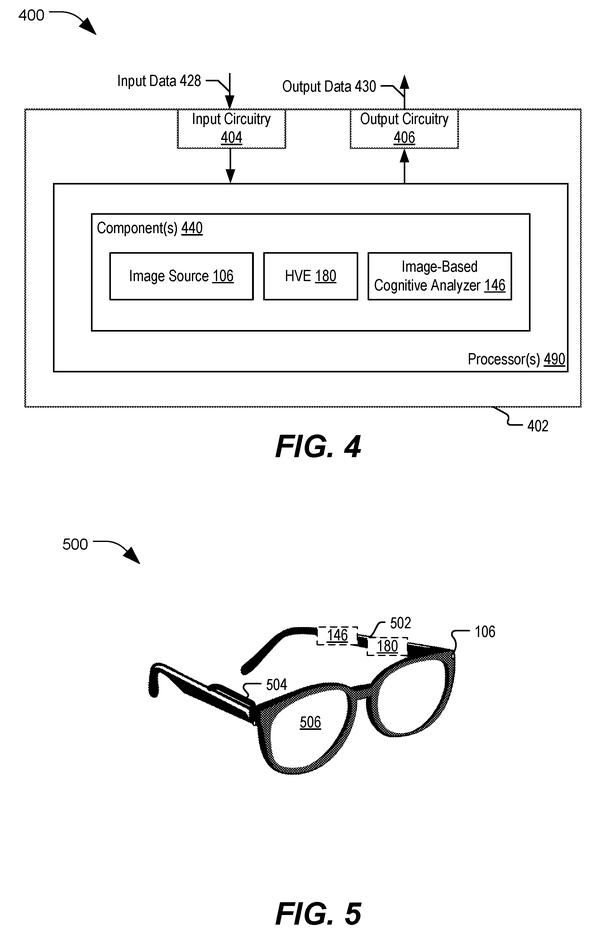
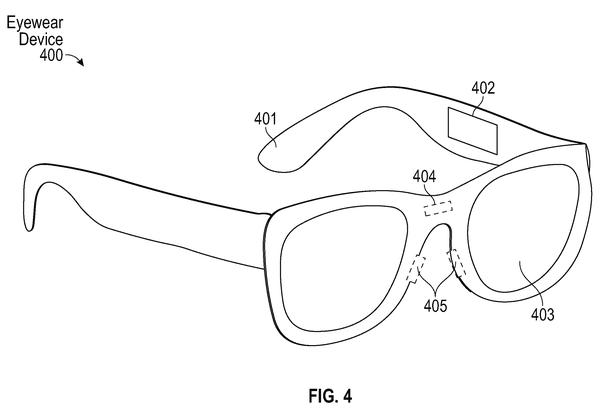
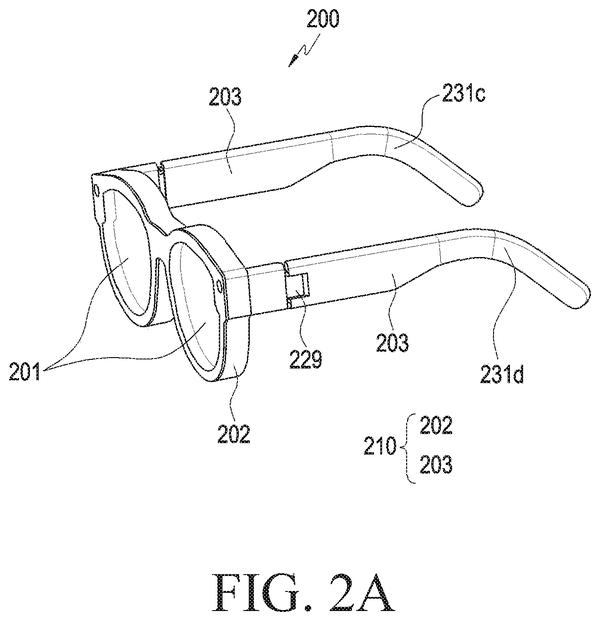
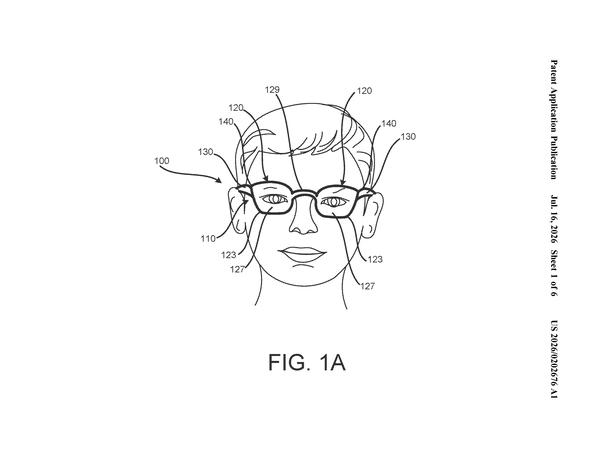
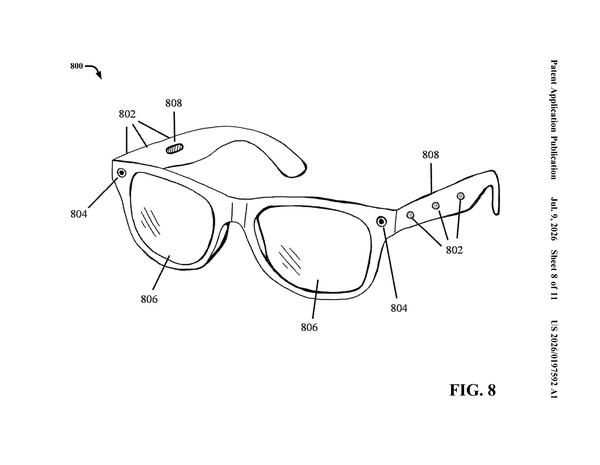
Smart glasses that track your eyes need cameras somewhere. Hiding them in the arms instead of the front keeps the face looking normal, which matters if these become everyday eyewear rather than ski-goggle-sized headsets.
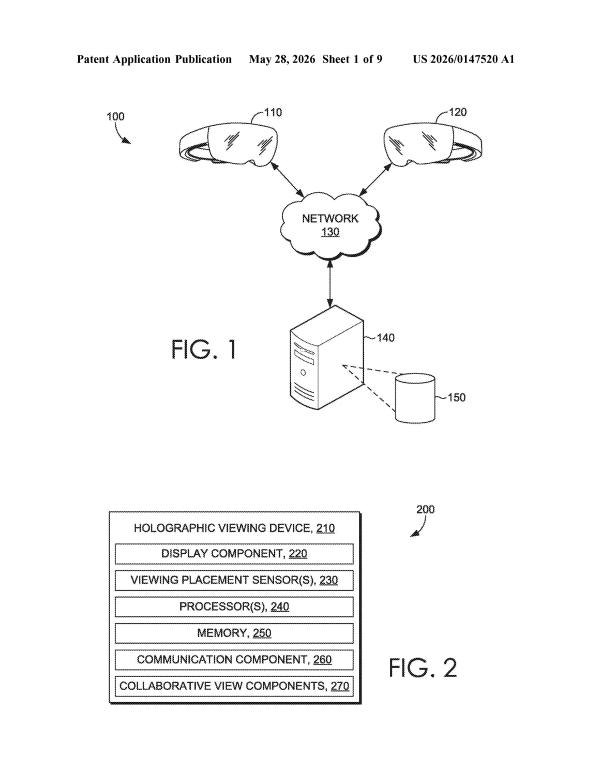
Smart glasses users could sync their viewpoints in real time during shared tasks, eliminating the need to physically relocate or verbally coordinate what each person is examining.
The race has stalled on manufacturing precision, how to keep optical components aligned when tolerance stacks up across modular parts. Google moves the calibration checkpoint upstream, measuring before assembly rather than chasing misalignment after the fact.
The ambiguity problem surfaces here: when multiple objects match what you're asking for, Ray-Ban glasses need a way to confirm which one you actually mean before executing the command.
Getting polarized light to both eyes without waste opens up brighter AR displays without bigger batteries. The dual-panel approach recycles light that current designs simply throw away.
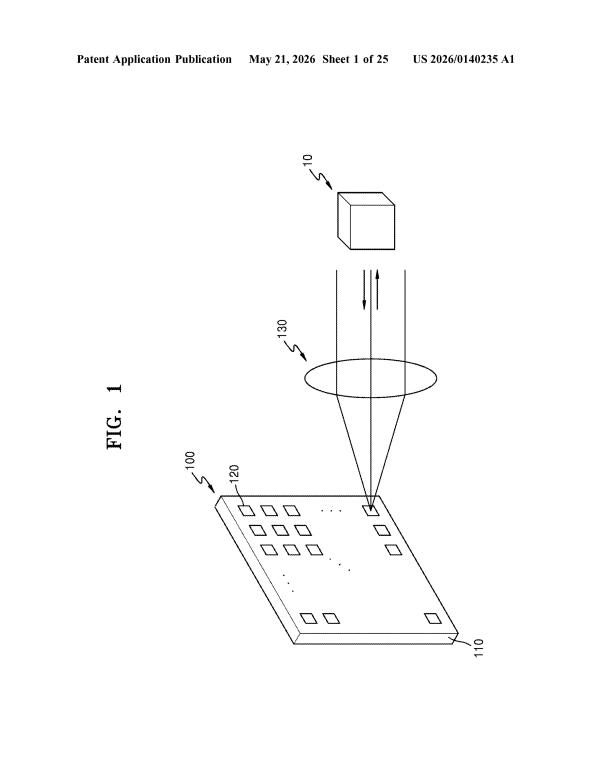
As glasses shrink their sensor stacks, Samsung isolates transmit and receive signals on a single chip using polarization, sidestepping the crosstalk that's plagued miniaturized depth sensing.
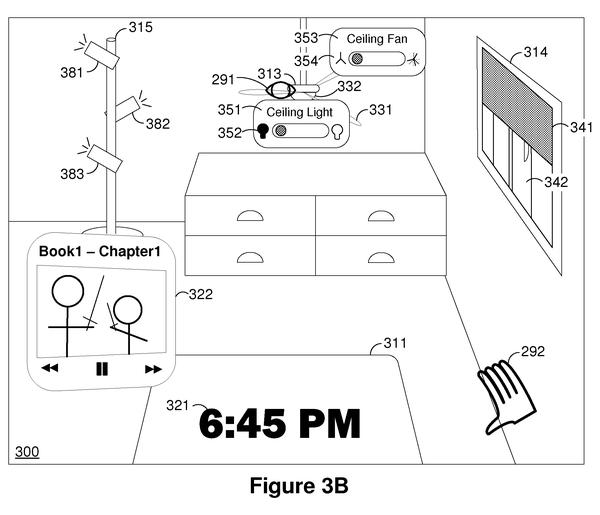
The glasses need to read intent, not just motion. Apple's two-tier system, gesture summons controls, then gaze selects them, separates "I want to interact" from "I'm just looking around."
Realistic reflections on virtual objects require live reading of the actual room's lighting and surfaces, not pre-rendered guesses. Samsung's GAN system generates those reflections on the fly, making placed objects optically coherent with their surroundings.
Aligning multiple optical components to within fractions of a millimeter during manufacturing requires new methods. Meta's approach uses software calibration before final mechanical assembly, potentially cutting production defects that plague current headsets.
Hybrid meetings in AR need consistent spatial placement rules. Apple's patent maps how to position remote participants' avatars relative to in-room users and shared objects, solving a core coordination problem for multi-user AR sessions.
Shifting light angles between video frames lets Google pack sharper images into smaller optical spaces, a key constraint for headset displays squeezed into eyeglass frames.
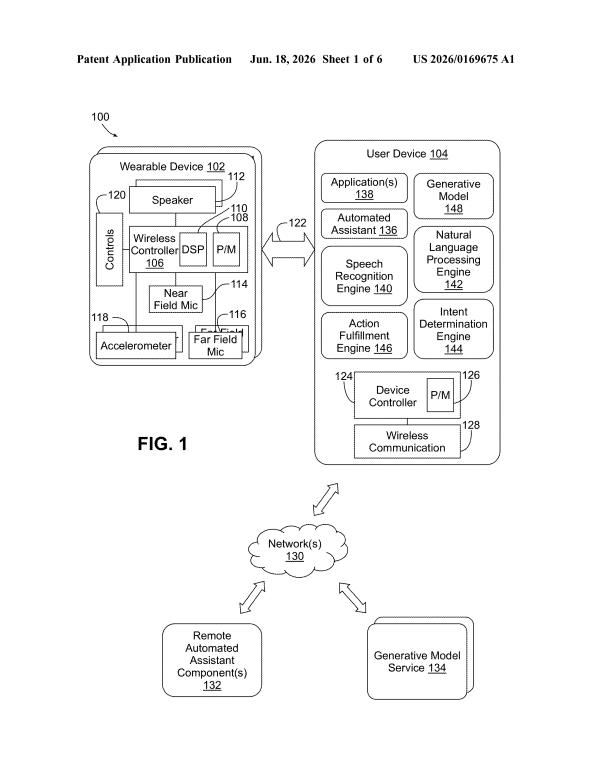
Smart glasses need to know whether to listen or defer to a nearby wristband when both devices hear the same voice command. This patent sketches out how multiple Meta wearables coordinate which one actually responds, preventing overlapping actions.
The race assumes aligned optics work perfectly once built. Meta's filing shows the real problem: keeping them aligned during wear, when head movement and device flex constantly threaten that calibration.
A curved display that reads skin biometrics inward while tracking hand gestures outward consolidates two sensing functions into one component, reducing the physical footprint smartglasses and rings need.
Predicting gaze direction lets the system render only the avatar in your focus at full quality, cutting bandwidth costs in multi-person virtual calls where processing every participant equally would drain resources.
Speckle noise has blocked holographic displays from feeling natural in AR glasses. Meta's approach uses multiple wavelengths to scatter the grain pattern across frequencies the eye can't track as a single defect.
Two pivot points in the hinge let the frame flex past normal opening angles without stressing the electronics-packed arms, protecting battery and optical components from damage during rough handling.
Smart glasses need to know whether a surface is actually a floor or wall to place virtual objects convincingly. Apple's system trains ML models to distinguish surfaces semantically, moving beyond simple depth detection to understand spatial boundaries.
The race so far has focused on how headsets see the world. This filing shows Apple working on turning what they see into usable 3D data: scanning physical objects and converting them into modeled parts rather than just point clouds or images.
Smart glasses need antenna space where a traditional phone doesn't have it. Folding the antenna function into the frame itself solves that geometry problem without adding bulk to the device.
Automatically scaling virtual windows to room dimensions solves a core usability problem: right now users must manually adjust where apps appear in each new space, which breaks the seamless experience AR promises.
The race assumes headsets need better optics. Apple instead proposes software that warps content to match eye position, keeping text readable without hardware redesign.
Eye trackers need to ignore gaze data at lens edges where vision physically cuts off, or headset software will misinterpret where users are actually looking. Apple's filter cleans up these boundary errors before they reach downstream apps.
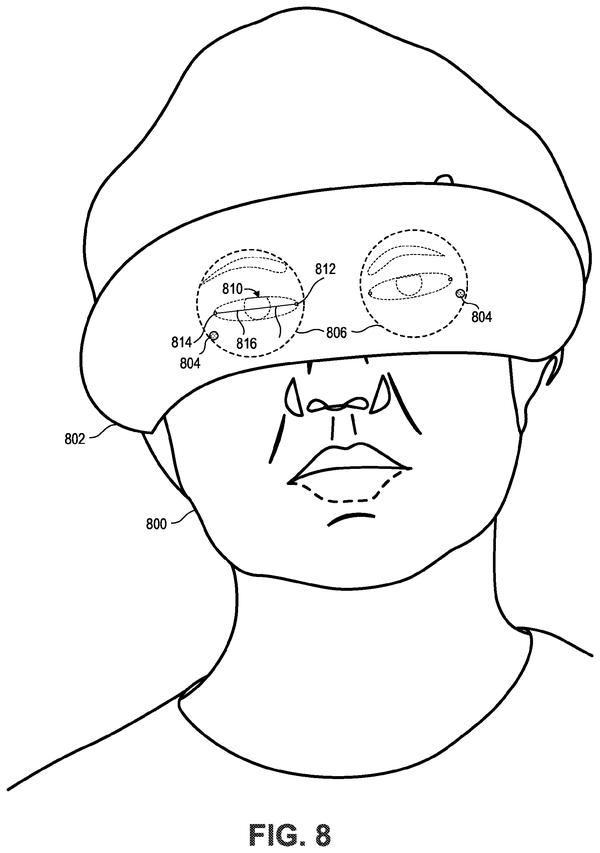
Infrared glints captured during normal use let the headset build a personalized eye model without a separate calibration step, streamlining the setup experience users encounter first.
Smart glasses need to show controls tied to what you're looking at, not just what's on screen. Apple's filing suggests splitting a single display into zones so pointing at one corner summons lights while pointing elsewhere brings up TV settings.
The race has mostly focused on display and sensor breakthroughs, but the glasses still have to sit on your face. This patent signals that durability and basic comfort are now table stakes before Meta ships anything to consumers.
Shrinking the optical stack that projects full-color images into the wearer's eye without bulky lenses. Google's curved lightguide approach bends light efficiently enough to keep AR glasses visually inconspicuous.
Waveguide AR displays could show crisp text without the color fringing that currently plagues the format, if Google's lens-correction approach works at mass production scale.
The race to shrink optics is moving from waveguide design itself to the light path feeding it. Splitting the beam before entry lets Google push more photons through without thickening the lens stack.
Camera durability in wearables demands thermal isolation. Meta's metal sheath design uses an air gap to shield the lens from heat buildup while keeping the module small enough for eyewear form factor.
Eye-tracking input for AR glasses needs reliable activation methods that don't require hand gestures or voice commands. Apple's corner-gaze system proves eyes alone can consistently trigger interface actions without accidental activation.
A laser in the nose pad detects micro-shifts in headset position, letting the device recalibrate display and eye-tracking before the user notices drift, solving a core problem in all-day wear comfort.
Questions readers ask
Is Apple actually building AR glasses?
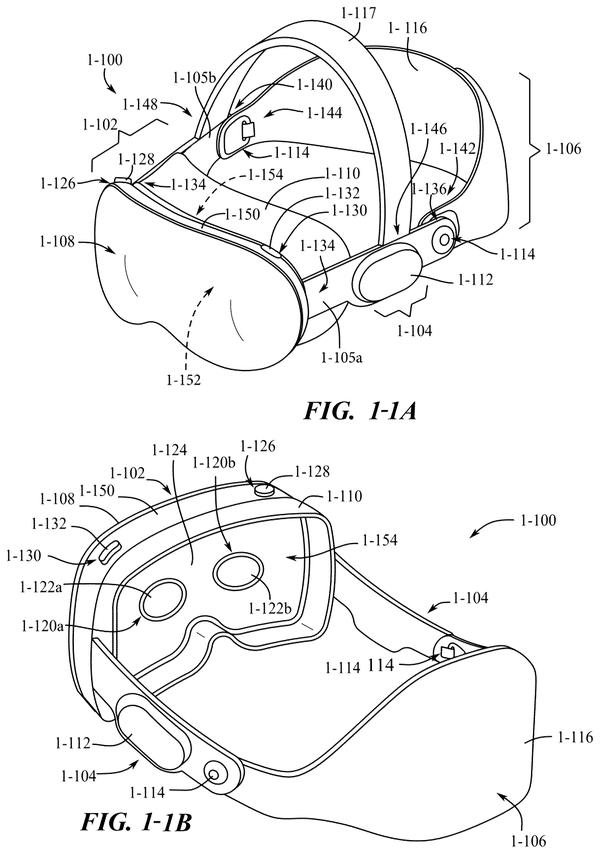
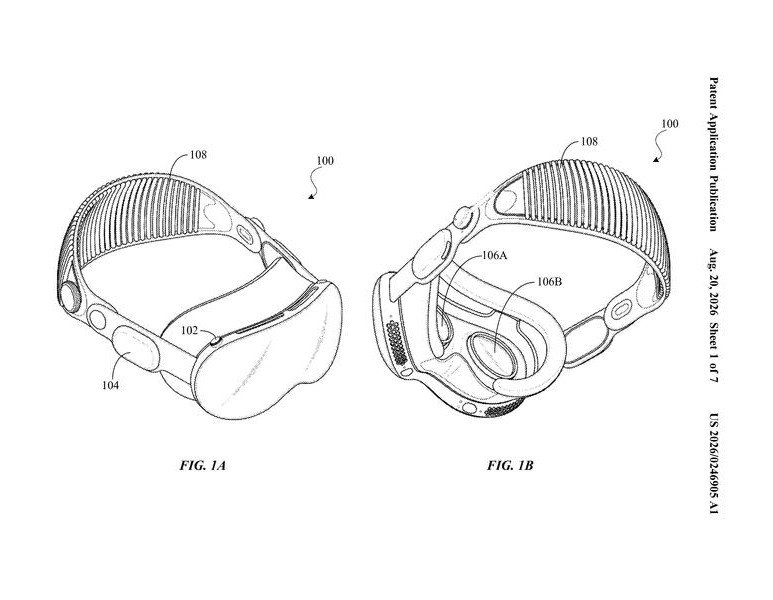
Apple's filings here focus on eye tracking, headset fit, and display mechanics rather than a specific device. Patents like this show engineering directions a company is exploring, not confirmation of a shipping product. The volume and specificity of Apple's filings suggest serious investment in the underlying tech, but the timeline for any actual glasses stays unclear.
Why do so many patents focus on eye tracking?
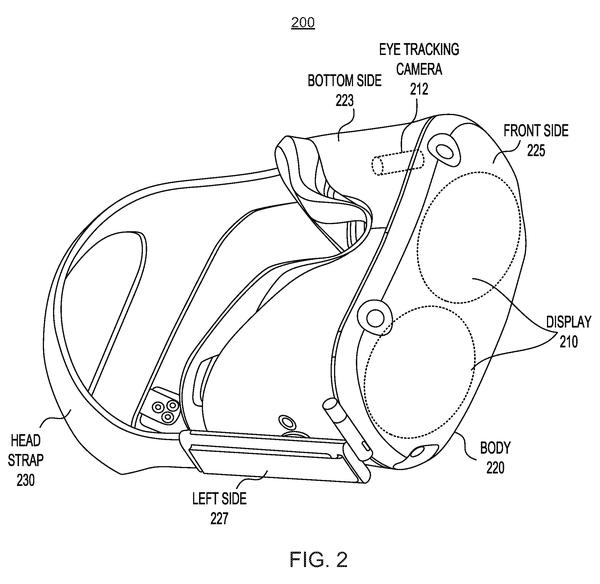
Several filings, including Apple's gaze-detection hot corner patent and its 3D eye-mapping system, treat eye tracking as a control input, not just a display feature. If a headset knows exactly where you're looking, it can trigger actions or adjust the screen without buttons. That double use, as both sensor and controller, seems to be why so many patents cluster here.
What problems are Meta's smart glasses patents solving?
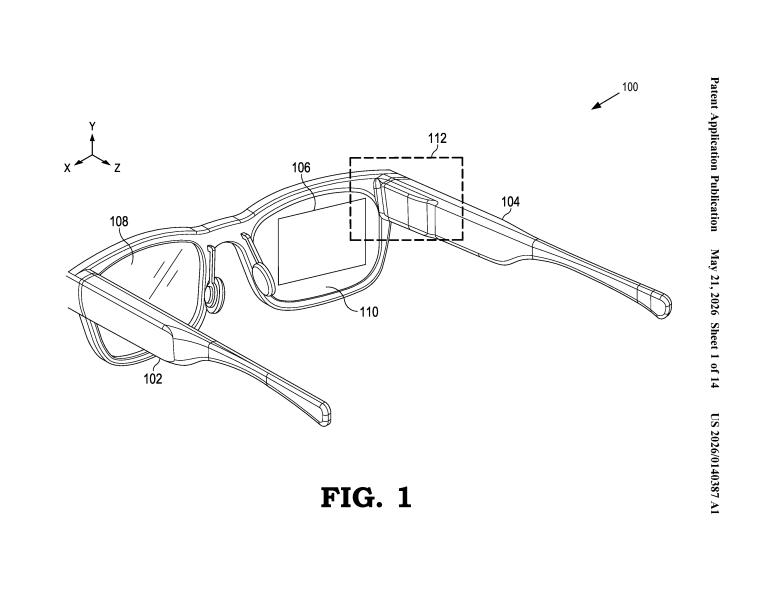
Meta's patents in this watchlist lean toward physical comfort and durability, like a hinged nose bridge that adjusts to different face shapes and a metal-sheathed camera lens built with a small air gap. These are small mechanical fixes rather than flashy features, aimed at making glasses people will actually keep wearing.
Do these patents mean a product is coming soon?
No. Patent filings describe technology a company has explored and wants to protect, sometimes years before, or instead of, any product launch. This watchlist tracks the direction of that research across Apple, Google, and Meta so readers can see where the engineering effort is going, not when or whether a device will ship.
Want this weekly breakdown for a company we don't cover?
Patentlyze Pro →
The weekly email: the best of Big Tech's filings, in plain English. Free.